
Tools vs. Totems: How Every Product Category Splits in Two
Every mature product category fractures into tools and totems. Learn the mechanism behind this split, and how to use it to read markets, diagnose brands, and spot white space.

Quick answer:
As product categories mature, they split into two distinct camps: tools optimized for utility and invisibility, and totems optimized for identity and meaning. The middle ground between them tends to erode. Understanding which side of this divide a product occupies, and why, is one of the more useful lenses available for reading consumer behavior and brand strategy.
There was a moment in the 1990s when every pen company believed it could be both. Practical enough for the office supply closet. Aspirational enough for the boardroom. The result was a lot of $20 Parker pens that nobody particularly wanted and nobody particularly remembered. The Bic Cristal cost a dollar and worked perfectly. The Montblanc Meisterstück cost $1,200 and carried twenty years of accumulated mythology. The Parker sat between them, doing neither job especially well.
That tension is not unique to pens. It is closer to a pattern, one that shows up across enough categories and enough decades that it starts to look less like coincidence and more like a mechanism. Every mature product category eventually pulls apart at its seams, settling into two distinct poles: tools, which optimize for utility and near-invisibility, and totems, which optimize for identity, narrative, and desire. What happens to everything in between is the more interesting question.
Phase One: Utility Was the Only Game in Town

The first generation of any product category is almost always utilitarian. Not because manufacturers lacked imagination, but because the object itself was still being figured out.
The Model T Ford came in one color. The first iPod was a music player, not a cultural artifact, even if it became one. Early smartphones were remarkable pieces of engineering and completely indistinguishable from a status perspective. Everyone had the same device. The object existed to solve the problem.
This phase tends to be short. Once the core function is solved and competition enters, differentiation becomes incremental. Prices drop. Features converge. The category enters what might loosely be called commoditization, a condition where The Economist described as markets flattening into nearly identical offerings. At that point, two escape routes open up. Most brands attempt both, and succeed at neither.
What Tools and Totems Actually Do

A tool is not just a cheap product. The Sony WH-1000XM5 is not cheap. The Victorinox Fibrox Chef's Knife at $40 is priced below many competitors but earns its category dominance through professional-grade performance at a non-luxury price. A tool is defined by what it deprioritizes: narrative, heritage, cultural legibility. The object wants to disappear into its function. You do not think about a Bic pen while you are writing. That invisibility is the product.
Totems work in reverse. The Rimowa Classic aluminum suitcase and a $90 carry-on from a mid-tier brand will both hold your clothes across a transatlantic flight with comparable reliability. The Rimowa costs over $1,000 not despite this functional equivalence, but partly because of it. When the utilitarian case is closed, the remaining difference is entirely symbolic: heritage, scarcity, recognition. The luggage is visible in a way that a tool refuses to be. That visibility is the product.
The middle position requires you to be seen, but not for anything in particular. It is the strategic equivalent of attending a dinner party and having nothing to say.
The Anatomy of the Split, Category by Category
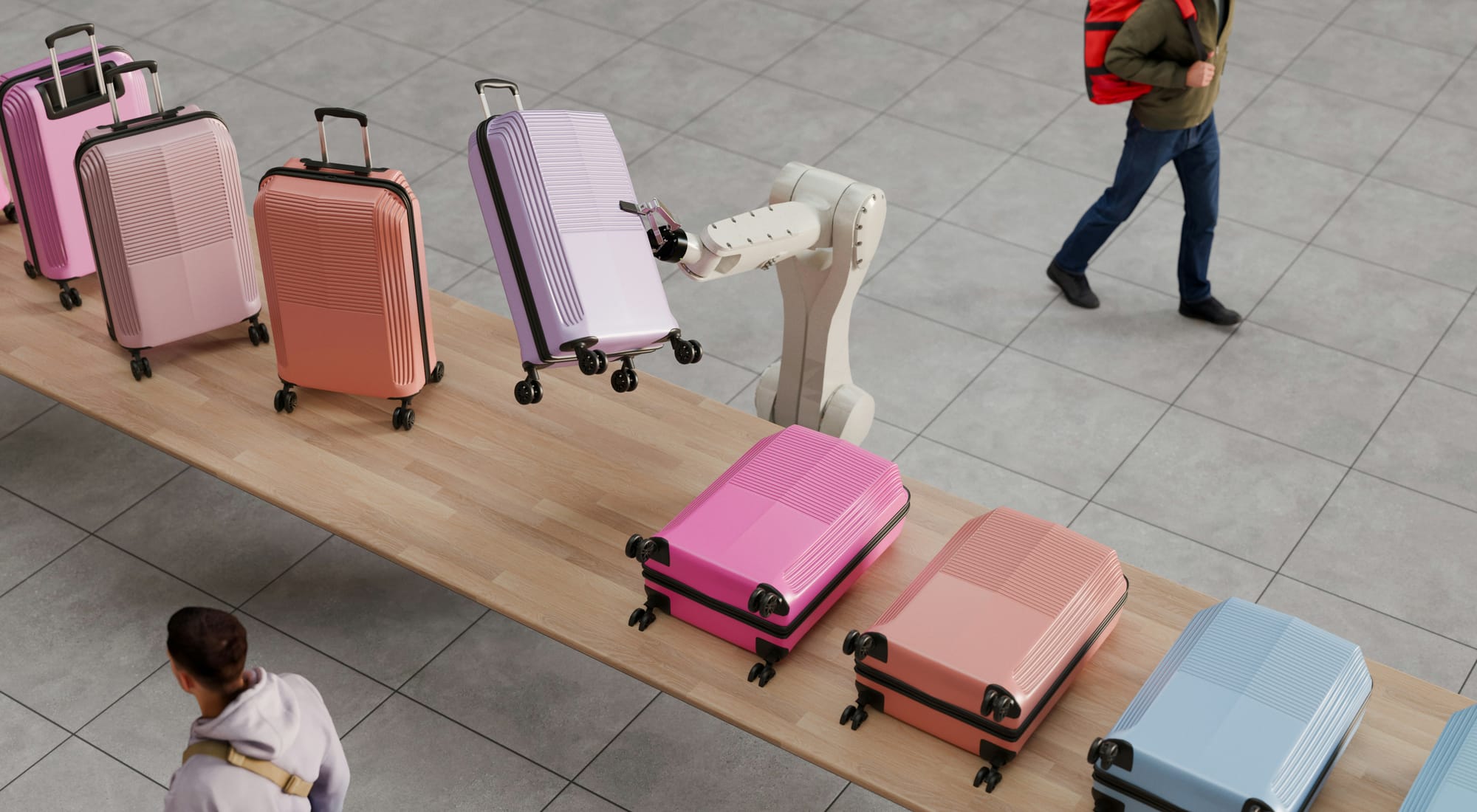
The split is easier to read in some categories than others, but it is present almost everywhere you look once you start looking.
| Category | Tool | Totem | The Vanishing Middle |
|---|---|---|---|
| Cars | Toyota Corolla | Rolls-Royce Phantom | The $40K sedan |
| Pens | Bic Cristal | Montblanc Meisterstück | The $20 Parker |
| Luggage | Away The Carry-On | Rimowa Classic | The $300 Samsonite |
| Jackets | Uniqlo Ultra Light Down | Canada Goose Expedition | The $200 North Face |
| Headphones | Sony WH-1000XM5 | Apple AirPods Max | The $150 Beats |
| Kitchen Knives | Victorinox Fibrox | Shun Premier | The $80 Wüsthof |
The $300 Samsonite row is worth sitting with. It is a reasonable suitcase. Nothing is wrong with it. But "reasonable" is not a purchasing emotion, and it is not a conversation anyone is having at the baggage carousel. The Rimowa owner knows why they bought it. The Away owner knows why they bought it. The Samsonite owner just needed a suitcase.
Why Luxury Needs Scarcity and Tools Need Scale

Totems require scarcity to function. This is not an accident of supply and demand but a deliberate condition that luxury brands actively manage, sometimes through limited production runs, sometimes through price alone, sometimes through controlled retail environments that make acquisition feel like a minor achievement. The moment a totem becomes universally accessible, it loses the property that made it a totem in the first place. Hermes understands this. That is why the Keepall has a waiting list.
Tools work in the opposite direction. Ubiquity is a feature. A Casio G-Shock becomes more useful as a reference point when everyone understands what it represents: durability, accuracy, complete indifference to status. The Patagonia Black Hole Duffel, which is deliberately unglamorous, gains credibility precisely from widespread adoption among people who carry things in rough conditions. Its plainness is the signal.
The middle position satisfies neither requirement. Too available to be scarce, too expensive to benefit from scale, too present to disappear into pure function.
The Brands That Refused to Pick a Side
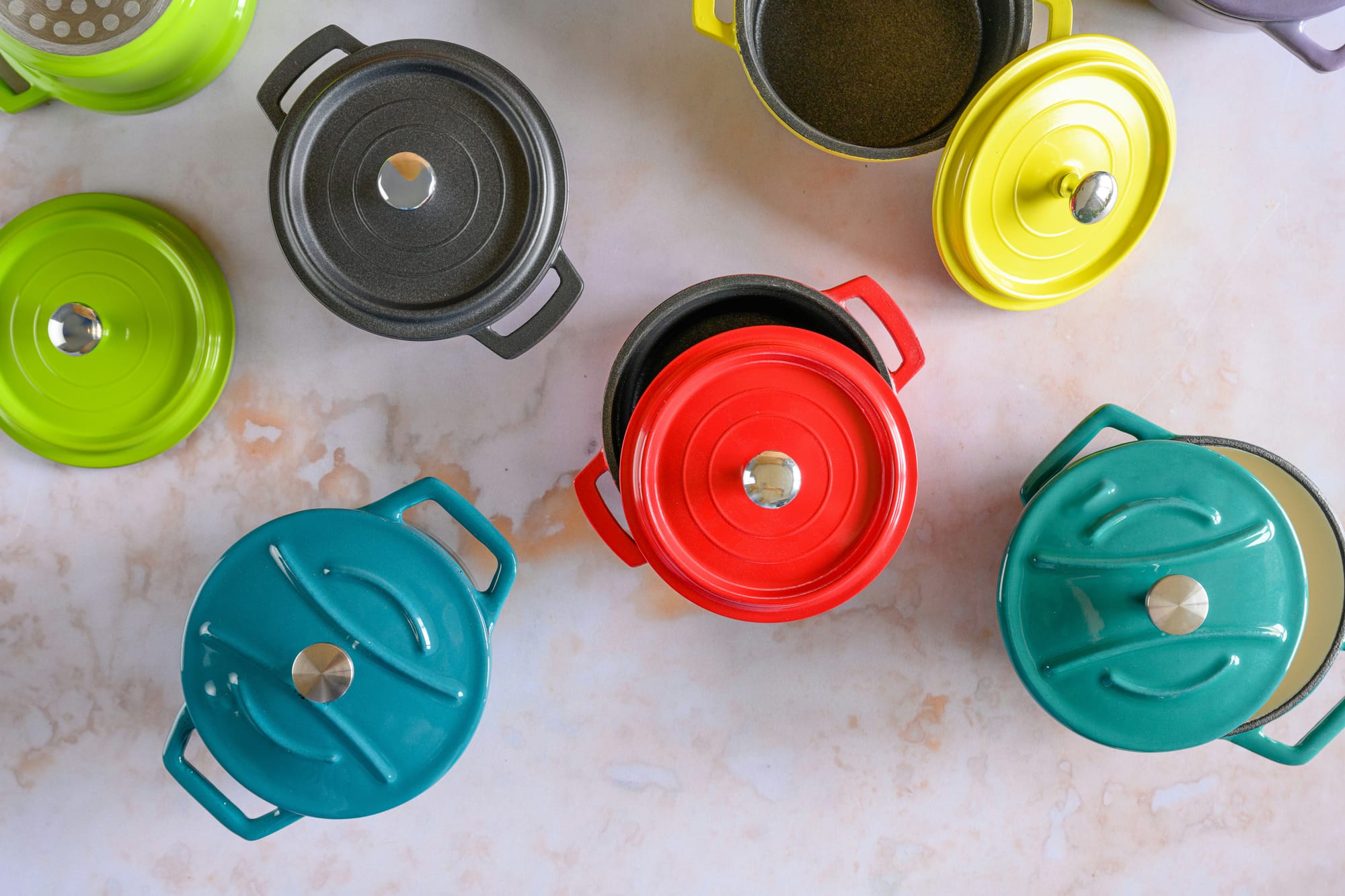
A few products exist in genuine hybrid territory, and studying them carefully is more instructive than cataloguing the clean splits.
Yeti started as a tool. A cooler for serious anglers and hunters who needed performance that consumer-grade products could not deliver. Then, as Outside Magazine documented, something shifted. The Yeti cooler became visible as a signal of a certain outdoor lifestyle, which turned it into a totem among people who had never put it near a fish. Yeti did not engineer this transition deliberately. It happened because the product genuinely performed at the tool level, which gave it enough credibility to carry totem weight once cultural adoption caught up. Most brands cannot replicate that sequence because they start with the totem ambition before establishing tool credibility.
Le Creuset is a different case. The Dutch oven actually cooks better than most alternatives (tool) and comes in a range of colors that make it a deliberate visual choice for a kitchen (totem). The hybrid works because neither property undermines the other. The cooking performance is real. The color selection is not a distraction from it.
Apple is the most studied example and probably the most complex. The iPhone functions as a tool, a device people depend on for work and communication, while simultaneously operating as one of the more widely recognized status objects in consumer technology. The tension between those two identities has been Apple's greatest creative challenge for fifteen years.
The Anti-Totem That Is Still a Totem

Patagonia deserves its own category. The brand built its identity around refusing to participate in the logic of luxury signaling, right down to running ads that told customers not to buy their products. And yet a $200 Patagonia Nano Puff is still a signal. The ethics, the minimalism, the deliberate anti-branding: all of it functions totemic among a specific audience. Patagonia did not escape the split. It just found a totem position that looks like a tool position if you are not paying attention.
This is the move that Muji has been running for decades in Japan, and that a certain strain of "quiet luxury" has recently industrialized in fashion. The rejection of overt status is itself a status marker. The signal is just encoded differently.
Mature categories pull toward two poles: disappear into the job or become part of the identity.
Tools compete by solving the problem cleanly enough to become almost invisible. Totems compete by making ownership visible and meaningful. The dangerous territory is the expensive, recognizable, undifferentiated space between them.
The category eventually splits at the meaning layer.
Function is usually solved first. Once performance converges, brands need another reason to exist. Some pursue scale and usefulness. Others pursue scarcity, identity, and desire.
Tool
The product proves itself through use. The strongest version fades into the task because there is little reason to think about the object while it works.
Middle Too expensive to disappear.
Too ordinary to carry meaning.
Totem
The product carries narrative beyond the job it performs. Recognition, heritage, scarcity, belonging, and personal identity become part of the purchase.
Distinct value rises at the poles and weakens in the middle.
Tools have a clear answer to "why this?" Totems have a different but equally clear answer. The middle asks the customer to spend more without providing a strong functional or symbolic reason.
The middle loses the clearest buying argument.
The tool wins by being the obvious functional choice. The totem wins by being the desired object. The middle is left competing through small feature differences and discounting.
The same split keeps repeating across unrelated categories.
Price varies. Function varies. The organizing logic remains surprisingly stable: one side competes through usefulness, the other through what ownership communicates.
Scale strengthens the position.
Availability, familiarity, production efficiency, and widespread professional use increase confidence in a tool.
Scarcity strengthens the position.
Controlled availability, price, heritage, difficult acquisition, and limited production protect the distinction attached to ownership.
Yeti
Performance established the tool. Cultural adoption later gave the same object meaning beyond the job.
Le Creuset
Cooking performance remains credible while color and display value create an equally strong ownership story.
Apple
Everyday dependence and cultural recognition coexist inside the same object.
Patagonia
The rejection of overt status becomes a recognizable form of status for the audience that understands the code.
The danger begins when a brand cannot explain which game it is playing.
Why is this the obvious choice?
Performance, reliability, availability, economics, or ease of use should make the answer immediate.
Why should anyone care?
If the answer becomes "it is a little nicer," the product may be drifting into the middle.
What does owning this mean?
Heritage, rarity, taste, membership, aspiration, or identity should supply the reason beyond function.
Diagnosing Where a Brand Is Losing Its Position
The middle is where brand equity goes to dissolve slowly.
J.Crew, Gap, and Banana Republic have spent the last decade discovering this in real time. None of them are cheap enough to win on price. None of them carry enough cultural weight to justify premium positioning. The customer who wants functional basics at low cost goes to Uniqlo. The customer who wants a brand that means something goes somewhere else. J.Crew is left serving the customer who is mildly satisfied and not especially loyal, which is the most precarious position available.
Under Armour is a version of the same problem in performance apparel: not quite the tool that Nike's functional lines represent, not quite the totem that Nike's Jordan and lifestyle divisions command. Caught between two definitions of the category, performing well at neither.
Using This Lens on Categories That Have Not Split Yet

Electric bikes are an interesting case right now. The category is still in early utility-era thinking, with most purchasing decisions driven by range, weight, and price. Rad Power Bikes is clearly positioning for the tool end: accessible price, practical design, broad distribution. VanMoof tried to play the totem position before its finances caught up with its ambitions. The split has not fully arrived yet, which means the category still has shape to be claimed.
Polestar is attempting something similar in electric vehicles, building a tool-facing luxury car: performance-focused, aesthetically spare, deliberately understated in a segment where Tesla's cultural weight is already tilting totem. Whether it succeeds is genuinely unclear, which makes it worth watching.
The Object Always Arrives Before Its Category
What this pattern reveals, when you sit with it long enough, is that the split is less about what a product does and more about what it means to own one. The function gets solved early. The meaning takes longer to stabilize. Once it does, the category reorganizes around two poles, and the brands that tried to serve everyone find themselves serving no one particularly well.
In the beginning, there was the object. Then there was the tool. Then there was the totem. Then there was the void where the middle used to be.
The question worth asking, for any category you follow closely: where is the split currently forming, and which side of it are you building for?
💡 OffLabel-023 | The Tool-Totem Split
Diagnosis: As categories mature and functional differences narrow, brands are pulled toward two stronger positions: utility that disappears into use, or meaning that makes ownership visible. The middle becomes vulnerable because it asks for attention without giving buyers a clear reason to care.
Prescription: Decide which side of the category you are building for. If you are a tool, win through usefulness, reliability, access, and scale. If you are a totem, build recognition, narrative, scarcity, and symbolic value. Avoid premium pricing without a strong functional or cultural reason behind it.
Strategic Medication: Category Polarization, Symbolic Value, Utility Positioning [Provisional]

