
The Rise of the Anti-Convenience Economy: Why We're Paying More for Less
Vinyl records, film cameras, manual espresso makers. Discover why the most coveted products today are the ones that demand effort and what it means for brands.

Quick answer:
The Anti-Convenience Economy describes a growing market shift where consumers deliberately choose slower, harder, and more effortful products over frictionless alternatives. Driven by the psychology of effort and a cultural backlash against passive consumption, this trend is reshaping how premium products are designed, priced, and sold.
There is something quietly strange happening in consumer markets. Vinyl record sales have grown for 18 consecutive years, even as streaming puts 100 million songs inside a phone that fits in your pocket. Film cameras require you to pay around $20 per roll, wait days for development, and accept that roughly a third of your shots will be unusable. Sourdough requires a living culture, two days of patience, and a non-trivial risk of failure. None of this is a regression. It's a signal.
The frictionless economy spent the better part of two decades removing every point of resistance from the act of buying and using things. One-click checkout. Autoplay. Same-day delivery. Algorithmic recommendations that anticipate preferences before the user has named them. The efficiency gains were real. So was what got lost.
What got lost is harder to name than what was gained, which is probably why it took a market to surface it rather than a think piece. The products and behaviors gaining momentum right now share a trait that runs counter to everything convenience optimizes for: they require something of the person using them.
Convenience removed the work. The market is now paying to put some of it back.
Film cameras, manual coffee makers, notebooks, vinyl records, board games, and stripped-down phones ask more from the buyer than their optimized alternatives. That effort creates choice, skill, ritual, ownership, and attention that frictionless products often remove.
The exchange hidden inside convenience
Faster products save time by removing steps. The trade becomes visible when those missing steps were also carrying meaning.
The system does more.
The product predicts, automates, accelerates, stores, recommends, and moves the customer toward completion with as little interruption as possible.
shifts
The customer does more.
The product requires preparation, judgment, patience, maintenance, or practice. Completion feels connected to the person using it.
What useful friction adds back
The extra step has value when it changes the quality of the experience rather than merely making the process slower.
Choice
A pause requires the buyer to decide rather than continue through a default.
Skill
Repeated use develops ability, judgment, and personal preference.
Ritual
Preparation becomes part of the product rather than an obstacle before it.
Ownership
Effort invested in making or operating something increases attachment to it.
Presence
The customer must attend to the process instead of letting it disappear into automation.
Products that win by asking more
The inconvenience differs by category. The commercial pattern remains remarkably consistent.
Effort changes the value of the outcome.
The customer is not paying only for the object. They are paying for an experience in which their own participation affects the result.
Friction can support premium pricing.
Products that create skill, ritual, and visible participation compete on the quality of use rather than feature count alone.
The premium accumulates above basic function.
A manual product may perform fewer tasks while creating more value around the act of using it.
The Convenience Trap, and What It Actually Removed
Convenience promised to give back time. In most cases, it delivered. But the transaction was less symmetrical than it appeared. Every layer of friction that gets removed also removes a decision, a skill, a small act of presence. Amazon Prime didn't just speed up delivery; it made the act of acquiring something so effortless that the thing itself often arrives feeling slightly less valuable than anticipated. Netflix autoplay doesn't just serve the next episode; it removes the moment of deliberate choice that makes watching something feel like a preference rather than a default.

This is not a moral argument against convenience. It's an observation about what the market is now pricing. When effort disappears entirely from an experience, something else disappears with it: the sense that the experience was chosen.
The Light Phone is a useful case study. It is, by any conventional measure, a worse phone. It doesn't run social media apps. It has a minimal interface. It does calls, texts, and not much else. It sells for more than entry-level smartphones that do a hundred times as much. The people buying it are not confused about what they're giving up. The reduction is the product.
The Anti-Convenience Product Hall of Fame
A short inventory of things winning by being harder:
Products that become more valuable by asking more from us.
Each product gives up some version of speed, automation, or predictability. In return, it creates attention, ritual, skill, or a stronger sense of ownership.
| Product | Why It Is “Worse” | Why It Works |
|---|---|---|
|
01
|
Why It Is “Worse” No screen, manual focus, and film costs around $20 per roll. | Why It Works Forces you to see rather than simply shoot. |
| Why It Is “Worse” Requires constant physical micro-adjustments. | Why It Works Turns standing into a physical act of attention. | |
| Why It Is “Worse” Takes approximately six minutes to brew coffee. | Why It Works The ritual becomes inseparable from the cup. | |
| Why It Is “Worse” Uses manual pressure and requires no electricity. | Why It Works Makes espresso a daily practice rather than a commodity. | |
| Why It Is “Worse” No search function, no automatic backup, and limited physical space. | Why It Works The friction of handwriting changes how you think. | |
| Why It Is “Worse” Film is expensive, storage is physical, and images can fade. | Why It Works Scarcity produces attention in a way infinite storage cannot. |
The pattern across these is consistent. Each product asks the user to show up fully. Each one rewards that presence with something an optimized alternative cannot replicate: the sense that you made something, chose something, did something.
The Psychology Behind Paying More for Less
Harvard Business Review's research on the IKEA Effect documents what behavioral economists have confirmed in repeated experiments: people assign significantly more value to things they have invested effort in creating or operating. The name comes from flat-pack furniture assembly, but the underlying principle extends across almost every category of consumption. Effort creates ownership at a psychological level that purchase alone does not.
There is a related phenomenon that doesn't have a catchy academic label but shows up everywhere in this market: the value of legible skill. Handmade pottery carries visible tool marks. Scratch-built PCs have cable management decisions made by a specific person. Sourdough has a crumb structure that reflects the baker's judgment over 48 hours. These traces of effort are not incidental. They are the product. They signal that a person was present and paying attention, which in a world of automated output has become genuinely uncommon.
The Slow Movement, which started as a food philosophy and has since spread into travel, education, and design, operates on this same logic. Its argument is not that fast is bad. It's that slow produces a different quality of experience, and that quality has been systematically undervalued because it doesn't compress well into metrics.

The Business Case for Inconvenience
There is a commercial argument here that doesn't get made often enough: friction is a margin strategy.
Artisanal, high-effort products operate at price points that commodity goods cannot approach. Hand-forged Japanese knives sell for multiples of what a factory-produced equivalent costs, and the demand is not declining. A2 milk, which requires specific breeds of cattle and more careful processing, commands a persistent premium over standard alternatives. The Technivorm Moccamaster retails for around $350 in a category where functional alternatives exist for $30. None of these products are priced on features alone. They are priced on the experience of using them, which includes the investment the user makes.
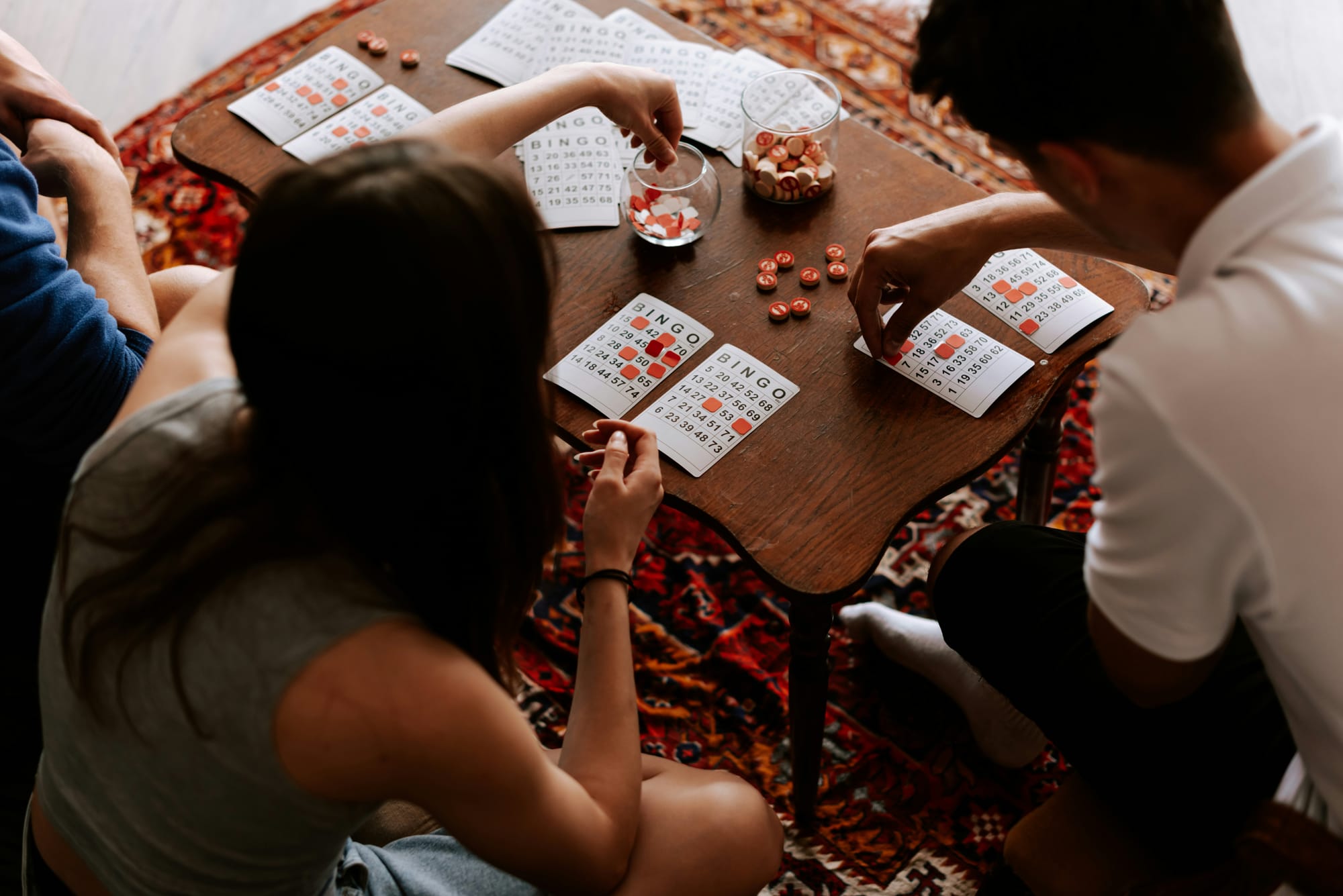
The subscription economy is also facing a quiet challenge from this direction. Ownership is making a comeback, and not only as nostalgia. Vinyl records you can hold, loan, lose, and re-discover. Physical books don't get removed from your library when a licensing agreement expires. Film cameras don't require a software update to function. The resurgence of board games follows similar logic: a game on a table in front of people produces a fundamentally different social experience than a game on a screen, and that difference is what people are paying for.
The dark side of this trend is worth naming plainly. Anti-convenience can tip into performance. The $1,000 toaster that requires a specific water temperature and a three-step preheating ritual is not necessarily making better toast. At the far end of the market, deliberate inconvenience becomes a status theater of its own, which is ironic given that the original impulse was toward authenticity. The Balmuir high-end lifestyle products segment is full of objects that signal the values of anti-convenience without actually delivering the experience. The ritual is cosplay. The effort is optional.
A Hybrid Economy, or Something More Interesting
The obvious conclusion is that convenience and anti-convenience will simply coexist as market segments, one for speed and one for depth. That is probably true. It is also not the more interesting observation.
The more interesting observation is that anti-convenience is changing what people expect from convenient products. The popularity of "slow apps" that deliberately limit notifications by design reflects a preference not just for quiet, but for products that respect the attention of the person using them. Convenience that is designed to be addictive is starting to look like a liability, not a feature. The Light Phone exists because the smartphone went too far, and the market noticed.

What King Arthur Baking understood during the pandemic sourdough moment was something most convenience-oriented brands still haven't fully absorbed: the act of making something is itself a product. Not a means to an end. The process is the point, and there is a significant and growing number of people who are willing to pay for that process to be genuinely demanding.
Convenience Solved One Problem and Created Five New Appetites
The original promise of the frictionless economy was time. More of it, freed from the tedium of effort. What the Anti-Convenience Economy reveals is that effort was not purely tedium. Some of it was meaning. Some of it was skill. Some of it was the sense of being present inside your own day rather than moving through it on autopilot.
The products gaining traction in this space are not winning despite being harder. They are winning because of it, and the brands that understand that distinction are building something more durable than a product line. They are building a relationship with the part of their customer that wants to show up.
So: what's the last inconvenient thing you bought, and why did it feel more like a decision than a purchase?
💡 OffLabel-022 | The Anti-Convenience Premium
Diagnosis: As products remove more steps, decisions, and effort, they also remove some of the ritual, skill, and attachment that made the experience valuable. In saturated categories, maximum ease can make the offering feel interchangeable.
Prescription: Preserve friction where participation improves the outcome. Design products that ask customers to choose, practice, prepare, or pay attention, then make the value of that effort visible. Remove inconvenience that adds nothing. Protect the steps that create ownership.
Strategic Medication: Ritual Design, Meaningful Friction, Participatory Value [Provisional]

