The Sun Never Sets: What Beaucroft Gets Right With the Solaris GMT
Beaucroft and Time+Tide’s Solaris GMT watch collaboration centers around the concept “The Sun Never Sets on Time+Tide,” reflecting Time+Tide’s global presence. The watch’s design, featuring a gradient dial and GMT function, embodies this concept and is grounded in a specific visual memory.
Quick answer:
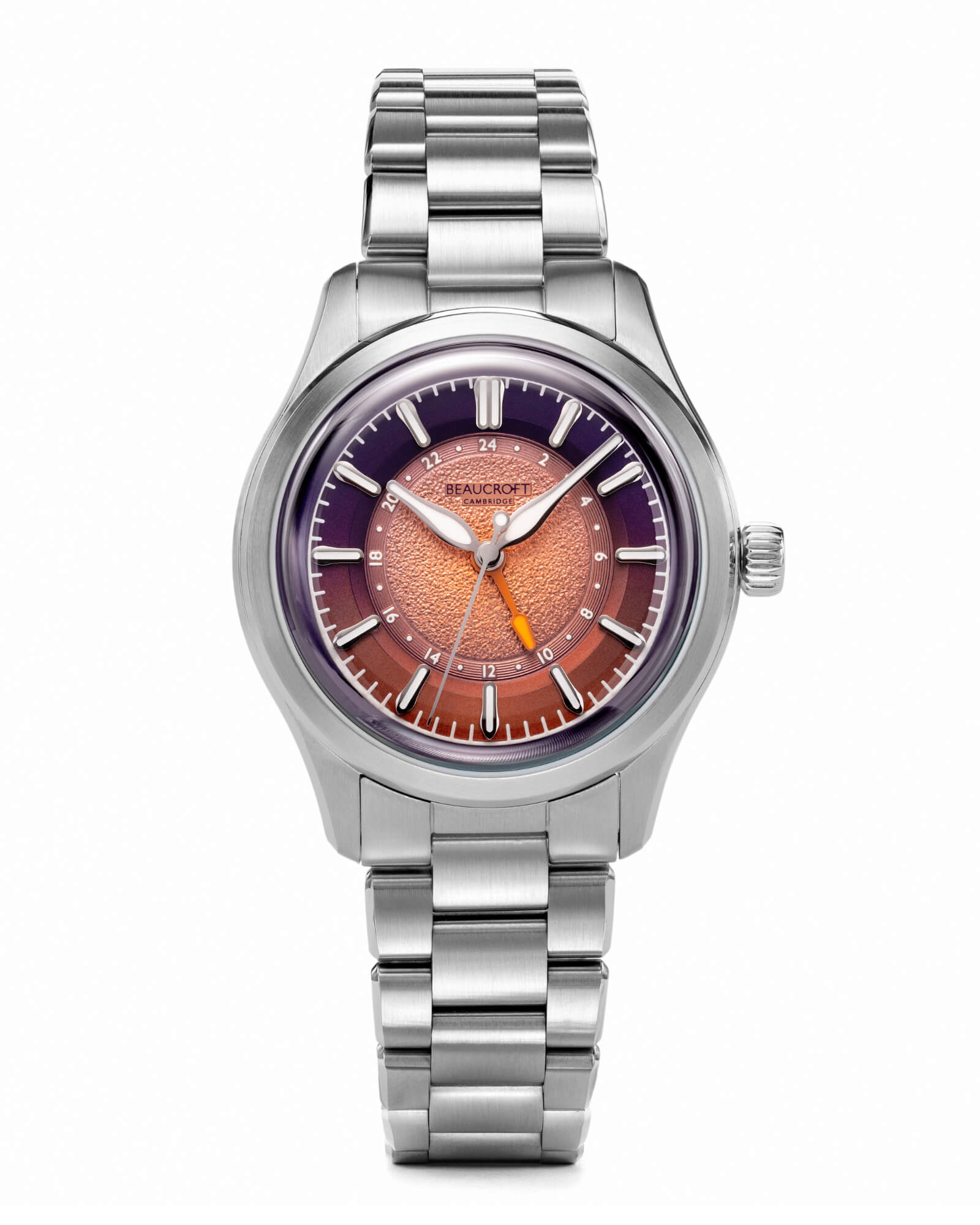
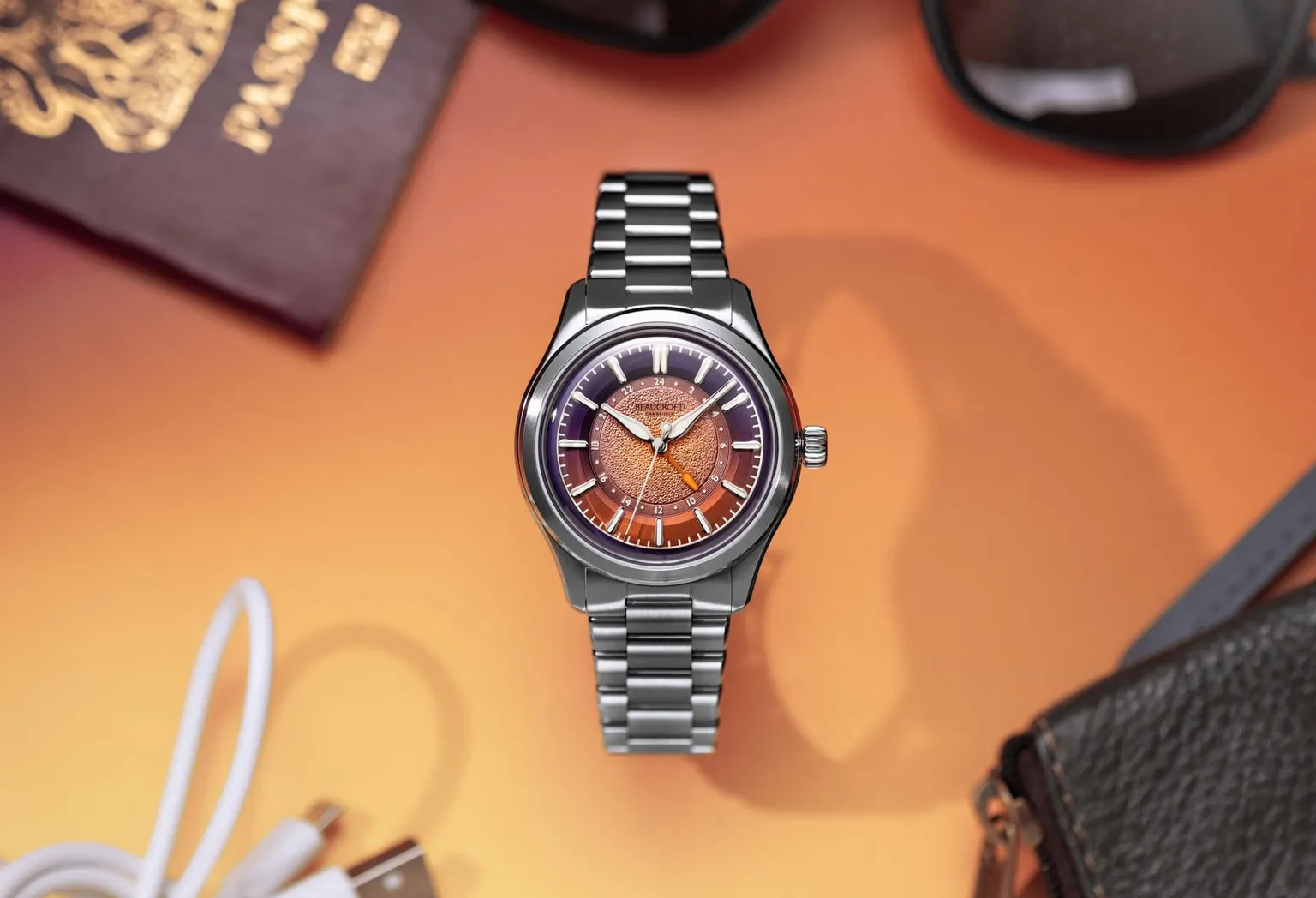
The Beaucroft Solaris GMT is a 200-piece limited edition watch created in collaboration with media platform Time+Tide. Priced at $899, it features a hammered sunburst dial in purple-to-orange gradient, a true GMT movement, and a case assembled by hand in Cambridge, UK. Pre-orders are open now, with delivery scheduled for September 2026.
The interesting thing about the Solaris GMT is not the watch. The interesting thing is the story being told through the watch, and how cleanly the two things map onto each other.
The One Idea Doing All the Work
The conceptual anchor is a single sentence: "The Sun Never Sets on Time+Tide." That's it. That's the whole campaign. And it works because it is literally, geographically true. Time+Tide now operates Watch Discovery Studios in London, Melbourne, and New York. At any given moment, one of those cities is in daylight. The idea did not need to be invented. It was already sitting in the operational structure of the business, waiting to be named.
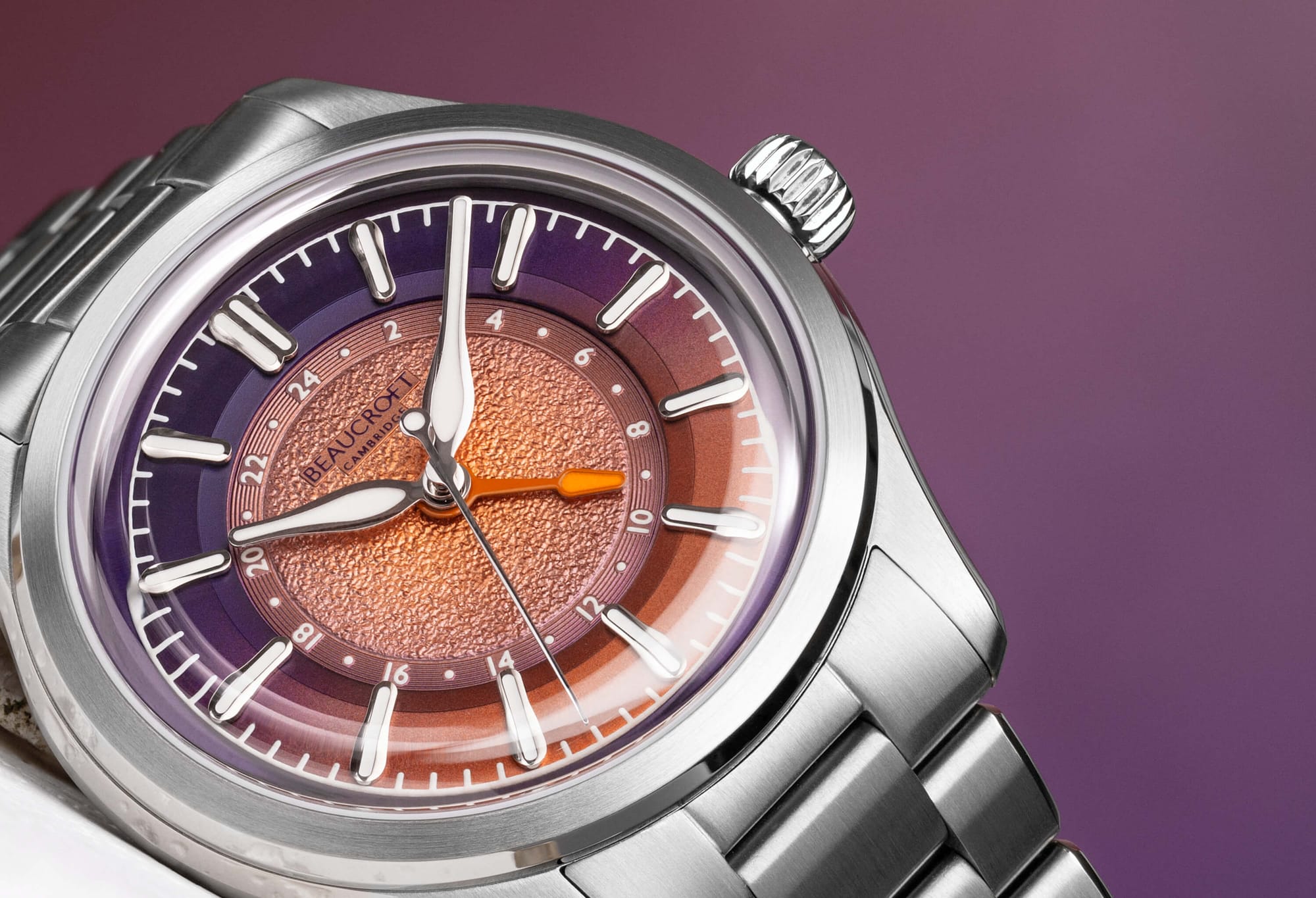
This is a useful distinction. Most brand collaborations start with aesthetics and reverse-engineer meaning. Beaucroft and Time+Tide started with a condition that was already real and let the design follow from it. The dial's gradient, from deep purple at the edges to vivid orange at the center, traces the logic of a sun in motion. The GMT function tracks a second time zone. Even the hammered texture on the dial surface reads as radiant energy rather than decorative flourish. Every element is downstream of the same source.
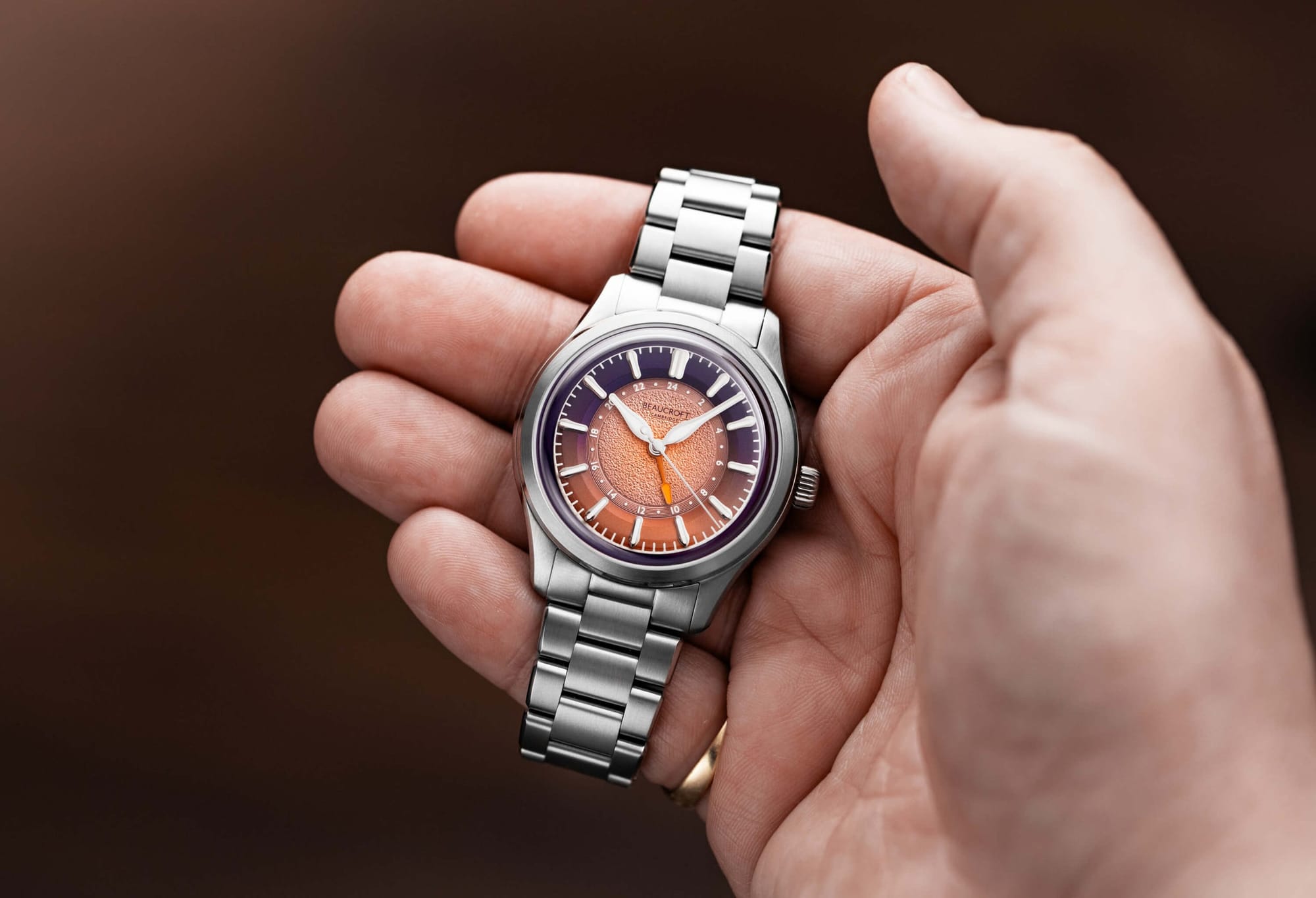
Beaucroft co-founder Matt Herd has said publicly that the color palette was inspired by a flight over Bryce Canyon, where the rock formations show natural layers of purple and orange from 37,000 feet. That detail matters more than it might seem. It gives the concept a material origin. The watch is not just themed around a feeling. It is grounded in a specific visual memory, which gives the design a precision that purely conceptual work rarely achieves.
The Brand, the Audience, and the Pitch
Beaucroft positions itself in the space that watch culture calls "independent microbrands." That is a crowded space right now, occupied by dozens of small manufacturers competing largely on specification and perceived value against Swiss and Japanese mid-market alternatives. The differentiation play for most of them is price-to-spec. Beaucroft is making a different bet.
Beaucroft
The brand's stated design philosophy, what they call "The Long Look," is the idea that a watch should hold the wearer's attention over time, not just photograph well. That is a positioning claim aimed squarely at a buyer who is past the spec-obsession phase and has started caring about whether they will still want to wear something five years from now. The Solaris GMT's target audience is not the first-time watch buyer. It is the buyer who already owns three watches and is considering what the fourth one should mean.
The collaboration with Time+Tide reinforces this. Time+Tide is a media platform with genuine editorial authority in watch culture. Its audience reads long-form criticism, follows independent brands closely, and tends to interpret a brand partnership as a form of endorsement rather than marketing. Distributing 200 units through that channel is less about reach and more about landing the watch in the right hands. The scarcity is also doing real work here: 200 pieces globally creates legitimate urgency without manufactured theater.
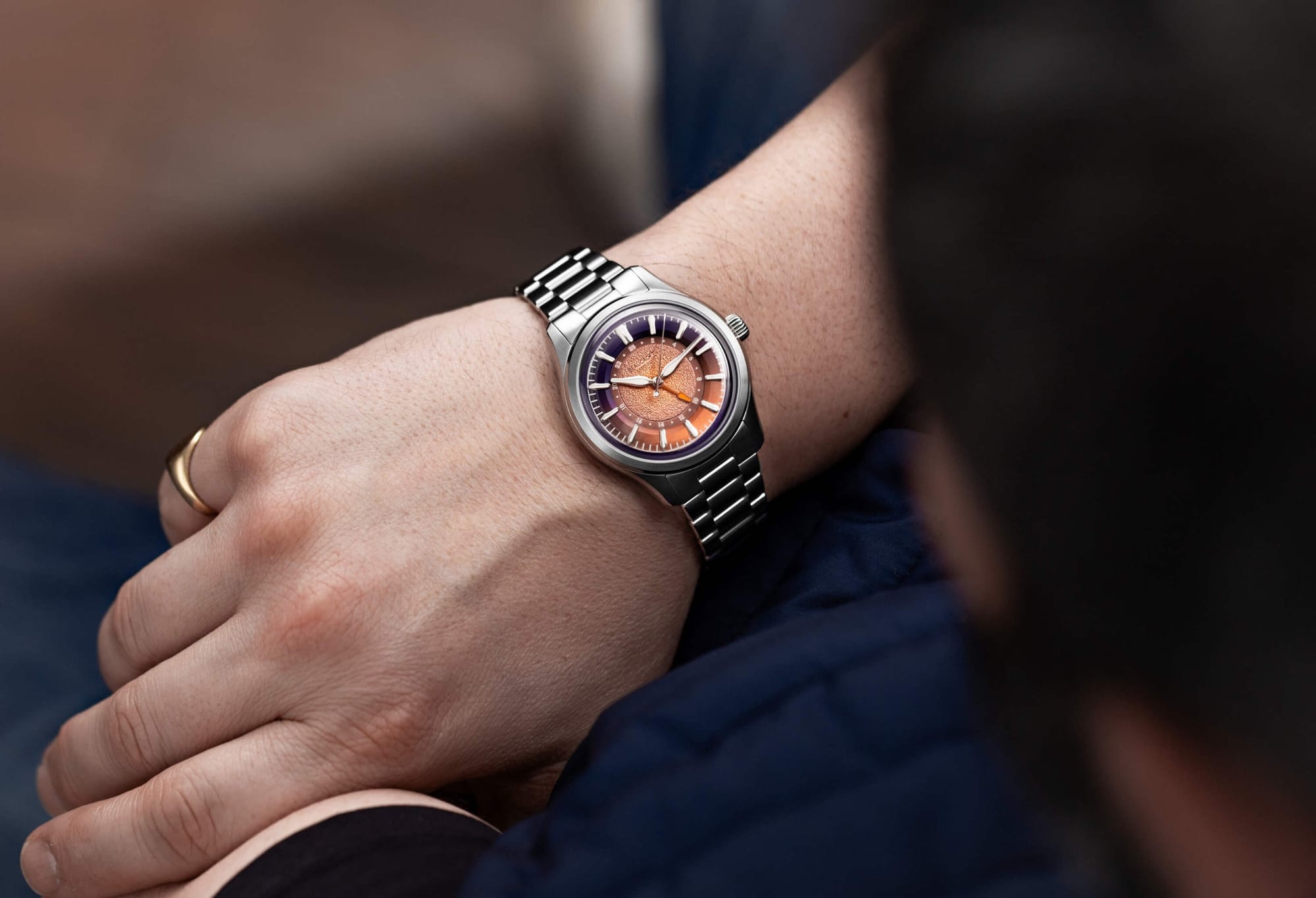
The design language completes the argument. The bracelet details (fully articulating links, micro-adjustment, double quick-release pins) were developed in direct dialogue with the Beaucroft community, which signals a brand that treats its buyers as collaborators rather than recipients. The British assembly is named prominently and specifically: Loupe Works, their Cambridge facility. That level of specificity functions as proof, not atmosphere.
The marketing pitch is essentially this: a watch that carries an actual story, made by people who understand watch culture from the inside, in a quantity small enough that ownership means something. At $899, that pitch is asking a buyer to pay a modest premium for narrative density. Given the execution, it seems like a reasonable trade.
What This Watch Gets Right About Collaboration
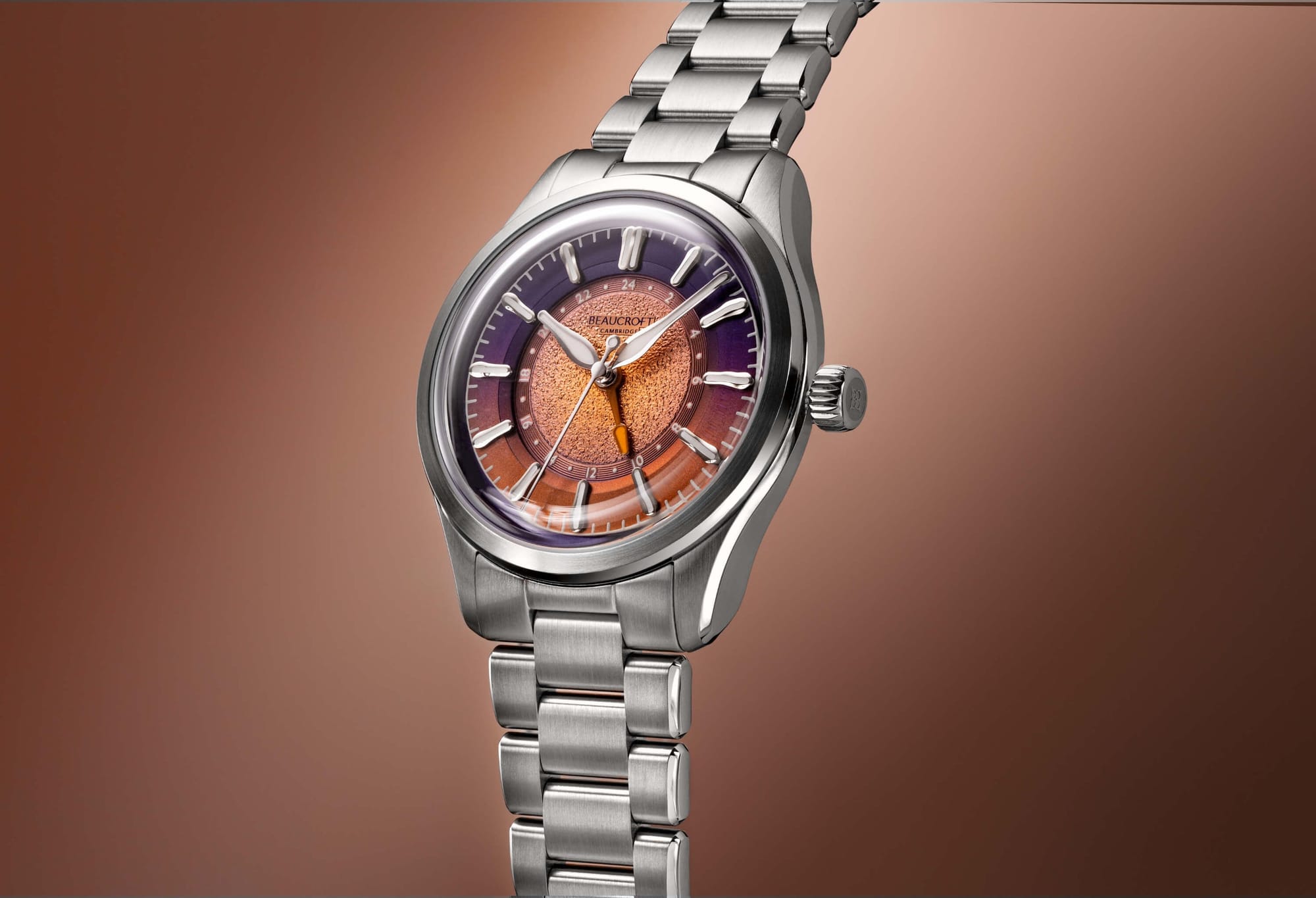
Most brand collaborations are additive. Brand A has an audience. Brand B has a product. They share exposure. The Solaris GMT does something less common: it lets the collaboration generate the concept rather than just distribute it. The design workshop Beaucroft held with the Time+Tide London team in October 2025, built around themes of travel, escape, and natural landscape, produced the Bryce Canyon memory, the gradient palette, and the "sun never sets" line. The collaboration is the origin story, not the distribution mechanism.
That is the move worth studying. The watch becomes evidence of the process. And the process becomes the brand story. One follows the other with enough internal logic that neither feels manufactured.
 Don Wheeler