
The Collaboration Paradox: Why Most Brand Team-Ups Feel Like Corporate Fanfiction
Most brand collaborations fail before they launch. Here's the cultural logic behind what separates the iconic ones from forgettable cash grabs.

Quick answer: Most brand collaborations fail because they optimize for logic instead of surprise. When two brands make obvious sense together, the resulting product often has nothing interesting to say. The collaborations that land — IKEA x Virgil Abloh, Balenciaga x The Simpsons — work because they create friction, not harmony.
There is a very specific feeling that comes with watching a brand collaboration get announced. A beat of recognition. Maybe a mild nod. Sometimes a screenshot sent to a group chat with no caption, because no caption is needed. Everyone already knows what the other person means.
That feeling is not excitement. It is the sensation of watching something that was never really alive.
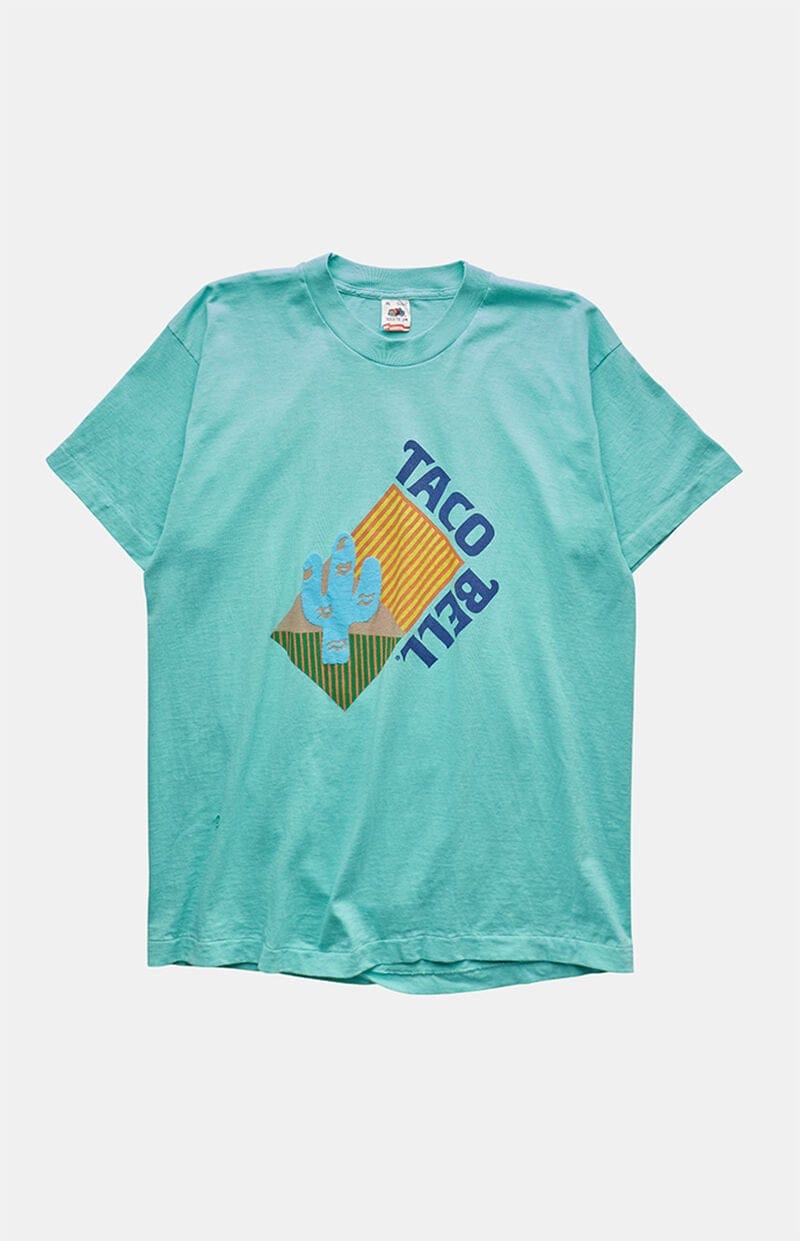
In 2023, Adidas x Gucci dropped a $1,200 track jacket. Streetwear credibility meets luxury prestige. Every brand deck in a five-mile radius would have called it a dream pairing. What it actually produced was something closer to a focus-grouped hallucination — neither fish nor fowl, just an overpriced hoodie with two logos and no discernible reason to exist. That same year, Taco Bell x PacSun put out a $30 tie-dye collection and bean-bag chairs. It sold out in hours.
The Taco Bell collab should not have worked. There is no elegant theory of brand equity that explains why fast food and surf culture produce cultural alchemy. Which is exactly why it worked.
The Collaboration Industrial Complex

Brand collaborations are no longer rare events. They are a weekly occurrence, a content calendar staple, a shortcut to press coverage that requires less creative risk than almost any other marketing format. The collab has become institutional.
H&M's designer series — Versace, Moschino, Balmain — was genuinely surprising when it started. Now it lands with the cultural weight of a quarterly earnings call. Supreme releases over 50 collaborations a year. Each new one diminishes the last. The format has not changed. The frequency has. And frequency is the fastest way to kill what made something feel special.
This is the paradox. The more brands treat collaboration as a reliable tool, the less any individual collaboration can do. Volume creates predictability, and predictability is the thing that kills the effect before the product even ships.
The issue is not that brands are collaborating more. The issue is that most of them have no idea what they are actually trying to do when they do it.
What Separates the Hits from the Press Releases

After looking at enough of these — the ones that moved culture and the ones that moved nothing — four things consistently separate them.
Surprise. The pairing feels genuinely unexpected. Not random, but not predictable either. There is a gap between "this makes sense" and "this makes a kind of sense I did not see coming."
Asymmetry. One brand elevates the other in a direction that is not obvious. Nike x Off-White in 2017 worked because Virgil Abloh brought a conceptual art sensibility to a sports product. Nike x Dior in 2022 was two prestige brands patting each other on the back. Symmetric partnerships produce symmetric results: nothing changes for either side.
Status transfer. The collaboration grants access to a cultural tier that at least one of the brands could not reach alone. Uniqlo x JW Anderson is a good model here. Fast fashion acquired high-fashion credibility. High fashion acquired scale and accessibility. Neither outcome was accidental.
Narrative tension. There is a story behind the partnership, or at minimum a question. Something the audience has to resolve. The collaborations with the longest cultural legs tend to be the ones where someone, somewhere, said "wait, why?" and then found out.
Miss two or more of these and what you have is corporate fanfiction. A partnership that exists because someone in a meeting thought it would look good in a deck.
Three Ways to Fail Spectacularly (Without Even Trying)

The obvious cash grab. Two brands with overlapping audiences, no creative tension, and a press release that writes itself. Starbucks x Spotify is the canonical example. Both brands are fine. The collaboration was less than fine. There was no surprise, no asymmetry, no narrative. Just two corporate entities standing next to each other for a photo.
The forced meme. This one is trickier because it at least has surprise working for it. Popeyes x Crocs produced fried-chicken-themed shoes, which is a sentence that genuinely raises questions. But surprise without any underlying logic is just novelty. Novelty has a half-life of about a week. The question "why does this exist?" needs an answer beyond "because it's weird." Otherwise what you get is a stunt that disappears the moment the coverage stops.
The symmetric snoozefest. BMW x Louis Vuitton. Luxury car, luxury luggage. Two giants of equivalent cultural status agreeing that they are both very good. The product was beautiful. The collaboration said nothing. When both brands are already operating at the same altitude, there is no status transfer to execute. No asymmetry to exploit. You are left with a very expensive object and no cultural story to go with it.
The Three That Actually Worked
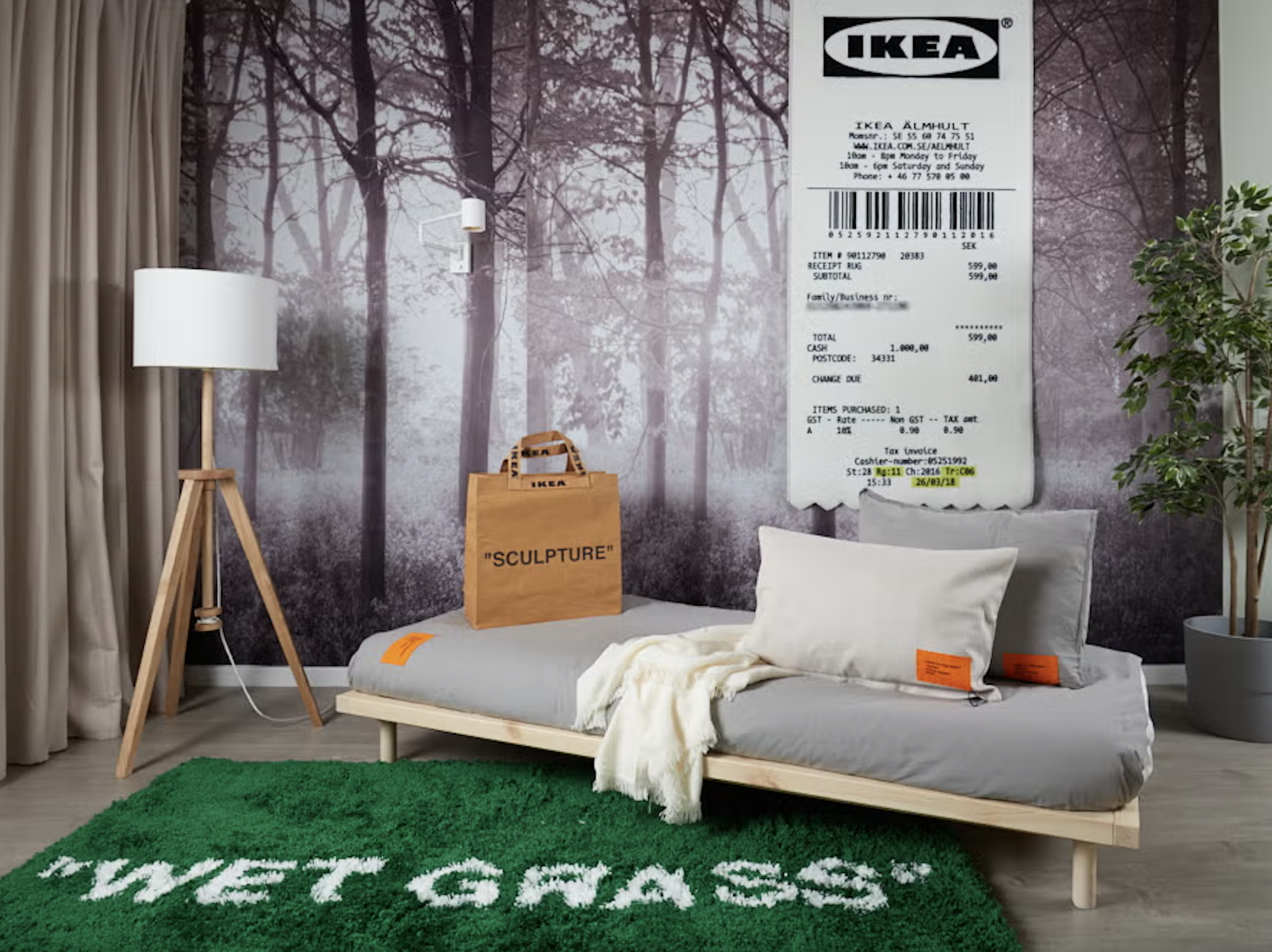
IKEA x Virgil Abloh ran all four of the variables cleanly. A streetwear icon designing flat-pack furniture was genuinely unexpected. The asymmetry was productive: Virgil's design credibility transferred to a mass-market context in a way that made both sides more interesting, not less. The status question was real — IKEA gained cultural relevance it could not have bought; Virgil gained audience reach he did not previously have. And the narrative tension was built into the concept: "democratizing design" sits in direct contrast with "exclusive hype," and that contrast gave people something to talk about.
Balenciaga x The Simpsons worked because it understood something the brand had been doing for years: irony is a vehicle for sincerity. High fashion meeting cartoon satire is not an accident. It is a thesis. The question "is this a joke or a masterpiece?" is not a problem to solve — it is the point. The Simpsons gained fashion-world relevance. Balenciaga gained a mass cultural audience without sacrificing its position. The joke landed because it was a real joke, not a performance of one.
Taco Bell x PacSun is the weird one. Fast food meets surf culture has no elegant theory behind it, which may be exactly why it sold out. The Psychology of Hype is not always about prestige. Sometimes it is about shared absurdity — the recognition that two things that should not go together actually describe the same person. The kid who eats Taco Bell at midnight and shops PacSun on the weekend is a real person. The collaboration addressed them directly, without over-explaining the logic.
A Checklist Worth Actually Using
Here is the short version. Before greenlighting a collaboration, run it through these four questions. Be honest.
Does the pairing feel genuinely unexpected? Not random, not forced, but specifically: would someone who follows both brands be mildly surprised?
Is there real asymmetry? Does one brand bring something the other cannot produce alone, and does that transfer happen in a direction that is non-obvious?
Does it open a new cultural tier for at least one partner? If both brands already share the same audience and status level, the collaboration has nowhere interesting to go.
Is there a story, a conflict, or a question at the center of it? Something that gives the audience something to resolve, argue about, or send to a group chat?
Four yeses and you might have something. Two or fewer and you are writing a press release.
What the Best Ones Have in Common

The collaborations worth studying are not the ones with the biggest budgets or the most compatible brand equities. They are the ones where someone, at some point, made a decision that felt risky. Where the pairing was plausible but not inevitable. Where the product said something that neither brand could have said alone.
The history of streetwear collaborations is full of these moments. Supreme x The North Face. Nike x Off-White. Adidas x Wales Bonner. None of them were the safest possible choice. All of them transferred status, created narrative, and gave people a reason to care before the product even arrived.
The brands that keep producing collaborations worth talking about are not the ones with the most sophisticated partnership strategies. They are the ones that understand a basic truth: the best collaborations do not combine audiences. They create a new one.
Everything else is just two logos on a product.
💡 OffLabel-024 | The Collaboration Paradox Solution
Diagnosis: As brand collaborations become routine, compatibility increasingly produces predictability rather than cultural relevance. Partnerships built around overlapping audiences and shared prestige often reinforce what consumers already know.
Prescription: Build partnerships around surprise, asymmetry, or narrative tension, the collaboration creates another product rather than a new reason to care.
Strategic Medication: Brand Equity Transfer, Cultural Repositioning , Narrative Tension [Provisional]

