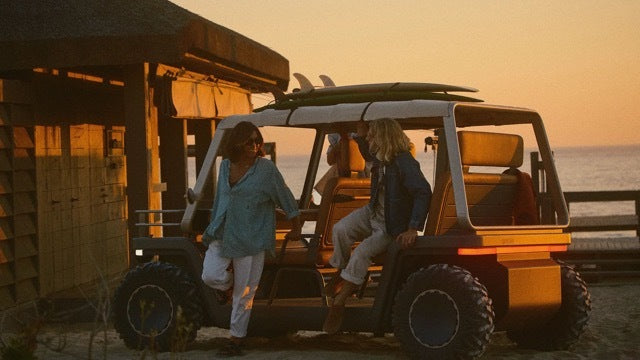
The $25,000 Golf Cart That Refuses to Be a Golf Cart
The Amble One is a $25,000 street-legal electric buggy built by Apple and Audi alumni. Here's what its brand strategy actually gets right.
Quick answer:
The Amble One is a street-legal, open-air electric vehicle built by Amble, a Lisbon-based startup founded by alumni of Apple, Audi, and Cowboy eBikes. Priced from $25,000, it offers more than 60 miles of range, seats four, and sits legally on public roads. First deliveries go to luxury hospitality clients in 2027, with consumer orders opening in 2028.
The marketing insight here is not the vehicle. The insight is the sequence. Amble is doing what almost every micromobility company skipped: it is building desire before it builds distribution. CEO Adrien Roose said it plainly to WIRED: "A lot of companies in micromobility start in the urban market and want to compete with everyone, and we all know that this did not work out so far." So Amble starts at Amangiri in Utah, at Mustique Island, at Six Senses in the Loire Valley. Guests encounter the Amble One at the best version of a place they will ever visit. The vehicle becomes part of a memory, not a commute. That is a very specific kind of brand-building, and it costs almost nothing in advertising.
Amble
Blue Pond Positioning
Amble positions itself as a new vehicle category sitting between the golf cart and the second family car, targeting coastal communities, private estates, and resort properties before expanding into urban consumer markets. The founders are not subtle about where they come from.
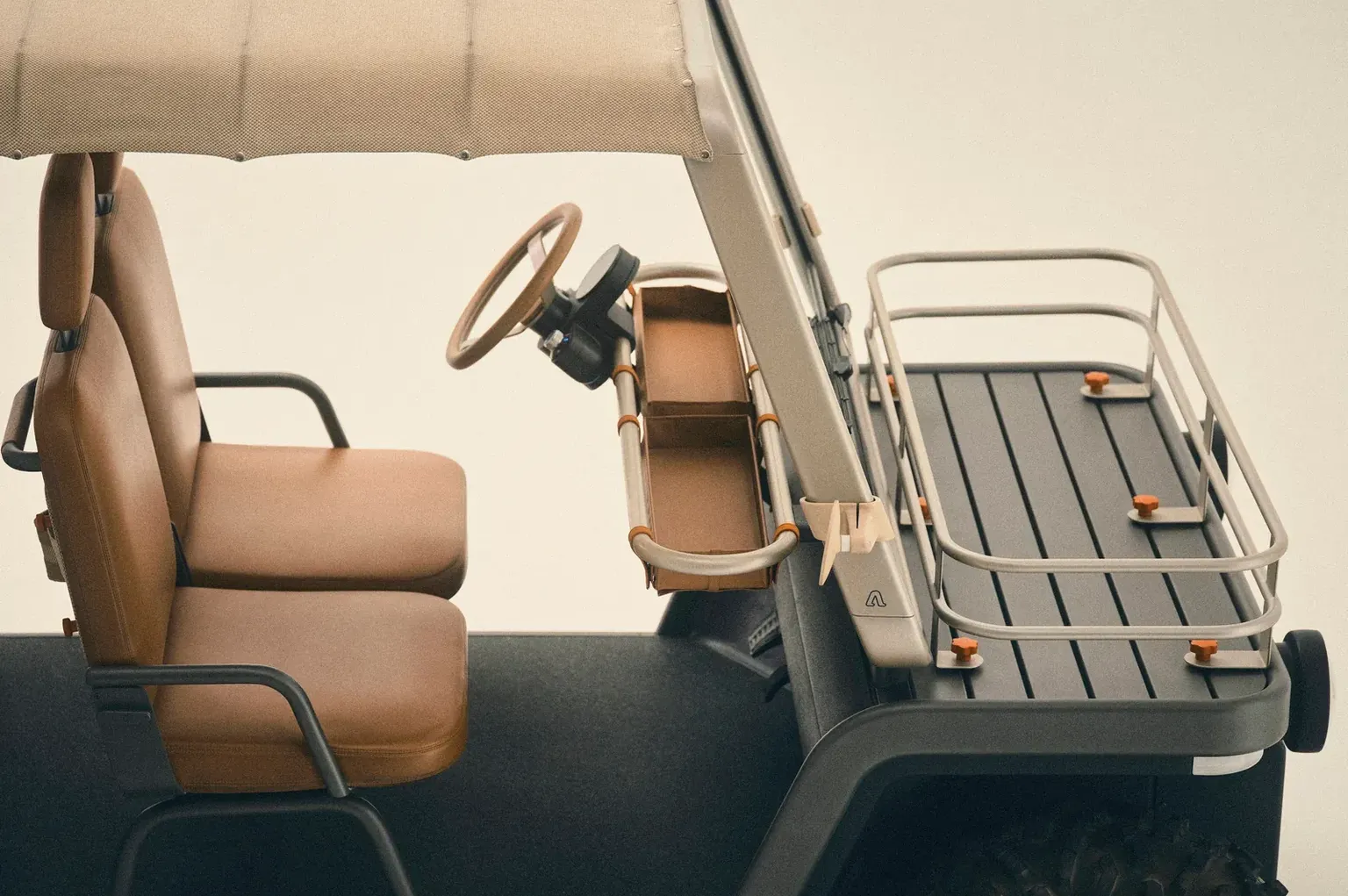
Design lead Julian Hoenig worked on the Apple Watch, Vision Pro, and the canceled Apple car project. His co-founder Adrien Roose built Cowboy into one of Europe's most recognized premium eBike brands. The result is a vehicle whose material language borrows from their collective past: an aluminum frame, cork accents, marine canvas, and orange screws that mark every removable element on the body. Those orange screws are worth pausing on. They are not decorative. They are a design philosophy made visible. The vehicle tells you what you can touch, move, and change, without a manual. That kind of communication-through-object thinking is rare, and it signals a team that understands form as argument.
Amble
The messaging runs against the grain of most EV marketing, which tends to sell futures. Amble sells place. "No doors to close you in, no screens to pull you away." The brand's own philosophy page frames the problem this way: cars became too large, too heavy, and too detached from the places they move through. That is a genuinely interesting provocation to open on, and it earns Amble the right to claim something more considered than efficiency.
The experience the brand is guiding customers through is not a commute made cleaner. It is a slower, more sensory relationship with wherever they already are. The community it is reaching is not early adopters looking for gadgets. It is people who already chose the expensive slow thing: the boutique hotel, the coastal village, the estate with a gravel driveway.
Amble
Amble is simply giving them a vehicle that matches the setting. The marketing pitch, stripped to its load-bearing logic, is this: the second car most families own does not need to be a smaller version of their first car. It needs to be something built for short distances, open air, and the kind of afternoon that does not need to go anywhere in particular. That is a product argument and a lifestyle argument simultaneously, and Amble is threading both without losing the thread.
What Actually Makes This Interesting
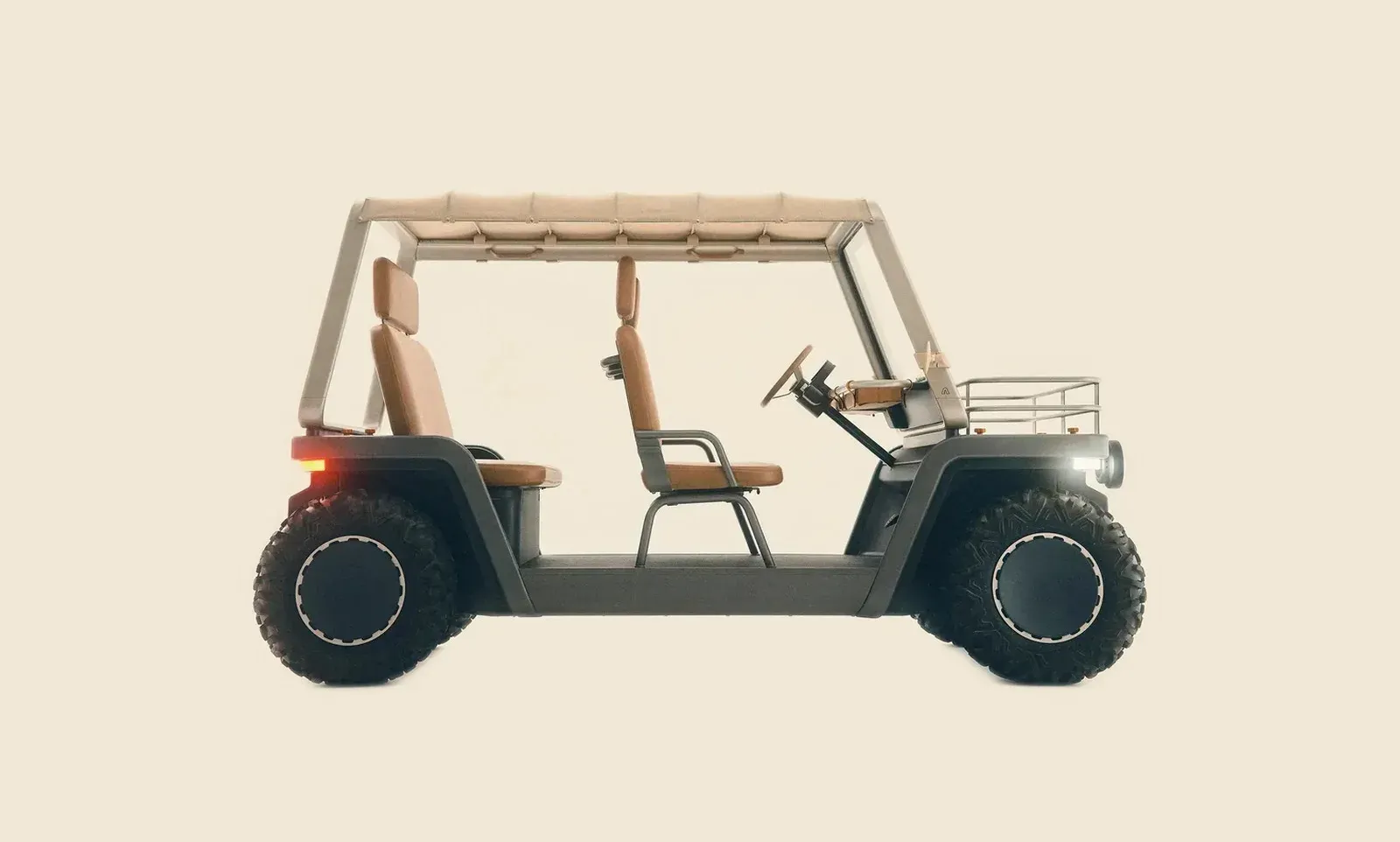
Amble carries more than 12 signed hospitality clients and over 500 vehicles committed before a single consumer delivery has shipped, according to CEO Adrien Roose. That is not a product launch. That is proof of concept for a brand-entry strategy that most mobility startups never attempt.
The company plans to follow the Amble One with a second platform targeting 2029, one with removable doors, a lower roofline, and a hardtop, aimed squarely at replacing the household's second car rather than the resort's fleet vehicle. The ambition scales. The question, as always, is whether the brand survives the transition from aspirational object to household appliance. The Amble One, as a starting point, gives them a real shot at doing it with some dignity intact. Reserve your place at driveamble.com.