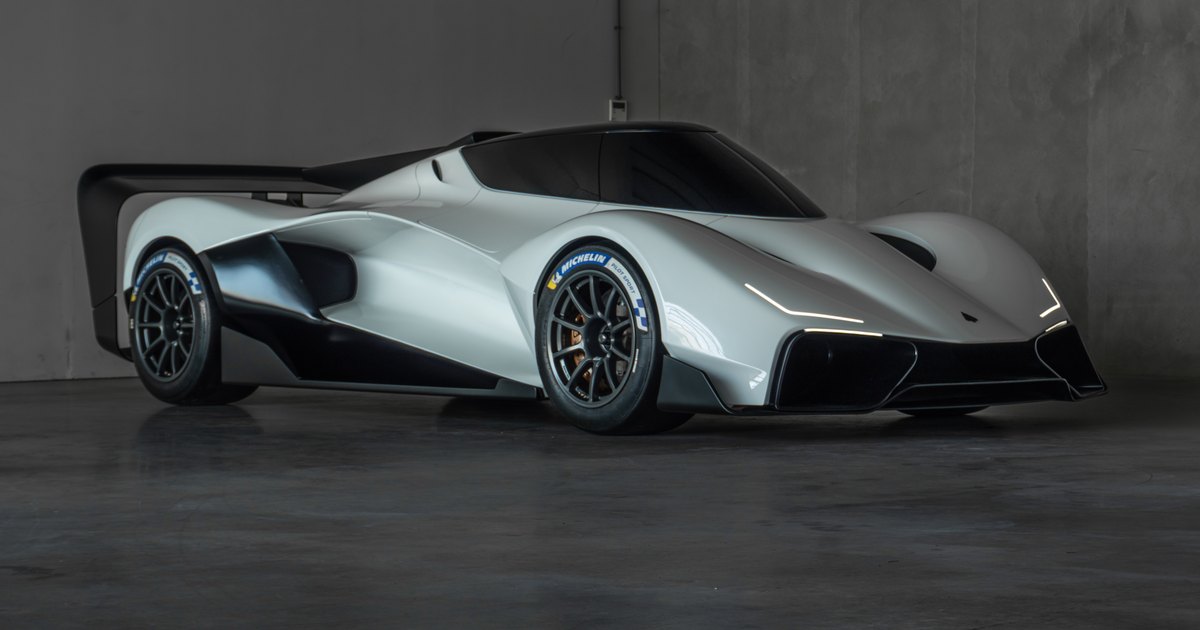
A Hypercar That Dares You to Sit Up Straight
Sanrivatti is marketing its debut hypercar around a radical driving position, not horsepower. Here's why that bet is either brilliant or premature.

Quick answer:
Sanrivatti ONE is the debut hypercar from new marque Sanrivatti, founded by Santiago Sanchez. The car's defining feature isn't horsepower, though Sanrivatti targets 800hp, 700Nm of torque, and a 330km/h top speed, but a head-forward driving posture called the Apex Position. The company is currently testing the concept on an engineering mule nicknamed Prototype Zero, with the finished car still unrevealed.
The Pitch Is the Posture

Every hypercar launch eventually says the same thing: faster, lighter, more power. Sanrivatti skipped that script entirely and built its whole identity around one decision: where the driver sits.
The Apex Position moves the driver forward and upright instead of reclined behind the front axle, the layout that's defined mid-engine supercars since the 1970s. Sanrivatti claims this delivers 3.2 times more visible track through Silverstone's Corner Three and a 28 degree vertical field of view, nearly double the 15.5 degrees of its benchmark hypercar comparison.
That's a genuinely odd thing to lead with. Most brands bury ergonomics in a spec sheet footnote. Sanrivatti put it in the headline, which only works if the audience actually cares about the difference between looking at a track and feeling embedded in it.
For Collectors Who've Seen Everything Else
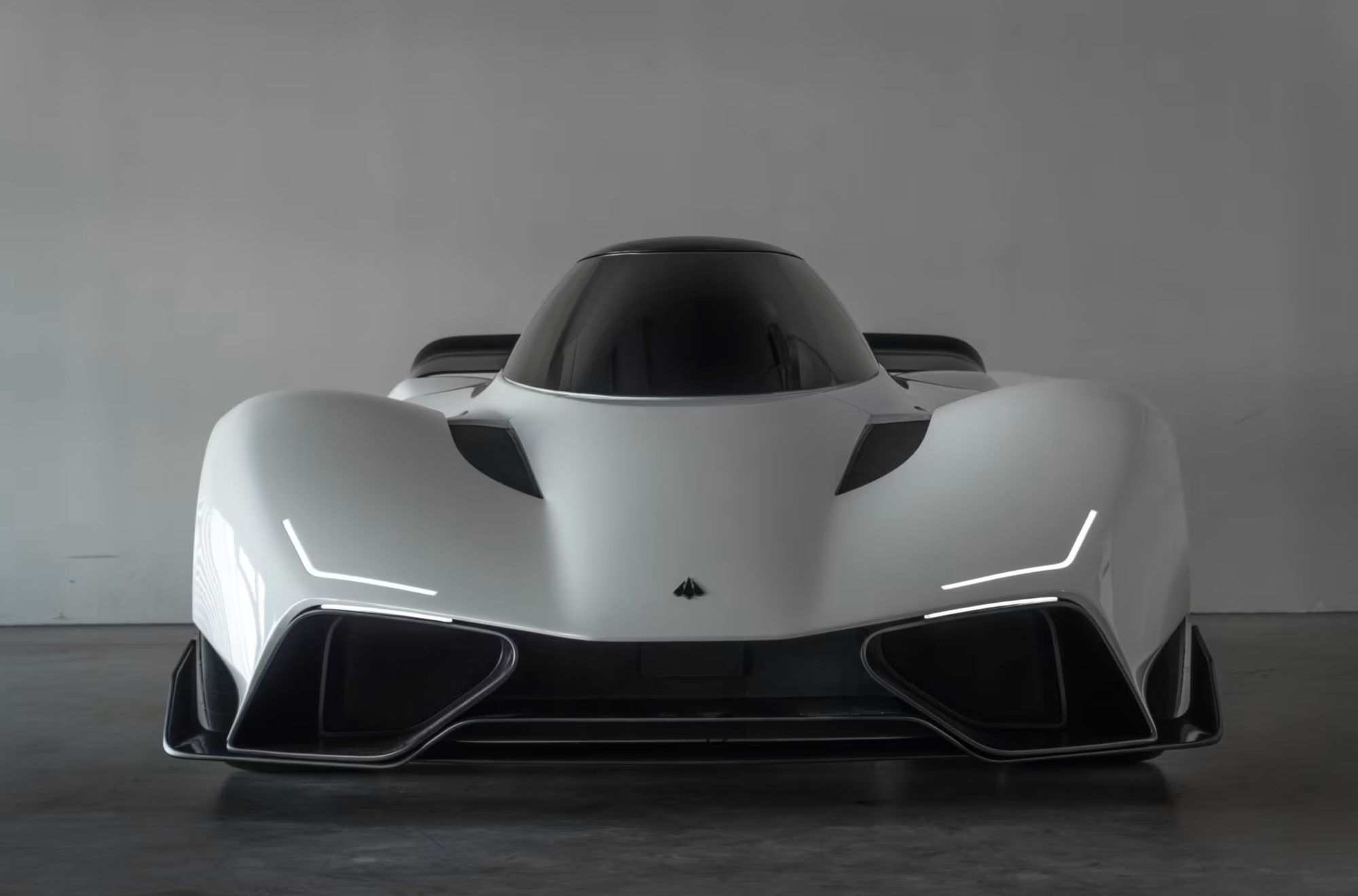
Sanrivatti isn't chasing volume. A hypercar positioned like this talks to maybe a few hundred buyers worldwide, collectors who've already driven the obvious choices and are bored of the reclined cockpit experience every manufacturer sells as "immersive."
The storytelling leans heavily on engineering transparency rather than lifestyle imagery. There's no yacht, no watch, no model leaning on the hood. Instead there's Prototype Zero, a visibly unfinished test mule photographed mid-lap, which signals something specific to this buyer: the process is the proof.
Founder Santiago Sanchez frames the project as relational rather than mechanical, saying the company is "developing a new relationship with control, sensation and driver engagement." That's a founder-led narrative aimed at people who collect engineering stories as much as engines, the sort of buyer who wants to talk about why a car feels different, not just how fast it goes.
The Car Is Still a Promise


Sanrivatti
Here's the tension nobody at Sanrivatti says out loud: the website sells a philosophy, not a finished product. There's no interior reveal, no confirmed price, no delivery date. Just a prototype mule and a set of performance targets that read like intentions rather than facts.
Design language reinforces that minimalism deliberately. Dark backgrounds, long vertical renders, minimal copy, the visual grammar of a brand that wants to look expensive by saying very little. It's a patient, almost gallery-opening approach rather than a showroom one.
Whether that patience holds depends entirely on execution. A head-forward seating position is a genuinely novel idea in a category built on reclined bravado, but novelty and comfort aren't always the same thing, and nobody outside Sanrivatti has sat in the finished car yet. The marketing pitch, reduced to its simplest form, is this: trust the posture before you've seen the price.
 Sanrivatti