Leica Bolts Carbon Onto a Camera That Didn't Ask For It
Leica's first Formula 1 camera sells a feeling, not faster autofocus. A look at the pricing, design, and strategy behind the Q3 43 F1 Edition.
Quick answer:
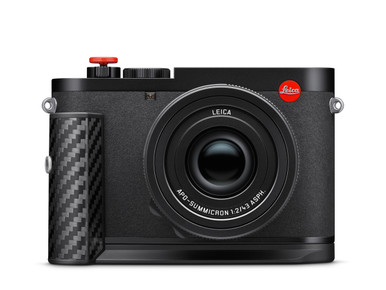
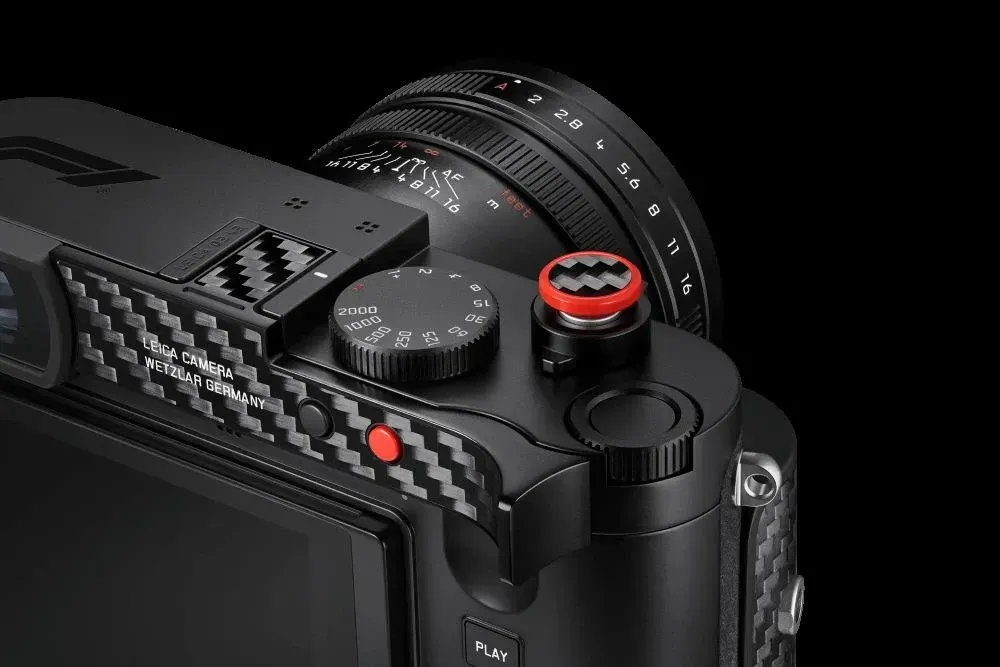
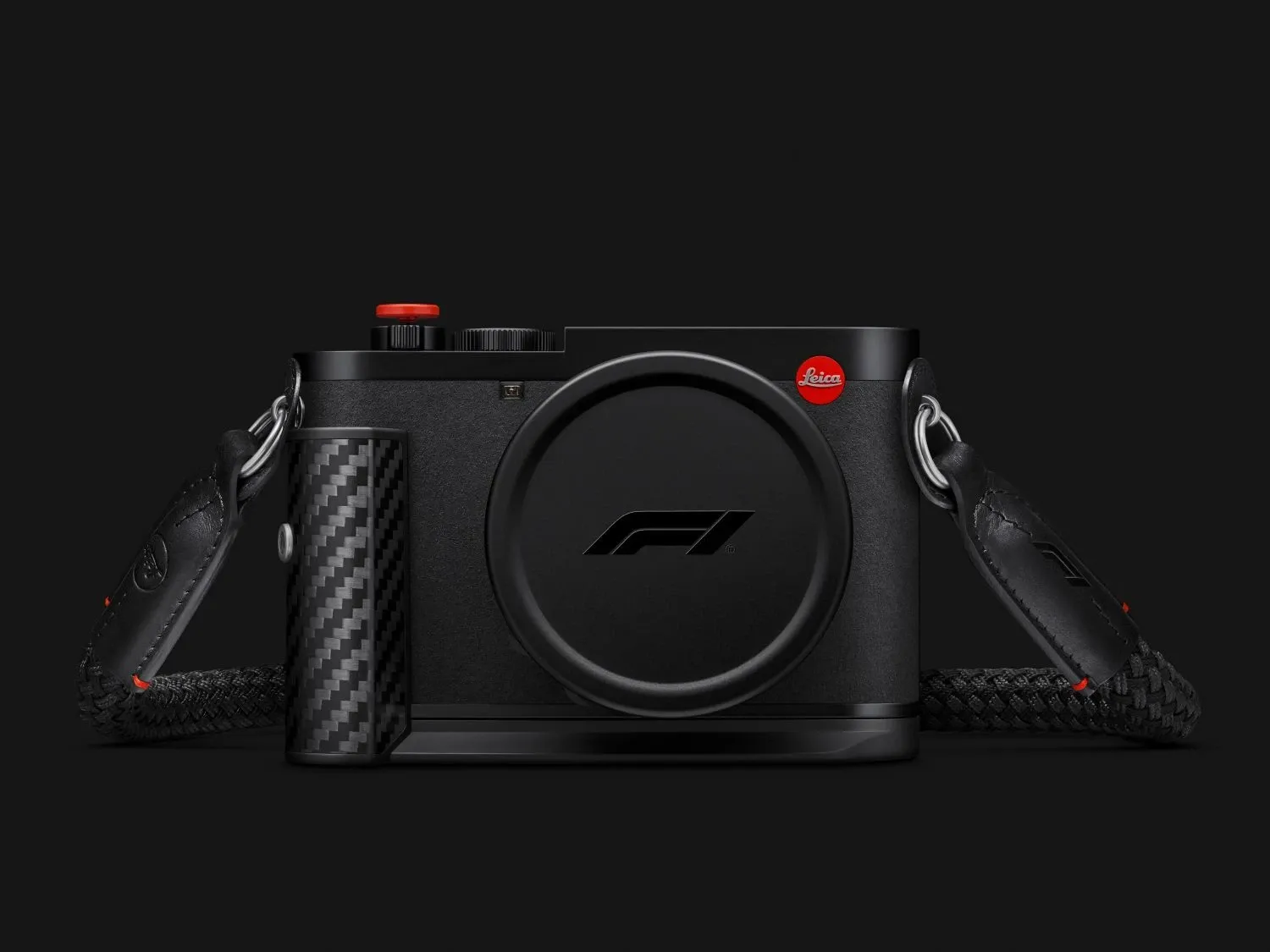
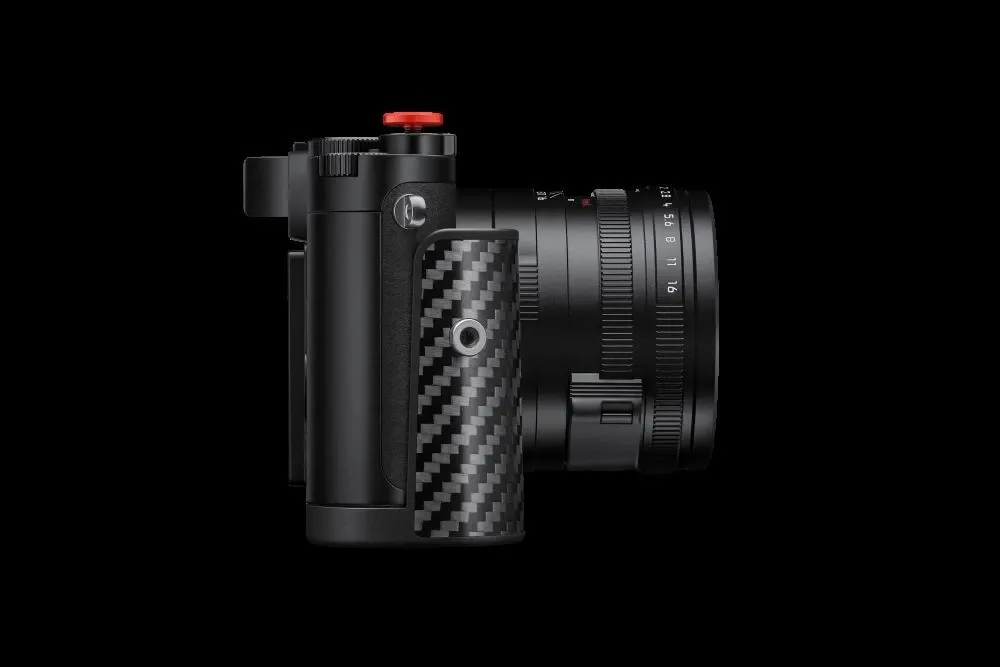
The Leica Q3 43 Formula 1 Edition is a $9,950 special edition of Leica's Q3 43 compact camera, launching October 21, 2026 as the brand's first licensing partnership with Formula 1. It trades Leica's usual metal housing for a carbon fiber grip, red accent controls, and an exclusive in camera color profile called the Formula 1 Leica Look.
The $2,000 Pit Lane Pass
Leica's volume engine is the Q line, and the company has made clear it will not add factory shifts to chase demand, choosing scarcity over scale as its pricing strategy for the entire series. That discipline, not the carbon fiber, is the real story behind this edition. Underneath the paddock dressing sits the same $7,950 Q3 43, autofocus and all.
The roughly $2,000 premium buys a feeling, not a faster camera. A meaningful slice of it is just the standalone wireless grip and thumb rest, which Leica already sells separately for a combined $480, so part of the markup is accessories you could already own. The rest is licensing fees and a story about racing that most buyers will never drive fast enough to earn.
The Paddock Is the Product
Leica is a photography brand reaching for a crowd it has never owned: Formula 1's young, global, merchandise hungry fanbase. The messaging borrows the sport's own vocabulary of fractions of a second, repositioning a shutter press as something closer to a pit stop. Leica North America's president said plainly that the camera wasn't built for one kind of buyer, hoping to land photographers, collectors, and racing obsessives, sometimes in the same person.
The rollout treats the object like a relic rather than inventory, with a Los Angeles unveiling alongside 2009 champion Jenson Button and a gallery of trackside photography from inside Parc Fermé. Distribution runs through Leica's own stores so buyers can hold the camera before paying for it, and the design does the talking a spec sheet cannot, down to the Microvelour grip modeled on a racing steering wheel and the color coded red controls. Strip away the garage dressing and the pitch gets simple: wear the paddock, then bring home the one frame that proves you were in it.
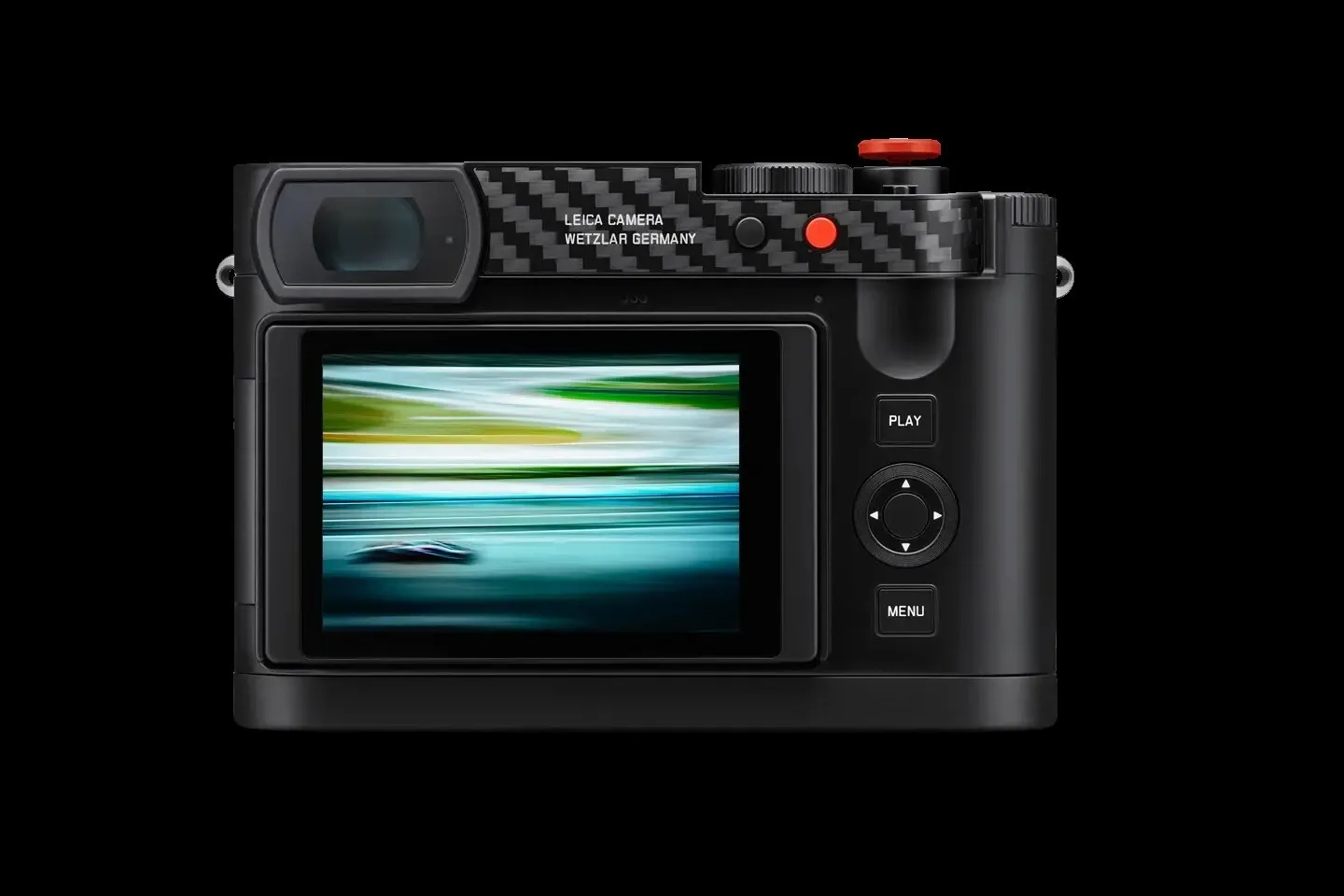
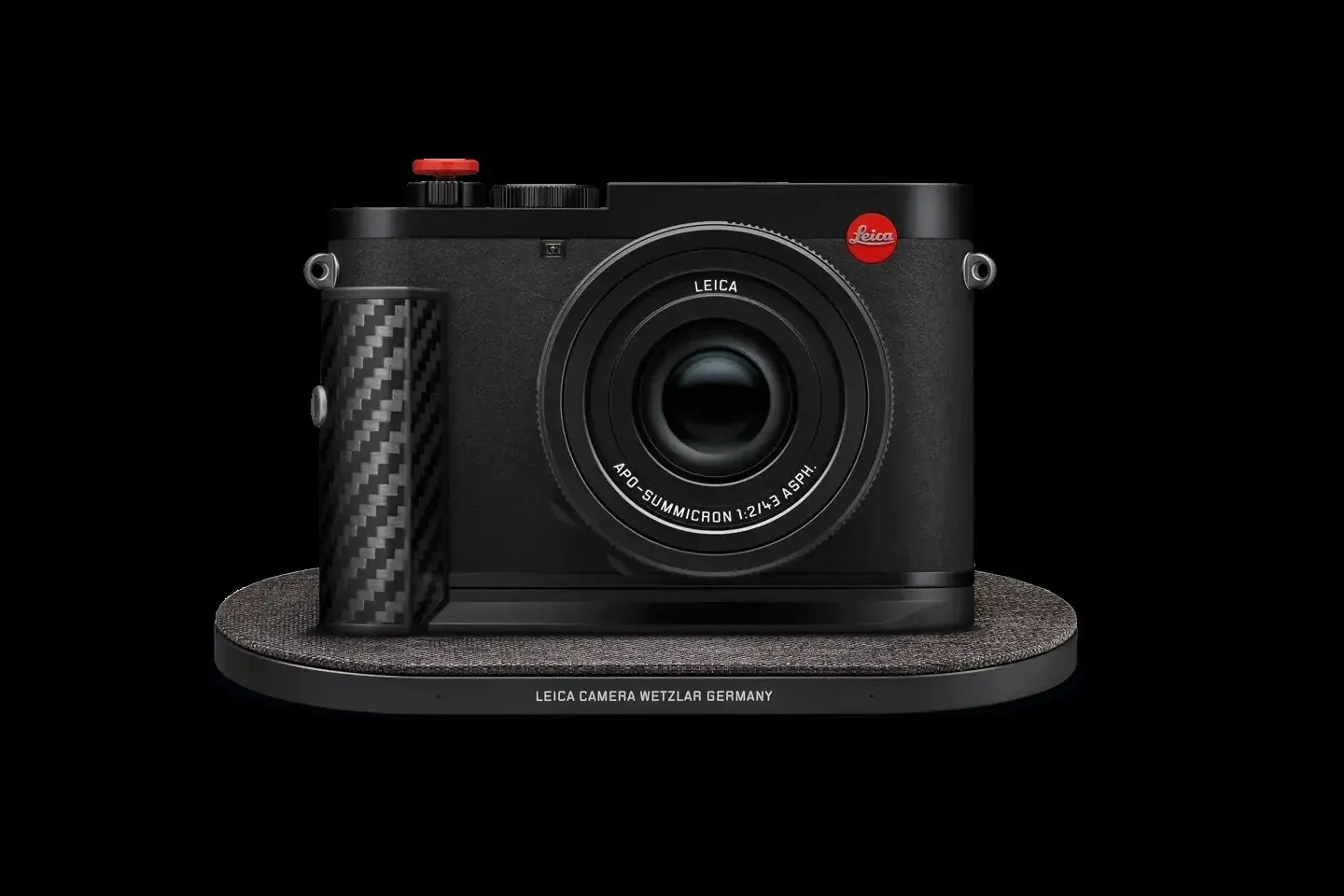
Leica
Carbon Fiber Doesn't Shoot Faster
None of this changes what the lens does. The 43mm optic is the opposite of a motorsport telephoto, and cropping to a 150mm equivalent leaves roughly five megapixels, so filling the frame with a car at 200mph is not really this camera's job. If trackside action was the ambition, Leica chose the wrong focal length on purpose.
Then there is the material swap. Leica's identity rests on a metal body you can trust after a drop, and carbon fiber is a material the brand has never built a camera from before. Trading a hallmark for a motorsport flex, without disclosing a production number, leaves open whether this is a special edition or simply a scarce one dressed as special.
Leica has run this play before, and the used market has not always rewarded it. A Q2 built with a famous photographer's name on it launched at $6,995 and later turned up secondhand for $4,850. Whether this carbon fiber camera holds its value has less to do with its grip than with how long Formula 1 stays the fastest growing fanbase in sport.