The Scottish Audiophile Brand That Froze Its Speakers to Make Them Sound Better
Fyne Audio's Cubitt 5 brings audiophile engineering into the active speaker market. Here's how the brand is positioning it, who it's targeting, and why the strategy is interesting.

Quick answer:
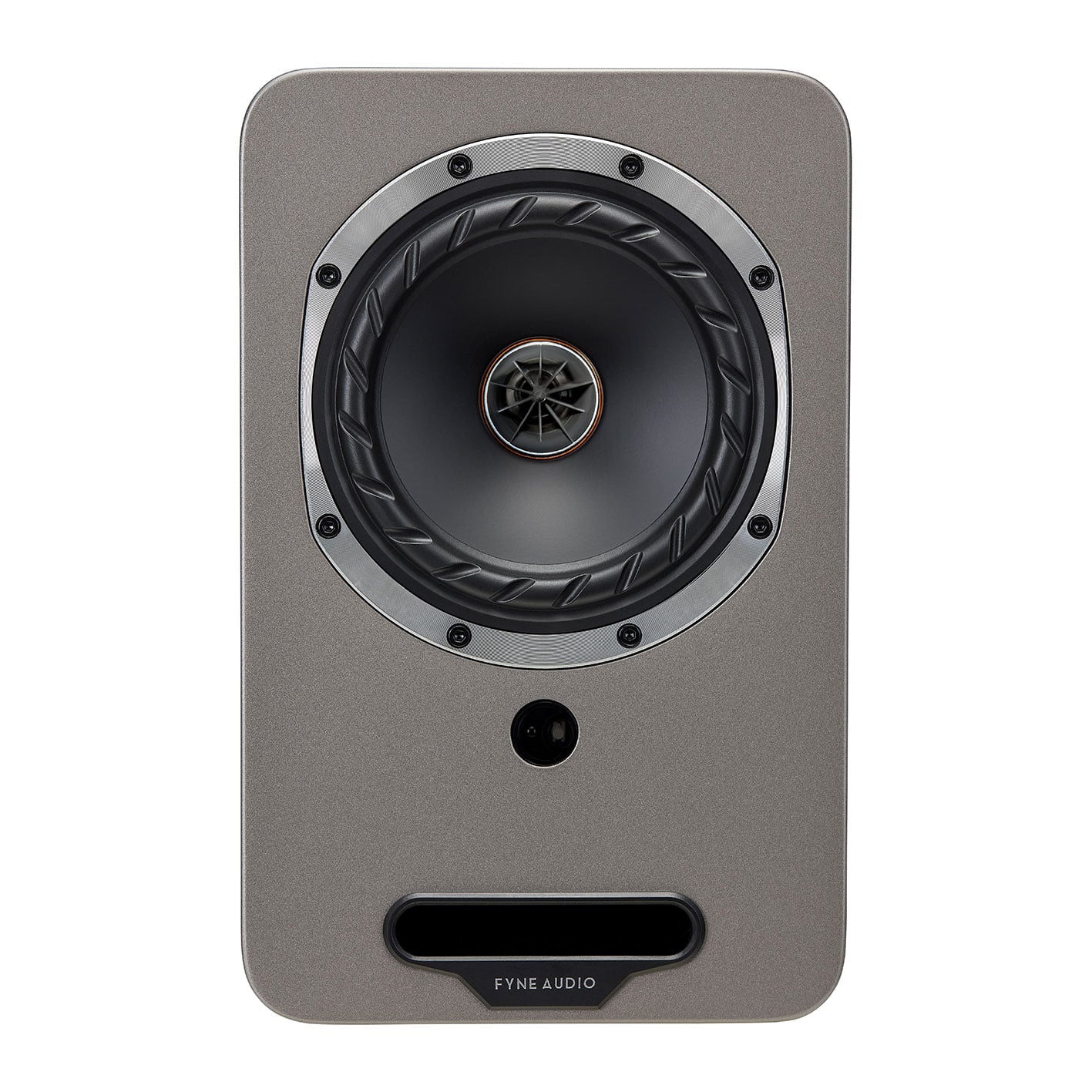
The Fyne Audio Cubitt 5 is a compact active bookshelf speaker system built in Scotland, featuring the brand's proprietary IsoFlare point-source driver technology, 240W of amplification, and a connection suite that spans Bluetooth, HDMI ARC, optical, phono, and analog inputs. It is Fyne Audio's first active speaker product, available in five contemporary finishes.
The Marketing Bet Hidden Inside This Little Speaker
Here is the actual move: Fyne Audio spent nine years building credibility in the passive audiophile speaker market, then designed an active speaker that makes no apology for having that DNA. The Cubitt 5 does not disguise itself as a lifestyle product that happens to sound good. It presents audiophile engineering as the feature, packaged in something you could put on a desk in Olive Green without it looking like a mistake.
That is a distinct position. Most brands entering the convenience speaker category strip out the mythology to chase approachability. Fyne Audio took the mythology with them.
Cryogenics, Royal Family Trivia, and a Color Named Arctic White
The brand story that Fyne Audio is working with is genuinely unusual. Founder Dr. Paul Mills spent decades as head of research at Tannoy before leaving to start Fyne Audio in Bellshill, Scotland, a small industrial town where the brand now employs over 50 people. That lineage gives the brand permission to speak with technical authority in audiophile circles, which it uses freely.
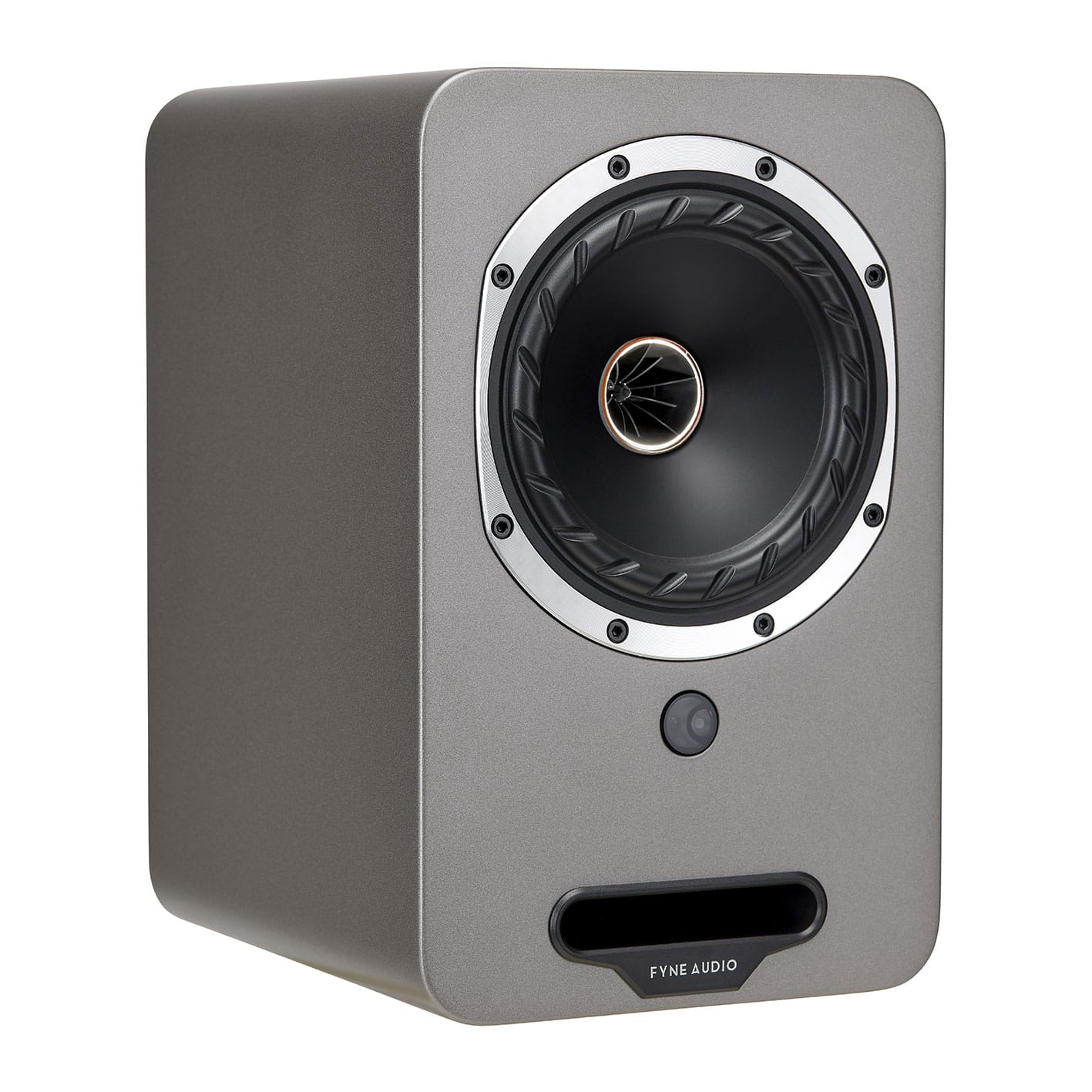
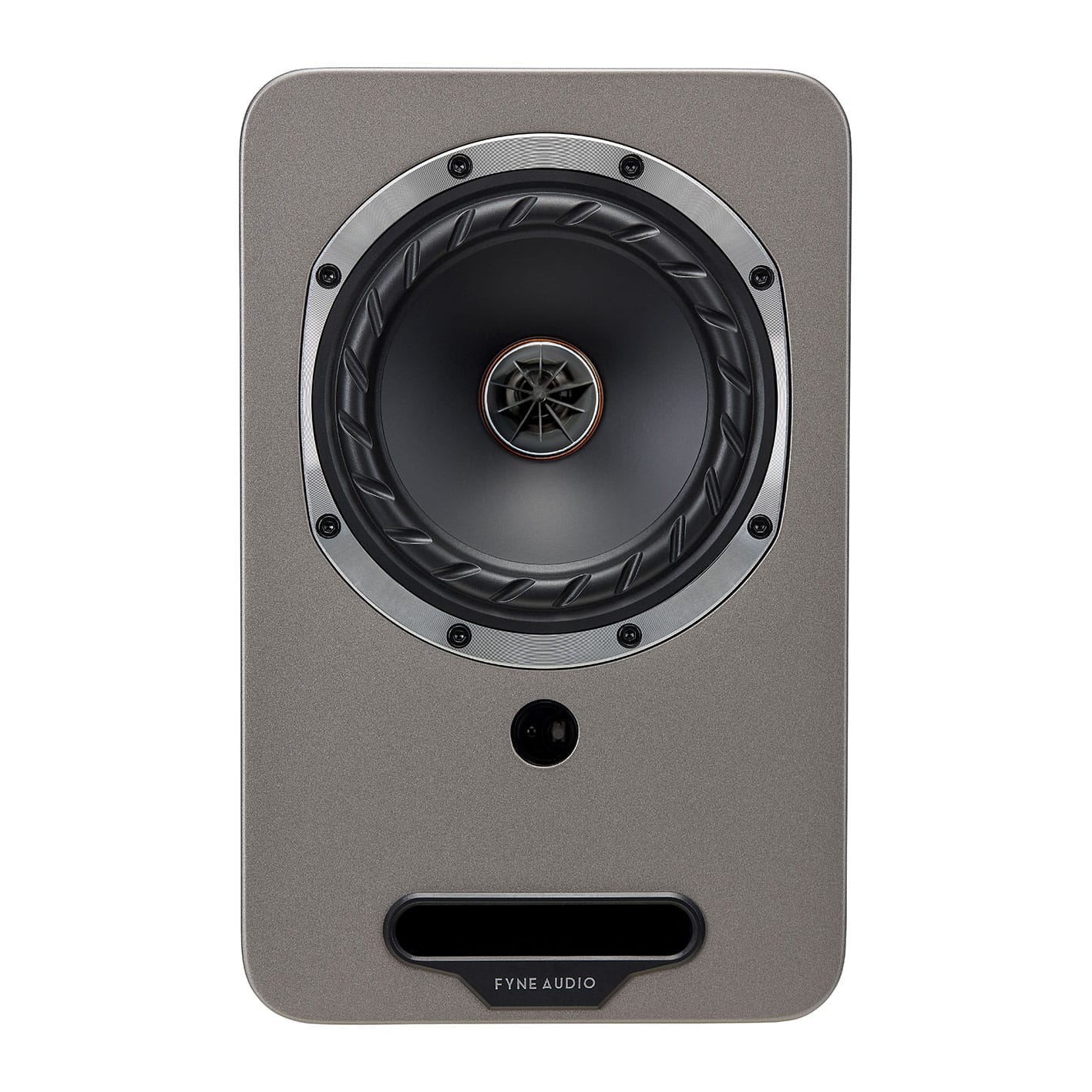
The IsoFlare driver, which places the tweeter directly inside the throat of the bass cone so that all frequencies originate from a single point in space, is the kind of engineering detail that the target audience finds genuinely interesting rather than cynically persuasive. Fyne Audio also treats the crossover wiring with a deep cryogenic process, cooling the assembled crossover to below -150°C for 24 hours to release micro-stresses in the metal. You can argue about whether that is audibly significant. The story it tells, however, is unambiguous: these people care about things most manufacturers would never bother with.

There is also a small, genuinely strange detail worth noting. The product is named Cubitt 5 after the brand's headquarters address: 1 Cubitt Court, Bellshill. The road itself is named after Thomas Cubitt, a celebrated Victorian builder who happens to be the great-great-great-grandfather of Queen Camilla. Nobody needed to put that in a product name. It is place-based branding with a weird historical footnote attached, and it works precisely because it is so specific.
Who Fyne Audio Is Actually Talking To With This Product
The target audience for the Cubitt 5 is not the classic audiophile with a dedicated listening room and a rack of separates. That person already knows Fyne Audio's passive lineup. This product is aimed at what you might call the quality-curious convenience buyer: someone setting up a home office, a bedroom system, or a living room arrangement where a full component stack is not viable, but who still recoils at the idea of compromising on sound.
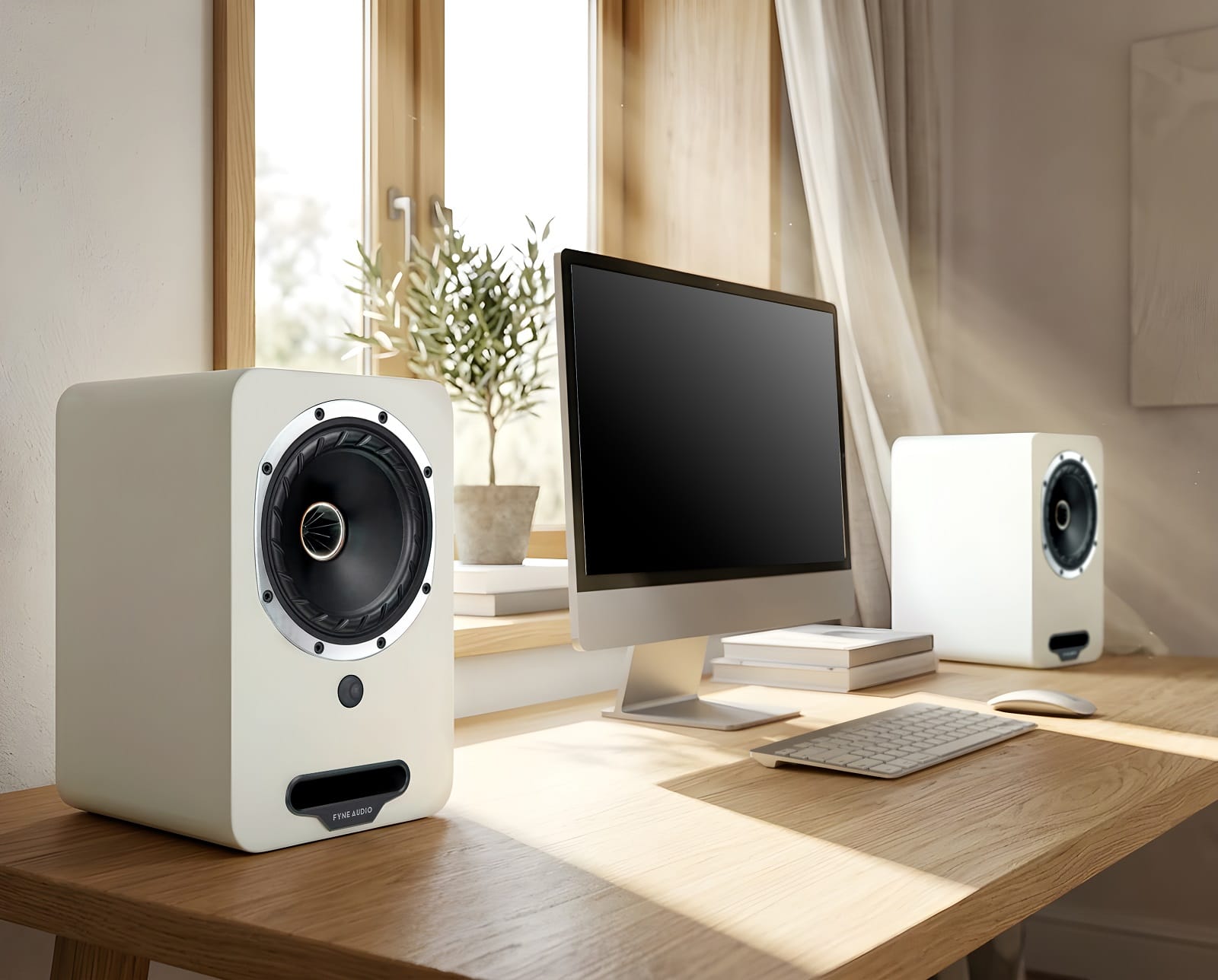
The design language signals this clearly. Five matte contemporary finishes, no wood veneer options, soft radius cabinet edges, and a form factor described explicitly as "furniture-friendly." The Cubitt 5 is sized and styled for real living spaces, not dedicated listening environments. The palette choices, including Pearl Titanium and Pebble Grey, feel closer to an interior design decision than a hi-fi purchase.
Fyne Audio
What the brand has deliberately excluded is equally informative. There is no companion app, no native streaming service integration, no LDAC or aptX Lossless. Source switching happens via an infrared remote. The forum community at AVForums noted the absence of USB connectivity as a curious omission for a desktop-positioned product. These are genuine tradeoffs, and some early buyers will hit them. But Fyne Audio's apparent read is that this audience wants simplicity of operation paired with seriousness of engineering, and that adding app dependency would complicate the first without improving the second.
The Pitch, Stated Plainly
Fyne Audio is telling a specific person: you do not have to choose between a speaker that fits your room and a speaker that sounds like it was made by people who actually care. The Cubitt 5 is engineered by the same mind that spent decades building research-grade passive speakers, it runs IsoFlare technology originally developed for premium audiophile products, its crossover is cryogenically treated, and it also comes in Arctic White and connects to your TV over a single cable.
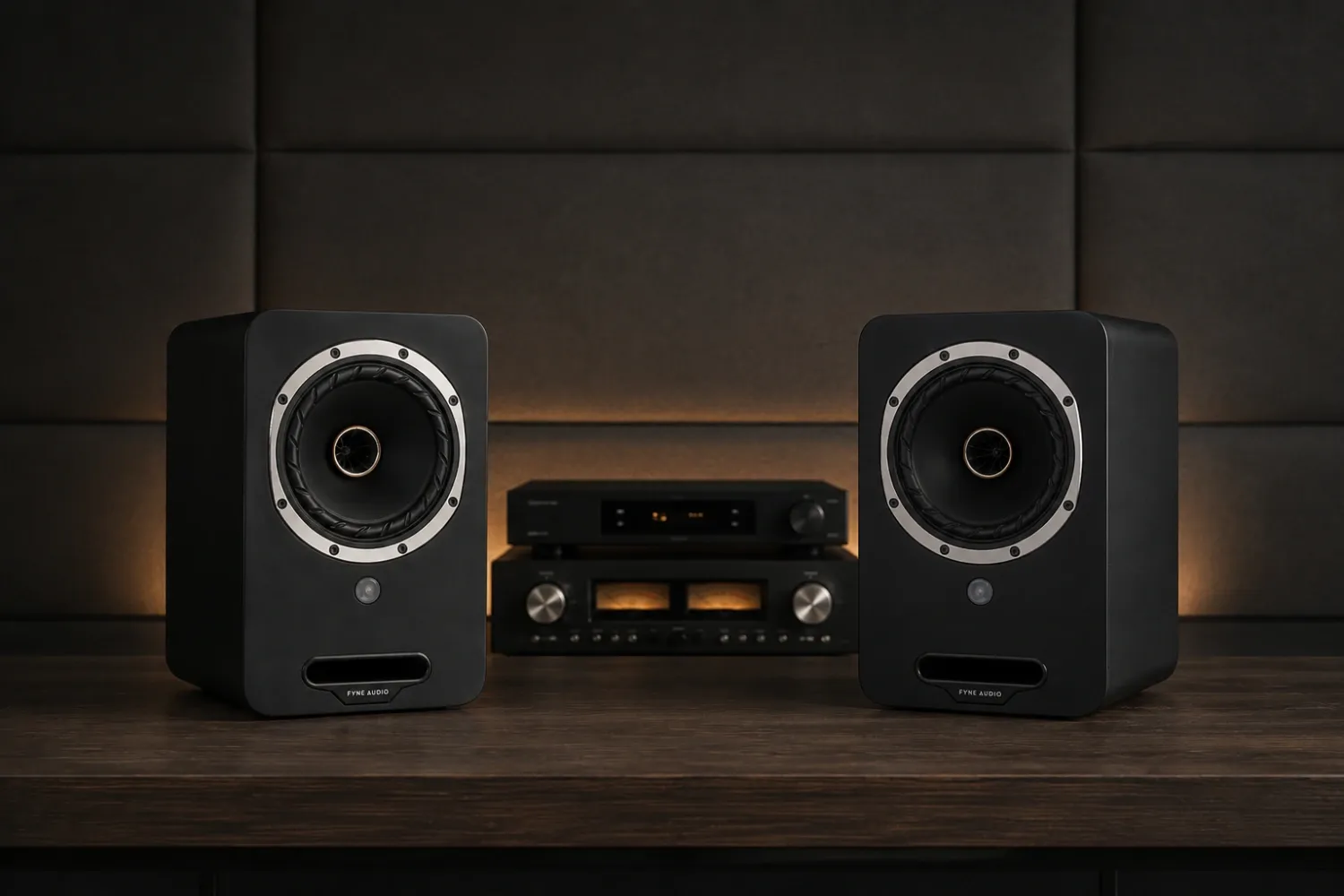
What Hi-Fi awarded it five stars and called it a high bar for Fyne Audio's debut in the active category. The competitive set, as eCoustics mapped it, includes KEF, Klipsch, Q Acoustics, Triangle, and Cambridge Audio. Fyne Audio has not walked into an empty room.
But the brand's actual differentiation is not connectivity breadth or color options. It is the credibility of its founding lineage, the specificity of its engineering story, and the willingness to let that story lead without softening it for the lifestyle market. That is either the brand's greatest competitive asset or the thing that limits how far into the mainstream it can reach. Probably both, depending on how long you wait to find out.