Amangiri Built a Cult Without Ever Running an Ad
Amangiri built a loyal following without advertising, loyalty programs, or celebrity campaigns. A breakdown of how the Utah desert resort became a brand case study.
Quick answer:
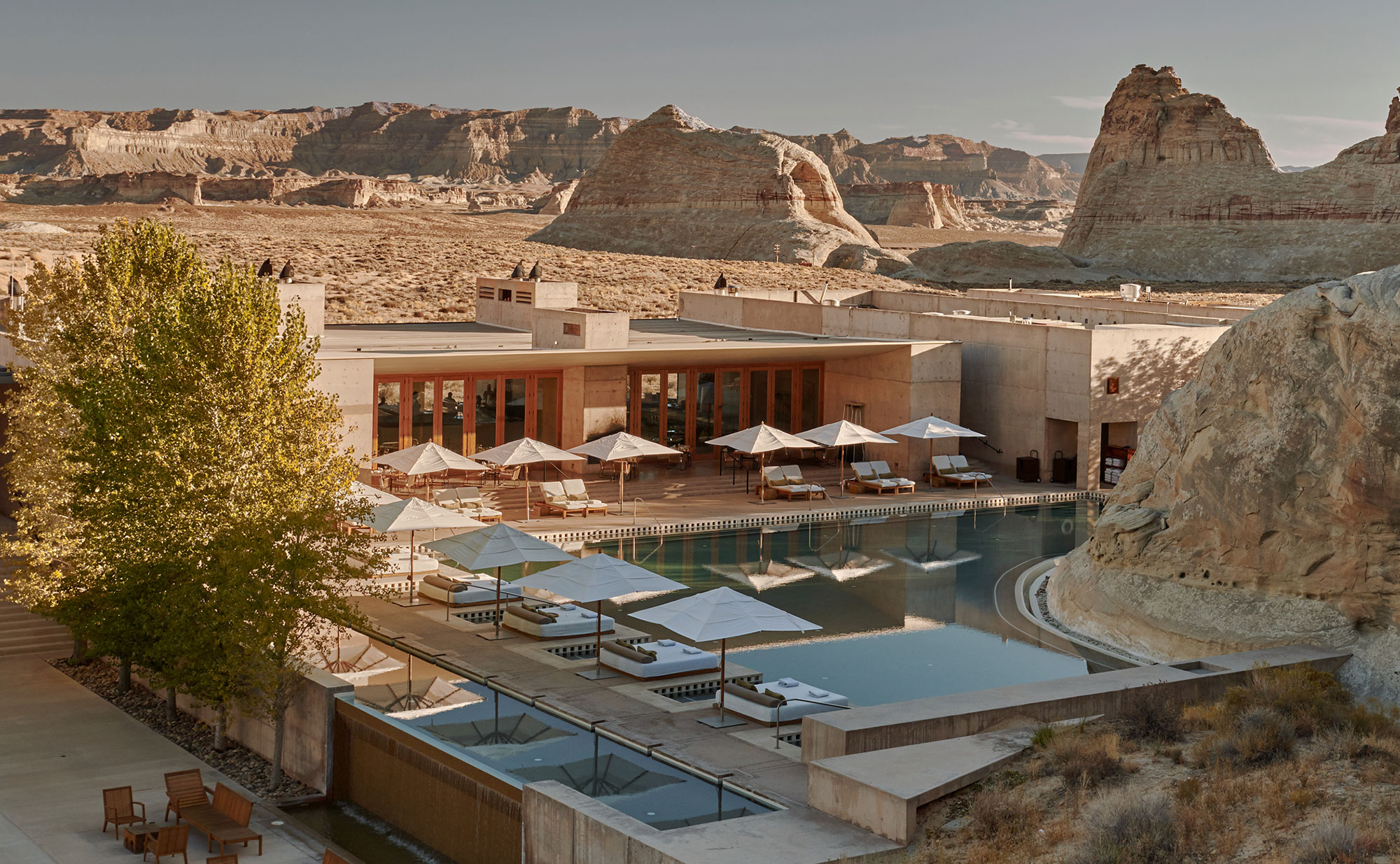
Amangiri is a 34-suite luxury desert resort in Canyon Point, Utah, part of the global Aman Hotels portfolio. Designed by architects Marwan Al-Sayed, Rick Joy, and Wendell Burnette, it sits on 920 acres of 165-million-year-old sandstone mesa landscape, near the Arizona border, and offers guided desert experiences, a landmark spa, and a secondary glamping enclave called Camp Sarika.
The Real Product Is Disappearance
There is a version of this story that starts with the nightly rate and ends with a ranking. That version misses the point entirely.
Amangiri's name translates to "peaceful mountain." That is not a tagline. It is an operating thesis.
The brand's Chief Marketing Officer Jane Mackie told CoStar that Aman charges the highest rates in its markets without advertising, relying entirely on a core clientele of high-net-worth travelers known, only half-ironically, as "Aman Junkies." She also noted they have never needed a loyalty program, because loyalty arrived without one. That is not a flex. That is a structural observation worth sitting with.
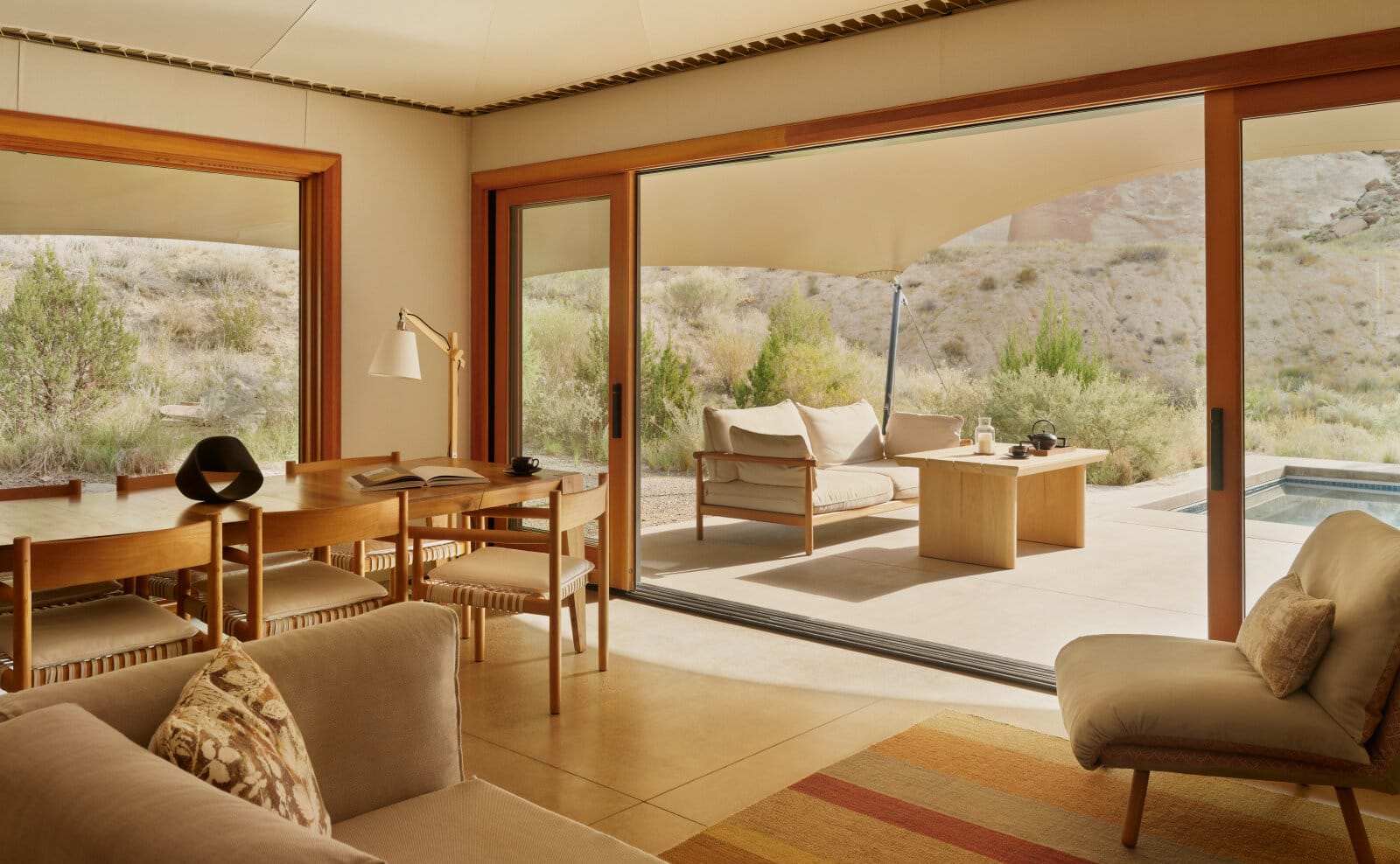
What Amangiri actually sells is the complete removal of optionality. No decision fatigue, no restaurant hunting, no itinerary anxiety. The resort composes the day for you, then steps back. Field Mag reviewer Kellyn Wilson described achieving a sleep score of 100 after a day of via ferrata climbing, sound baths, and very little phone contact.
The Marketing Is the Architecture, the Architecture Is the Marketing
Amangiri's brand positioning sits in a specific gap: not the grand European palace, not the Miami Beach social scene, not the Caribbean all-inclusive. It targets travelers who want to be left alone in a setting so extraordinary that solitude becomes aspirational rather than isolating.
The target audience runs wide in income and tight in sensibility. Lady Gaga danced in the kitchen here. So did Brad Pitt, Kylie Jenner, and Ariana Grande. Celebrity proximity arrived as a byproduct, not a campaign. That distinction is the whole strategy.
The messaging approach is essentially negative space. No advertising, no programmed entertainment schedules, no poolside DJs, no performative signage. Aman CMO Mackie described the brand as "a scarce product" by deliberate design. The story Amangiri tells is the landscape itself, delivered through desert sage lemonade on arrival, bison on the dinner menu, a Navajo flute player in a slot canyon, and a handwoven Navajo bag tag left on your luggage at checkout. Veranda described the arrival experience as "anticipating your needs before you even arrived." That is operational messaging, not marketing copy.
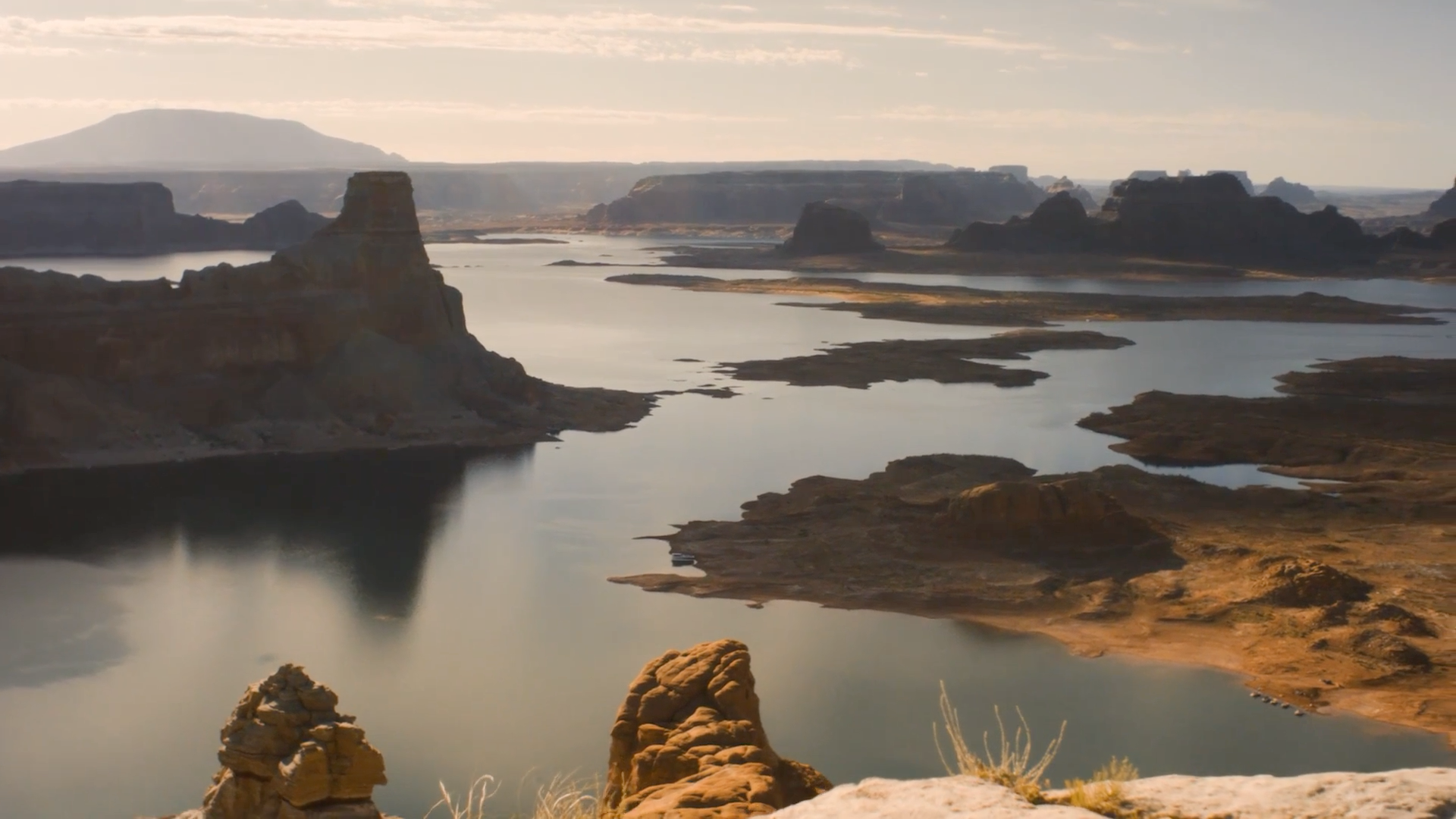
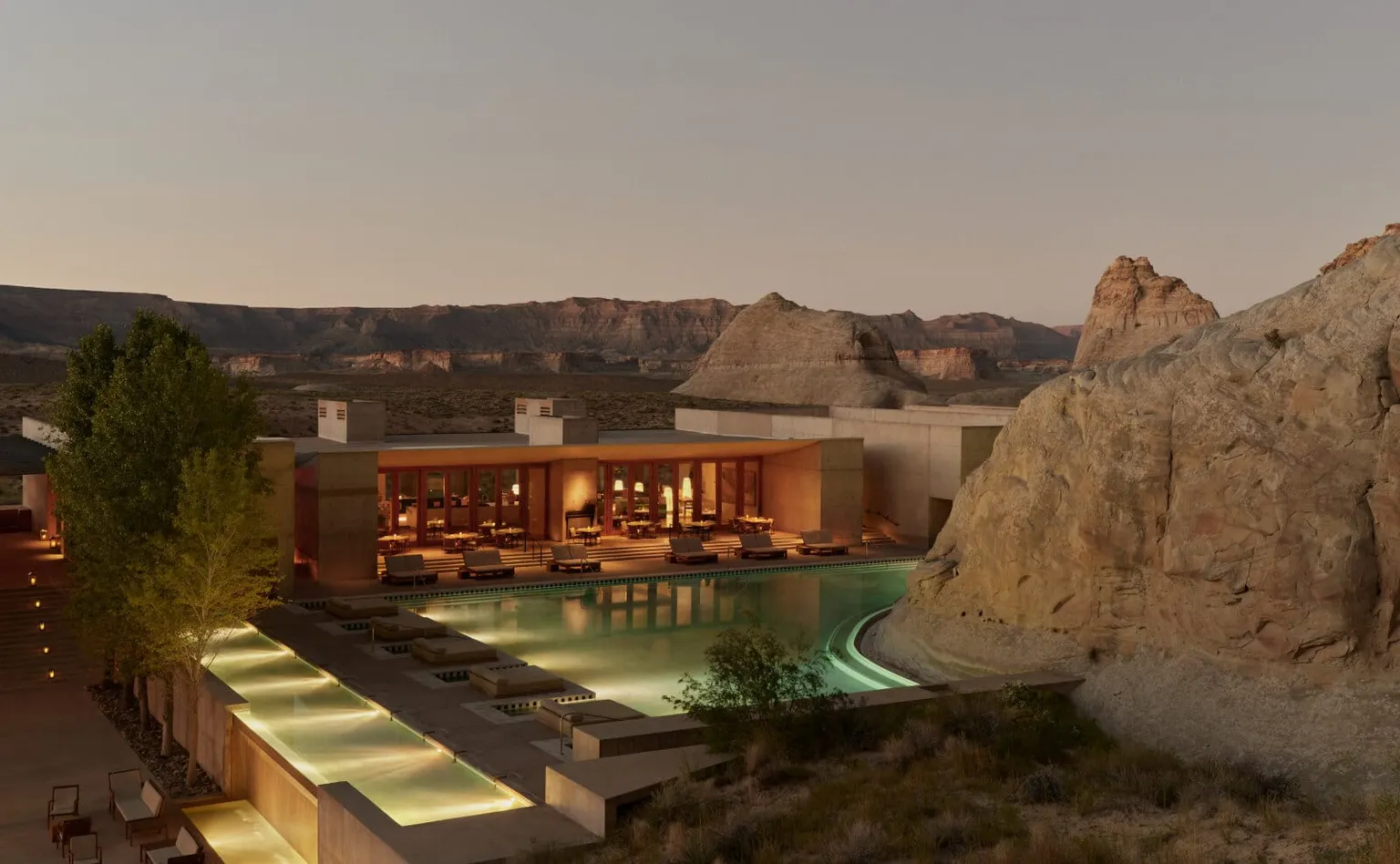
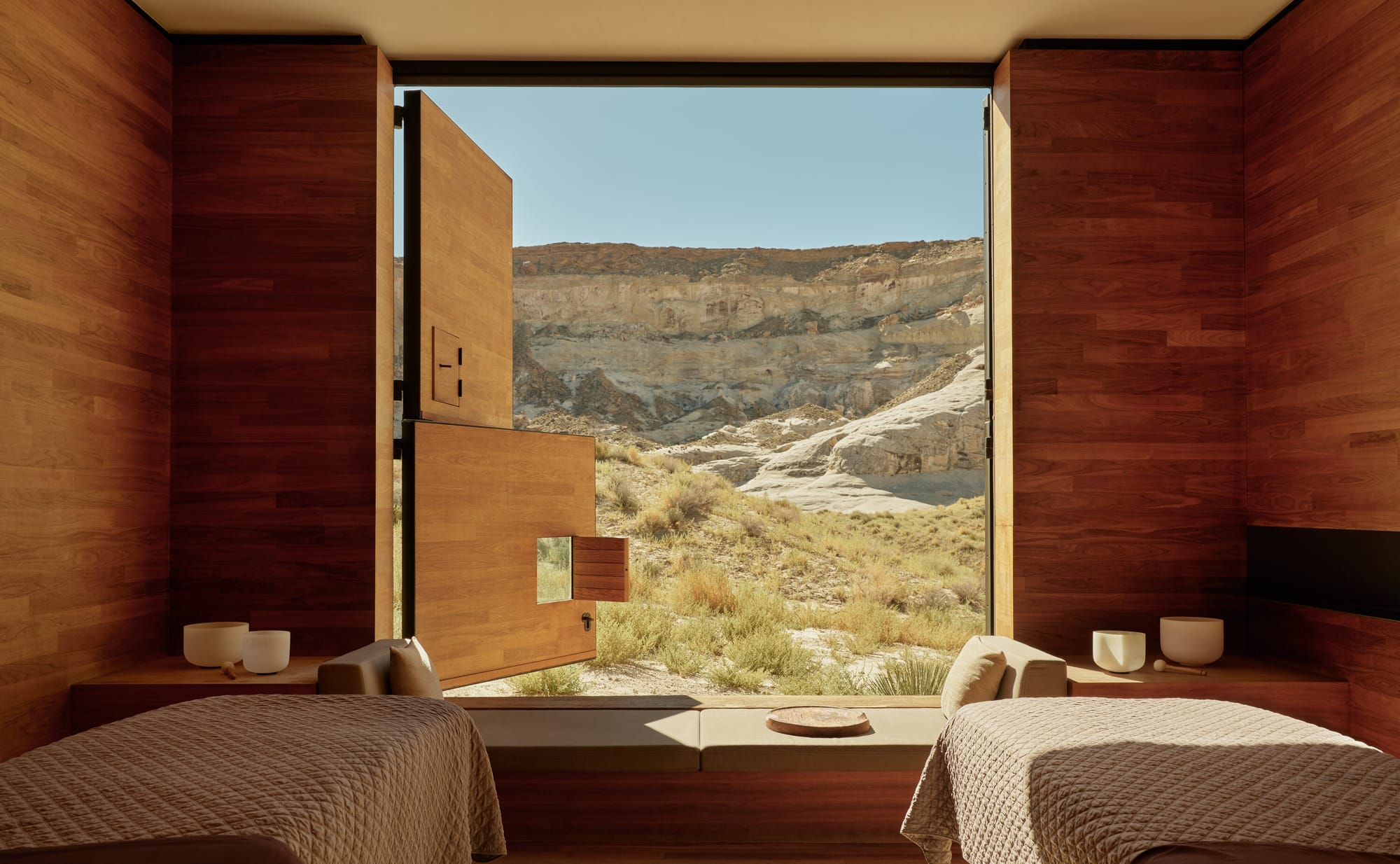
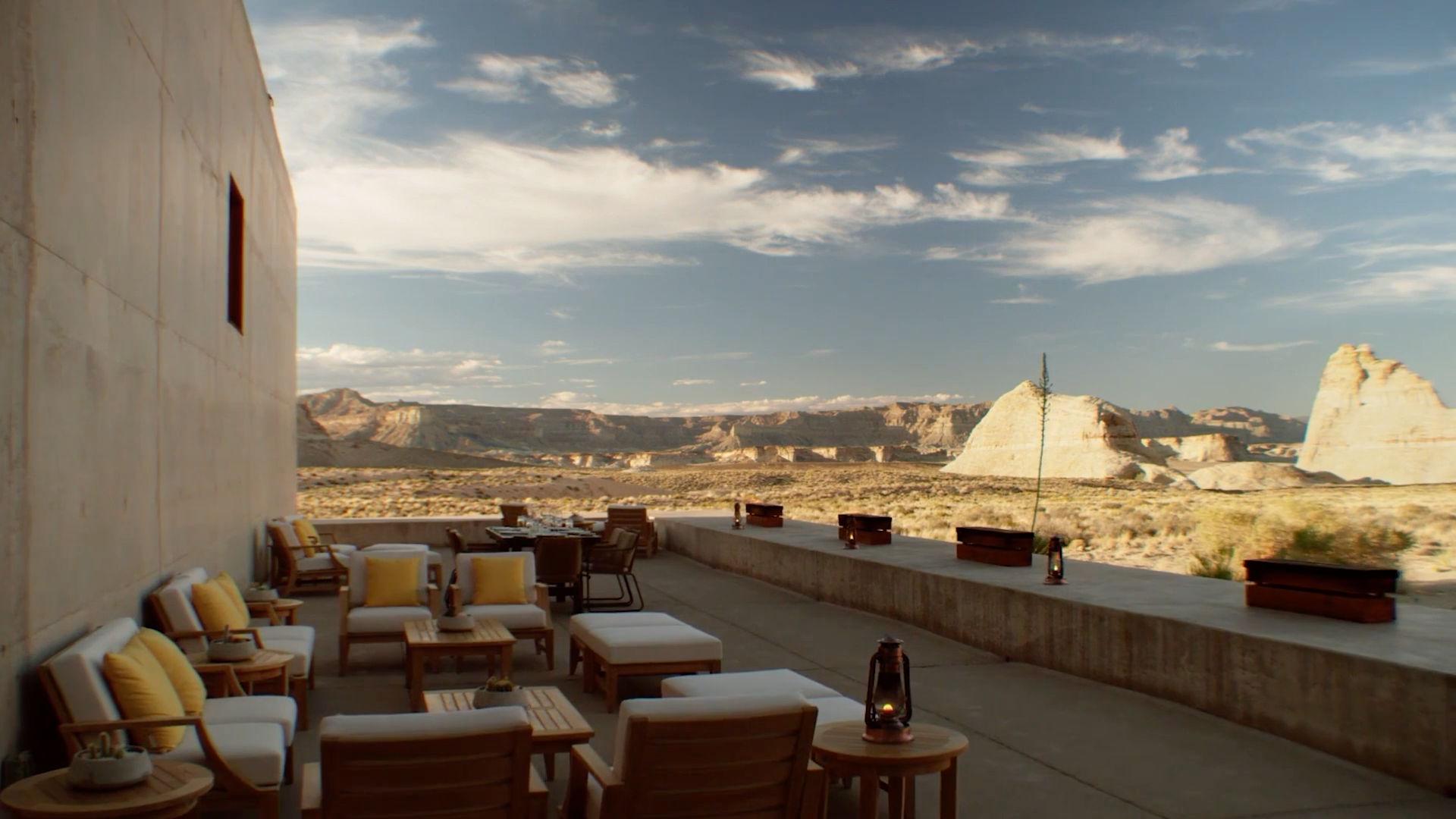
The experience arc runs from overwhelm to stillness to reluctance to leave. Guests arrive carrying the weight of whatever they do for money. The architecture begins dismantling that immediately. Poured concrete tinted to match the surrounding red sandstone means the buildings do not announce themselves. The main pool wraps an existing rock formation rather than importing one. The spa is carved into the canyon, its treatment rooms aligned with gaps in the stone to frame distant rock formations like slow paintings. Artist-in-residence Ulrike Arnold makes pigments from Broken Arrow Cave materials on the property, dust and shale and volcanic ash applied to canvas with bare hands, then left outside for rain and sandstorms to finish. Guests are encouraged to touch the work. That is a design philosophy, not a wellness amenity.
The community dimension is not decorative. Amangiri works directly with Navajo Nation members for cultural programming, sources local vendors for guided experiences, and donates resources to K-12 schools across southern Utah. The Aman Junkies subculture reinforces this: GMs host "happy reunion" receptions for returning guests, who typically arrive with a mental list of which properties they have visited and which they plan to visit next.
Against Four Seasons, Amangiri offers irreplaceability over consistency. Against One&Only, it offers stillness over stimulation. The USP is not a feature set. It is an ontological position: the building exists to serve the landscape, and the landscape is the only thing that cannot be replicated anywhere else on earth.
The Pitch Is the Land Itself
Most luxury hospitality markets on what they add. Amangiri markets on what it removes. No noise, no schedule, no compromise between beautiful and comfortable. The architectural language of ochre and rust and slate blue does not reference a brand palette; it references 165 million years of geological accumulation. That is the pitch.
The resort does not need to explain itself, and it knows it. That confidence is not arrogance. It is the product of being genuinely irreplaceable in a category where most competitors are, in the end, interchangeable.