The Watch That Thinks the Future Got It Wrong
The Amida Digitrend OSII Black is a 150-piece Swiss jumping-hour watch built on a radical 1976 design. Here's the brand strategy behind it.

Quick answer:
The Eagle Lightweight GT is a bespoke, road-going reimagining of Jaguar's 1963 factory Lightweight E-Type, built by Eagle E-Types in East Sussex. Each car begins as an original Series 1 E-Type, stripped and rebuilt with period-correct materials, exotic lightweight alloys, and modern safety and comfort systems, all concealed beneath bodywork that looks like it arrived from 1963 with nowhere better to be.
The Watch That Thinks the Future Got It Wrong
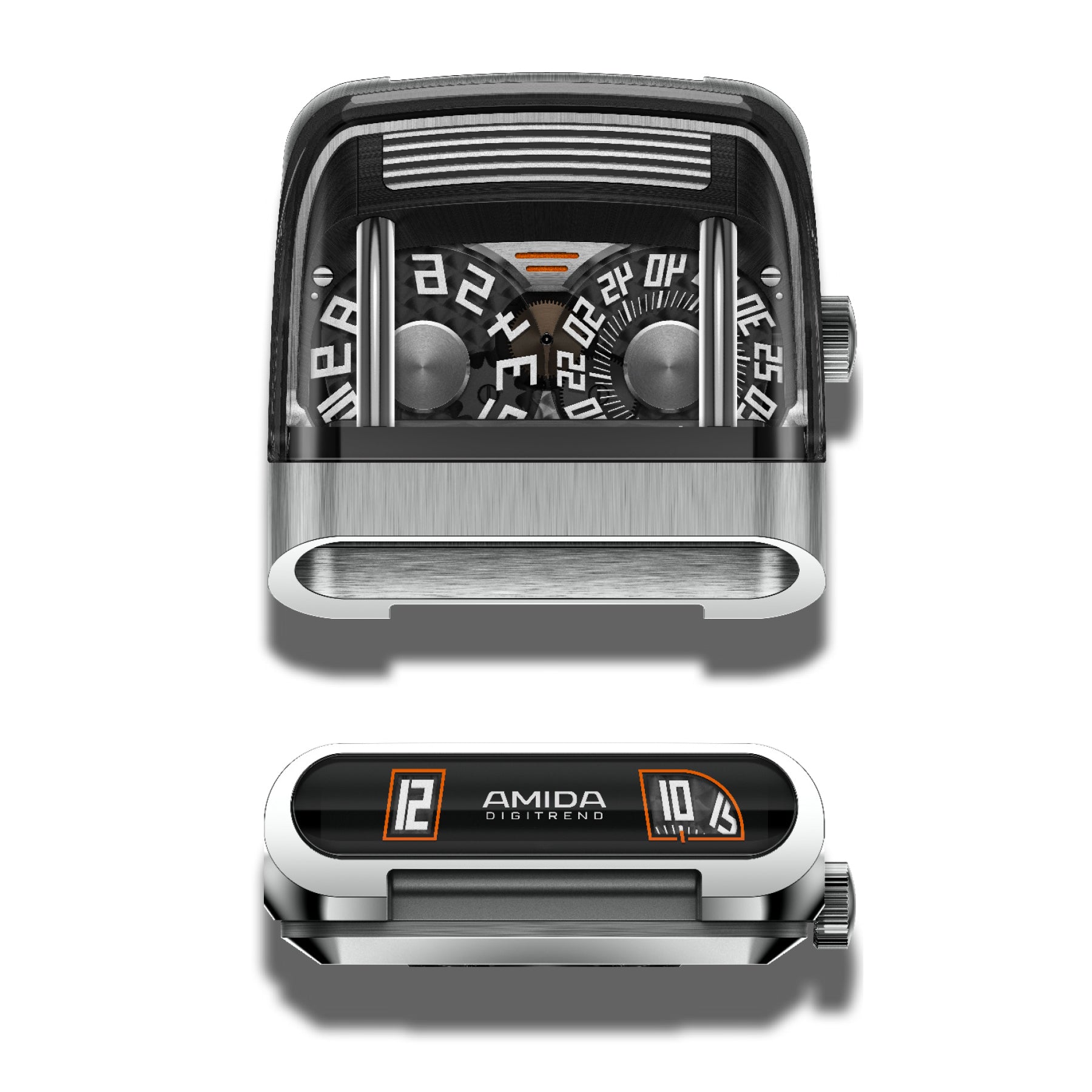
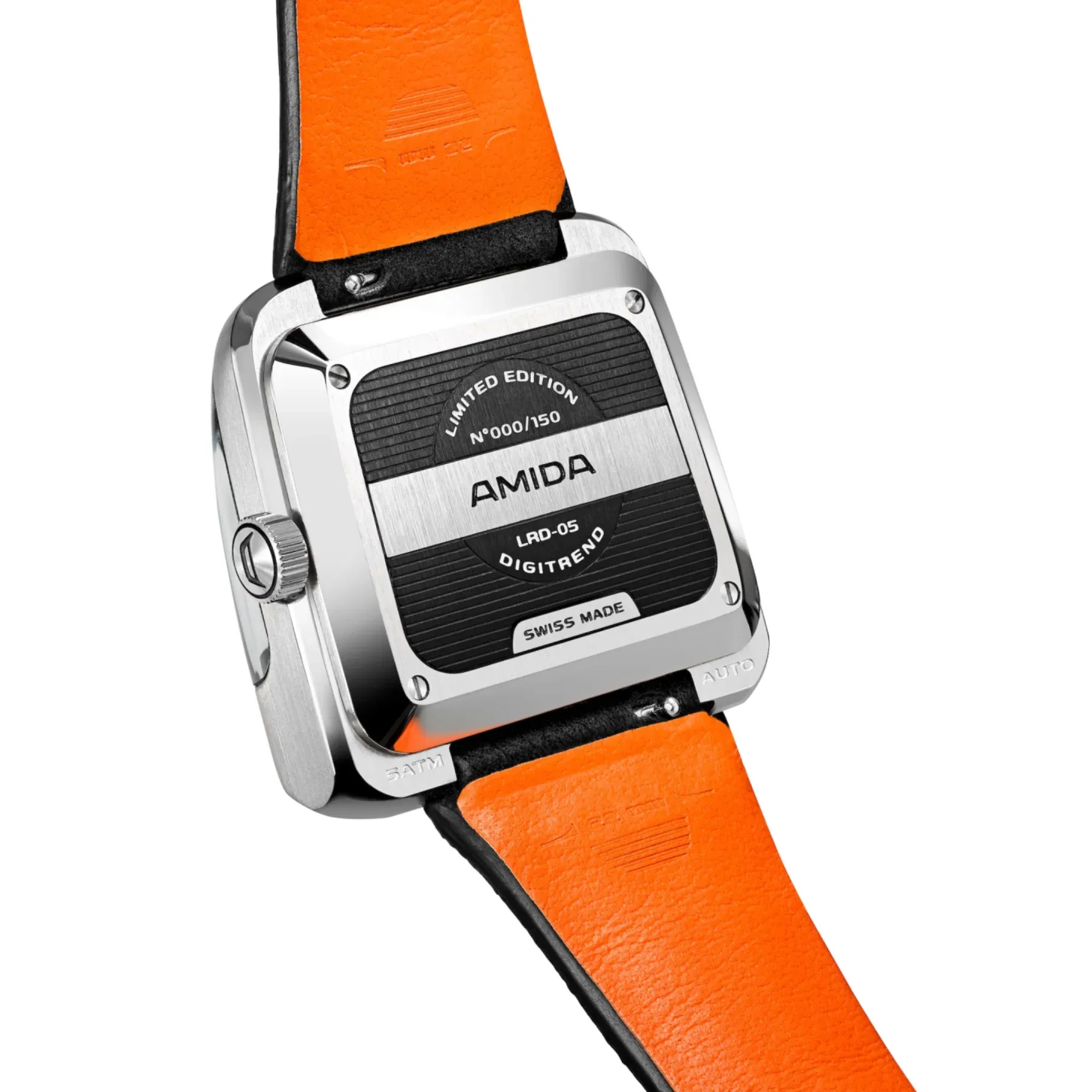
Quick answer: The Amida Digitrend OSII Black is a Swiss automatic jumping-hour watch limited to 150 pieces, starting at CHF 5,150 (~$6,340). Its sapphire hood machined from a single block, teal-glowing Super-LumiNova display, and DLC-coated internal steel framework represent the most fully realized version yet of a 1976 space-age design that was killed before it could finish what it started.
There is a version of the future that lost. It had organic curves, mechanical audacity, and a way of reading time that required you to look through a prism rather than at a hand. The Quartz Crisis ran it off the road in the late 1970s. Most people do not notice this. Some people cannot stop thinking about it.
Amida, revived in 2024 by creative director Matthieu Allègre and co-founder Clément Meynier, is making objects for the second group.
What is the Amida Digitrend OSII Black, and why does it exist?
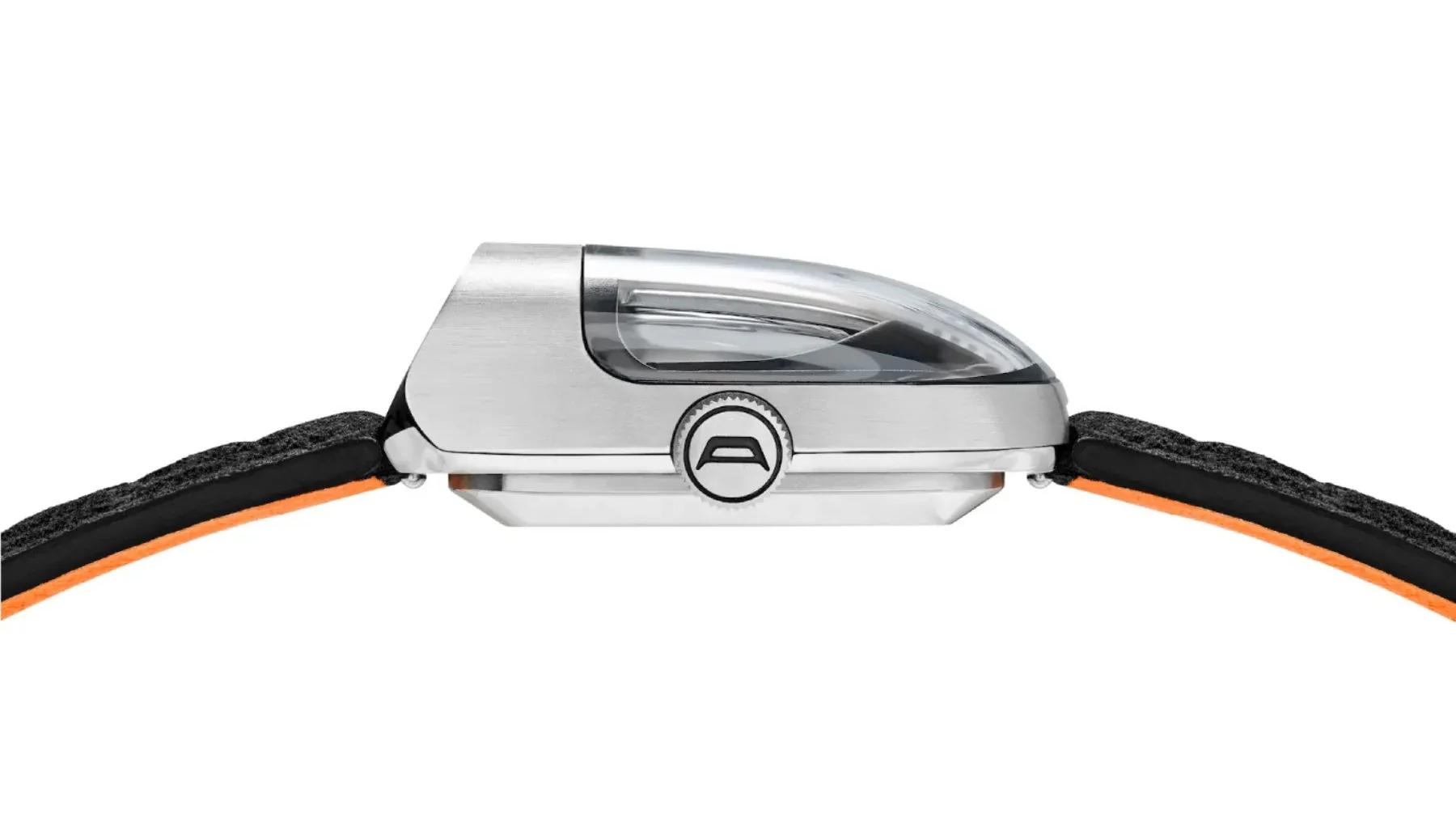
The original Amida Digitrend debuted in 1976 as a mechanical watch that displayed time through a prism, projecting horizontal jumping-hour discs vertically onto the face. It was strange. It was radical. It was also launched directly into the teeth of the Quartz Crisis, and Amida went bankrupt three years later.
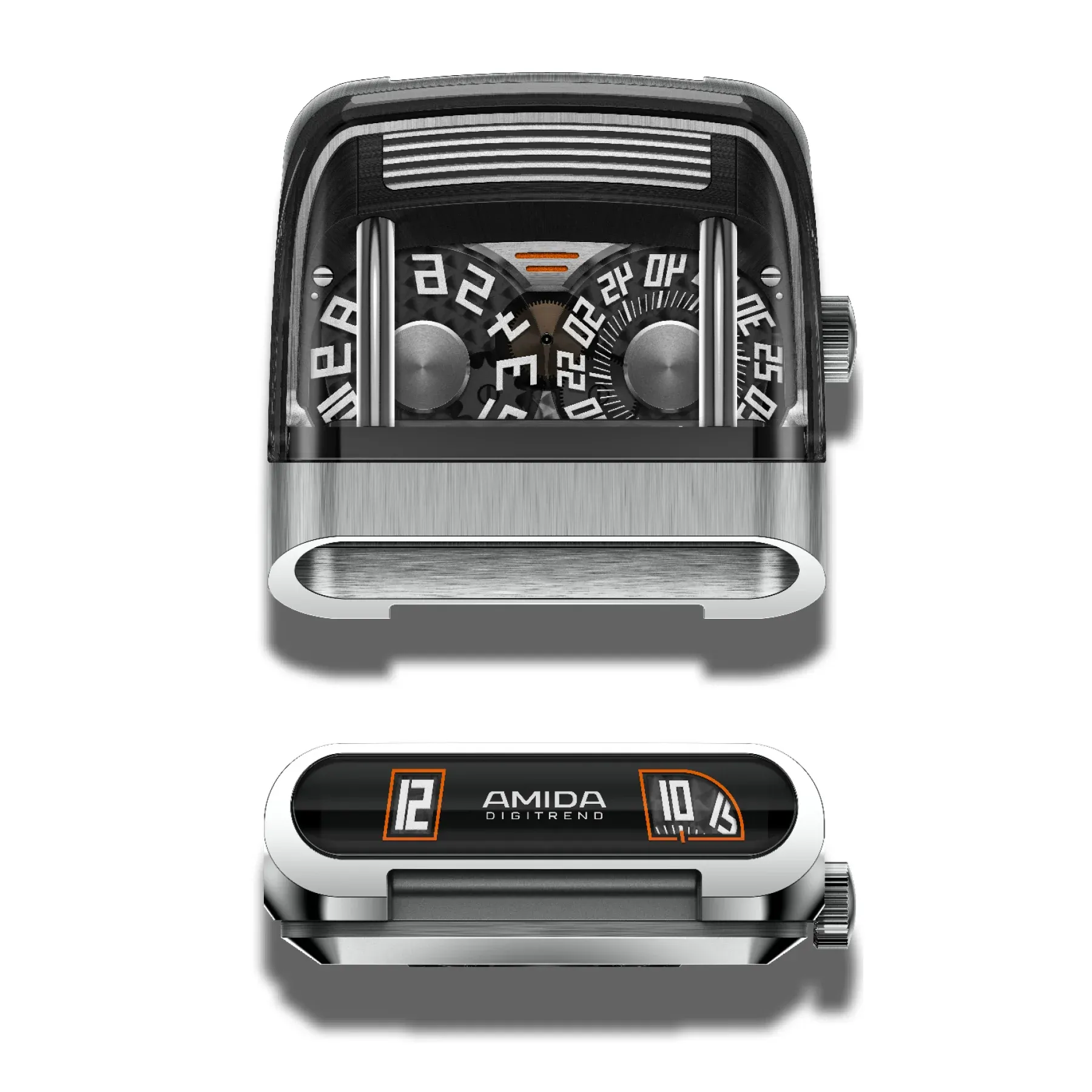
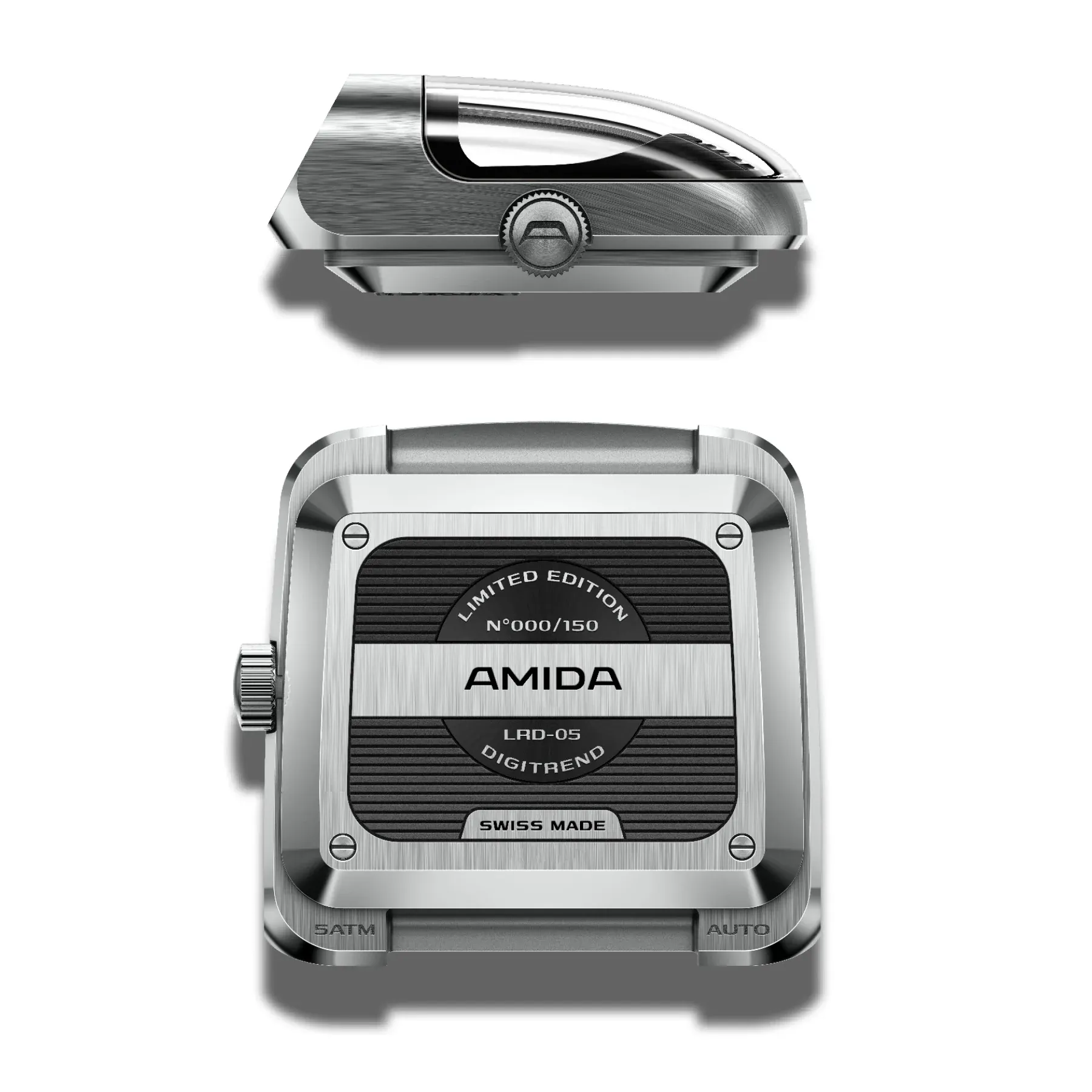
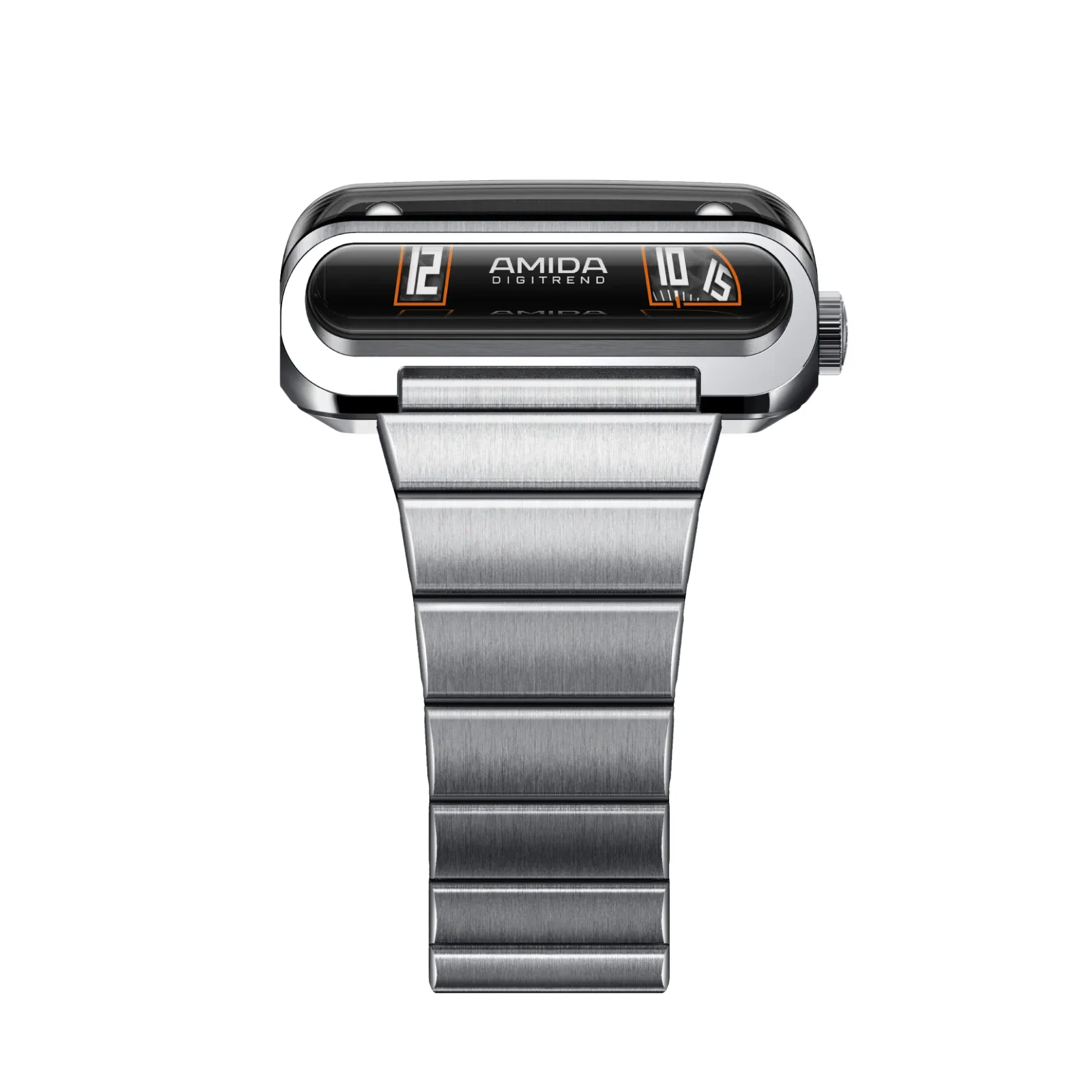
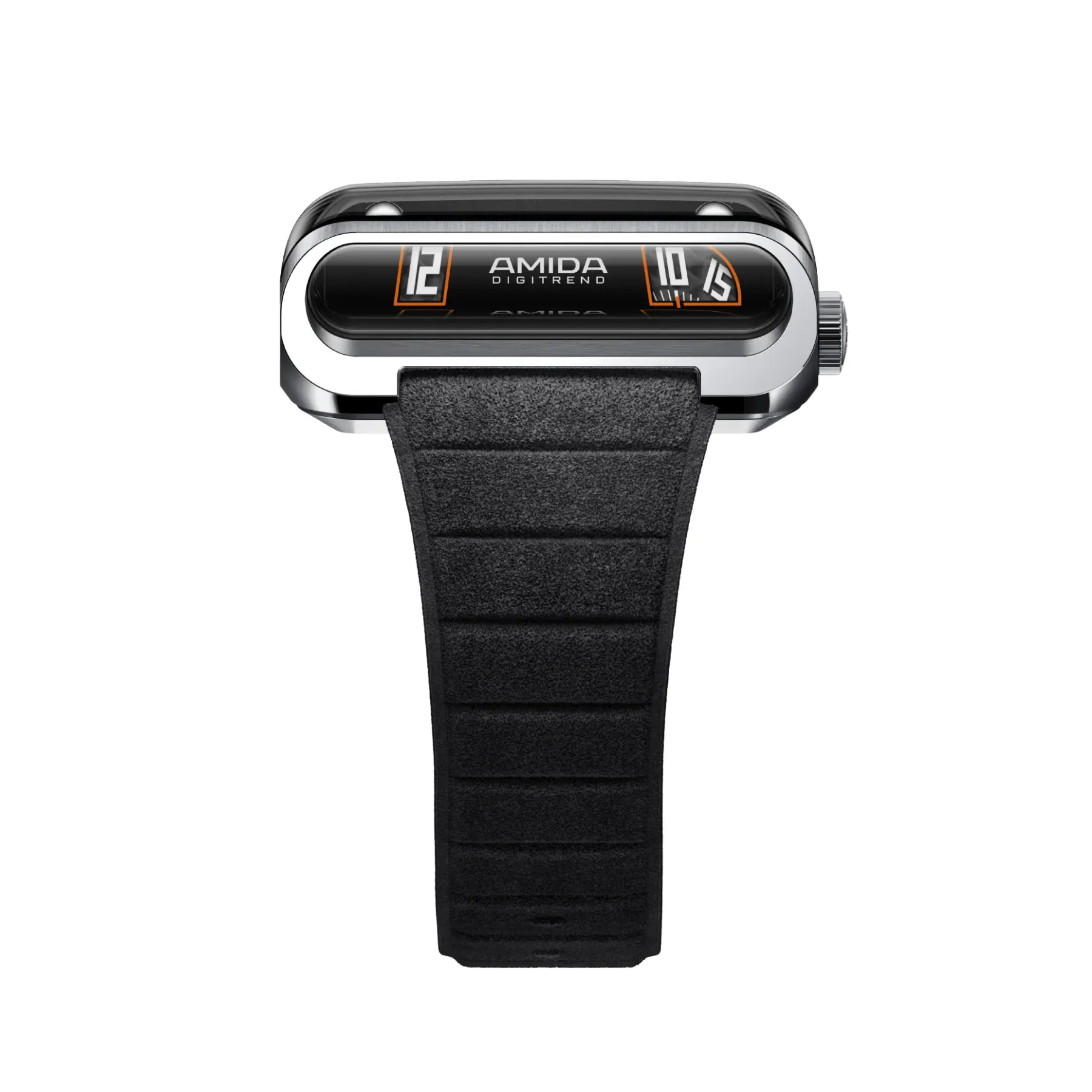
The OSII Black is not a reissue. It is the third iteration of a design evolution that Allègre describes, without irony, as resuming interrupted work. The first Open Sapphire replaced the metal hood with a single-block machined sapphire crystal. The OSII Black does the same, but adds a fully luminous display for the first time in Digitrend history, charging BGW9 Super-LumiNova through the transparent hood so the watch glows teal in the dark. Amida calls this the Nocturnal Form. A new DLC-coated internal steel framework makes previously hidden mechanics into deliberate architecture. 150 pieces exist worldwide.
How Amida sells a belief system and happens to include a watch
Amida
The marketing insight is this: Amida is not selling a watch to watch collectors. Amida is selling a physical argument to people who already agree with it.
The brand calls its thesis the "Historical Correction." The premise, stated plainly by Allègre, is that mid-century design offered a baseline of audacity that was abandoned prematurely, and that the wrong aesthetic future won. Amida positions itself as an active tool for retrieving what it calls the "Lost Future" — not through nostalgia or recreation, but through continuation. "We do not look back to copy the past," Allègre has said. "We look back to resume the work."
This reframe does several things at once. It converts the brand's customers from buyers into participants. It creates a community identity that precedes the product. It gives the watch a function beyond timekeeping: a "totem of dedication," in the brand's own language, for people who believe the timeline is finally moving in the right direction.
The target audience is small by design and specific by necessity. These are independent watchmaking enthusiasts, retro-futurist design devotees, and people who find the MB&F HM5 spiritually legible (MB&F's Maximilian Büsser held the Swiss rights to the Amida trademark before transferring them to the current team, which tells you something about the lineage). At CHF 5,150 to CHF 5,500 (~$6,340–$6,768), the OSII Black sits in upper-independent territory, priced for considered buyers rather than impulse ones.
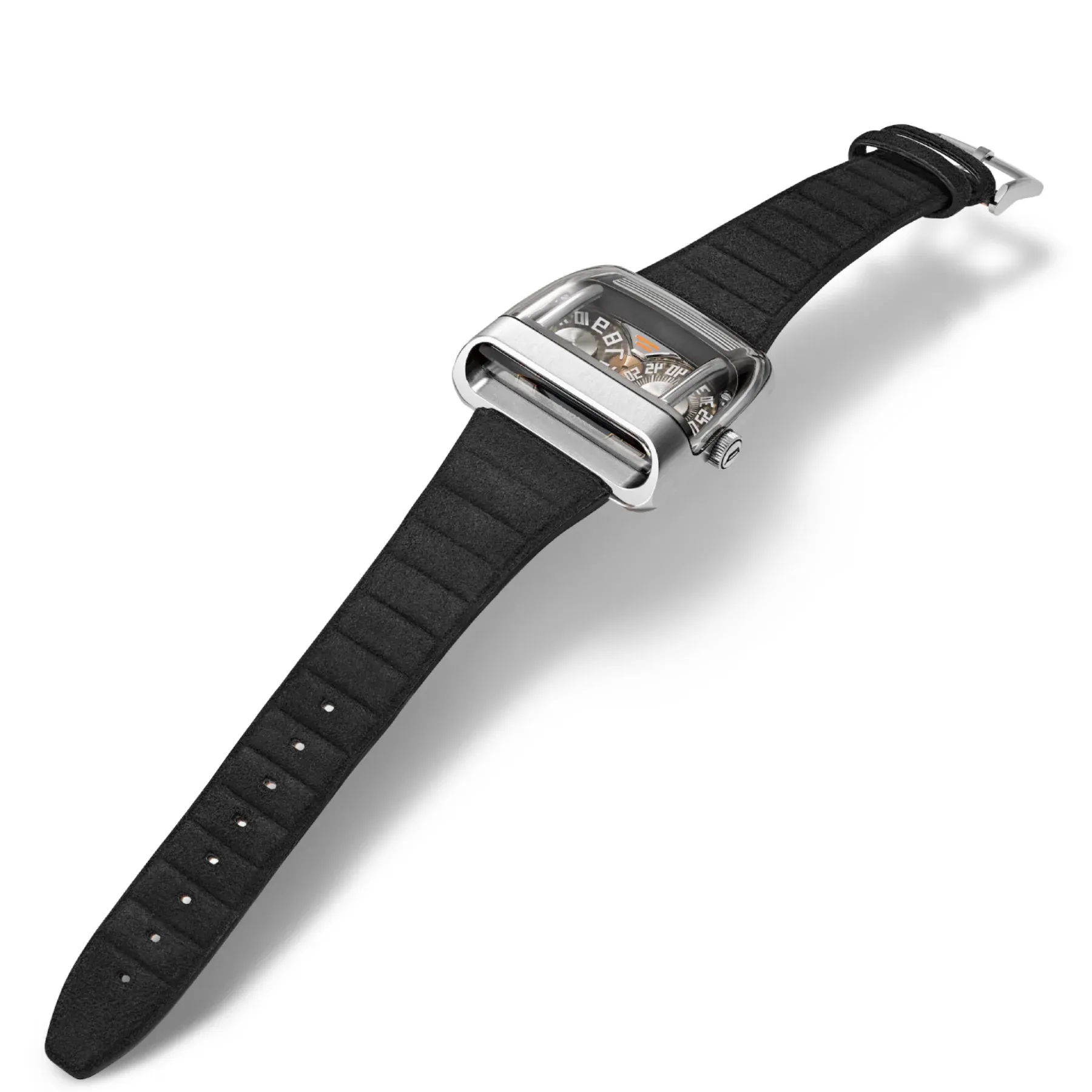
The design language operationalizes the argument. The sapphire hood reads like a spaceship window. The teal lume has no utilitarian reason to be teal specifically, other than that it looks like something from a 1968 concept film. The packaging is a display box that Gear Patrol described as looking like "a prop from 2001: A Space Odyssey." Even the horizontal-line decoration etched into the nose of the hood serves no mechanical function. It exists purely because it belongs. That kind of purposeful decoration is rare. Committing to ornament with no apology is a creative act that most watch brands are too cautious to make.
The marketing pitch, stripped to its sentence: this watch is proof that the better future is still available, limited to 150 people who understand what that means.
A rare thing: a brand that knows what it actually believes
Amida
Most luxury watch brands communicate heritage as though age is a credential that speaks for itself. Amida does the opposite. Allègre frames the original Digitrend's brief existence not as a founding myth to be celebrated, but as a problem to be solved. The brand's whole creative energy is pointed forward, using a 1976 design as a starting position rather than a destination. That tension, between deep historical specificity and genuine forward intention, is genuinely unusual in this category.
The Nocturnal Form is the clearest sign that the project is real. Making something glow in the dark is trivially achievable. Designing the glow so that it functions as a second version of the watch, one that only exists at night and extends rather than interrupts the daytime design, requires a level of intentionality that most brands do not reach. The OSII Black passes that test.
The question Amida is really answering has nothing to do with horology. It is asking whether a small, deliberate community of people can physically retrieve an aesthetic future that was foreclosed by market conditions five decades ago. 150 watches at a time, the answer appears to be yes.
 AMIDA
AMIDA