
The Truck That Sells You the Parts You Didn't Know You Wanted
Slate's electric truck ships unfinished on purpose. Here's the marketing logic behind selling subtraction as a luxury of choice.
Quick answer:
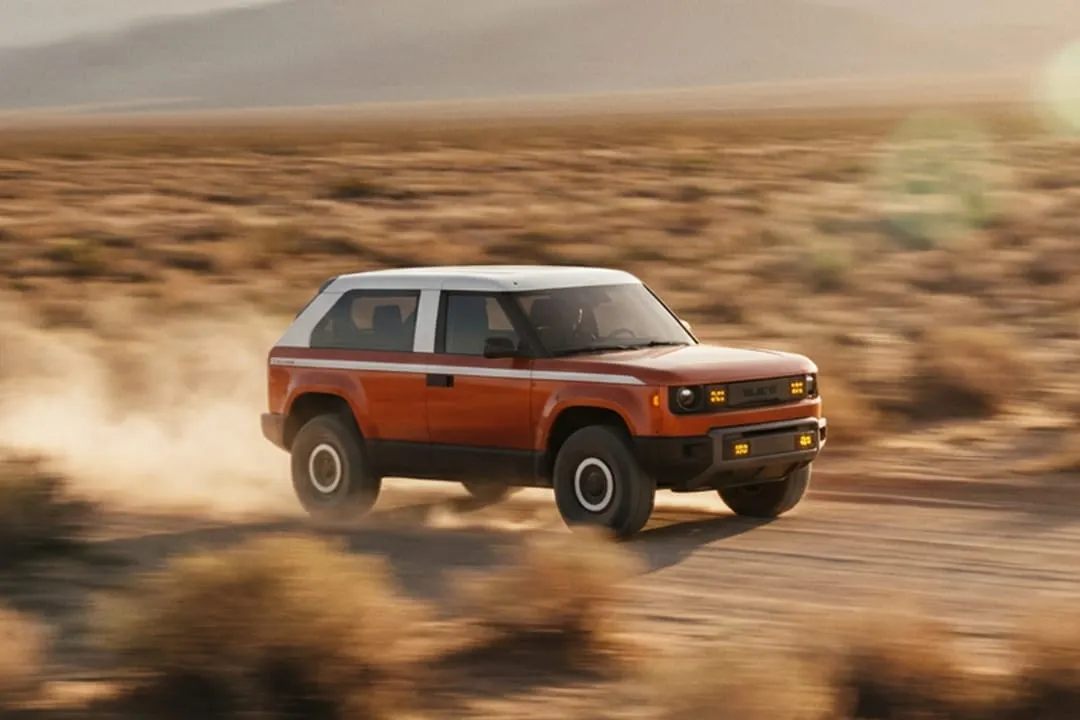
Slate's Blank Slate is a two-seat electric pickup starting at $24,950, built with a single unpainted gray composite body that owners wrap, accessorize, and convert into a five-seat SUV or fastback themselves. It ships without a touchscreen, radio, or speakers. Deliveries begin around late 2026.
The Less You Get, the More They Sell
Here is the insight nobody at a traditional automaker would greenlight: the less a vehicle does, the more a customer will pay to finish it. Slate didn't build a cheap truck and apologize for the missing features. It built the missing features into the pitch.
Slate's own homepage frames this plainly: the essentials start at $24,950, and "whatever else you add...is entirely up to you." That's not a disclaimer. That's the entire business model, stated as a dare.
Every unit leaves the Warsaw, Indiana plant identical, a single configuration, one color, no options list. CEO Peter Faricy, formerly of Amazon Marketplace, isn't selling scarcity. He's selling a blank canvas with a receipt.

A Pickup Truck With a Sneakerhead's Business Model
Slate's identity is built on absence doing the work presence usually does. The target buyer, per former CEO Chris Barman, is "the wage earner, the mass population", not the EV early adopter chasing acceleration numbers. The storytelling leans on nostalgia for two-door pickups before Tacomas and Rangers bulked up into suburban furniture, a genuinely strange flex in a market where Ford reports only 10 percent of Bronco buyers choose the two-door.
The journey Slate builds is sequential, not transactional. Reserve, then preorder, then wait, then customize on your own schedule through "Slate University" manuals and a DIY design philosophy that treats the owner as co-manufacturer. Head of engineering Eric Keipper put it bluntly: the company is "giving the power of accessorization back to the customer", letting them "accessorize over time and put the things that they want in the vehicle on their timeline and on their budget."

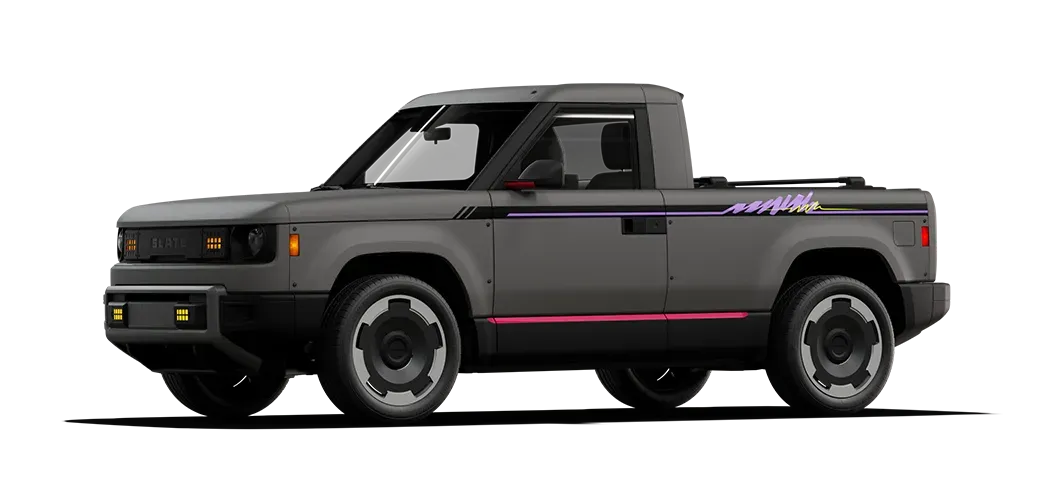
Culturally, Slate is courting the Crocs-charm generation without saying so. Dash "Slatelets" slot in like trinkets. A Crayola wrap collaboration brings colors named Razzmatazz and Dandelion to a product category that has spent two decades competing on horsepower. A Smarties candy tie-in exists, apparently, because why not. The differentiation is structural rather than cosmetic: the body is unpainted injection-molded composite, designed from the outset to be wrapped, not painted, which eliminates the paint shop entirely and keeps the sticker low. The design language carries this through every layer, from the "coach lines" that make wrap kits install cleanly, to starter packs with names like Retrograde and Nightwave that read more like sneaker drops than trim levels, to panels that swap with regular Allen bolts because the whole architecture assumes the owner will eventually open it up.
The Base Model Is Just the Beginning
There is a real tension sitting under all of this, and Slate hasn't fully resolved it. The truck is rear-wheel-drive with two doors, a configuration the broader market has been abandoning for twenty years, yet Slate's own president of vehicles expects the SUV conversion to account for 60 percent of sales, not the base truck the pricing is built around. The thing being sold and the thing people actually want may not be the same object.
Then there's the dependency paradox. No touchscreen, no modem, no infotainment, just a dash mount for your own phone. That's marketed as liberation from subscription creep, but it also means the car's entire digital experience is borrowed from a device Slate doesn't make and can't control. James May, taking one for a drive, called it "an incredibly easy car to live with, even easier than my Tesla," and reached for a bagel analogy: you buy the bagel, then you put the filling in. Charming, and also a tacit admission that the car, as sold, is unfinished by design.
The accessory economy is the real hedge here. Wraps need reapplying every three to five years, which means Slate has engineered a recurring revenue relationship into a vehicle it sells once. More than 180,000 reservations suggest the bet is working, at least as a story. Whether it still works at the volume needed to hit break even, estimated around 80,000 units a year against 150,000 units of capacity, is the question Slate has quietly deferred to the accessory catalog to answer.
 Slate


