
The Lost Art of Campaign Consistency
Why the Fisher & Paykel forest ads work, what "repeatable novelty" means, and how modern brands waste assets by abandoning consistency for disconnected content.
Quick answer
Campaign consistency means committing to one strong concept and repeating it across every execution, so each new ad builds on the last instead of starting from scratch. The Fisher & Paykel forest campaign shows why this works: recognition plus discovery compounds brand memory over time, while the modern habit of churning out disconnected one-off ads throws that compounding away.
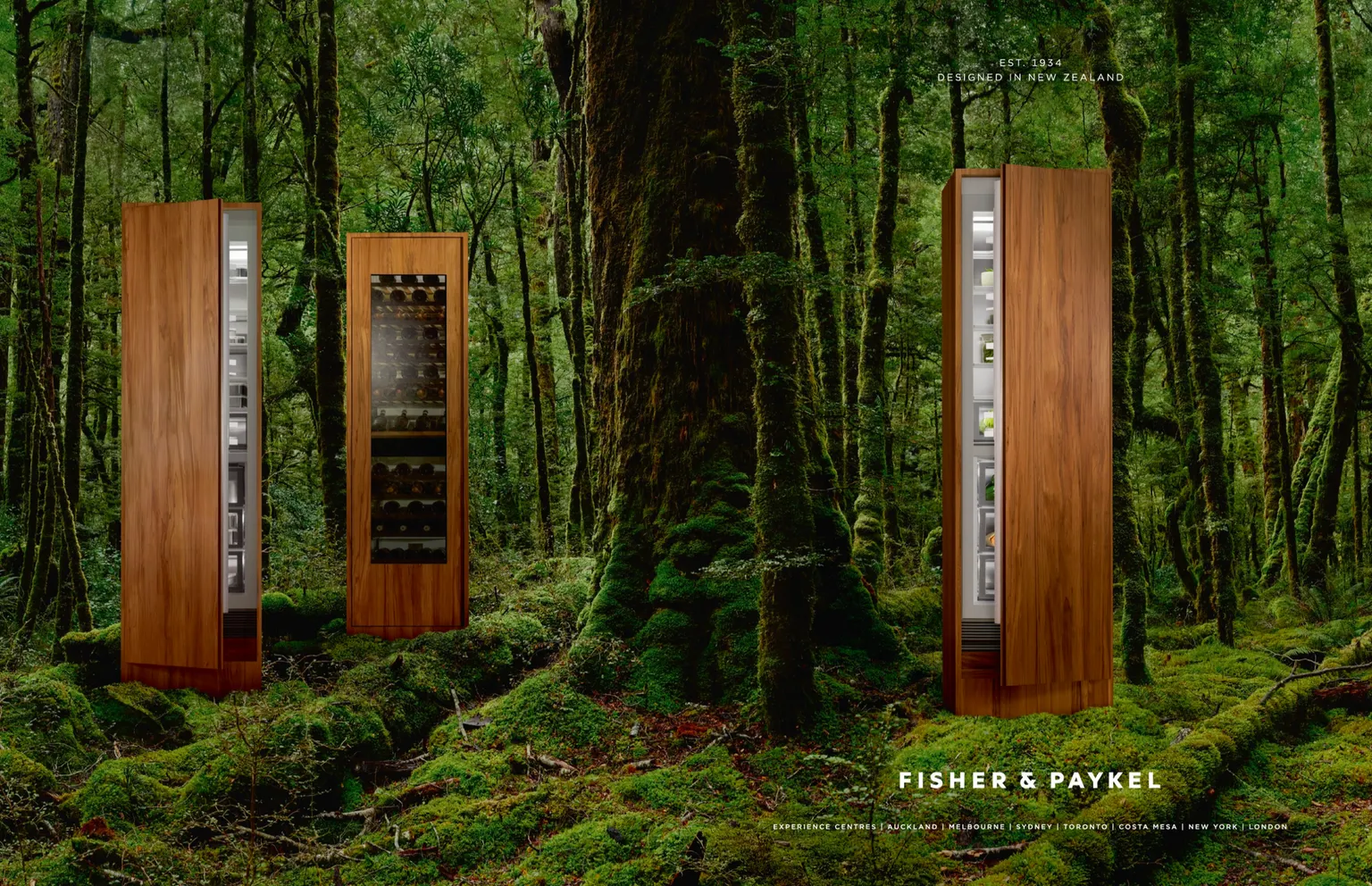
There is a Fisher & Paykel campaign I cannot stop thinking about. Picture a sleek, integrated kitchen appliance, the kind of thing that costs more than my first car, dropped into the middle of a New Zealand forest. Not a styled studio forest. A real one. Ferns, moss, that wet primordial green that makes you feel like a dinosaur might wander through the frame at any moment.
A wine cooler in the woods should look ridiculous. It does not.
That is the first thing worth sitting with. The image is a disruption and a logic at the same time. Your eye snags on the strangeness, then your brain quietly nods along. And then you see the next ad in the series, and the one after that, and something starts to happen that almost no advertising does anymore. You start to anticipate.
Let me break down why these specific ads work, because "they look cool" is the kind of answer that gets people fired.
Why does the Fisher & Paykel forest campaign actually work?
There are three things happening underneath the pretty picture, and none of them are accidents.
First, geographic provenance. The forest plants a flag. This is New Zealand, and the brand is from there, and you know it before you read a single word of copy. That matters because the luxury appliance category is a swamp of generic aspiration. Stainless steel, marble countertops, a model in linen pretending to enjoy a salad. Fisher & Paykel skips all of it and grounds the product in a specific place with a specific texture. You cannot fake provenance. Either you have it or you are renting someone else's.
Content is what you make when you have given up on being remembered.
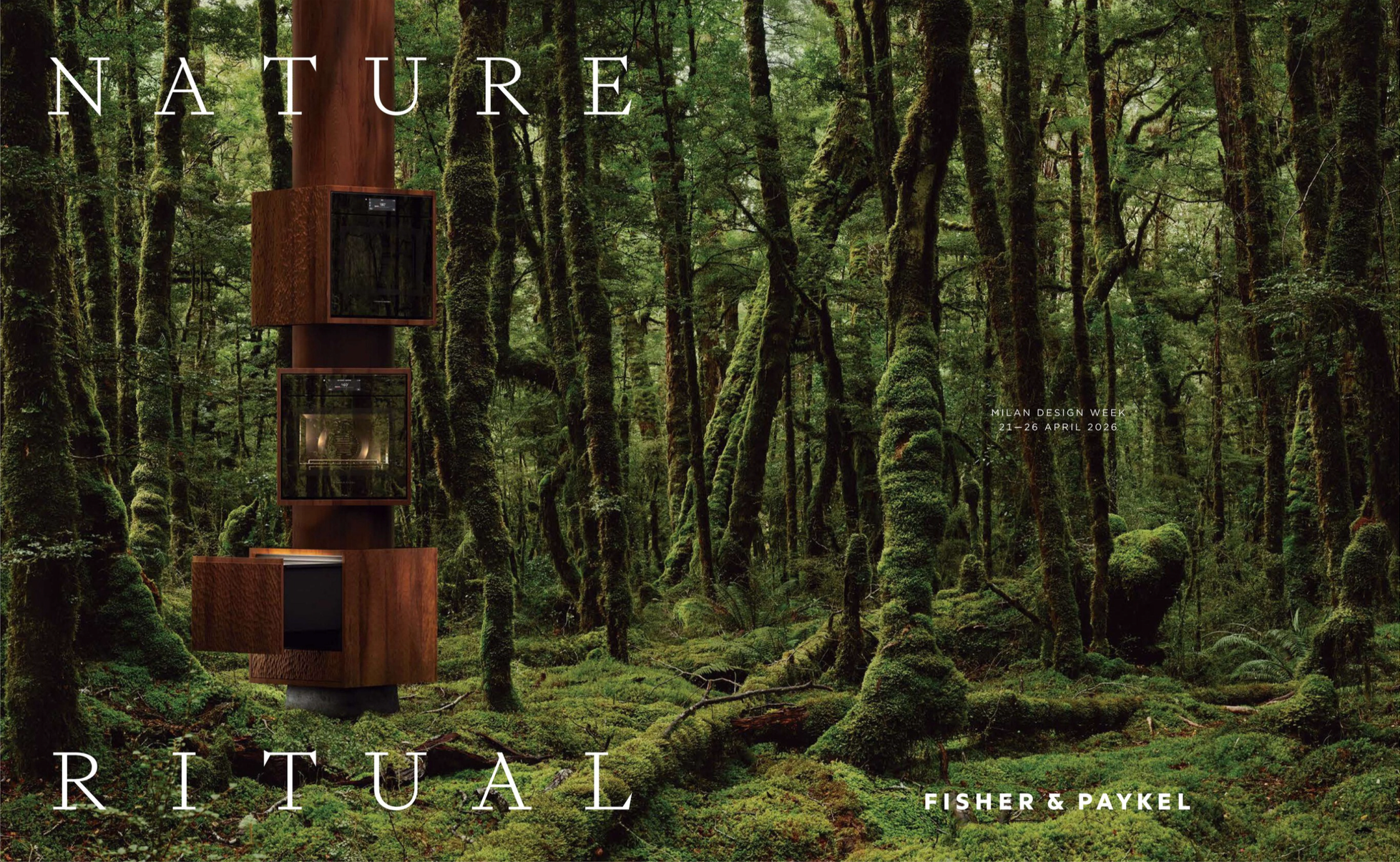
Second, material storytelling. Wood-paneled appliances set against living timber. The link is tactile before it is intellectual. You are not looking at a fridge. You are looking at something that seems to have grown out of the forest floor, an object that belongs to the natural world rather than imposing on it. That is a hard trick to pull off in a kitchen showroom and an easy one in a forest, which is presumably why they went to the forest.
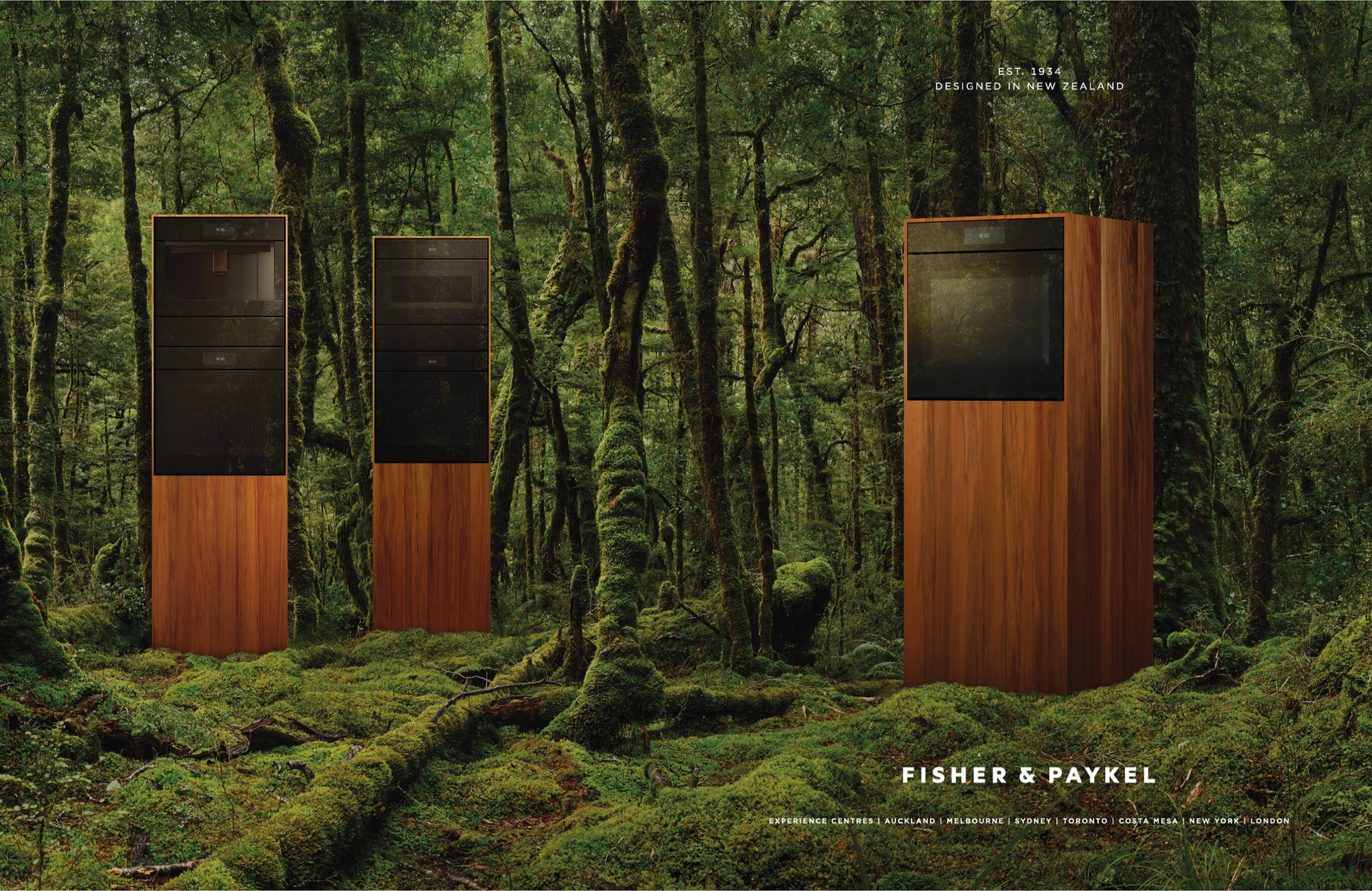
Third, the exotic factor. The setting does the heavy lifting on desire. A premium oven in a kitchen is a premium oven. The same oven in an ancient forest reads as rare, strange, slightly mythic. The context promotes the product from appliance to object of want, and it does it without a single adjective.
So that is the concept. A genuinely good one. Maybe a 9 out of 10 on idea alone.
But the idea is not the part that matters most.
What is "repeatable novelty" and why is it the goal?
Here is the thing people miss when they praise a single great ad. The single great ad is not the achievement. The system is.
Every time you run into a new entry in this series, your brain does two jobs at once. It recognizes the brand instantly, before the logo, before the name, just from the visual grammar of appliance-meets-forest. And at the same moment it gets curious, because it wants to know which product is in the frame this time. A wine fridge? An integrated oven? Something you did not even realize the brand made?
Recognition and discovery, firing together, on every single impression.
I think of it like a jazz standard. The melody is fixed. Everybody in the room knows where it is going. But the soloist plays it differently every night, and the pleasure lives in the tension between the part you recognize and the part you have never heard. You lean in precisely because you already know the tune.
That is repeatable novelty, and it is close to the holy grail of brand building. The campaign rewards you for paying attention. It turns a passive viewer into a slightly active one, and every impression deposits a little more equity into the same account instead of opening a new one.
The verdict on the concept: it is good. The verdict on the system is that the system is the actual product.
Why do most modern campaigns throw all of that away?
Now look at almost everything else.
We are living through an era of staggering asset waste, and most of us have stopped noticing because it is the water we swim in. A brand will commission a hundred different ads, each one a small high-effort production, each one pointing in a slightly different direction. No shared concept. No connective tissue. Just a hundred separate attempts to grab a passing eyeball, like throwing a hundred hooks into the water and being surprised when the fish do not learn the boat.
The problem is what it does to memory.
Memory works through repetition and association. You remember the thing you saw fourteen times in the same shape. You do not remember the fourteen clever things you saw once each. When every execution is a fresh experiment, the customer's brain treats each one as a stranger. You are not depositing into an account. You are opening fourteen accounts with a dollar in each and wondering why you are not rich.
There is a quieter mistake underneath the loud one, which is what we have collectively decided to believe about attention. Somewhere along the way the industry convinced itself that people will not sit still for a real idea, that attention spans have shrunk to the length of a sneeze, that the only viable move is shorter, faster, punchier noise. So we stopped making campaigns and started making "content," a word that should make anyone who cares about this work a little nauseous.
Content is what you make when you have given up on being remembered.
What does committing to consistency actually require?
Here is the uncomfortable part. Consistency is boring to pitch.
A new concept every quarter feels like progress. It gives everyone something to present, something to feel clever about, a fresh deck with fresh thinking. Running the same evocative idea for the eighth time feels like you stopped trying, even when it is the single hardest and most disciplined thing a brand can do.
The Fisher & Paykel forest is not technically complicated. There is no proprietary technology in the idea. What it requires is the nerve to find one strong concept and then refuse to abandon it the moment it stops feeling new to the people who made it. And it will stop feeling new to them long before it starts working on everyone else. That gap, between when the creator gets bored and when the audience gets it, is where most good campaigns go to die.
The discipline is not in the inventing. It is in the not-quitting.
Trusting the audience enough to repeat yourself
We have built a whole practice around the assumption that people will not stick around, and then we hand them fragmented, diluted, forgettable work that proves us right. It is a self-fulfilling prophecy with a media budget.
But memory does not work the way the pessimists insist it does. People can hold an idea. They will hold it, if you give them one worth holding and then have the patience to show it to them again and again until it settles in and becomes furniture in their mind. The forest does not work because it is fancy. It works because it shows up, the same and slightly different, until you cannot think about premium kitchen appliances without a little moss creeping into the frame.
The lost art is not creativity. We have plenty of that, scattered across a thousand one-off executions that nobody will recall by Friday. The lost art is the will to pick one true thing and stay with it long enough for it to mean something.
Find the idea that can breathe. Then have the nerve to let it.

