The French Speaker That Got Cheaper When It Got Better
Triangle’s marketing strategy for the Capella 2 speaker system focuses on “intensity” rather than convenience, appealing to listeners who value both sound quality and streaming capabilities.
Quick answer:
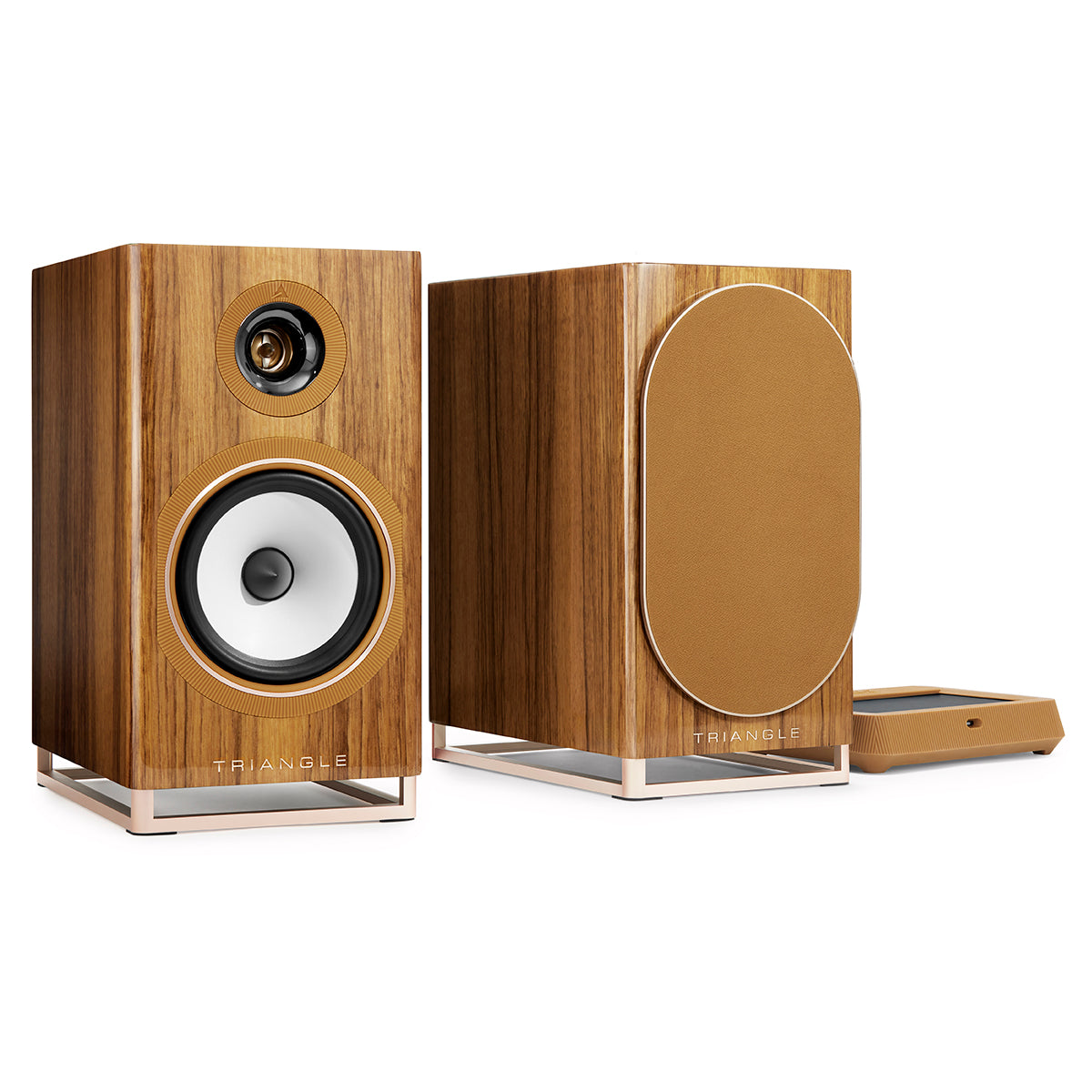
The Triangle Capella 2 is a French-made active wireless speaker system consisting of two amplified standmount speakers and the Stereo Hub 2 network player. It streams at up to 24-bit/192kHz via Wi-Fi, supports TIDAL, Spotify Lossless, Roon, AirPlay, and Chromecast, delivers 100 watts of Class D amplification per speaker, and comes in five finishes. Assembled in Soissons, France. Priced at $3,499 USD.
There is a rule in consumer audio that nobody writes down but everybody follows: when a product gets updated, the price goes up. Triangle broke that rule with the Capella 2. Better processor, expanded streaming support, new finishes, upgraded remote, and the price either held flat or dropped depending on your market. Simon Lucas at Sound Advice called it "contrary to the expectations those of us with long experience of the audio industry tend to have." That sentence is worth sitting with, because the decision to price against convention is not a footnote. It is the marketing thesis.
What does the Triangle Capella 2 marketing strategy actually reveal about the brand?
Triangle has been manufacturing speakers in Soissons, in the Picardy region of France, since 1980. That is over four decades of acoustic work happening in the same building, by people who have presumably spent a significant portion of their professional lives thinking about how sound moves through air and wood. The brand positioning lives here, anchored in that manufacturing origin story. "Craftsman of sound" is the language they use, and unlike most heritage claims that exist purely as nostalgia packaging, Triangle's has a physical address and a factory tour to back it up.
The target audience is someone who has graduated past the idea that convenience and fidelity are mutually exclusive. Not a first-time Sonos buyer. Not a dedicated two-channel audiophile running separates through a valve amplifier. The Capella 2 buyer sits somewhere in between: a person who knows what a horn tweeter is, cares that the mid-bass cone is made from natural cellulose pulp, and also wants to stream Qobuz from their phone without touching a cable. That is a real and underserved segment, and Triangle is one of the few brands with the acoustic credibility to occupy it without looking like a tech company cosplaying as a speaker manufacturer.

The messaging does something interesting. Triangle does not sell the Capella 2 on convenience. The word they return to is "intensity." Rediscover music with ease and intensity. That framing matters because it keeps the emotional register pointed at the listening experience rather than the setup process. A lot of wireless speaker marketing sells relief from complexity. Triangle is selling the thing that complexity was always supposed to be in service of.
The customer journey Triangle designs for the Capella 2 is unusually patient. There is a telephone appointment service staffed out of Soissons, a 30-day home trial with a full refund, and a companion app that runs automatic room calibration. The brand is essentially saying: we will absorb the risk of you getting this wrong. That posture builds trust in a category where trust is genuinely hard to earn, partly because so many previous wireless speaker purchases have ended in disappointment and drawer-disposal.
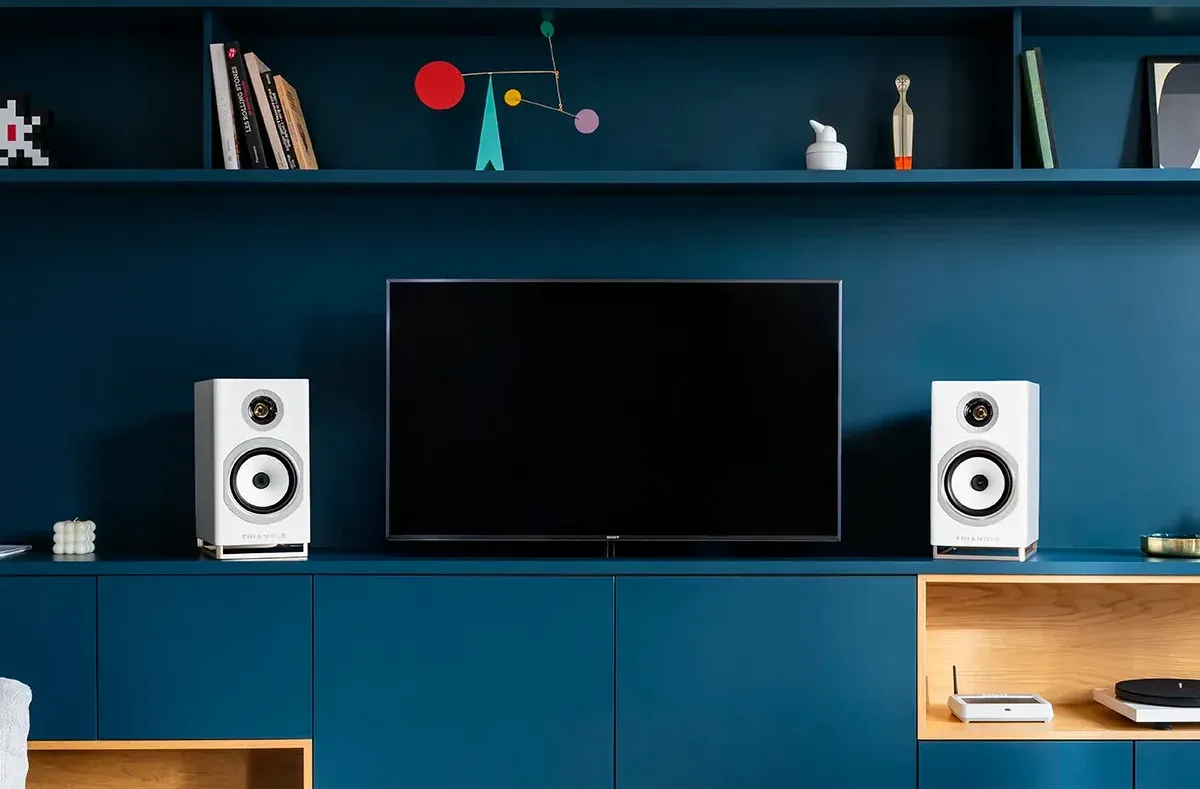
On differentiation, the most structurally interesting decision is the Stereo Hub 2 as a separate component. Every audio source connects to the hub, not to either speaker. This removes the "one active speaker with a cable running to the passive partner" compromise that undermines some competitors, and it gives the speakers true placement freedom. It also produces an object worth designing, which Triangle does, matching the hub finish to the speakers. The system becomes a set.
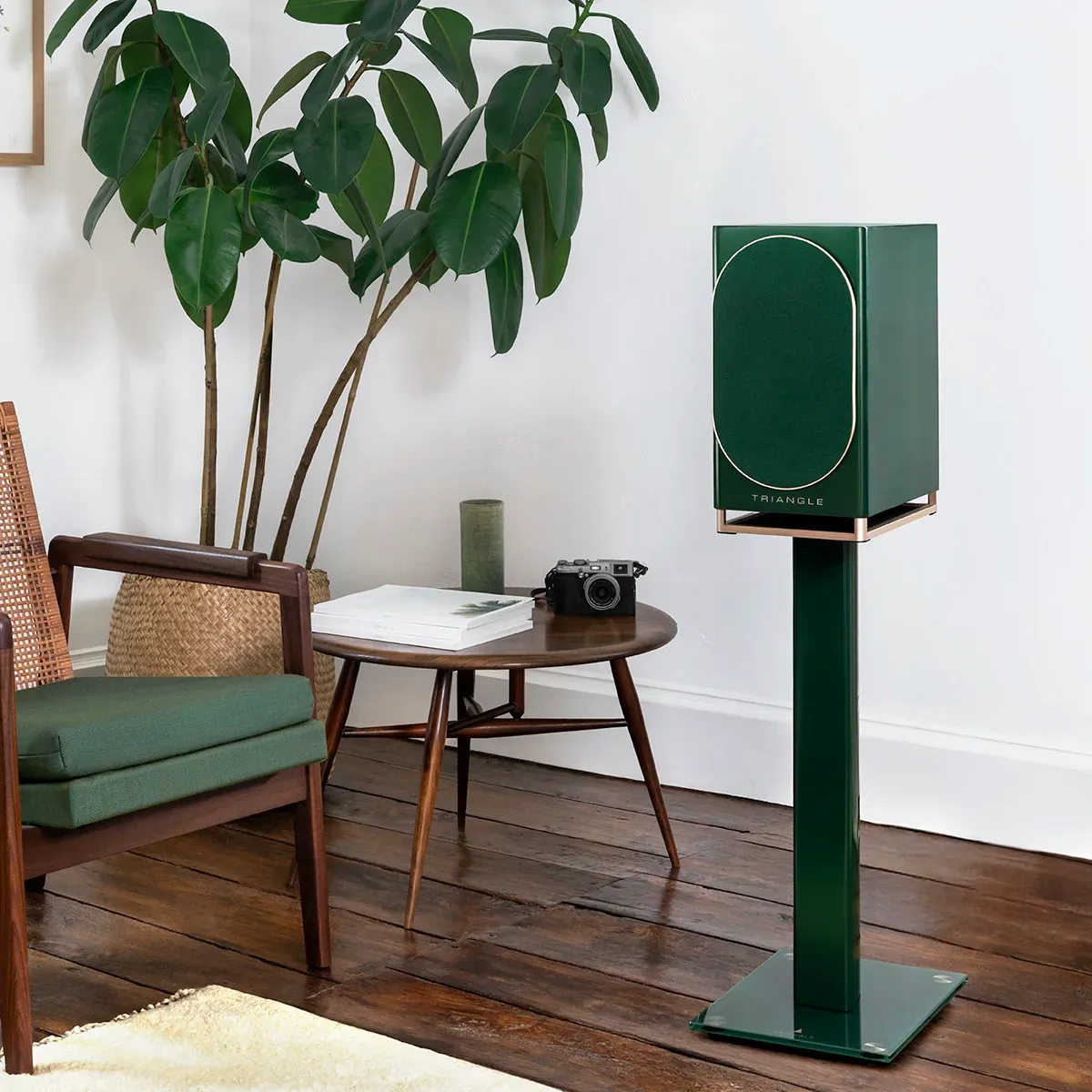
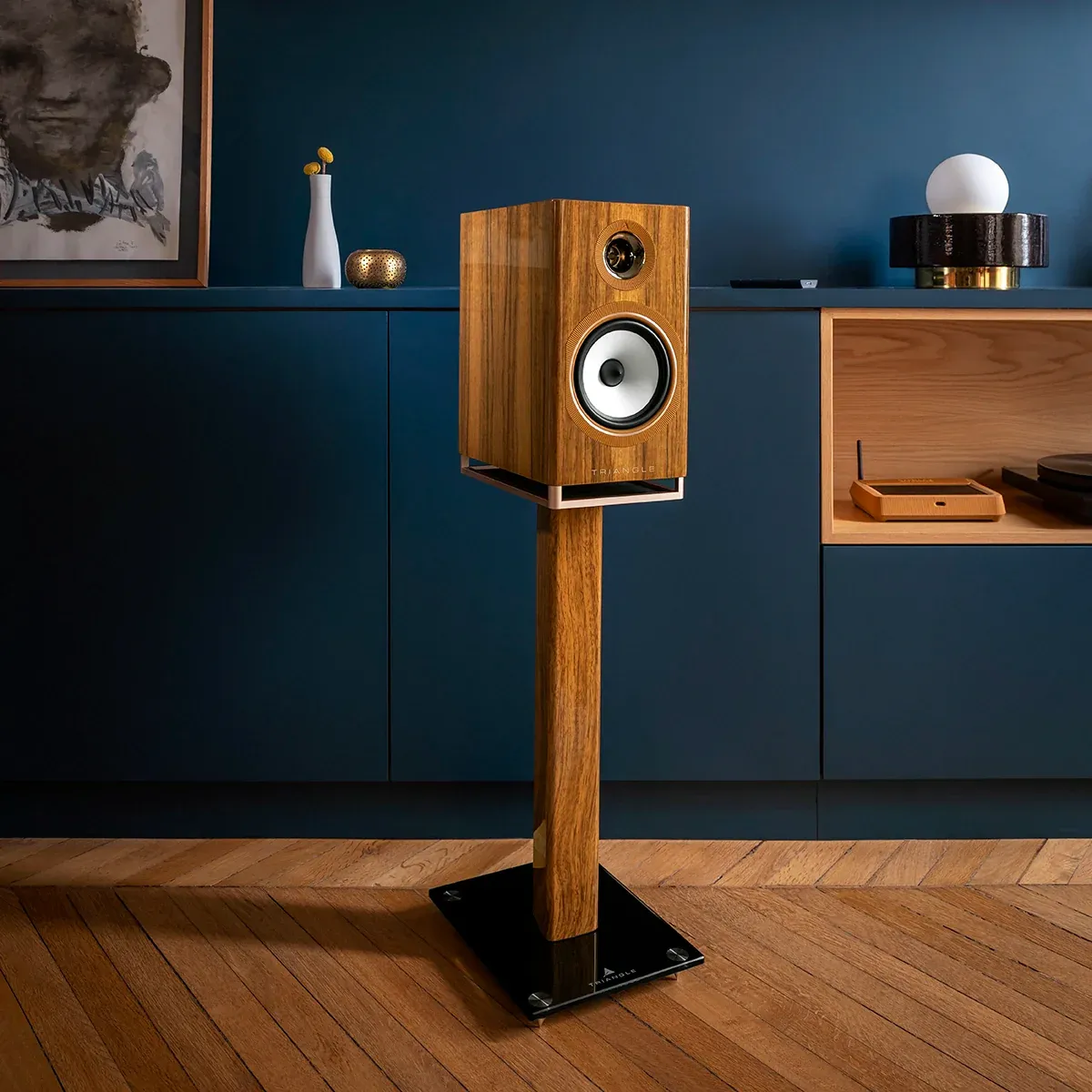
That design language carries considerable weight. Five finishes with names like "Astral Blue," "English Green," and "Space White" are not color options. They are personality options. The "English Green" finish on the review sample had, according to Sound Advice, a "flawlessly applied" lacquered surface. Each finish ships with a matched Stereo Hub 2. The S05 stands can be color-coordinated too. This is a brand asking its buyers to think of the whole room, not just the speakers.
The pitch, assembled
Triangle Capella 2 is the system for the listener who has spent years either overpaying for complexity or under-delivering on sound, and is now done with both. It is built by a company old enough to have convictions about acoustic materials and new enough to support Roon, Spotify Lossless, and automatic room calibration in the same box. The decision to lower the price on a better product signals something beyond value. It signals a brand that would rather be trusted than protected.
Whether that is enough to compete against Technics, JBL, and the rest of the $2,000-$3,500 active speaker market is a genuine open question. The Capella 2 has the lineage and the design restraint to make the argument. The answer, as it usually is, will come from the listening.
 TRIANGLE HiFi USA