
The Czinger 21C Is a Business Card Disguised as a Hypercar
The Czinger 21C is a 1,250hp 3D-printed hypercar. It's also a live demo for a manufacturing platform targeting Bugatti, McLaren, and the US Department of Defense.

Quick answer:
The Czinger 21C is a limited-production hybrid hypercar built in Los Angeles by Czinger Vehicles, a father-son company founded by Kevin and Lukas Czinger. Only 80 units exist. It seats two in a fighter jet tandem configuration, uses a twin-turbo V8 paired with three electric motors, and holds production car lap records at Laguna Seca, COTA, and the Goodwood Festival of Speed.
Most of what gets written about the 21C starts with the numbers. The speed. The horsepower. The price tag sitting just north of $2.3 million. That instinct is understandable, but it misreads what the thing actually is.
What Czinger Built Here
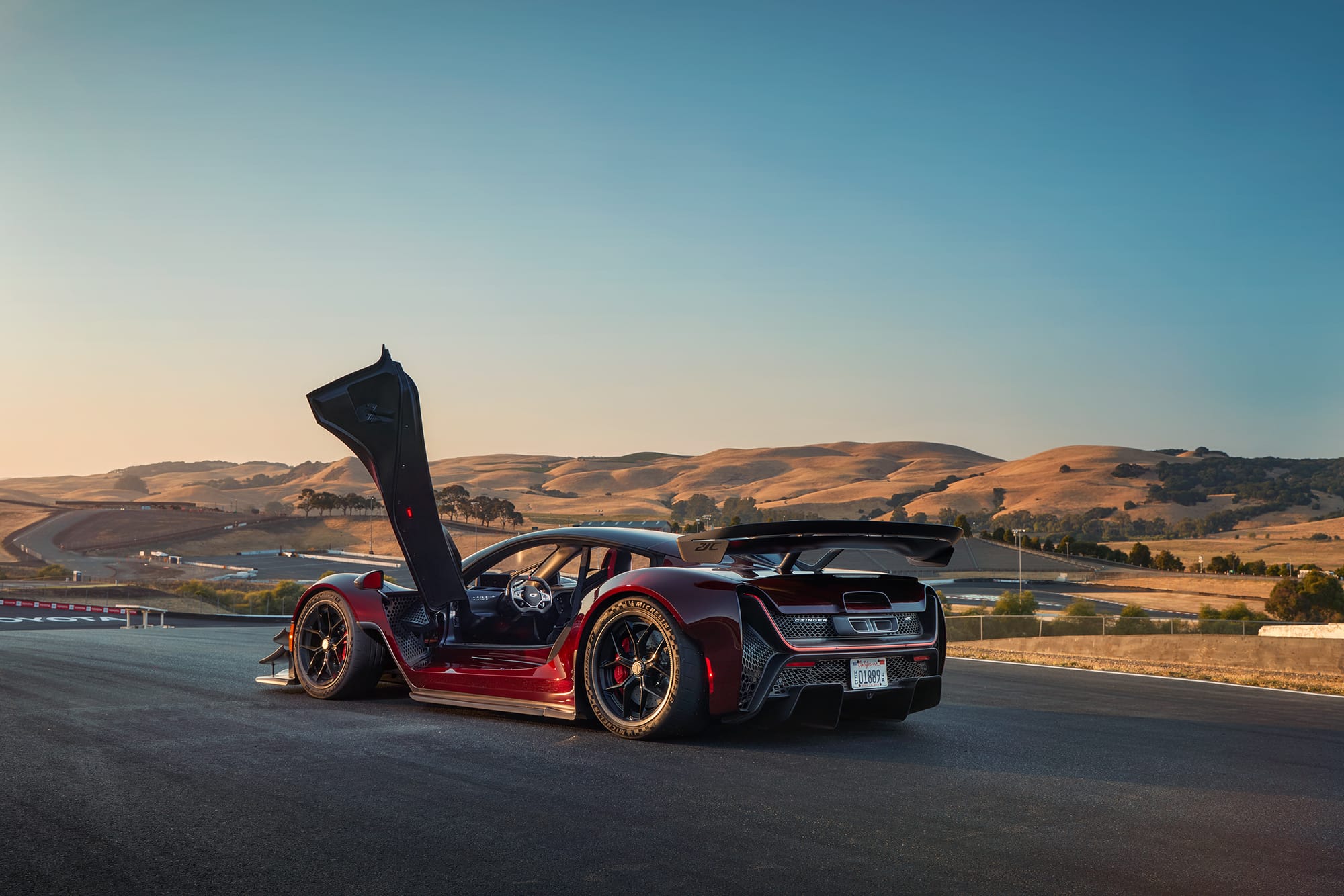
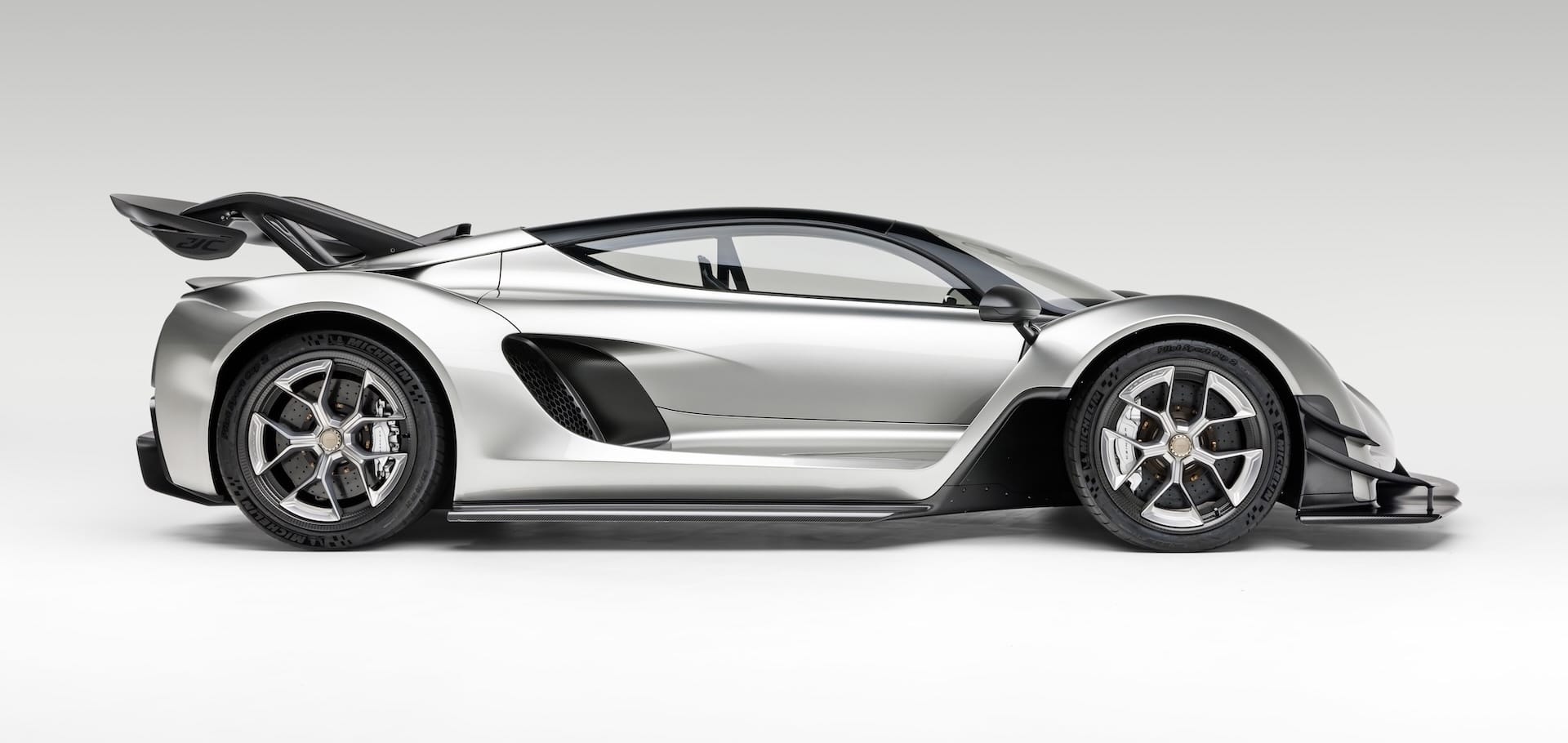
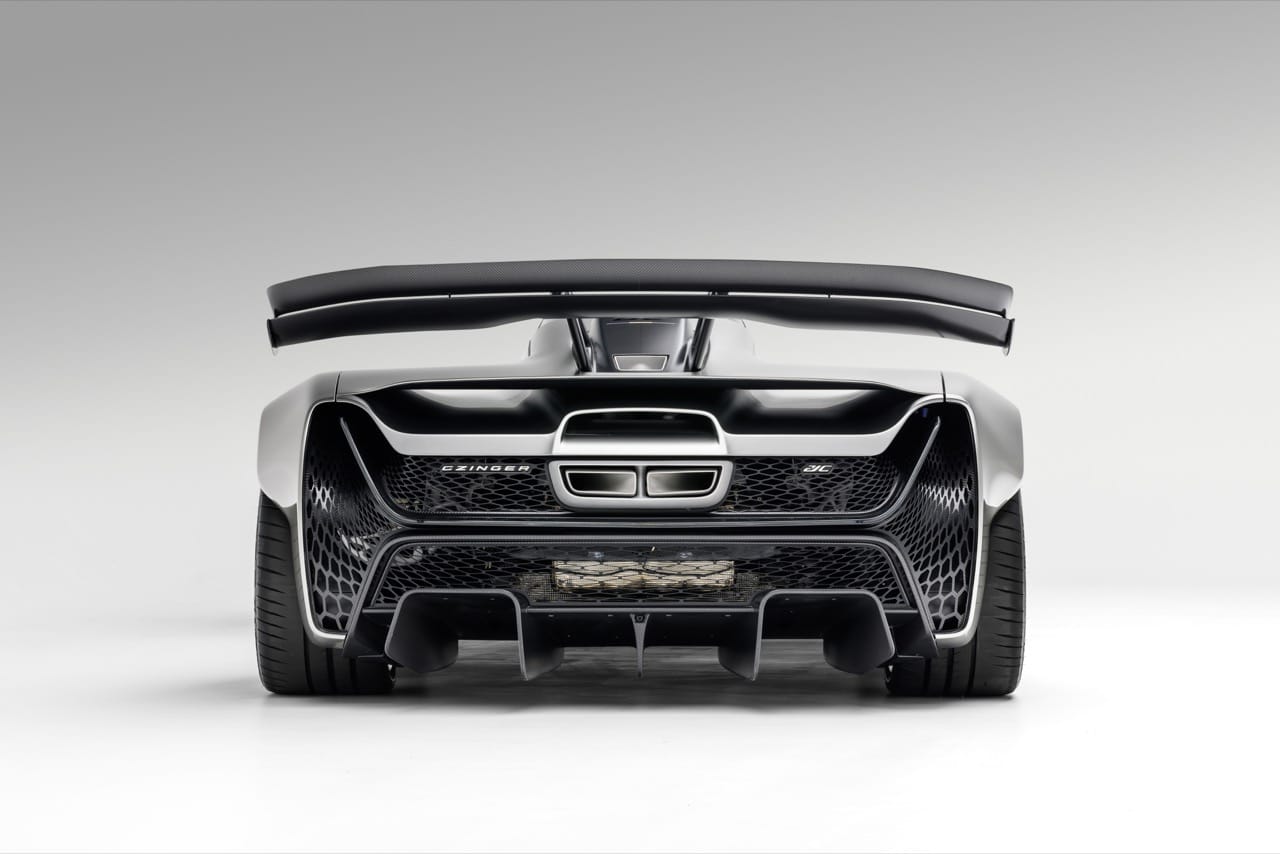
The 21C is a two-door coupé with over 350 3D-printed metal components, developed using generative design software from Czinger Vehicles' parent company, Divergent Technologies. The software doesn't follow blueprints the way traditional CAD does. It iterates through millions of possible geometries, places material only where structural load demands it, and arrives at shapes that look less like machined parts and more like cross-sections of bone. The chassis pieces have been described, by people who saw them in person, as looking like they came off an alien spacecraft. That is not marketing copy. That is what happens when the machine is allowed to answer without the constraint of "but can we mill it."
The result, physically, is a car that weighs significantly less than comparable gas-electric hypercars from European manufacturers, holds production car lap records across multiple circuits, and gets into by sitting on the door sill and rotating yourself in like you're boarding something that was not originally designed to accommodate a body.
The Car Is the Demo, Not the Product

Czinger
Here is the thing Czinger's marketing never quite says directly, but that becomes obvious the moment you understand the business: the 21C exists to prove that Divergent's manufacturing system works.
Divergent Technologies supplies 3D-printed structural components to Bugatti, McLaren, Aston Martin, and defense contractors including Lockheed Martin and Raytheon. The 21C functions as a live, drivable proof of concept for that platform. Kevin Czinger has described it plainly: "The 21C demonstrates what our digital architecture can do." Forbes called it "QED." That framing is accurate. The car is the argument. Every lap record, every press drive, every Road & Track cover functions as a demonstration reel for a manufacturing business targeting industrial OEM contracts worth hundreds of millions. Divergent's own campaign data showed that the 21C's performance marketing generated a reported 300% increase in B2B OEM inquiries. Czinger Vehicles is, in this sense, the most expensive sales tool in the history of the automobile industry.
The Full Marketing Picture
Brand positioning at Czinger runs on two tracks simultaneously, and the tension between them is intentional. To the collector market, the 21C is positioned as a California-made expression of the cutting edge of the human mind, limited to 80 units, designed in the lineage of Le Mans prototypes and fighter jets, with a chassis that references aerospace and aerobiology more than anything Detroit ever produced. The design language delivers on that claim without apology: organic lattice structures, biomimetic node forms, a glass canopy cockpit, and a rear wing scaled for a racetrack rather than a road. The car's visual identity is its manufacturing story made physical. You cannot look at the suspension geometry and mistake it for something stamped.

To OEM buyers and engineering executives, the messaging shifts to capital agility and production economics. No tooling. No fixed-line retooling. Generative design iterated in software, printed in metal at Czinger's Area 21 facility in Torrance, assembled largely by hand. The pitch is that the system is vehicle-agnostic, meaning the same infrastructure that builds the 21C can produce structural components for an Aston Martin or a Bugatti with zero transition time.
The community Czinger reaches is not traditional hypercar culture, exactly. It sits at the intersection of motorsport obsessives, California tech believers, and a certain kind of industrial futurist who finds structural engineering genuinely moving. Kevin Czinger described the cross-section of a printed frame as looking like the inside of a human bone: material placed precisely where competitive pressure, over millions of iterations, determined it needs to be. That is a strange thing to say about a car part, and also a completely honest one.
The marketing pitch, stripped down: buying the 21C is buying proof that the future of manufacturing has already been built, in an industrial district in Torrance, California, and that the 80 people who bought one are holding the receipt.

