Louis Erard Keeps Making Swiss Watchmaking Feel Less Afraid of Color
Louis Erard’s collaboration with Alain Silberstein continues to be a standout in modern watchmaking. The partnership successfully combines mechanical credibility with a unique and recognizable design language.
The Setup
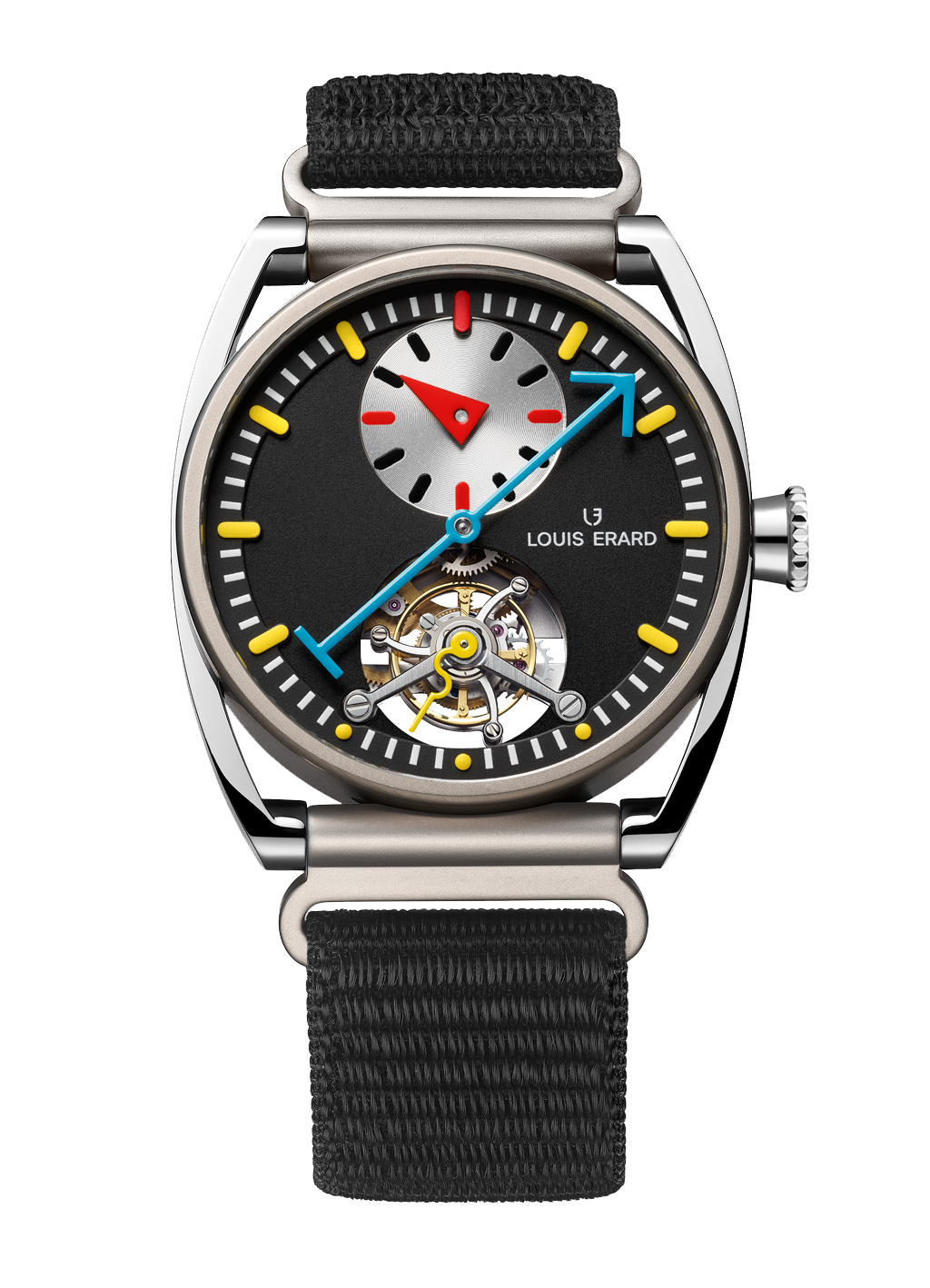
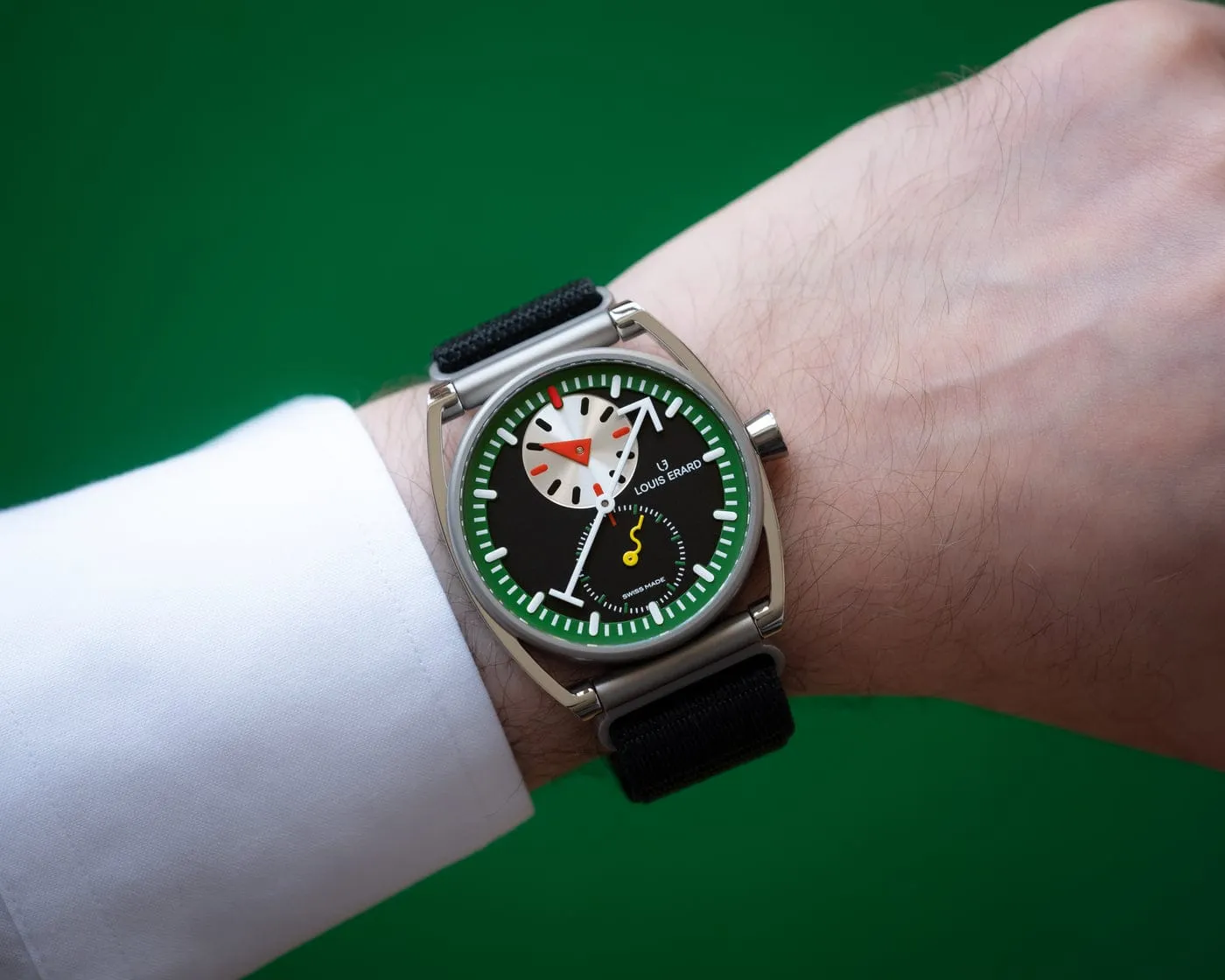
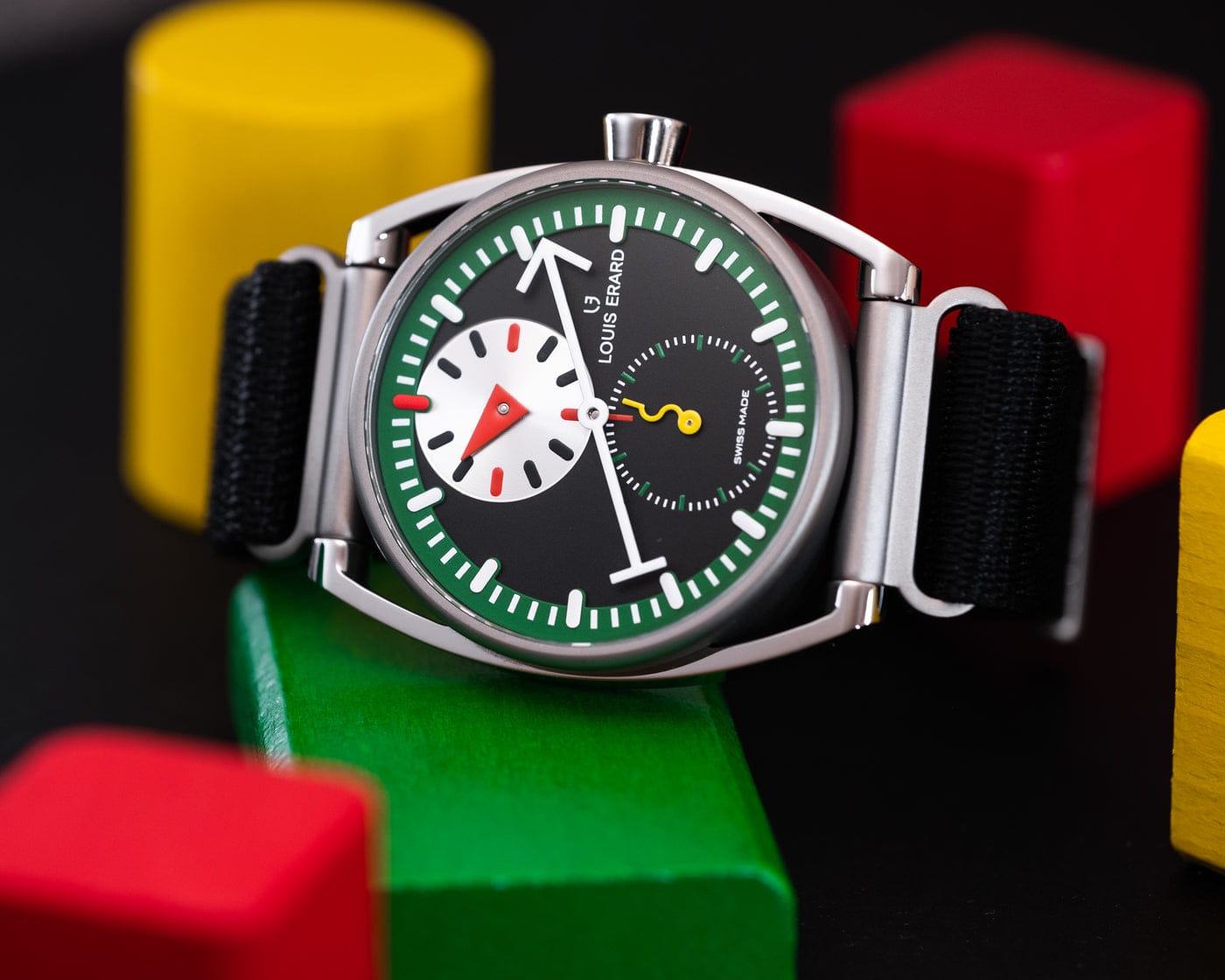
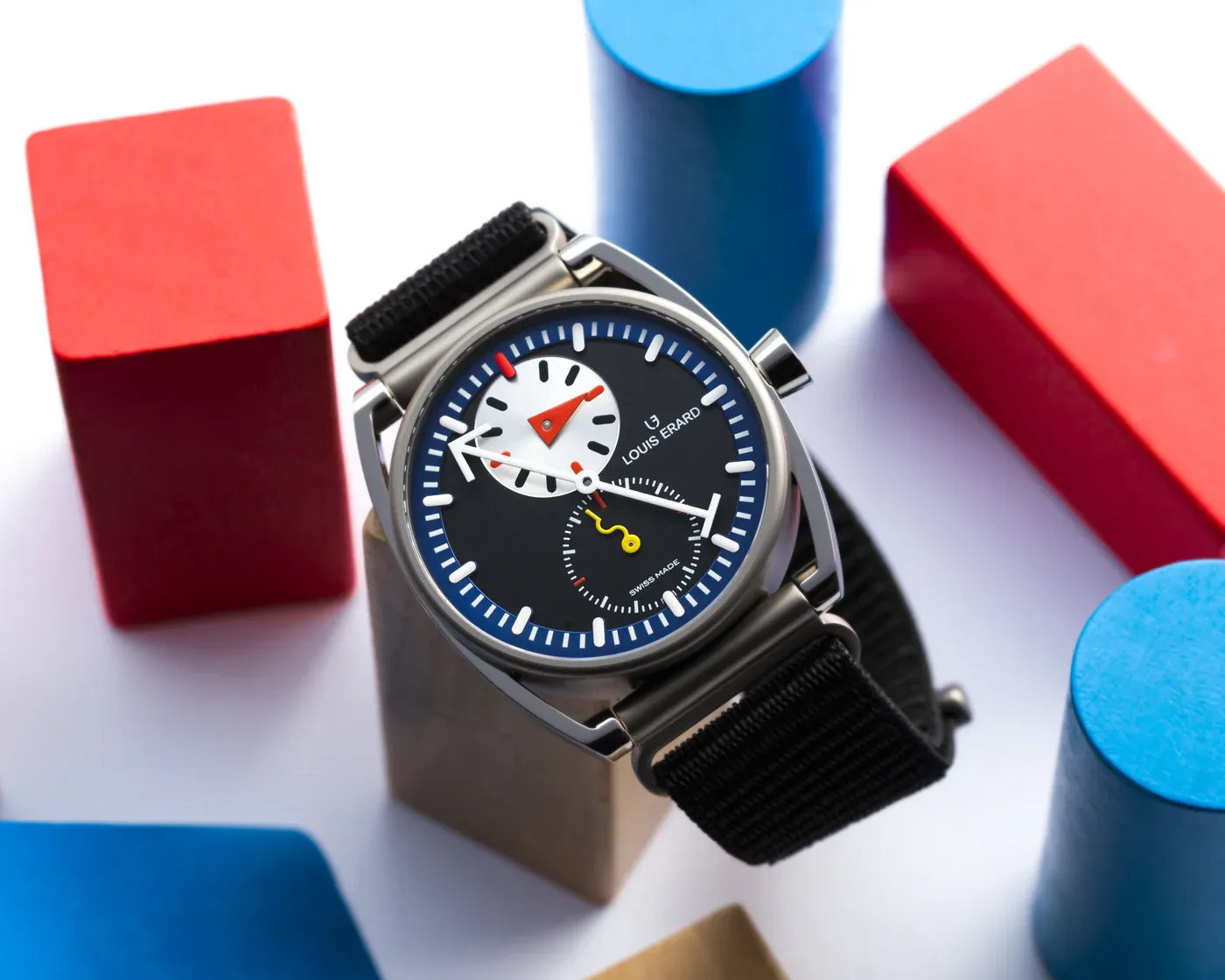
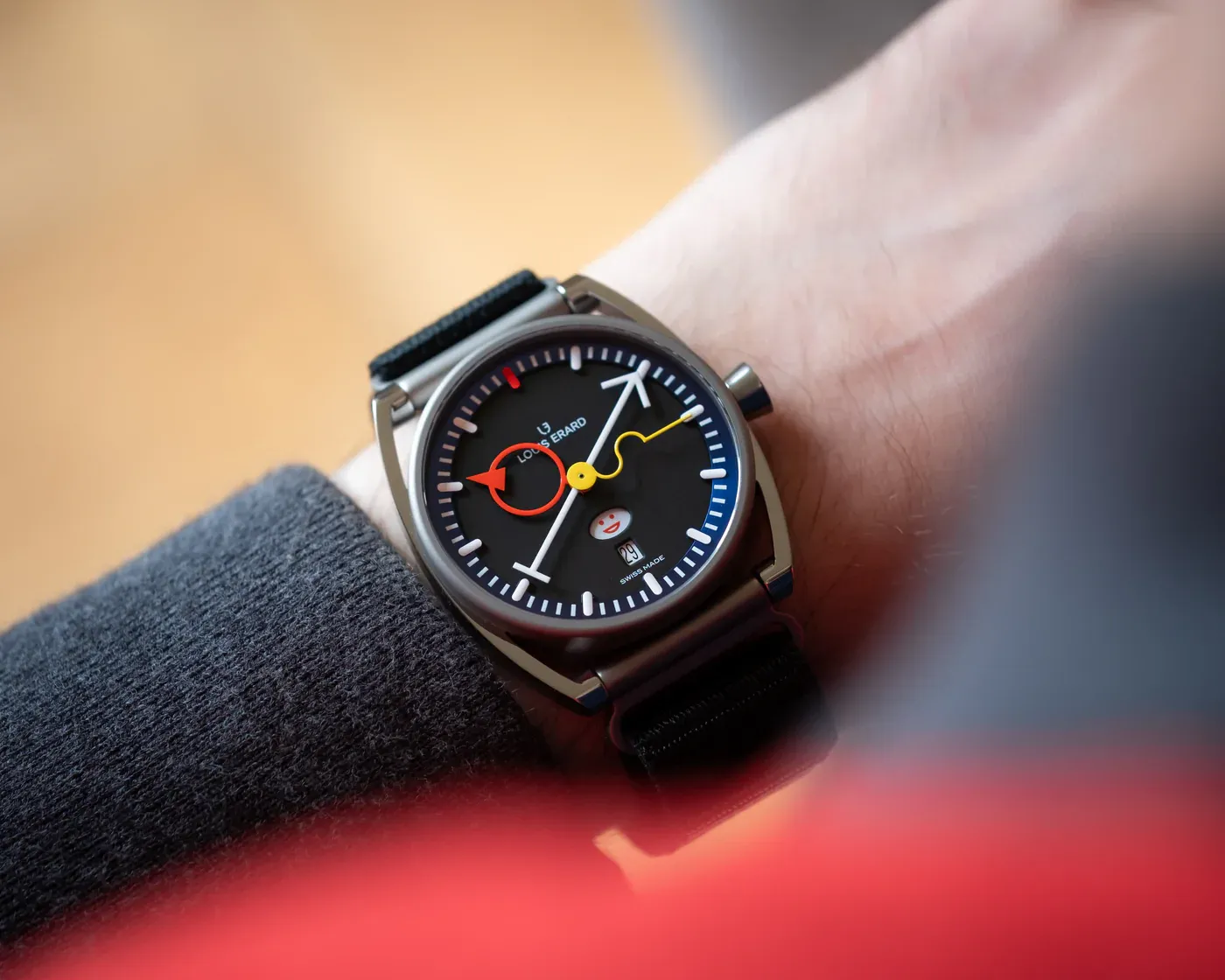
Louis Erard’s ongoing partnership with Alain Silberstein continues to be one of the more interesting collaboration stories in modern watchmaking. The latest Le Régulateur keeps the formula intact: titanium case, regulator display, Sellita automatic movement, and Silberstein’s unmistakable visual language of primary colors and geometric hands. Hours become a red triangle. Seconds turn into a yellow serpentine line. The whole watch feels closer to industrial design than traditional Swiss restraint.
Louis Erard
What makes the collaboration work is that Louis Erard understands the difference between borrowing aesthetics and borrowing authorship. Silberstein’s design language is allowed to fully shape the watch instead of getting watered down into a “special edition” accent package. That gives Louis Erard something many mid-priced Swiss brands struggle to achieve: a recognizable point of view. The regulator complication also becomes smarter in this context because the separated displays naturally support Silberstein’s graphic approach. The watch reads instantly from across a room, which is rare for something this mechanically niche.
Louis Erard x Alain Silberstein
An Infotechnics™ analysis of how a product rates across eight areas of performance.
To explore in more detail, pinch out to zoom in
The hands do most of the marketing before the buyer reads a word.
The shape shows a watch carried by design authorship more than complication. Design language and differentiation score highest because Silberstein’s visual system makes the regulator instantly legible as an object of taste. The softer areas are audience and experience. This is still a niche display for people already receptive to designer watchmaking, but Louis Erard makes the entry feel unusually accessible.
The Breakdown
Brand Positioning and Identity
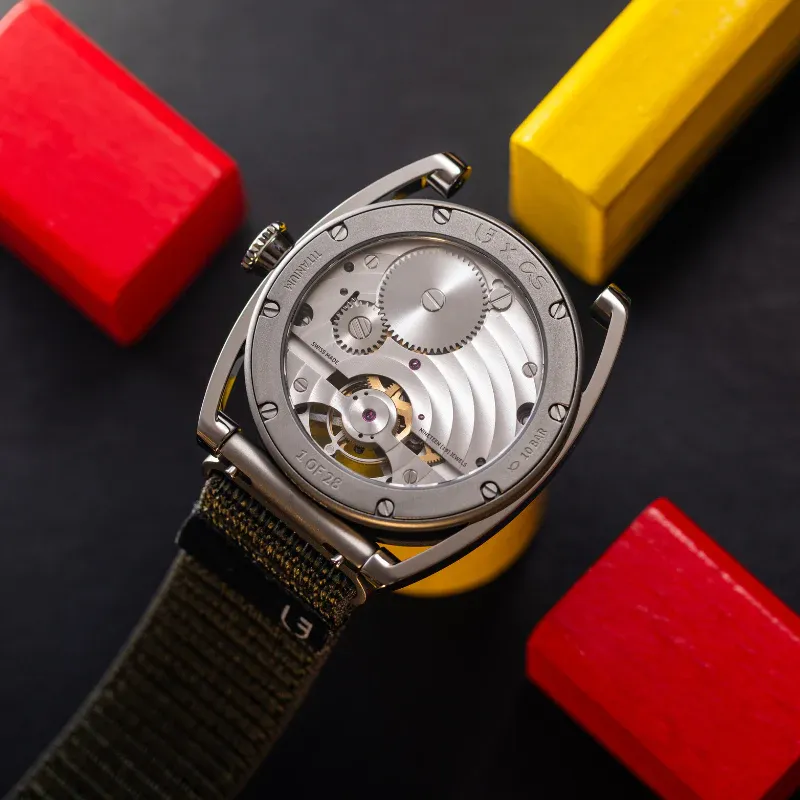
Louis Erard positions its Alain Silberstein collaboration as affordable access to designer-led independent watchmaking. The brand takes its regulator format, then hands it to Silberstein’s Bauhaus-adjacent language of primary colors, playful geometry, and clear visual codes. The result lets Louis Erard look more daring without abandoning mechanical credibility: titanium case, Sellita SW266-1 automatic regulator movement, 100m water resistance, and a 178-piece limit.
Target Segment and Audience
The audience is the collector who wants design authorship at a price far below most artist-driven independent watches. It speaks to Silberstein fans, regulator-watch nerds, design people, and buyers bored by safe steel sports watches. The watch also reaches collectors who may know Silberstein’s original brand but want a more accessible path into his visual world, especially as his collaborations with Louis Erard have become collector pieces.
Messaging and Storytelling
The messaging is built around “regulator, but with personality.” The display separates hours, minutes, and seconds, then Silberstein gives each hand a different shape: red triangle for hours, white minute hand, and yellow serpentine seconds. That makes the complication instantly readable as design, not just horology. Louis Erard also benefits from the longer story: its first Silberstein regulator in 2019 was a turning point that earned GPHG selection and a Red Dot Product Design Award.
Experience and Journey
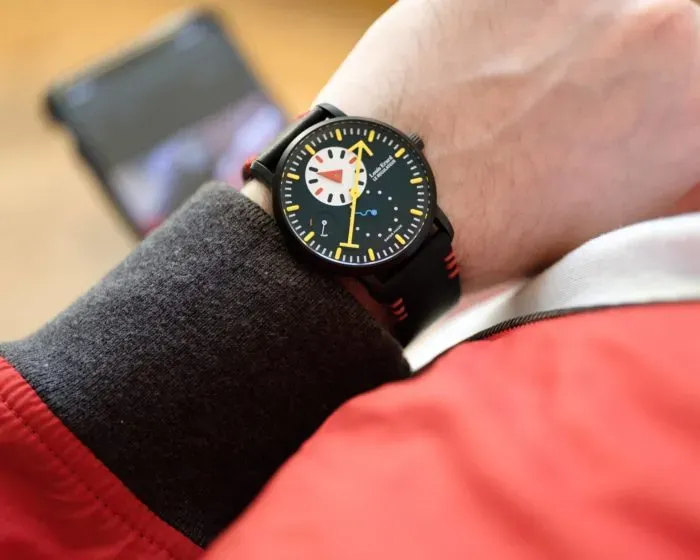
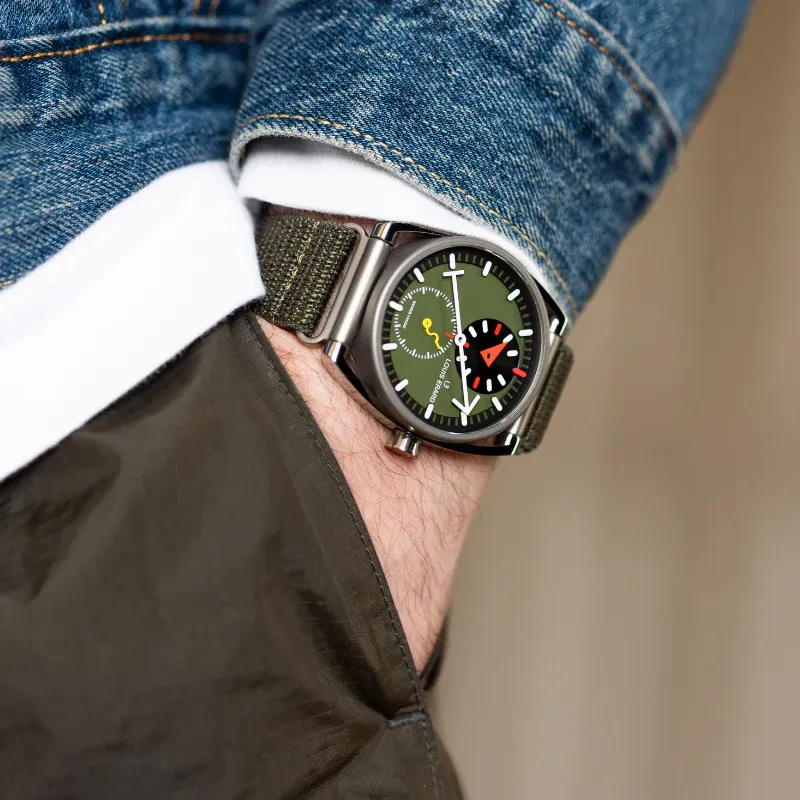
The customer journey starts with color, then moves into the regulator logic. First you see the graphic hands and case architecture. Then you understand that the central hand tracks minutes, the 12 o’clock counter shows hours, and the 6 o’clock subdial tracks seconds. On wrist, reviews point to the comfort of the 40mm titanium case, 47mm lug-to-lug feel, nylon hook-and-loop strap, quick-change system, and lightweight build. The watch rewards curiosity without becoming precious.
Louis Erard
Community and Culture Insight
The collaboration sits inside a watch culture that has become more open to color, character, and designer authorship. Silberstein’s old brand built a loyal following around joyful shapes and primary colors, and the FT notes that his Louis Erard partnership has become his most prolific collaboration after the closure of his original company. Louis Erard also uses this playbook broadly, working with names like Vianney Halter, Worn & Wound, and Konstantin Chaykin to make the regulator format a collaboration platform.
Differentiation and Unique Selling Point
The USP is a limited titanium regulator designed by Alain Silberstein at a relatively approachable price. The watch uses a microblasted grade 2 and polished grade 5 titanium case, Sellita SW266-1 automatic movement, sapphire crystal with anti-reflective treatment, 100m water resistance, quick-change nylon strap, and Silberstein’s unmistakable primary-color hand set. The difference is not only the specs. It is the rare combination of visual authorship, wearable practicality, and limited-edition scarcity.
Design Language
The design language is playful geometry inside disciplined watchmaking. Silberstein’s red triangle, white minute hand, and yellow serpentine seconds hand make the dial feel like an animated diagram. The black dial, opaline counter, green flange, red and white markings, titanium case, vertical sidebars, and nylon strap keep it graphic and casual. The design works because the case behaves like a frame while the hands carry the personality.
Marketing Pitch
The marketing pitch is: buy a serious regulator that refuses to dress like one. Louis Erard is selling mechanical credibility with the visual confidence of an Alain Silberstein object. The watch works because it makes a niche complication feel easy to understand, easy to notice, and easy to enjoy. It gives collectors an affordable way into designer watchmaking without sanding off the oddness that makes the collaboration matter.
Is It A Winning Pitch?
What other watch brands actually understand design authorship instead of simply doing collaborations for marketing noise?