
Karma’s Gyesera Isn’t Chasing Tesla. It’s Chasing Ferrari’s Ghost.
Karma Automotive's Gyesera wants to invent American exotic car prestige overnight. An editorial look at the brand strategy behind the hybrid supercar.

Quick answer:
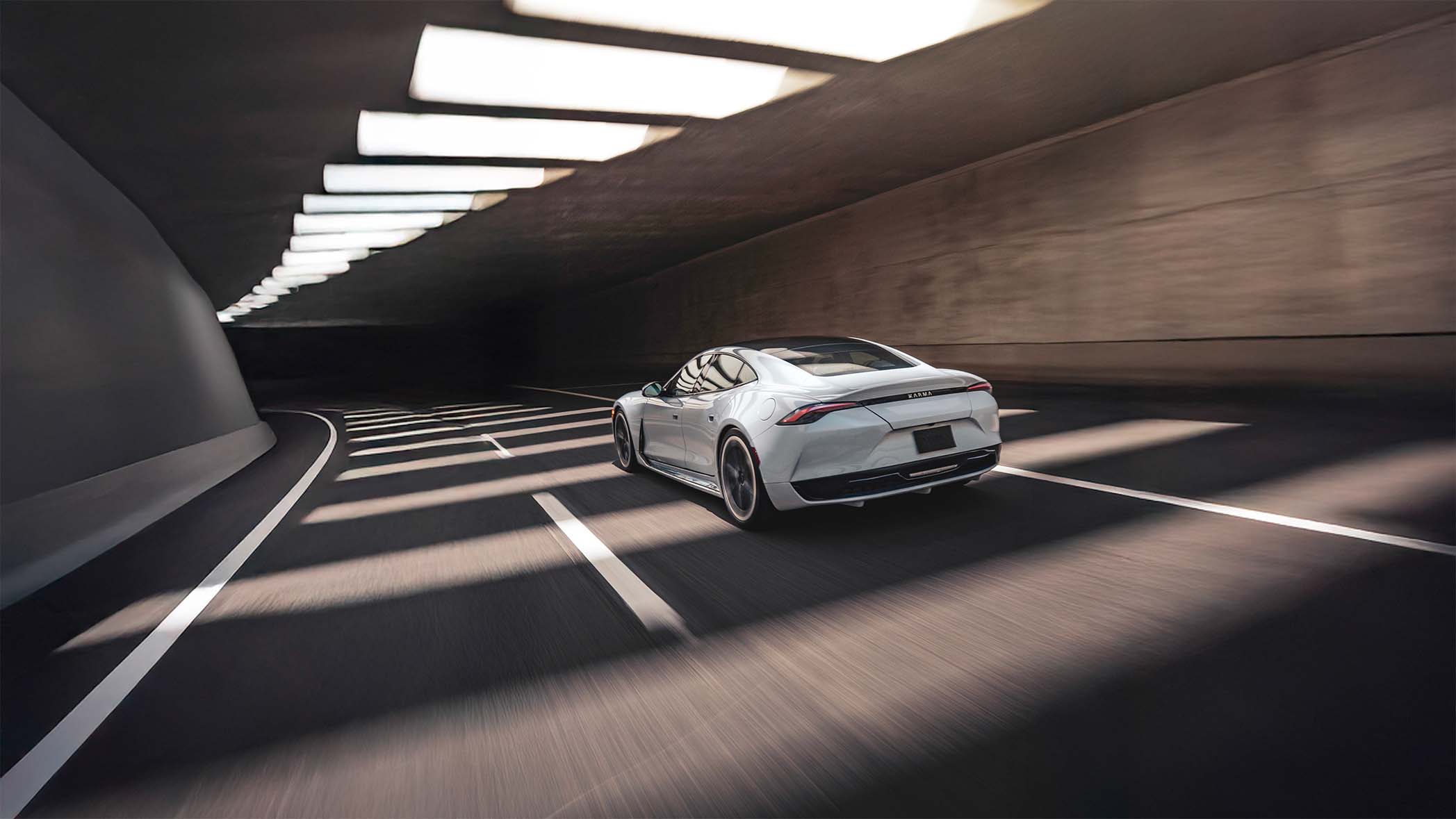
The Gyesera is Karma Automotive's plug-in hybrid grand tourer, a hand-assembled, carbon-bodied two-door built in Southern California that pairs 566 horsepower with up to 80 miles of electric-only range. Karma calls it "An Artifact from Destiny" and is betting that an American exotic car can exist without a European badge or a century of racing history behind it.
That is the real story here. Not the horsepower figure, not the carbon fiber, but the sheer audacity of the claim itself. Exotic cars have always been a European export, built on inherited prestige that took decades to accumulate. Karma is trying to manufacture that prestige from scratch, in real time, with a company that didn't exist before 2014.
Prestige, Made in America. Heritage Sold Separately.
Every word on Karma's Gyesera product page works to borrow legitimacy from somewhere else. "The American Exotic" headline sits directly above language about "precision, passion, and a commitment to building something truly exceptional right here at home." That is a company talking itself into a category it has not yet earned a seat at.
The target buyer implied by this copy isn't someone cross-shopping a Civic. It's someone who already owns something European and exclusive, and who Karma hopes feels a patriotic itch when a brand says "American" and "exotic" in the same breath. That is a narrow, specific bet on identity-driven purchasing, not practicality-driven purchasing.


Karma Automotive
Compare that to how an established manufacturer talks about its own domestic investment. BMW Group's recent $1.7 billion Spartanburg announcement frames American manufacturing as scale and choice: a single assembly line capable of building five different drivetrain technologies for a global customer base. BMW's American story is about capacity. Karma's American story is about identity. One is a numbers argument. The other is a feelings argument, and feelings arguments are much harder to defend when nobody outside the enthusiast press has heard of you yet.
You Can't Inherit a Legend. You Can Name Every Part.
Look at how much design vocabulary Karma assigns to small physical details. The hood vent has a name, the Comet Line. The angular cut ahead of the front doors has a name, the Backslash Feature. The LED signature has a name, Target Lighting.
Naming every panel detail is a storytelling device borrowed directly from watchmaking and sneaker culture, where a feature only becomes collectible once it has a proper noun attached to it. It works because it gives owners and dealers something specific to talk about besides the spec sheet. It also signals, intentionally or not, that Karma knows it needs narrative texture because the brand itself doesn't yet carry inherited weight.
The materials list reinforces the same instinct. Bridge of Weir leather, HRE wheels, Brembo brakes, a choice between JL Audio and Master & Dynamic sound systems: these are all supplier names that exist to be dropped in conversation. Karma is assembling credibility by association, the same way a first-season restaurant hangs a framed magazine review by the door before it has built its own reputation.
The plug-in hybrid drivetrain is the part of the story that actually differentiates the car on substance rather than vocabulary. Eighty miles of electric range with a gas engine as backup solves real range anxiety in a way a pure EV supercar cannot, and it lets Karma dodge the infrastructure problem that haunts every low-volume electric exotic. That's a genuine engineering answer to a genuine customer objection, buried under several paragraphs of Comet Line poetry.
The Appeal of Getting There First
The configurator language, "Assigned Drivers Only," gives away the intended customer more honestly than the brand copy does. This isn't a car aimed at mass awareness. It's a car aimed at a small circle of collectors who want something their friends haven't seen, built in numbers small enough to guarantee exclusivity by default rather than by design.
That customer doesn't need Karma to out-market Ferrari or Lamborghini. They need Karma to be interesting enough at a dinner party, which is a considerably lower bar than building a seventy-year heritage brand overnight. Judged against that bar, the hand-assembled construction, the Southern California build location, and the drive-mode language about carving canyon roads all land exactly where they need to.
What Karma is actually selling is a founding-member story: buy in now, while the badge is still unknown, and own a piece of a brand's origin before anyone else recognizes the name. That pitch has worked before in watches, sneakers, and independent coachbuilders. Whether it works for a car company with no racing pedigree and no decade of word-of-mouth behind it is the bet the Gyesera is actually placing.
 — Jonny Lieberman


