
Jackson Pollock Was Nobody Here. Now It's a Selling Point.
A West Village condo sells on Jackson Pollock's unfamous years. Here's the marketing logic behind turning an artist's uncertainty into a selling point.
Quick answer:
46 Carmine Street, Unit 4 is a top-floor, one-bedroom condo in an 1827 Federal-style West Village townhouse, marketed as "The Artist's Enclave" because a 20-year-old Jackson Pollock lived and worked there in 1932 with his brother Charles, before either Pollock or Abstract Expressionism existed as a concept. The unit has since sold twice, been renovated, and now trades on that single biographical detail.
The Artist Wasn't Famous Yet. Perfect.
Compass did not call this "a renovated prewar one-bedroom." It called it The Artist's Enclave, a name that does two things at once. It signals creative identity before a buyer reads a single spec, and it quietly tells you who this listing is for.
The target is not a family needing a second bedroom. It is a buyer who wants a story to tell at a dinner party, someone who finds cultural proximity more persuasive than closet space. The copy leans into that directly, framing the unit as the place Pollock went "to figure out who he was going to be," which is a strange and genuinely interesting choice of angle for a sales document.
Most developers selling on a famous former resident pick the version of that person already covered in gold leaf. This listing picks the unfinished draft. That is either a bold act of storytelling discipline or an accident of the facts available, and honestly, it does not matter which. It works either way.
Compass
Four Flights Up, a Century of Stories
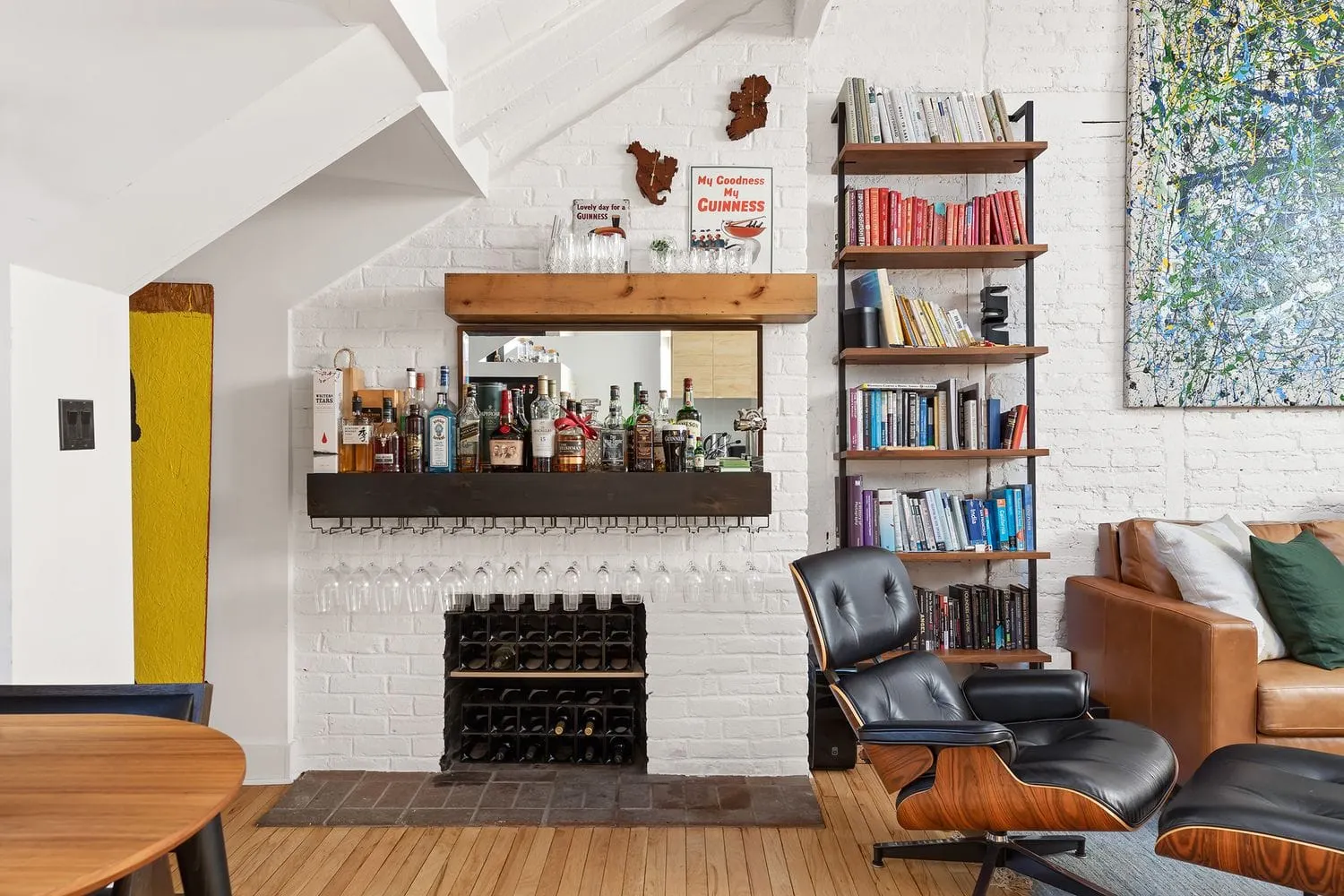
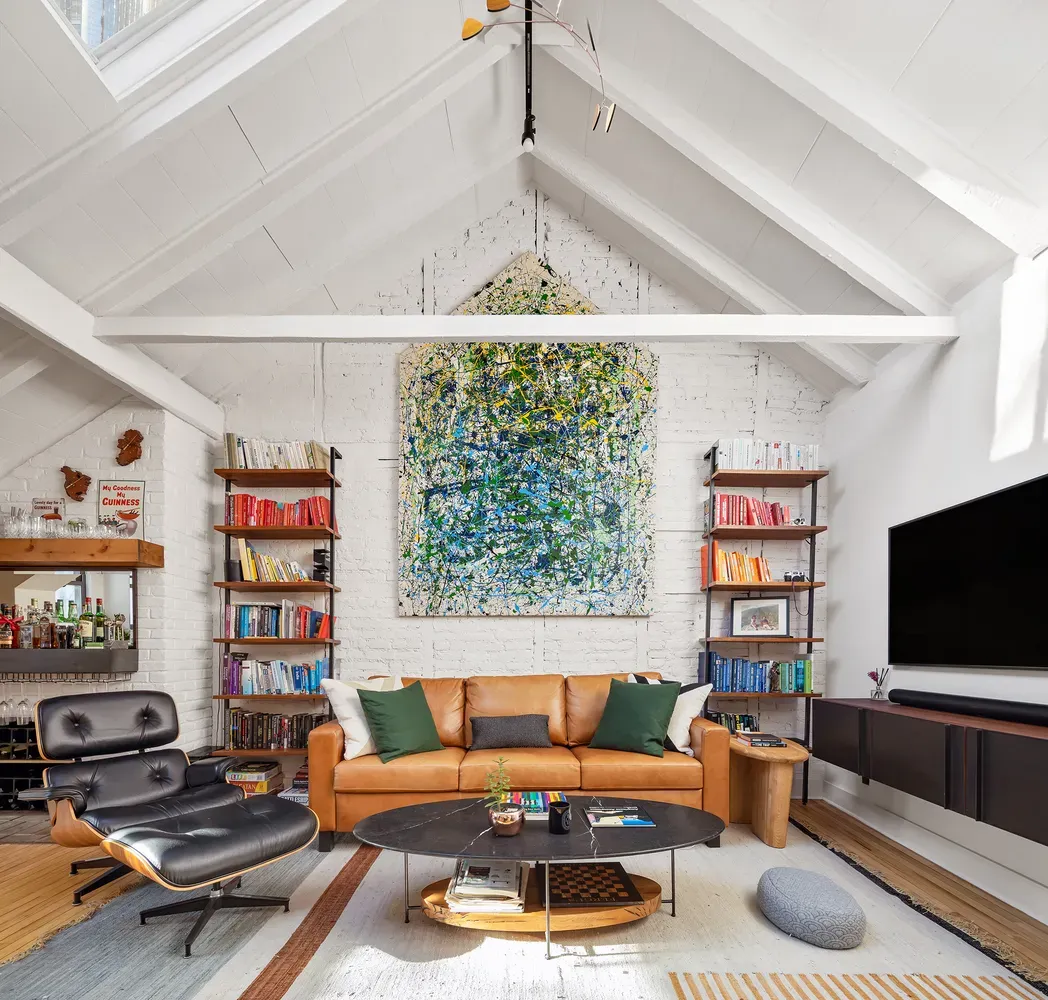
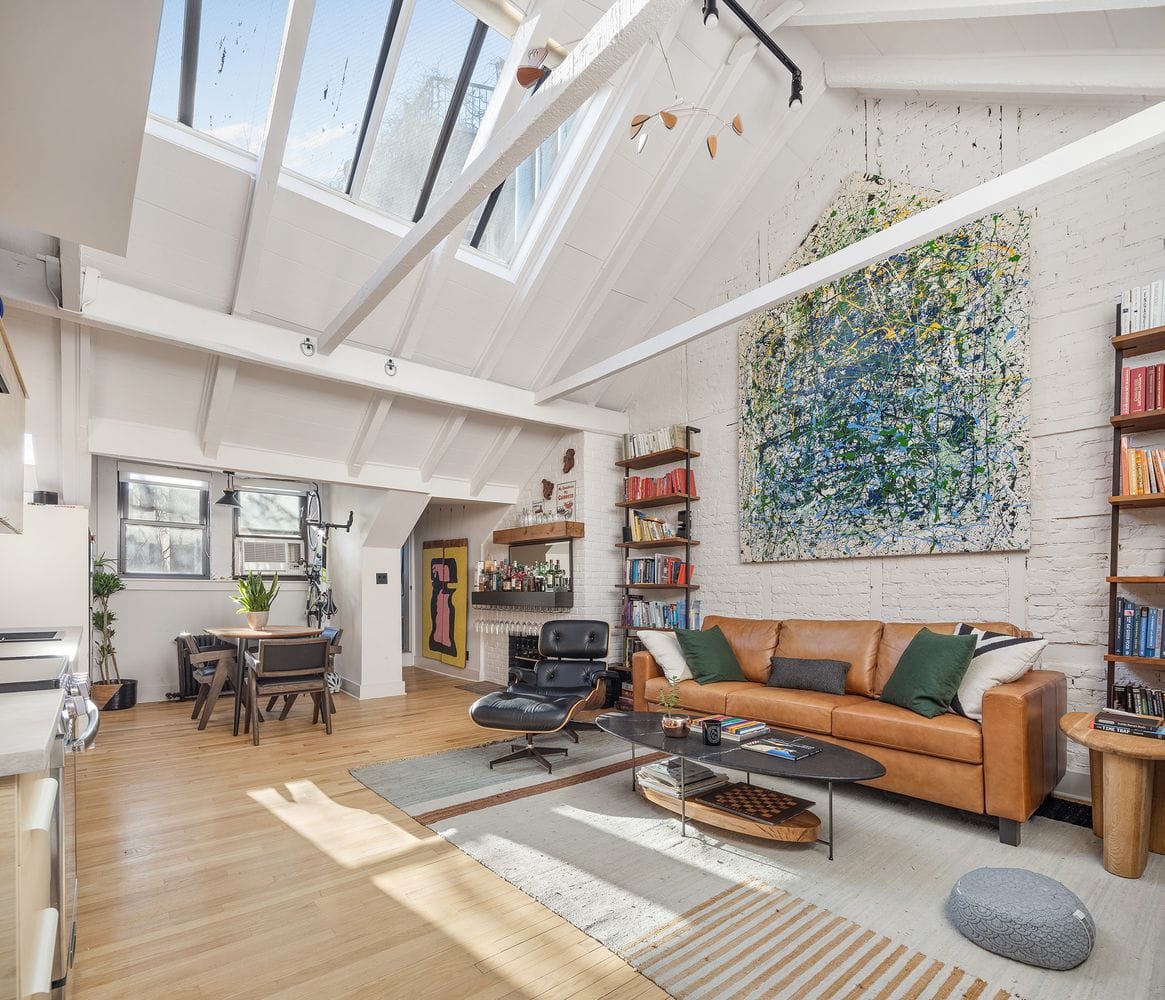
The design language backs the narrative instead of fighting it. Fourteen-foot ceilings, exposed beams, and a loft positioned as a "studio, home office, or creative retreat" all point at the same word without ever saying it: artist.
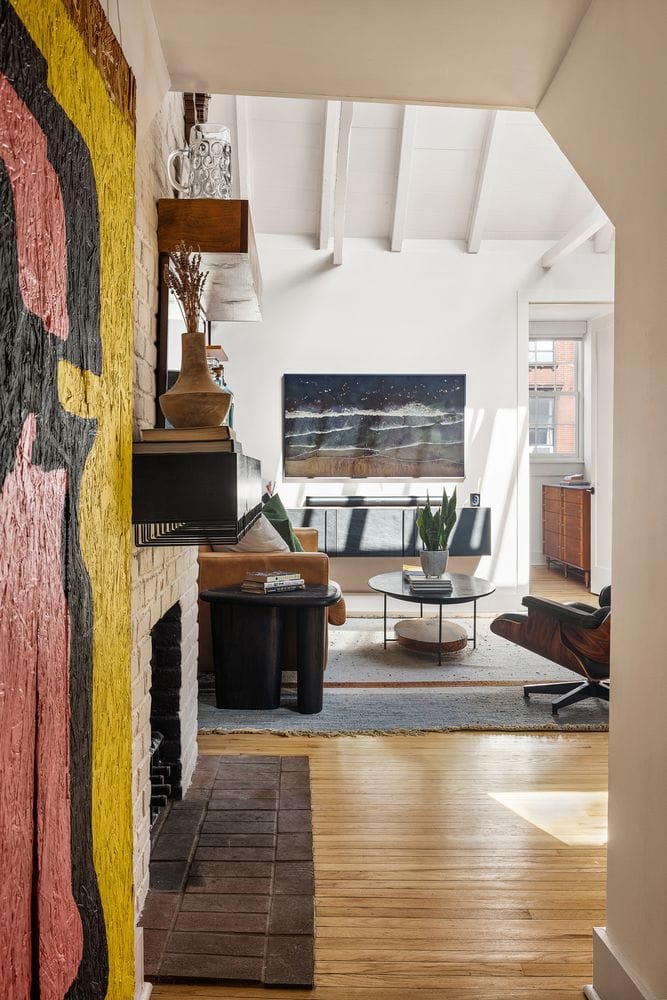
The listing calls the feeling an "urban treehouse," which is a smart bit of copywriting because it reframes a top-floor walk-up, usually a liability, into the entire premise. Skylights and treetop views become the reward for climbing, not an apology for the lack of an elevator. A decorative fireplace and exposed brick do the same work, adding visible age in a market where a lot of renovations try to erase it.
The building's documented history, a milliner selling hats downstairs in the 1850s, artists living there in the 1930s, landmark status arriving in 2010, gets folded into the pitch as continuity rather than trivia. The shared garden and the neighborhood's jazz clubs, comedy venues, and indie cinemas extend that same idea outward. The apartment is framed as one data point inside a longer, still-running story about the West Village as a place where people go to become someone.
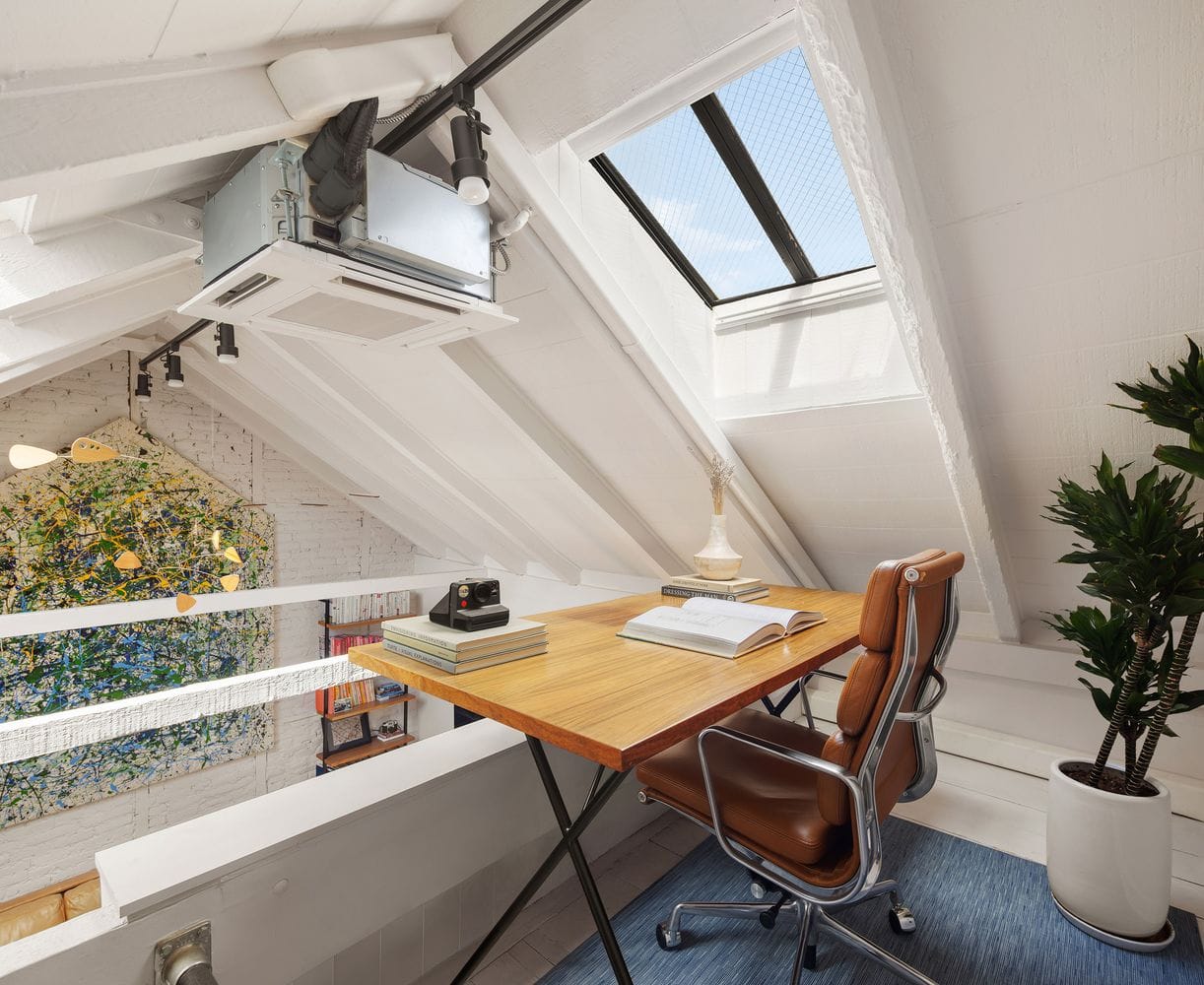
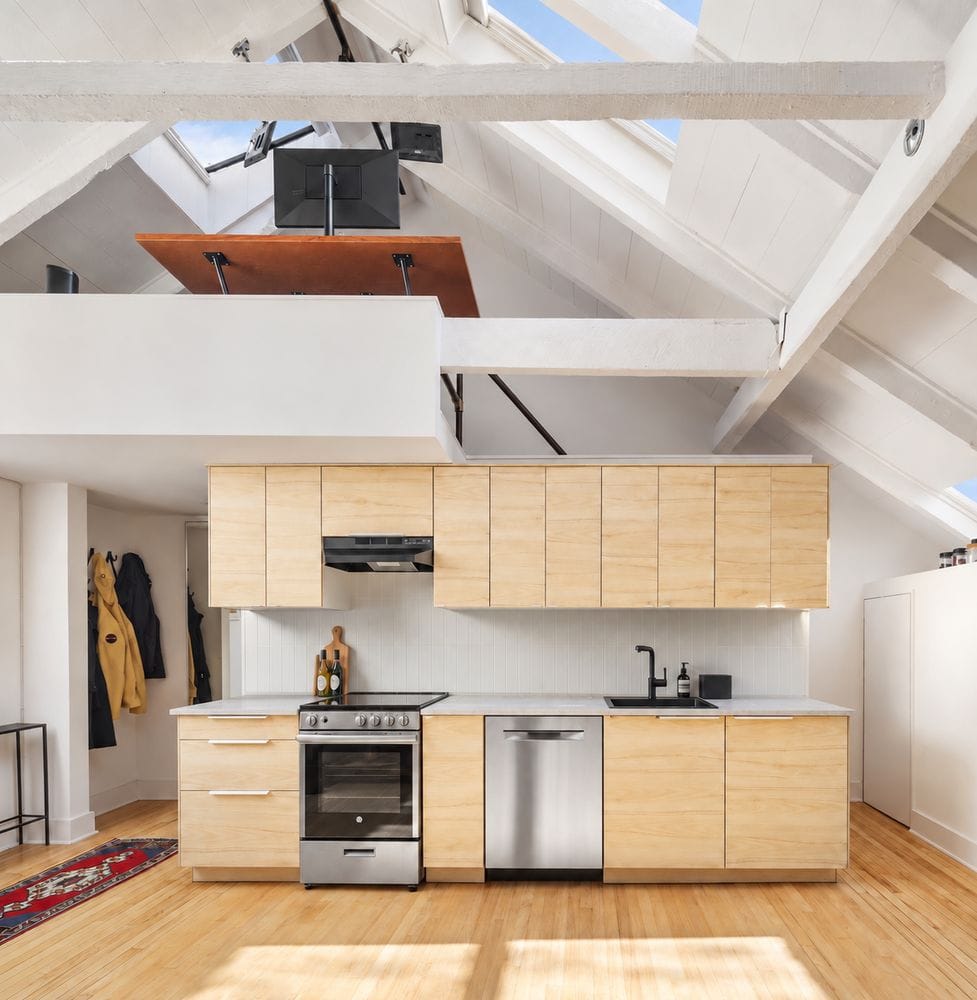
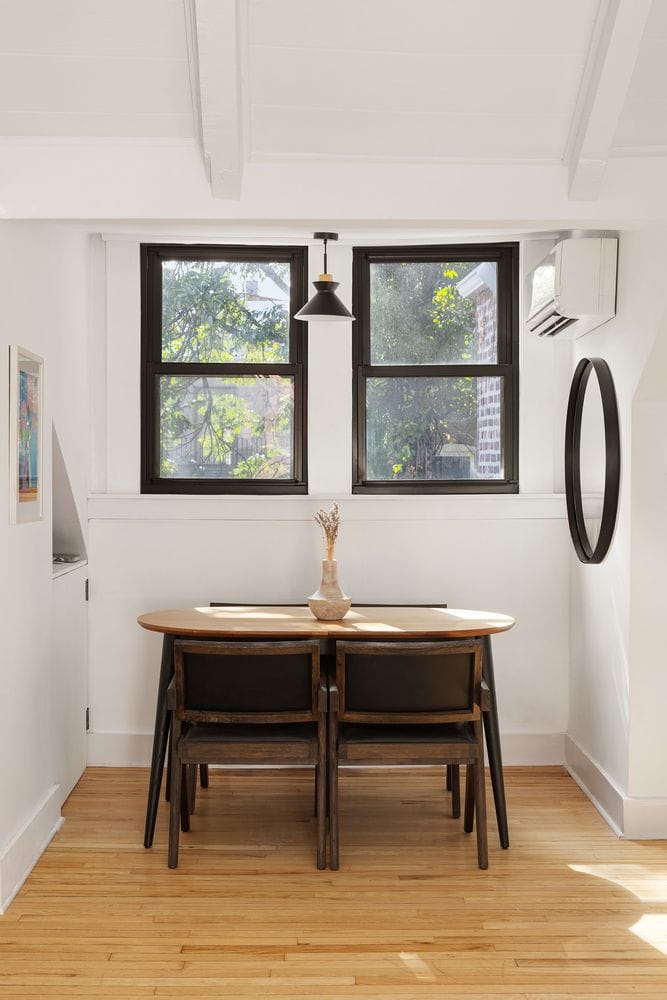
Compass
You Can't Buy the Art. You Can Buy the Address.
Here is the tension nobody in the copy addresses directly: Pollock did not become famous while living here. He left, kept working, and only later became the Pollock worth naming a listing after. The marketing borrows his eventual fame to sell a period of his life defined by the opposite of fame.
That is either a small dishonesty or an unusually honest one, depending on your mood. It openly admits the building housed an artist "still finding his way," rather than pretending Pollock dripped paint across these floors mid-masterpiece. For a market saturated with manufactured provenance, that restraint toward overstatement is the differentiator.
The marketing pitch, reduced to one line: you cannot buy the version of Pollock that sells for tens of millions at auction, but you can buy the room he was standing in before anyone thought he was worth that much. It is a bet that buyers find potential more seductive than proof. Judging by two prior sales and a contract signed within 33 days this time around, that bet keeps paying off.
🔗 https://www.compass.com/homedetails/46-Carmine-St-Unit-4-Manhattan-NY-10014/1OXCK8_pid/

