
The Smartest Ferrari You Can Buy Might Arrive in a Display Case
Amalgam creates officially licensed, museum-grade scale models of Ferrari cars, focusing on extreme accuracy and detail. The company’s unique selling point is its bespoke owner-matching service, allowing customers to commission replicas of their exact Ferrari, down to specific details.

The Setup
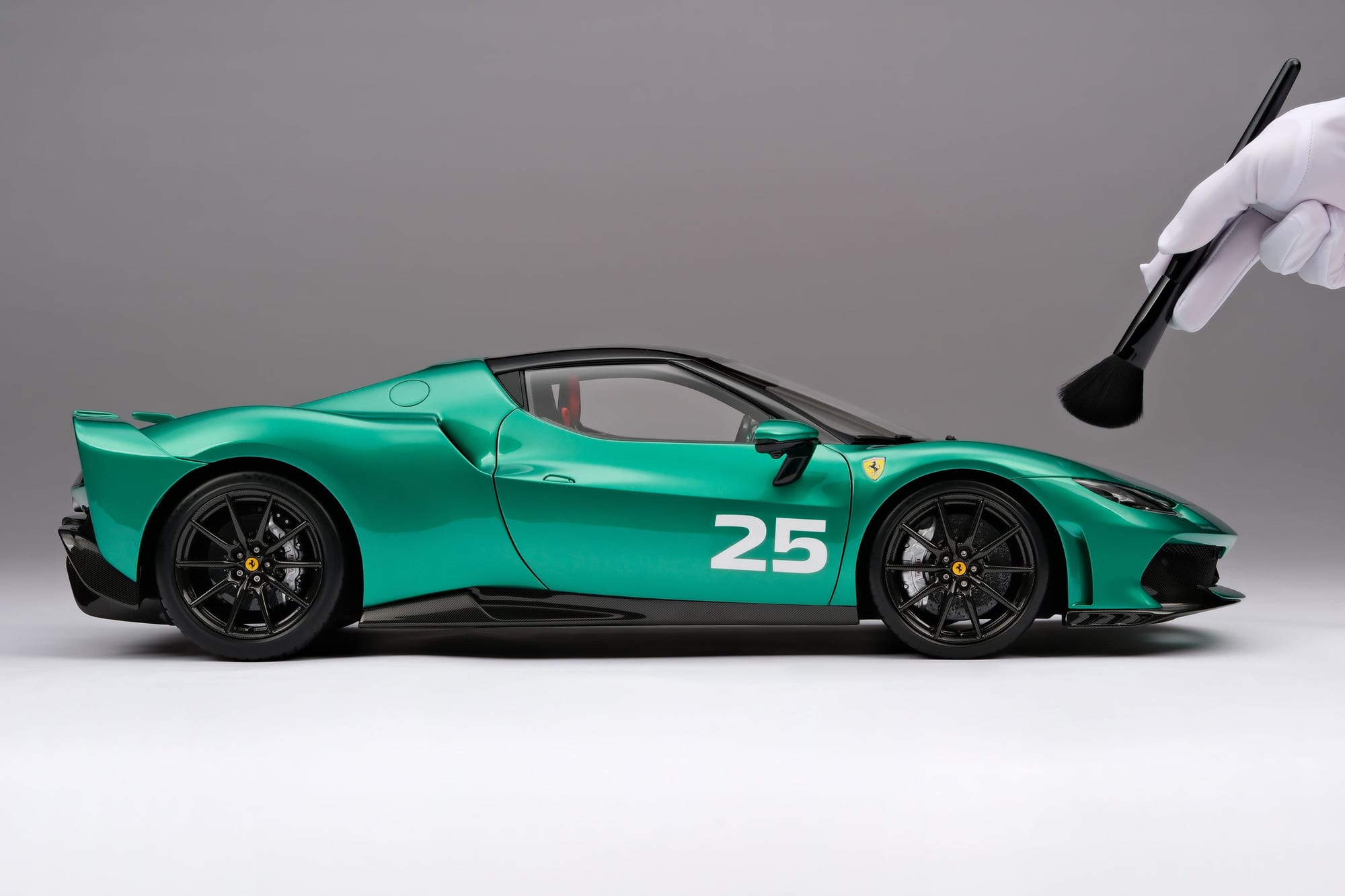
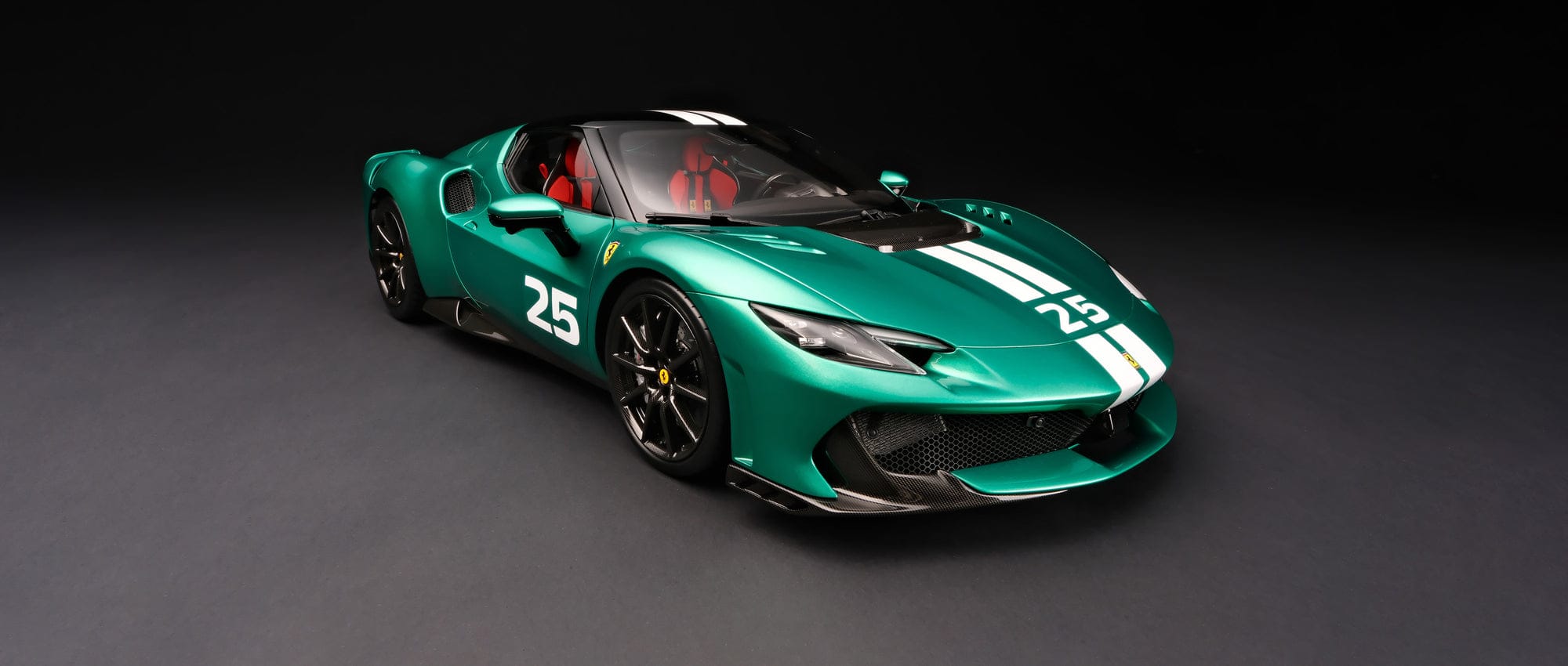
Amalgam’s Ferrari collection sits in a strange and fascinating category. The company builds officially licensed scale models of Ferrari road cars, Formula 1 machines, endurance racers, and bespoke owner commissions with an obsessive level of detail. Paint codes, stitching, brake calipers, cockpit materials, liveries, CAD references, and body proportions are all recreated at museum-grade precision. Some owners even commission miniature versions of the exact Ferrari sitting in their garage.
Amalgam
The interesting part is how Amalgam reframes the idea of a “model car.” These objects behave more like architectural maquettes, mechanical portraits, or collectible memory devices than hobby-shop merchandise. Ferrari already understands the emotional economy around provenance, rarity, and specification. Amalgam simply shrinks that ecosystem into something displayable. In the process, it quietly turns scale into luxury. The product is not transportation. It is permanent access to the feeling of the car itself.
The Breakdown
Amalgam Ferrari Collection
An Infotechnics™ analysis of how a product rates across eight areas of performance.
To explore in more detail, pinch out to zoom in
Amalgam is strongest when “model car” stops being the right category.
The Ferrari collection works because it borrows the rules of full-size Ferrari ownership: specification, provenance, rarity, display value, and emotional memory. Differentiation and design language score highest because the bespoke owner-matching offer turns miniature scale into serious collector territory. The softer areas are audience and messaging. The buyer pool is narrow, and the story relies heavily on Ferrari’s existing mythology rather than creating a fully separate Amalgam world.
Brand Positioning and Identity
Amalgam positions its Ferrari collection as the museum-grade version of model cars. These are not toys, and the brand is careful to make that clear. The collection covers Ferrari road cars, Formula 1 cars, GT racers, historic icons, and owner-matched bespoke commissions. Amalgam’s relationship with Ferrari has run for nearly 20 years, giving the models official weight rather than fan-made charm. The identity is precision, licensing, craft, and collector seriousness at miniature scale.
Target Segment and Audience
The audience is Ferrari owners, high-end collectors, motorsport obsessives, design buyers, and people who want a physical version of a car they own, admire, or missed their chance to buy. The bespoke offer is especially sharp because it speaks directly to owners who want their exact paint, interior, stitching, wheels, brake calipers, and personal details replicated. That turns the model from memorabilia into a private ownership echo.
Messaging and Storytelling
The messaging is built around devotion to detail. Amalgam talks about passion for Ferrari across road, GT, Formula 1, and historic machines, while the bespoke copy emphasizes matching every visible detail of an owner’s car. The story works because Ferrari already carries mythology. Amalgam does not need to invent romance from scratch. It miniaturizes the myth and makes it ownable, displayable, and personal.
Experience and Journey
The customer journey moves from browsing famous Ferraris to commissioning an object that can become deeply personal. A buyer can choose from existing scale models or pursue a unique commission if Amalgam has not yet modeled the vehicle. That process involves data, licensing, tooling, finishes, and custom detail work. The journey feels closer to commissioning a watch, artwork, or furniture piece than buying a collectible from a shelf.
Amalgam
Community and Culture Insight
Amalgam sits inside Ferrari culture, but also inside a broader collector economy where scale, accuracy, and official access matter. Ferrari collecting is already built on provenance, specification, rarity, and emotional memory. Amalgam transfers those same rules into miniature form. A 1:8 model can preserve a race car, owner spec, or dream car in a way that feels serious enough for a study, garage, showroom, or private collection.
Differentiation and Unique Selling Point
The USP is officially licensed Ferrari models with extreme accuracy, large scale, and bespoke owner-matching options. Amalgam uses manufacturer relationships, CAD data, paint codes, drawings, material references, and skilled hand assembly to build models that operate more like archival replicas than souvenirs. The owner commission service deepens the moat because it can match the exact car in someone’s garage, down to visible specification details.
Design Language
The design language is Ferrari translated into display-object precision. Red paint, race liveries, sculpted bodywork, cockpit details, wheels, grilles, badging, and interior materials all become part of the sell. The product photography treats the models like full-size cars, not hobby objects. That matters because the visual language has to justify high pricing before the buyer ever reads the production story.
Marketing Pitch
The marketing pitch is: own the Ferrari story at a scale you can live with. Amalgam is selling access to Ferrari emotion without requiring another garage bay, auction paddle, or race-car maintenance budget. For owners, it becomes a perfect echo of their real car. For collectors, it becomes a way to hold a piece of Ferrari history in physical form. The clever move is that Amalgam makes “model car” feel like an inadequate phrase. This is collectible memory, built small enough to fit in a room and serious enough to belong there.
Is It A Winning Pitch?
At what point does a collectible stop being merchandise and start becoming design art?


