
The Medium Keeps Rewriting the Message
Platforms don't just distribute ideas differently. They rewrite them. Here's how format, culture, and algorithms change content before anyone reads it.
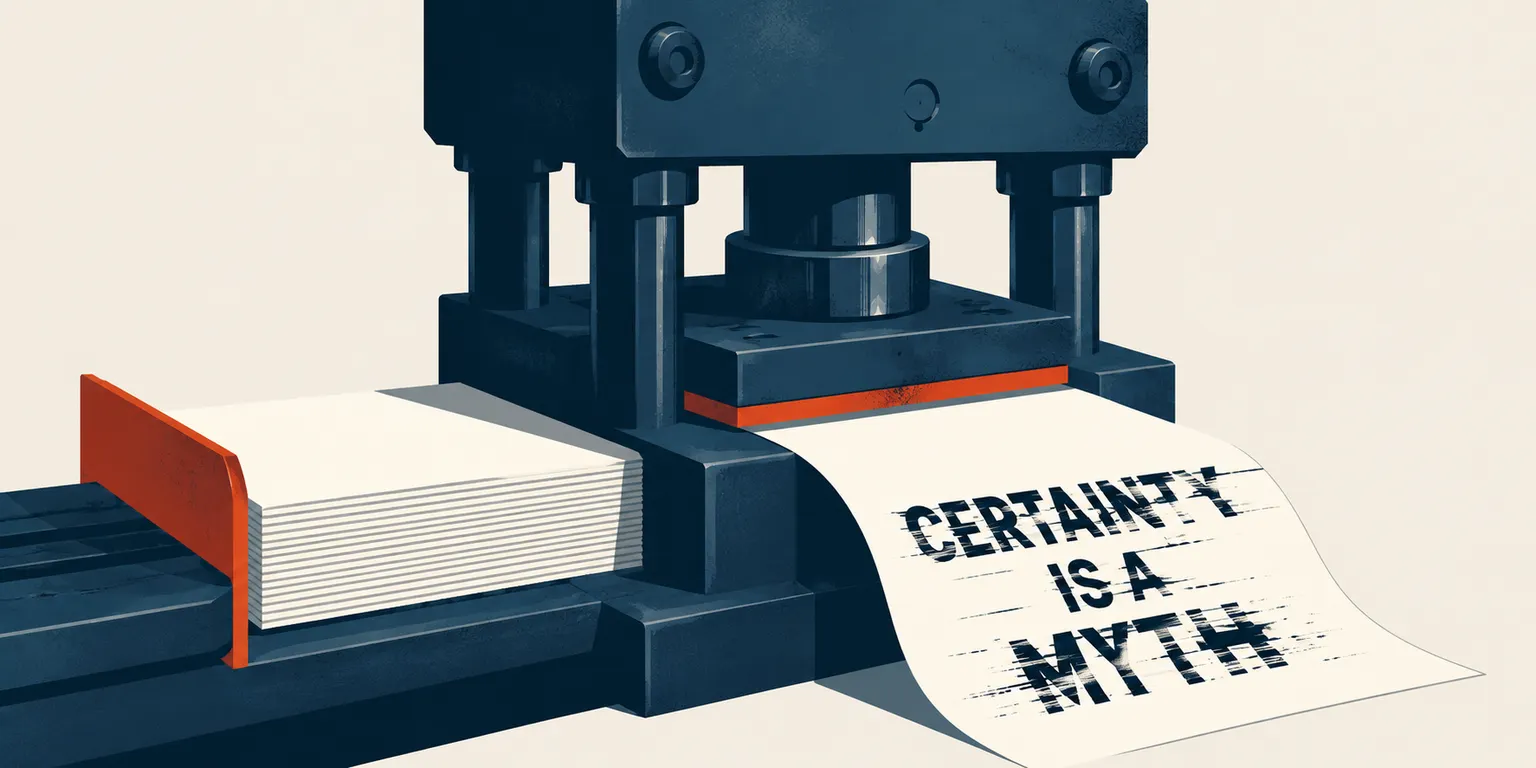
Marshall McLuhan said "the medium is the message" in 1964. Most people treated it as a clever provocation and moved on. Fewer people sat with what it actually implies: that the pipe changes the water. That the container doesn't just carry the idea, it edits it, quietly and continuously, in ways the speaker rarely notices and the audience rarely questions. This post examines how modern platforms don't just distribute thinking differently, they rewrite it at the source, and what that means for anyone who creates, publishes, or communicates anything at all.
Key Takeaways
- McLuhan's original argument was that the medium shapes the audience more than the content does. The updated version of that argument is that the medium shapes the content itself, before it even reaches an audience.
- Different platforms don't just change how a message is delivered. They change what ideas are expressible, which thoughts survive long enough to be finished, and which get abandoned because the format has no room for them.
- Algorithmic selection pressure is a new layer McLuhan could not have anticipated. Platforms now actively reward certain content types, effectively co-authoring every piece of content published on them.
- Short-form and long-form formats don't just serve different audiences. They produce genuinely different thinking. The same person writing a tweet and writing an essay is not writing the same idea at different lengths.
- Understanding how a medium rewrites is practically useful. It lets creators make deliberate choices rather than formatting choices that were made for them by the platform design team.
What McLuhan Actually Argued (and Where It Gets More Interesting)
McLuhan's claim, stated plainly, was that the effect of any medium on society comes from the medium itself, not from the content it carries. The light bulb, he said, has no content. But it completely reorganizes human time, space, and social behavior. The what is irrelevant. The how does all the work.
That is a satisfying and somewhat unsettling observation. It is also, as a complete theory, somewhat underdeveloped.
What McLuhan did not fully account for, because he was mostly watching television and the printing press, was the feedback loop. Mediums do not just passively shape audiences. They also reshape the creators producing content for them. Neil Postman extended this in "Amusing Ourselves to Death," arguing that television restructured political discourse by making image, brevity, and entertainment the currency of public life. Politicians adapted. Ideas adapted. The medium selected for a type of argument that suited its rhythms, and everything else slowly became harder to find.
That feedback loop is the thing worth focusing on. The medium keeps rewriting the message. Present tense. Continuous. Active.
Every platform edits the idea before the audience ever sees it.
A medium does more than carry a message. It limits its size, teaches the creator what the audience expects, and rewards certain forms of expression over others. The result is not one idea distributed six ways. It is six different ideas produced from the same starting material.
The platform rewrite press
The original thought enters with context, uncertainty, evidence, and open questions. The medium applies three edits before publication.
The idea before the platform
An argument with context, evidence, qualifications, uncertainty, and enough room to change direction while being developed.
The platform makes its changes
These forces work together. Each one removes certain possibilities before the piece reaches publication.
The platform-shaped conclusion
The idea becomes shorter, cleaner, more decisive, more personal, more entertaining, or more searchable depending on where it appears.
One starting idea. Six platform editions.
Each medium preserves a different quality and discards a different cost. None produces a neutral copy of the original.
Conclusion first
Brevity and argument reward claims that land quickly and invite response.
Lesson first
Professional identity and personal experience turn ideas into career lessons.
Hook first
Fast video rewards personality, rapid payoff, and a clear emotional beat.
Argument first
Direct delivery allows context, qualification, and gradual development.
Conversation first
Spoken exchange allows discovery, correction, digression, and unfinished thinking.
Retention first
Search and watch time reward clear sequence, visual proof, and promised payoff.
Fast formats pressure the writer toward resolution.
The creator reaches for a conclusion early because uncertainty takes time, space, and reader patience.
Slow formats permit revision inside the thought.
The creator can introduce doubt, test competing explanations, and change course without losing the entire piece.
Write the idea before the platform writes it for you.
Platform adaptation is unavoidable. Passive adaptation is not. The useful skill is knowing exactly what changes during translation.
How Does a Medium Actually Rewrite a Message?
The rewriting happens on three distinct levels, and most people only notice the first one.
The first level is format constraint. A platform gives you 280 characters, or 60 seconds of vertical video, or an audio file with no visual support whatsoever. You cut, compress, and simplify. This is the obvious part.
The second level is cultural expectation. Every platform develops a dominant mode of communication, and audiences enforce it. LinkedIn rewards a specific blend of professional confession and motivational framing. Twitter/X rewards wit and provocation, particularly when it generates argument. Substack rewards the long, considered essay written in a first-person voice. These are not rules anyone wrote down. They emerged. But they shape what gets written before a single word is typed, because every creator with a following knows what the room wants.
The third level is the algorithm. Platforms optimize for engagement, and engagement metrics tend to favor certain content types over others. Outrage performs well. Simplicity performs well. Binary positions (you are either right or wrong about this) perform better than qualified reasoning, which tends to trail off into ambiguity before anyone has shared it. Creators who want visibility adapt accordingly. Over time, the algorithm becomes a silent co-author on every piece of published content.
None of these levels operates cleanly in isolation. They compound.
Platform by Platform: How the Rewriting Differs
The following table maps how the same idea (take, for argument's sake, a complex argument about organizational change) gets rewritten as it moves across platforms.
Every platform edits the idea.
Format and culture determine which parts of an argument become visible—and which parts disappear.
| Platform | Format constraint | Cultural expectation | What gets amplified | What gets cut |
|---|---|---|---|---|
| Twitter/X | 280 characters | Wit, provocation, and speed | Hot takes and decisive claims | Context, qualification, and nuance |
| Long-form allowed, but skimmable | Professional credibility and personal story | Authority signals and success narratives | Uncertainty, failure, and messy reasoning | |
| TikTok | 15 to 60 seconds, vertical video | Hooks within two seconds and entertainment | Personality, relatability, and emotional beat | Research, complexity, and sourced argument |
| Substack / Newsletter | Unlimited and email-delivered | Considered voice and trust-building | Full argument and layered thinking | Viral potential and immediate reach |
| Podcast | Audio-only and long-form | Conversational and exploratory | Tone, tangents, and honest thinking | Precision, visual reference, and editing |
| YouTube | Video with variable length | Retention-optimized and searchable | Structure, payoff, and visual clarity | Ambiguity and open questions |
The interesting thing here is that none of these platforms is a neutral pipe. Each one produces a different essay from the same starting idea. A podcast guest and a tweet-thread author working from identical notes will produce arguments that, by the end, say genuinely different things.
Do Algorithms Actually Co-Author Content?
This is where the argument gets complicated, and complicated is where it gets honest.
Research from arXiv on content creator incentives found that creators operating on algorithm-curated platforms systematically shift their output toward what the platform rewards, even when doing so changes the argument itself. This is not cynical behavior. It is rational adaptation. But the cumulative effect is a selection pressure on ideas: certain types of thinking are amplified, and others are functionally deprioritized until they disappear from the ecosystem.
A science communicator who notices that 90-second explainer videos outperform 12-minute lectures will produce more 90-second explainers. Not because the shorter format is better for the idea, but because the platform made longer ideas invisible. The Journal of Science Communication published research specifically examining how algorithmic visibility shapes what science content gets created, finding that researchers and communicators adapt their framing, complexity, and even their conclusions based on what platforms reward.
This does not mean every creator is compromised or that every platform destroys thought. That would be the binary reading. The more accurate read is that every medium is a collaborator you did not choose, with preferences you did not agree to, editing your work in ways you often cannot fully see.
The Long-Form vs. Short-Form Question Is Not About Length
Here is a claim worth testing: short-form and long-form content do not serve the same idea at different scales. They produce different ideas.
When you write a tweet, you reach for a conclusion. You need something that fits, something that lands cleanly. The constraint selects for resolution. The format pressures you toward certainty.
When you write a 3,000-word essay, you can afford to be wrong halfway through and then correct yourself. You can introduce a complication and sit with it for two paragraphs before resolving it. You can say "I am not sure about this" without losing the thread. The format allows for a different relationship to uncertainty.
This is not a small difference. Intellectual honesty, self-correction, and provisional reasoning are modes of thinking that require space to exist. Short-form formats do not forbid them, exactly, but they create strong structural pressure against them. Over time, if a writer primarily lives in short-form platforms, certain cognitive habits atrophy. The observation is not that short-form content is worse. It is that the medium selects for a type of mind, and that type of mind then produces more of the same medium.
That is the feedback loop, and it runs in both directions.
What Gets Lost Is Not Always Obvious
Some things that get rewritten by mediums are clearly valuable, and some are not. This is the part of the argument that resists clean conclusions.
Complex, hedged, provisionally-stated ideas do not always deserve to survive. Sometimes nuance is a polite word for an argument that has not been thought through. A 280-character constraint can force precision that a longer format would have buried in qualifications. A podcast's conversational rhythm can surface genuine thinking that a formal essay would have polished into something less honest.
At the same time, certain kinds of thinking require friction to develop. Arguments that require 2,000 words to make responsibly cannot be summarized without becoming different arguments. Historical context does not compress well. Ambiguity is not a bug that more editing would fix.
What the medium rewrites, in the end, is the relationship between the thinker and time. Fast mediums select for fast conclusions. Slow mediums select for slow development. This is not a moral claim about either. It is an observation about what each format produces, and what it does not.
What This Means If You Actually Create Things for a Living
The practical implication is not "use fewer platforms" or "write longer essays." Those are easy calls that do not account for how distribution actually works.
The more productive question is: when the medium has rewritten your message, do you know it?
Most creators adapt to platform constraints without noticing the adaptation. They format content for LinkedIn because that is where their audience is, and over time they start thinking in LinkedIn-shaped ideas. They write tweets because Twitter rewards a certain type of clarity, and gradually they stop being comfortable with arguments that do not resolve into tweetable conclusions.
The antidote, to the extent there is one, is deliberate translation rather than reflexive formatting. Start with the argument in its fullest form, in whatever medium you think in (a voice memo, a long draft, a conversation). Then ask, consciously, what this medium requires me to cut. Name what is being removed. Make the choice actively. Some of what gets cut will be unnecessary. Some of it will be load-bearing to the argument. Knowing the difference is the skill.
Publishing is an editorial act. The platform is an editor. Knowing what your editor wants, and deciding whether you agree, is the job.
The Rewriting Is Not New, Just Faster
Print selected for linear argument. Radio selected for voice-driven authority and emotional persuasion. Television selected for image, brevity, and the appearance of confidence. Each medium reshaped the arguments that circulated within it, and reshaped the audiences those arguments were addressed to.
The current moment is not categorically different. The rewriting is just faster, more granular, and harder to see because the platforms providing the feedback are themselves optimizing in real time. The algorithm is not a stable editor with a fixed taste. It changes, and the content changes with it, which means the ideas change with it.
McLuhan said the medium is the message. The more precise version, fifty-plus years later, is that the medium is a rewrite. It is ongoing. It is collaborative in a way you did not sign up for. And understanding it clearly is the first condition for working with it rather than being worked on by it.
Frequently Asked Questions
What does "the medium rewrites the message" actually mean in practice?
It means that when content is formatted for a specific platform, the platform's constraints, cultural norms, and algorithmic preferences actively change the content itself, not just how it is packaged. A complex argument formatted for TikTok becomes a different argument than the same idea written as a 2,000-word essay. The format does not just shape delivery; it shapes what gets said, what gets cut, and what conclusions are reachable within the available space.
How is this different from McLuhan's original theory?
McLuhan argued that the medium shapes the audience and society more than the content does. The updated version of this argument focuses on the feedback loop: the medium also reshapes the creator and the content being produced. McLuhan was mostly describing a one-directional effect. The current media environment involves creators actively adapting their thinking and their arguments to platform requirements, which produces a continuous rewriting rather than a fixed structural influence.
Does this mean short-form content is worse than long-form content?
Not as a general rule. Short-form formats can produce precision and clarity that longer formats sometimes avoid by using length as a substitute for actual resolution. The more accurate claim is that short-form and long-form formats do not serve the same ideas at different lengths; they produce genuinely different arguments. Some ideas require space to develop honestly. Others are strengthened by constraint. The format is not neutral, but neither is length automatically a virtue.
How do algorithms change what content gets created, not just what gets seen?
When platforms reward certain content types with greater visibility, creators adapt their output to match those preferences. Over time, this selection pressure shifts what content gets made at the source, not just what content gets distributed. Research on content creator behavior on algorithm-curated platforms shows that creators systematically change their arguments, framing, and even their conclusions based on what the platform rewards. The algorithm is not just a distributor. It is a collaborator operating upstream of the publishing decision.
Can creators protect their ideas from being rewritten by the medium?
Not entirely, but more than most do. The practical approach is to develop the argument first, in its fullest form, before formatting it for any platform. Treat platform formatting as a deliberate editorial decision rather than a default. Name what gets cut in translation. Some of what is removed will be filler; some will be central to the argument. The difference between those two categories is worth knowing before publishing.
Which platforms preserve the most of an original idea?
Long-form newsletters and podcasts tend to allow the most faithful expression of complex arguments, primarily because they are delivered directly to subscribers and are less immediately subject to algorithmic sorting at the point of creation. That said, both still carry strong cultural expectations that shape what works within them. No platform is neutral. Some are just less actively editing than others.
An independent voice that will raise an eyebrow.
The Off Label is marketing strategy in action. We go further than what's on the surface. Every play, brief, strategy, and trend published here is proof of how we connect dots and turn ideas into an advantage.
Browse Full Foundations Archive →Published from the Charleston, South Carolina strategy lab. Synthesizing marketing behavior into actionable strategy for New York City and the world's creative hubs.
© 2026 The Off Label. All rights reserved. Content on this site may not be reproduced without prior permission.
NYC / LDN / CDMX / CHS

