
The Creative Economy Needs Builders, Not Just Creators
The creative economy's real problem isn't talent. It's business architecture. Learn how empathy, equity, and accessibility reshape creative enterprise for long-term impact.
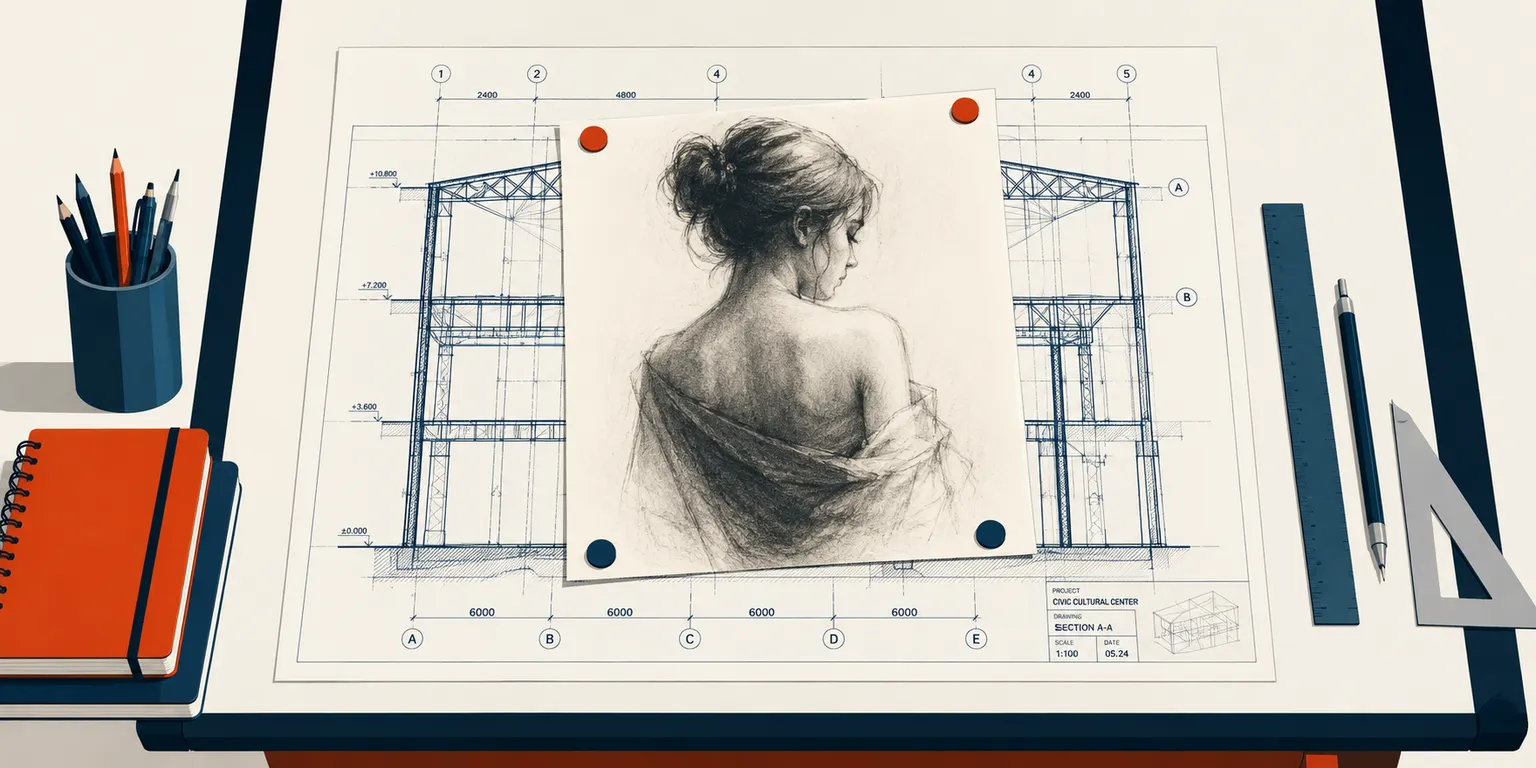
The creative economy has a talent problem. Not a shortage of it. An overvaluation of it. Somewhere along the way, the industry convinced itself that enough artistic brilliance would outrun bad business, and that conviction has quietly bankrupted more creative ventures than any recession ever did. This post is about what separates creative enterprises that last from those that simply shine. It is about the shift from creation as an identity to building as a practice, and why that distinction matters more now than it ever has.
Key Takeaways
- The creative economy is worth at least $1.5 trillion globally and employs roughly 50 million people, yet its business models remain among the most fragile and inequitable of any major sector.
- Individual creative talent, without intentional business architecture, produces enterprises that are hard to scale, harder to sustain, and often inaccessible to the people they claim to serve.
- Major disruptions, including the pandemic and accelerating market concentration, have exposed how poorly the sector's legacy monetization models serve most of the people working within them.
- Applying empathy, equity, and accessibility as operational principles, not just values statements, is what separates creative enterprises built for the future from those still running on nostalgia.
- The leadership qualities that drive transformative change in the creative sector are learnable, measurable, and urgently needed.
The Classic Idea: Talent Is the Business
For a long time, the dominant theory of the creative economy went something like this: find your gift, develop it obsessively, put it in front of the right people, and the business will follow. Film schools produced directors. Art programs produced painters. Music conservatories produced musicians. And somewhere off to the side, often treated as a slightly embarrassing administrative function, someone handled the money.
This model had a kind of romantic logic. It elevated the work. It placed the creator at the center. And for a small number of people, it worked.
The problem is that the business did not follow. Not reliably. Not equitably. What followed, more often, was a creative class that was structurally underpaid, dependent on institutional gatekeepers, and building on foundations designed for someone else's economy. The talent was real. The business architecture was borrowed or broken.
Creative services exports alone reached $1.4 trillion globally, a 29% increase over five years (UNCTAD, 2024). The US creative economy accounts for $1.1 trillion in value added and 5.2 million jobs (Bureau of Economic Analysis, 2022). Those are not small numbers. And yet, market concentration in the same sector tells a different story: in the US, five publishers control roughly 80% of the book market, six film studios account for nearly 90% of box office revenue, and three companies dominated 59% of the global streaming music subscription market as recently as 2021 (UNCTAD, 2024). The talent economy is massive. The ownership of that talent economy is not.
Infotechnics · Enterprise architecture
The creative economy needs builders, not just creators.
Talent can produce extraordinary work. Only intentional systems can make that work accessible, sustainable, equitable, and capable of surviving its founder.
The enterprise workshop
Build the structure beneath the work.
Choose a starting model or move the four structural controls. The building changes as revenue, distribution, labor, and access become stronger or more fragile.
Structural capacity
The work is carrying the organization.
A disruption to the creator, venue, funder, or launch cycle can destabilize the entire enterprise.
Estimated global value of the creative economy.
People employed across the global creative economy.
Of global recorded music revenue now comes from streaming.
The surrounding system is part of the work
Builders design what creators are taught to ignore.
Every creative enterprise has these systems. The only question is whether they were designed intentionally or inherited by default.
How does value return?
Pricing, recurring revenue, ownership, licensing, investment, and the mix between them.
Designs financial continuityWho controls distribution?
Platforms, venues, publishers, direct audiences, partners, and the leverage each one holds.
Designs market powerWho carries the risk?
Pay, contracts, freelancing, unpaid work, decision rights, and institutional knowledge.
Designs organizational stabilityWho can participate?
Price, geography, disability, language, culture, technology, and trust.
Designs the addressable audienceCreative ambition
Protect what makes the work matter.
Vision, distinctiveness, experimentation, risk, and the standards that make the enterprise worth building.
Structural responsibility
Build what lets the work continue.
Fiscal discipline, audience access, sustainable labor, distribution leverage, and adaptive leadership.
The business surrounding the work is also a form of making
Build something that doesn’t require you to be indispensable.
The question is not only how to protect the work. It is what kind of enterprise the work needs to survive.
What Everyone Gets Wrong About the Creator-Builder Divide
Here is what gets misunderstood: the argument is not that creators should stop creating and become spreadsheet jockeys. That framing turns a real tension into a false choice.
The actual problem is subtler, and it runs through the entire sector like a stress fracture. Creative enterprises tend to organize themselves around the central creative act, whether that is a performance, a publication, a design, a film, and treat everything else as a support function. Marketing, access, pricing, distribution, labor structure, audience relationships, data literacy, each of these gets treated as secondary to the work. And because they are treated as secondary, they are often handled inconsistently, delegated without strategy, or ignored entirely until something breaks.
What builders do differently is treat those systems as part of the creative work itself. The organizational design of a theatre company is a creative problem. The accessibility strategy of a museum is a design problem. The monetization model of an independent music venue is an expression of values, not just a budget line.
This is not semantics. It changes what questions get asked at the founding stage, what gets measured once the work is underway, and who gets to participate in the enterprise at all.
What Changed, and Why the Old Models Are Under Real Pressure
The disruptions of the past several years did not create the sector's structural problems. They made them impossible to ignore.
The pandemic hit creative industries with a particular kind of violence because those industries had built themselves around live presence, physical space, and in-person transaction. When the rooms went dark, the revenue models went with them. Organizations that had been running on donor dependency, one-time grants, and ticket sales discovered that their financial architecture was thinner than their programming suggested. According to UNESCO's reporting on COVID's economic impact, the crisis removed any remaining doubt that the old models were in acute stress.
What followed was not a clean reset. Recovery has been uneven, geographically inconsistent, and heavily shaped by who had capital to survive the gap.
Separately, the concentration of market power continued accelerating. When a handful of platforms control the primary distribution channels for music, publishing, and film, smaller and independent creative enterprises face a compounding problem: they are expected to create the content that feeds those platforms while having minimal leverage over how that content is valued, surfaced, or paid for. Streaming services now account for 67.3% of global recorded music revenue (UNCTAD, 2024), but the majority of that revenue pools around a narrow band of catalog and major-label releases. The long tail exists. It just does not pay particularly well.
None of this means the creative economy is shrinking. Developing countries increased their share of global creative goods exports from 10% in 2010 to 20% in 2022 (UNCTAD, 2024), which is a meaningful shift in who gets to participate. But growth in the aggregate can coexist with structural precarity for most of the individual participants. These things are not mutually exclusive.
Revenue architecture · Business model design
The business model determines more than how revenue arrives.
Each model creates a different balance of stability, scale, ownership, and access. Choosing one means choosing its structural tradeoffs as well.
| Business Model Type | Revenue Stability | Scalability | Equity Potential | Accessibility Barriers | Common in Sector |
|---|---|---|---|---|---|
| Ticket/Event Sales | Low | Low | Medium | High | Very High |
| Grant/Donor Dependency | Medium | Low | Low | Medium | Very High |
| Subscription/ |
High | Medium | Medium | Medium | Growing |
| Licensing and IP | High | High | Low (consolidated) | High | Low |
| Blended Value/ |
Medium | Medium | High | Low | Emerging |
| Community Co-ownership | Medium | Low | High | Low | Rare |
This is not a complete taxonomy. It is a starting point for asking better questions about which models actually serve the people building and participating in creative enterprises.
What This Means Operationally: Building with Empathy, Equity, and Accessibility
So what does a builder actually do? Not in theory. On a Tuesday.
The short answer: builders ask different questions than creators. And then they do something with the answers.
Start with consumer experience as a design constraint, not an afterthought.
Understanding who your audience actually is, how they find you, what they can afford, what barriers exist between them and the work, this is data work. It is also empathy work. Buying behaviors in the creative sector are not monolithic. A community arts organization and a commercial gallery may both sell access to visual art, but their audiences have radically different relationships to price, proximity, and trust. Treating consumer experience as a variable rather than a given is the first operational shift.
The data matters here. Not because numbers replace judgment, but because assumptions about who participates in creative work tend to reproduce existing exclusions without noticing. If your audience data consistently reflects the same demographic profile, that is information about your model, not evidence that no other audience exists.
Design for accessibility as a function of reach, not charity.
Accessibility is often positioned as a compliance requirement or a gesture toward inclusion. In practice, accessible design expands the addressable audience, deepens trust with existing participants, and produces more durable organizations. An enterprise that physically, economically, and culturally can only be used by a narrow segment of the population has built a ceiling into its own architecture.
This applies across the sector in different forms. A music venue that is physically inaccessible to wheelchair users is not just failing a legal standard; it is operating with a smaller audience than it built for. A publishing model priced above what most readers can sustain is not just inequitable; it is commercially brittle. These are not moral arguments disguised as business arguments. The access problem and the growth problem are frequently the same problem.
Apply equity thinking to labor structure before scaling.
Creative enterprises often reproduce the labor dynamics of the broader economy without examining them closely. Interns absorb workloads that should be paid positions. Freelance structures shift financial risk onto the workers with the least leverage. Star compensation diverges sharply from what most participants in the same organization earn.
This matters operationally because unsustainable labor practices produce high turnover, institutional knowledge loss, and organizational cultures that eventually repel the talent they claim to need. Equity in labor structure is not a nice-to-have. It is what makes the organization stable enough to actually do the work over time.
Build leadership around the capacity to hold tension, not just cast vision.
The leadership qualities that matter most in creative enterprises are not the ones that get featured in profile pieces. Vision is necessary but insufficient. What distinguishes transformative creative leaders is the ability to hold productive tension between artistic ambition and fiscal responsibility, between serving existing audiences and reaching new ones, between protecting the organization and taking the risks that keep it alive.
That capacity is observable and developable. It shows up in how decisions get made, who gets included in those decisions, and what the organization does when the creative vision and the business reality disagree. Leaders who can sit with that tension without resolving it prematurely tend to build enterprises that last.
The Question Worth Taking Seriously
None of what is described here arrives with a clean resolution. Creative enterprises built around empathy, equity, and accessibility still fail. Some of the most thoughtfully designed organizations in the sector have collapsed for reasons that had nothing to do with their model's quality. Funding dried up. Key people left. The market moved.
And some creative enterprises with deeply flawed structures, exploitative labor practices, and no coherent equity thinking have thrived for decades because they had capital, access, or timing that compensated for everything else.
This is not a comfortable observation. But it is an honest one. The argument for building differently is not that it guarantees success. It is that it changes what you are building toward, who benefits from it, and whether the thing survives the loss of any single person's irreplaceable genius.
Build Something That Doesn't Require You to Be Indispensable
The creative economy does not need fewer creators. It needs more people who understand that the business surrounding the creative work is itself a form of making. The model, the access structure, the labor arrangement, the data practice, the leadership culture: each of these is designed, whether intentionally or by default.
Default design tends to reproduce existing inequities, serve existing audiences, and collapse when circumstances change. Intentional design can do something different.
The starting question is not "how do I protect the work?" It is "what kind of enterprise does this work need to survive?"
That question is worth sitting with. It does not have an easy answer. But it is the right question, and most creative enterprises never ask it.
Frequently Asked Questions
What is the difference between a creator and a builder in the creative economy?
A creator focuses primarily on the central creative act, whether that is making music, writing, designing, or performing. A builder treats the surrounding systems, including distribution, access, labor, monetization, and audience relationships, as equally important parts of the work. The distinction is not about abandoning creativity; it is about recognizing that a creative enterprise is a system, not just a body of work. Builders design that system with intention rather than leaving it to chance.
Why do so many creative businesses fail even when the work is excellent?
Excellent creative work and a viable creative business are related but separate things. Most creative enterprises fail not because the work was bad, but because the business architecture was borrowed from contexts that do not apply, built on unsustainable funding models, or never designed to reach the audiences who would value the work most. The quality of the output does not insulate an organization from structural fragility in its revenue model, labor practices, or market positioning.
How do empathy and equity function as operational business principles?
Empathy, applied operationally, means treating consumer experience and participant wellbeing as design constraints from the start, not corrections applied after something goes wrong. Equity means examining who the business actually serves, who benefits from its success, and who carries its risks, and then adjusting structures accordingly. Both translate into specific decisions: pricing models, accessibility features, hiring practices, data collection, and governance structures. They are not values statements. They are inputs into how the organization is designed and run.
What business models are best suited for creative enterprises committed to social impact?
There is no single answer, and any claim to have one should be treated skeptically. Community membership models, blended value investment structures, and co-ownership arrangements have shown promise in distributing both risk and benefit more equitably. Each carries tradeoffs in terms of scalability, revenue stability, and administrative complexity. The most durable creative enterprises tend to combine multiple revenue streams rather than depending on any single model, and they revisit those models as market conditions shift.
What leadership qualities matter most in creative enterprise transformation?
The most consequential leadership quality in creative enterprise transformation is the capacity to hold productive tension: between creative ambition and financial sustainability, between serving current audiences and expanding to new ones, between protecting organizational culture and adapting to changed conditions. Leaders who resolve that tension too quickly, by defaulting entirely to either the creative or the commercial impulse, tend to build organizations that are either artistically vital but economically fragile, or financially stable but creatively inert. The ability to operate in that discomfort, and make decisions within it rather than despite it, is what drives durable change.
How has market concentration affected independent creative enterprises?
Market concentration in publishing, film, and music has narrowed the distribution channels that independent creative enterprises can realistically access. When a small number of platforms or companies control the primary channels through which creative work reaches audiences, smaller enterprises face structural disadvantages in visibility, pricing leverage, and data access. This does not make independent enterprise impossible, but it does mean that distribution strategy has become one of the most consequential decisions a creative enterprise makes, and one that cannot be treated as secondary to the work itself.
An independent voice that will raise an eyebrow.
The Off Label is marketing strategy in action. We go further than what's on the surface. Every play, brief, strategy, and trend published here is proof of how we connect dots and turn ideas into an advantage.
Browse Full Foundations Archive →Published from the Charleston, South Carolina strategy lab. Synthesizing marketing behavior into actionable strategy for New York City and the world's creative hubs.
© 2026 The Off Label. All rights reserved. Content on this site may not be reproduced without prior permission.
NYC / LDN / CDMX / CHS

