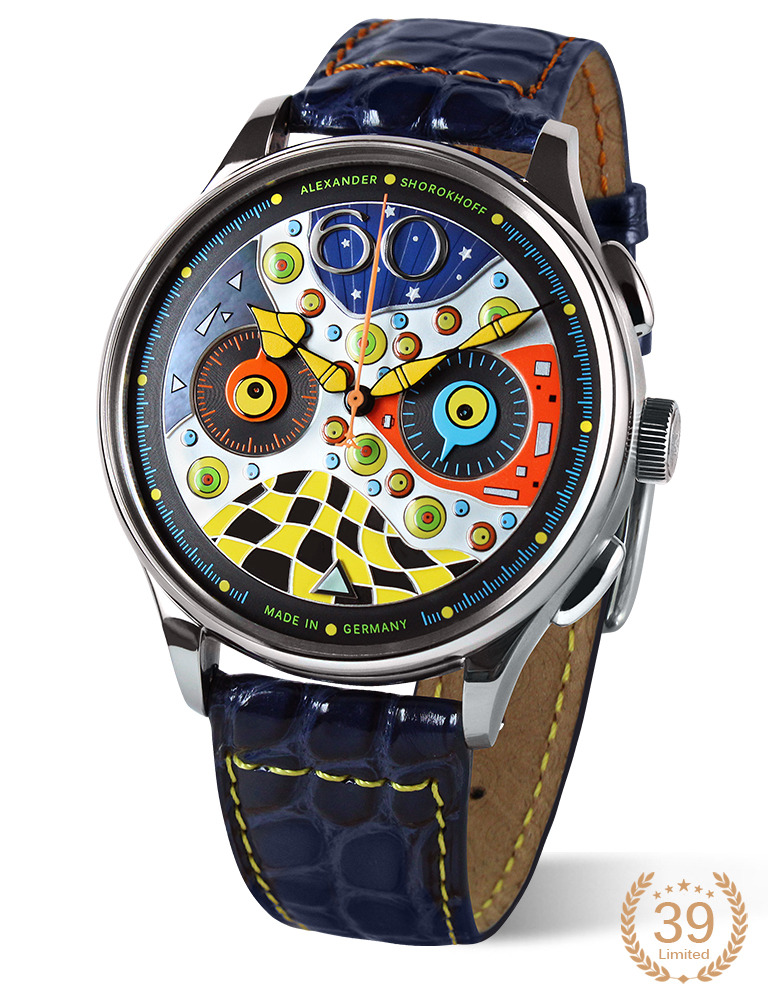
The Crazy Eyes Chrono Feels Like Gustav Klimt Designed a Watch Past Midnight
The Alexander Shorokhoff Crazy Eyes Chrono is a limited edition watch with a unique design inspired by Gustav Klimt. It features oversized “eye” registers, layered appliqués, and a hand-refined automatic movement.
The Setup
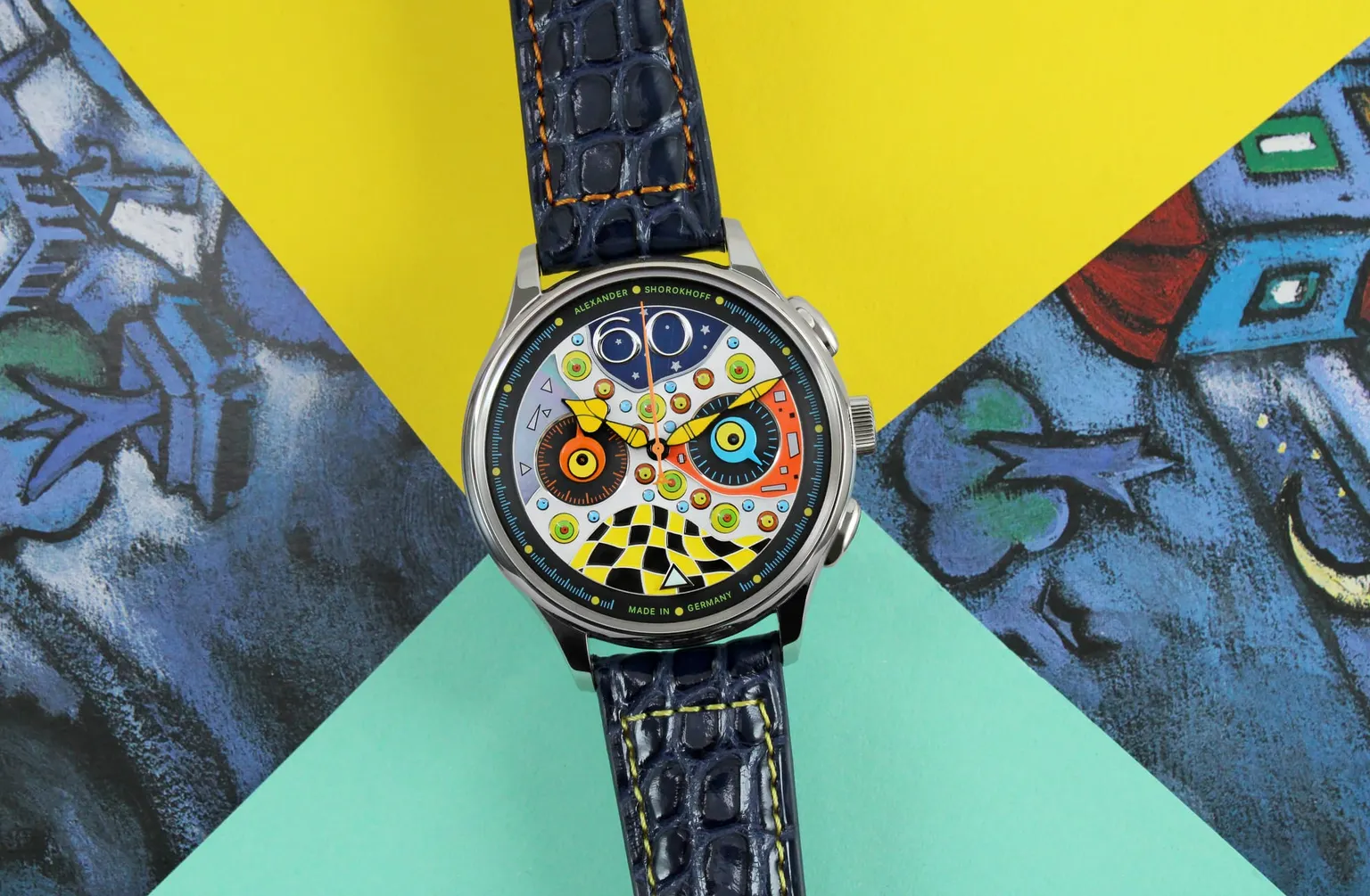
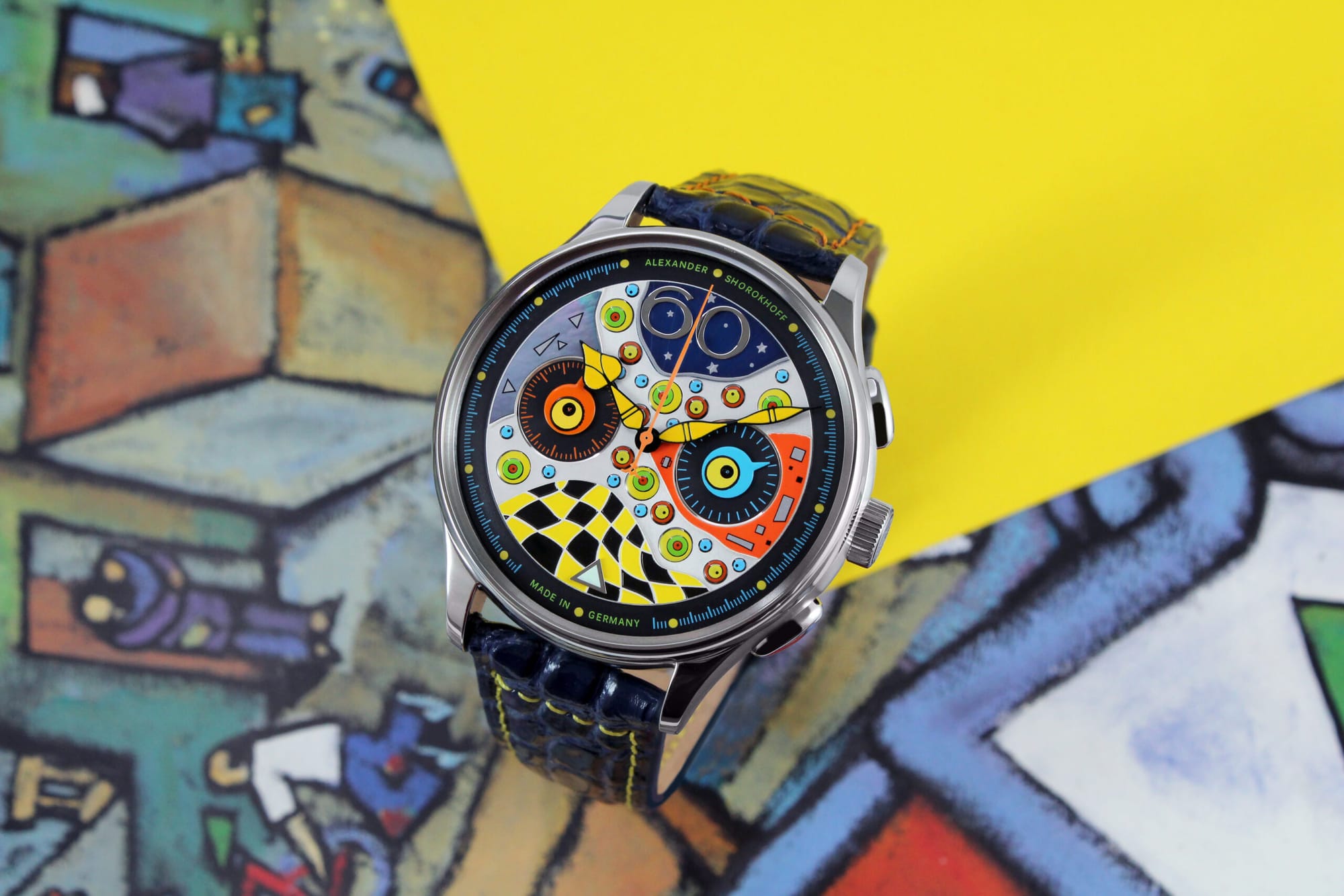
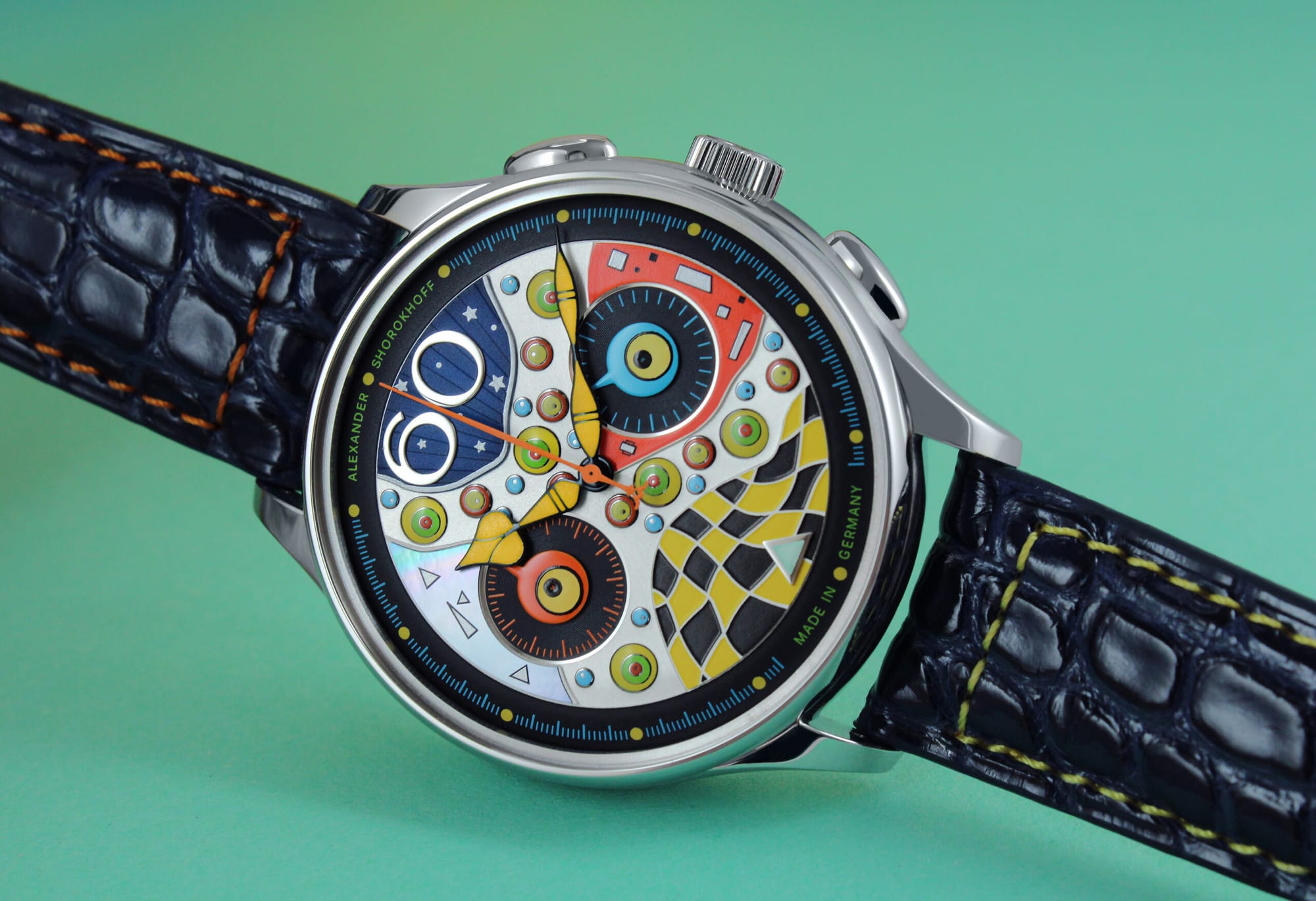
Alexander Shorokhoff’s Crazy Eyes Chrono looks like someone turned a chronograph into a gallery piece and forgot to calm it down afterward. The 42mm limited edition uses oversized “eye” registers, layered appliqués, mother-of-pearl, brass details, asymmetrical color blocking, and a hand-refined automatic movement underneath the chaos. Only 39 pieces exist, which feels appropriate for a watch that seems designed to stare back across the room.
Alexander Shorokhoff
What makes the watch interesting from a branding perspective is how confidently it rejects neutrality. Most luxury watches are built around versatility and safe permanence. Shorokhoff leans toward emotional reaction instead. The Crazy Eyes Chrono behaves more like collectible design than traditional wristwear. That gives the brand a sharper role in the collector market because the watch does not disappear into a rotation. It becomes the piece people remember, photograph, and ask about first.
The Breakdown
Alexander Shorokhoff Crazy Eyes Chrono
An Infotechnics™ analysis of how a product rates across eight areas of performance.
To explore in more detail, pinch out to zoom in
Crazy Eyes works because it refuses to be polite.
The strongest area is differentiation because the watch commits to its odd idea instead of softening it for broader approval. The dial is loud, memorable, and easy to recognize from across a room. The lower scores come from audience and culture. This is a narrow collector object, and the art-watch story will repel as many buyers as it attracts. That is the bargain. It gets remembered because it gives up on being universally wearable.
Brand Positioning and Identity
Alexander Shorokhoff positions the Crazy Eyes Chrono as art-first German watchmaking with a mechanical backbone. The watch sits in the brand’s Avantgarde line, which is built around “art on the wrist” and designs that break normal watch rules. The Crazy Eyes Chrono pushes that identity hard: Klimt inspiration, raised eye-like appliqués, layered dial materials, hand-refined chronograph movement, and a 39-piece limit. It is for a brand that wants to be remembered before it wants to be universally liked.
Target Segment and Audience
The target audience is the collector who wants a watch with personality before pedigree. This is for people already tired of safe divers, restrained dress watches, and endless vintage-inspired steel cases. The buyer likely follows independent brands, likes art references, and wants a limited piece that starts conversations quickly. Retailer listings and collector coverage frame the model as rare, colorful, and highly collectible, which puts it squarely in the “show me something different” lane.
Messaging and Storytelling
The messaging is built around Gustav Klimt, fantasy, and artistic disruption. Shorokhoff describes the watch as a chronograph where imagination becomes artistic reality, with the dial’s differently sized “eyes” acting as the central idea. The “60” stays at 12, a recurring Shorokhoff signature that points to both 60 minutes and the art movements of the 1960s. That gives the chaos a logic. The watch looks unruly, but the story gives the buyer a way to explain it.
Experience and Journey
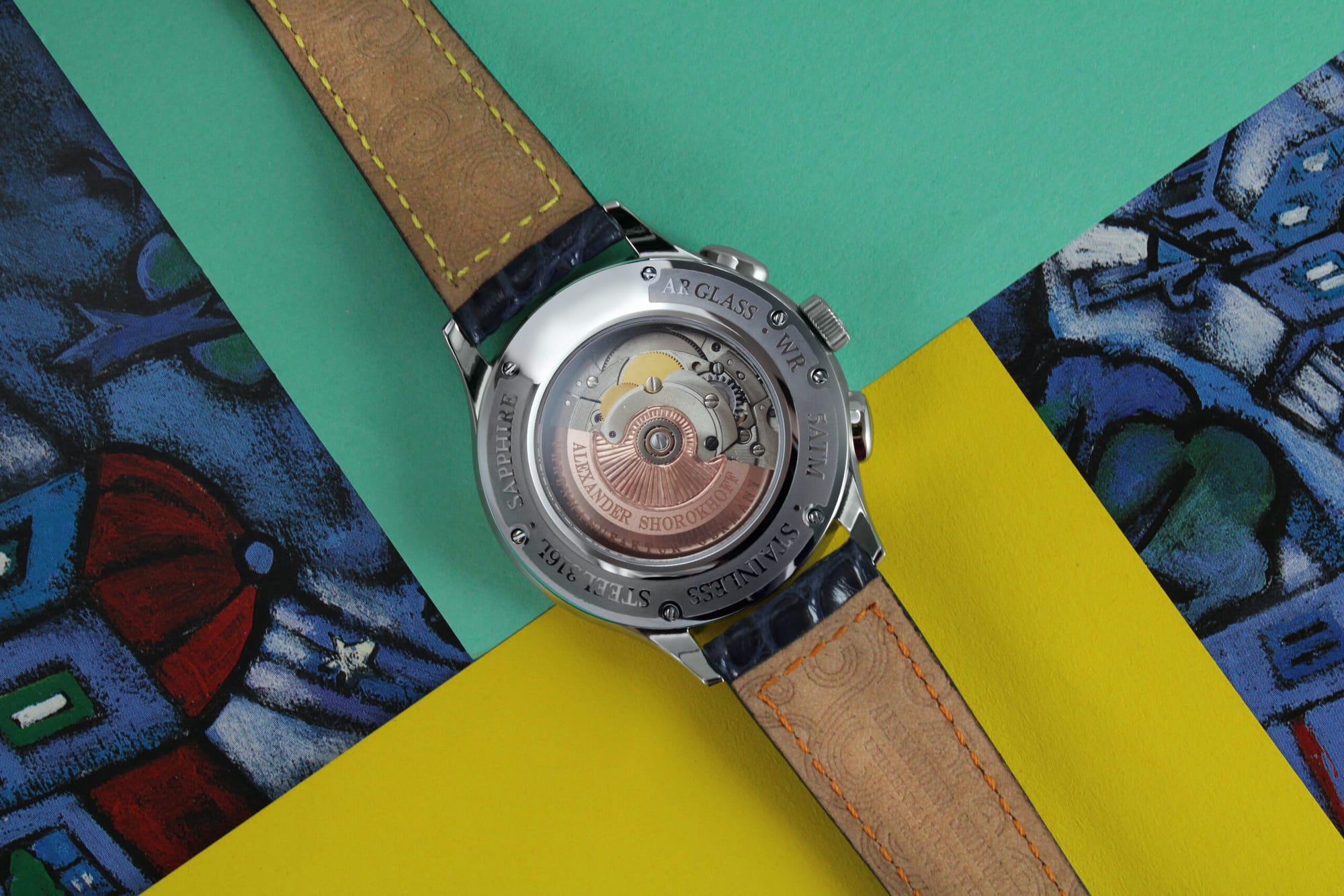
The customer journey starts with the dial, then moves into the craft. First, the buyer sees the oversized eye-like registers, bright hands, layered appliqués, mother-of-pearl, brass, and color play. Then the product page introduces the mechanical proof: automatic caliber 2030.DD, hand-engraved and refined oscillating weight, central chronograph seconds, decentralized 30-minute counter, date, sapphire front and back, and 44-hour power reserve. The buyer gets visual shock first, then enough craft to justify the purchase.
Alexander Shorokhoff
Community and Culture Insight
The Crazy Eyes Chrono belongs to the collector culture that values independent weirdness over safe status symbols. Alexander Shorokhoff has built a following around limited, art-driven watches that pull from Russian and European cultural references, modernism, and expressive dial work. Chrono24 specifically connects Crazy Eyes and Crazy Balls to Gustav Klimt and the brand’s 30th anniversary moment. The cultural read is simple: some collectors want their watch box to look less like a board meeting and more like a private gallery.
Differentiation and Unique Selling Point
The USP is a 39-piece automatic chronograph that turns the subdials into expressive “eyes” and backs the theater with hand-finishing. The watch uses a 42mm stainless steel case, cylindrical sapphire front glass, sapphire caseback, 5 ATM water resistance, automatic caliber 2030.DD, colorful appliqués, mother-of-pearl, brass, black-yellow hour and minute hands, orange central seconds, and a dark blue crocodile strap with orange and yellow stitching. Its difference is not subtlety. Its difference is controlled disorder with real watchmaking inside.
Design Language
The design language is Klimt filtered through a chronograph dial that refuses symmetry. The two registers become mismatched eyes. Raised appliqués create depth. Silver, mother-of-pearl, brass, black, yellow, orange, and blue all compete in a way that feels intentional rather than random. The rounded case, pushers, and cylindrical sapphire crystal add a calmer frame around the dial. That contrast matters. The case behaves. The dial misbehaves.
Marketing Pitch
The marketing pitch is: wear the watch that looks back. Alexander Shorokhoff is selling a limited chronograph that turns mechanical timekeeping into a piece of wrist-level art showpiece. The Crazy Eyes Chrono works because it gives collectors something instantly legible as different, then supports the madness with a hand-refined movement, limited production, and a clear art reference. It is not trying to be the most versatile watch in the box. It is trying to be the one everyone asks about first.
Is It A Winning Pitch?
Do brands gain more long-term value by chasing universal appeal, or by becoming unmistakable to a smaller audience?