
The Buccaneer Content Strategy
Ted Turner turned cheap airtime, old sitcoms, and forgotten movie libraries into a media empire. His approaches to TBS, TNT, and TCM still provide a blueprint for transforming a modern content strategy into an IP ecosystem.
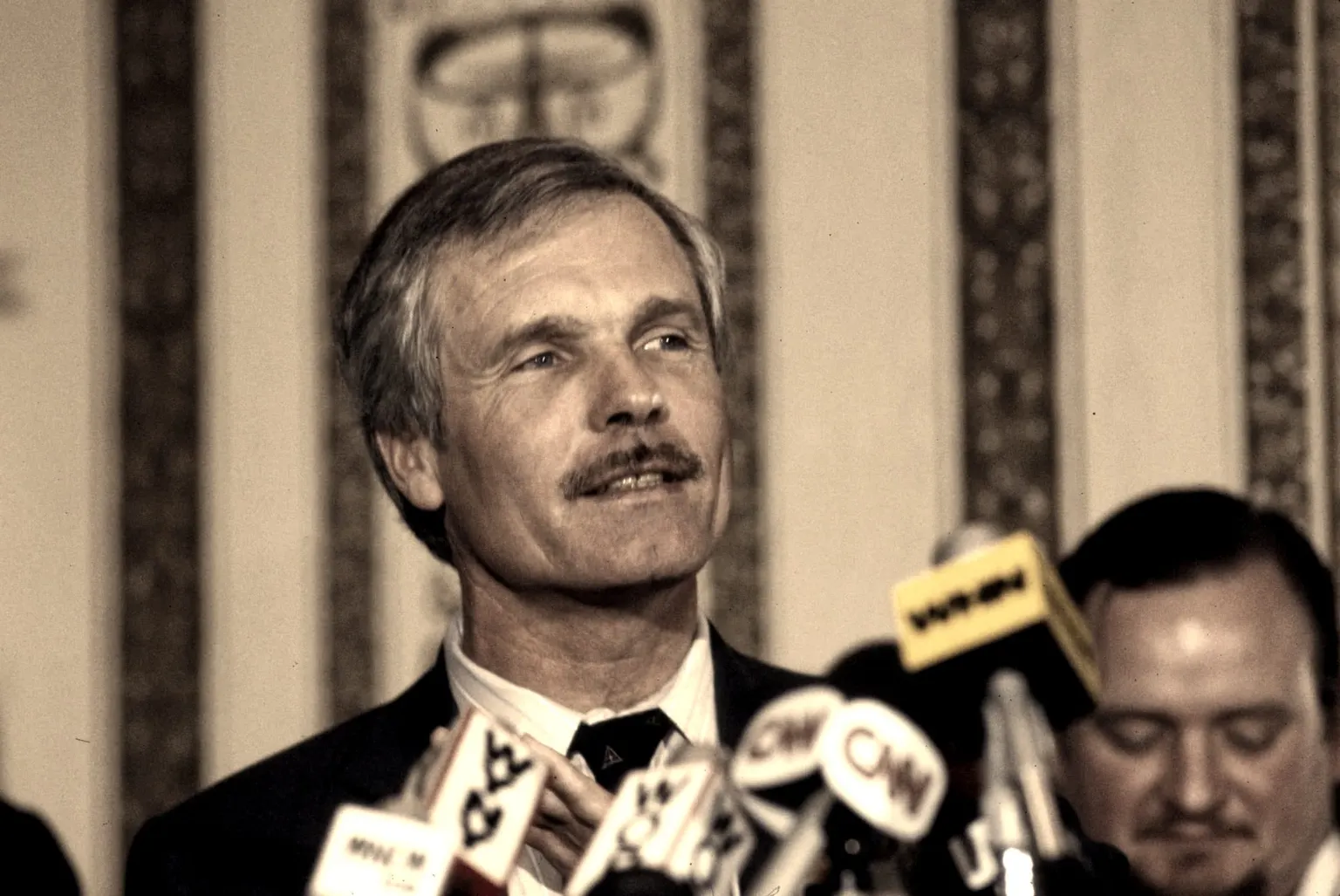
A Content Problem
Before Ted Turner built CNN into a global force, he created a superstation called TBS and confronted a problem staring that is still experienced today:
He needed content. He needed to fill airtime.
That sounds obvious now, but in the 1970s television landscape, it was a genuine business crisis. Turner had transformed Atlanta station WTCG into one of America’s first satellite “superstations,” meaning it could suddenly reach viewers far outside Georgia.
The problem was that national distribution demanded national-scale programming budgets, and Turner did not have network money.
So he improvised.
Buying Low Production, No Production IP

One of the smartest moves in media history started as a cost-control measure disguised as sports ownership. Turner bought the Atlanta Braves in 1976 largely because baseball games gave him dozens of hours of live programming at relatively low production cost.
Soon after, Hawks basketball joined the mix. Instead of paying massive licensing fees for premium sports rights, Turner vertically integrated the problem. He owned the teams, owned the station, and owned the airtime.
That decision accidentally created “America’s Team” before ESPN fully existed. Kids nowhere near Georgia suddenly grew up watching Braves games because TBS was available in their cable package or via UHF antenna.
But sports alone could not carry a 24-hour channel. Turner still needed mountains of inexpensive programming. That pushed him into syndicated television reruns, old sitcoms, and movie packages that the major networks largely treated like leftovers. Gilligan’s Island, The Andy Griffith Show, Sanford and Son, Leave It to Beaver. Later on Friends and Seinfeld. Cheap content with long shelf lives.
TBS slowly evolved into a comedy-forward network because sitcom reruns consistently worked. The “cheap filler” became brand identity.
The station that originally grabbed whatever programming it could eventually understood what viewers expected from it. That audience familiarity later opened the door for original programming and comedy branding that would define the network for decades.
Content Starts Forming Into Strategy

By the time Ted Turner launched TNT in 1988, the scramble for cheap programming had matured into something much more deliberate. TBS taught him that reruns and live sports could hold audiences. TNT showed he understood something bigger: libraries of old content was something he could build on.
Turner’s purchase of the MGM film library in 1986 became the turning point. The deal gave him control of thousands of titles, including classics from MGM, Warner Bros., and RKO.
Most people saw old movies. Turner saw high value IP. That distinction mattered.
Cable channels in the late 1980s had the same problem streaming services face now. They needed endless programming hours. Turner realized owning a movie library solved multiple issues at once. It lowered long-term licensing costs, gave TNT a recognizable identity, and created reusable content that could air repeatedly without fresh production expenses.
TNT quickly became the home for syndicated dramas and blockbuster films. Westerns, crime shows, war movies, and old Hollywood catalog titles filled the lineup. While TBS leaned into sitcom comfort viewing, TNT carried a more cinematic personality. The channels complemented each other like neighboring bars on the same street. One loud and casual. One darker and more polished.
The important shift was that Turner had stopped merely filling airtime. He was now segmenting audiences into channels.
The Superstation Model Goes Premium
By the time Turner Classic Movies launched in 1994, Ted Turner had moved far beyond the survival instincts that built the Superstation. TCM was not about plugging holes in a schedule anymore. It was about elevating the exact same content libraries he once used as inexpensive cable filler.
What makes TCM so interesting is the movies themselves were often decades old. Many had already aired endlessly across TBS and TNT. But Turner understood something most media executives missed at the time: presentation changes value.
TCM treated old films less like recycled programming and more like cultural artifacts.
The channel stripped away the noisy cable formatting of the era. No aggressive graphics. No loud interruptions. No frantic pacing. Instead, films were introduced by hosts who treated directors, actors, cinematographers, and screenwriters with genuine reverence. Suddenly the same MGM and Warner Bros. libraries Turner acquired years earlier felt prestigious instead of inexpensive.
That repositioning mattered because Turner had stumbled into one of the most valuable concepts in modern media: context shapes perception.
On TBS, an old Humphrey Bogart movie could feel like late-night filler between Braves baseball and sitcom reruns. On TCM, the same film became part of a curated cinematic canon. The content had not changed. The packaging and presentation of the content had.
And quietly, Turner had now segmented audiences at nearly every level of the entertainment market.
The Evolution of Strategy Across Channels
What happened to TBS, TNT, and TCM over time says a lot about how durable Turner’s original strategy actually was.
The technology changed. Cable weakened. Streaming took over. Warner Bros. Discovery reshuffled everything under corporate consolidation. But the DNA of Turner’s channels still remains surprisingly intact.
TBS is still associated with comedy and mass-audience entertainment because that identity was trained into viewers over decades. The rerun-heavy network eventually evolved into original comedy programming like Conan, Angie Tribeca, and Miracle Workers. Sports also remained attached to the network through Major League Baseball and NBA coverage spanning TBS & TNT.
TNT followed a similar path. The network that once leaned on syndicated dramas and old movies became one of cable television’s biggest homes for prestige procedural television and live sports. Shows like The Closer, Saving Grace, and Animal Kingdom pushed TNT deeper into original programming, while the NBA kept the channel culturally relevant long after cable fragmentation started eating away at traditional television audiences.
Then there is TCM, which may be the most fascinating survival story of the three. While many legacy cable brands drifted into algorithm-driven sludge, Turner Classic Movies largely stayed loyal to its original identity.
It still treats film history seriously. Hosts still contextualize movies. Directors and actors still appear for curated discussions and preservation events. In a media environment obsessed with speed and churn, TCM became valuable precisely because it refused to behave like modern content platforms.
Ted Turner did not start with a media empire. He started with empty airtime and turned cheap content into channel identity.
TBS, TNT, and TCM all came from the same practical problem. Turner needed programming hours he could afford. The answer became a system: own distribution, reuse libraries, segment audiences, and make old content feel newly valuable.
National reach created national-scale hunger.
A superstation could travel far beyond Atlanta, but that reach created a programming problem. Turner had to fill hours without network-level money.
Comfort
Sports, sitcom reruns, and syndicated television turned cheap programming into mass-audience habit.
Library
The MGM library turned old movies into a reusable programming base with a more cinematic personality.
Context
The same old films gained new value when the channel treated them as cultural artifacts.
The strategy matured from filling time to shaping audience expectations.
Turner’s early moves were not polished. They were practical. But each practical decision created reusable assets, predictable viewing habits, and channel identities that could grow over time.
Final Take
Ted Turner's approach to content and IP strategy still matters now.
A lot of creators today obsess over producing masterpiece-level content while ignoring the reality that consistency often builds the audience that eventually funds quality. Turner’s early strategy was ugly, practical, repetitive, and wildly effective.
The future of his empire was already sitting there in primitive form: live sports, syndicated comfort viewing, owned distribution, and eventually owned intellectual property.
The media giant started with a man trying to figure out how to keep Channel 17 from going dark. And that may be the strangest part of all.
💡 OffLabel-019 | The Buccaneer Content Strategy
Diagnosis: Modern creators often treat content like isolated posts instead of reusable intellectual property that can compound across platforms, audiences, and formats over time.
Prescription: Build content systems the way Ted Turner built cable television by turning inexpensive, repeatable, and undervalued media assets into segmented audience ecosystems that grow in value through distribution and positioning.
Strategic Medication: Audience Segmentation Through Content, IP Library Compounding, Context Value Reframing [Provisional]


