
The Best Promotion Doesn’t Lower Price. It Raises Priority.
Sales promotion isn't about making things cheaper. It's about raising purchase priority. Learn how the mechanics actually work and what separates effective promotions from expensive ones.
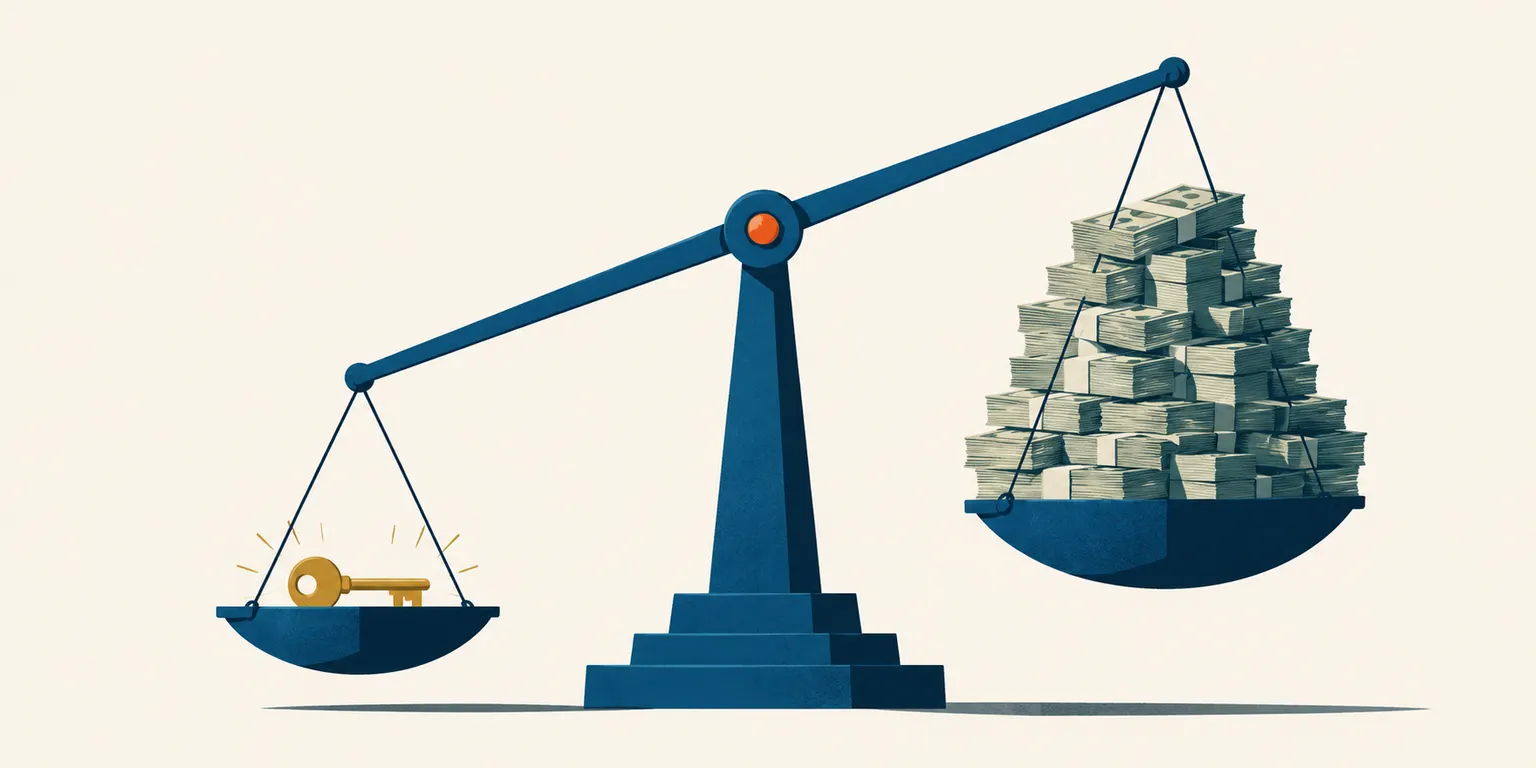
Everyone thinks sales promotion is about making something cheaper. That is the wrong lens, and most of the time it produces the wrong results. The better question is not "how do we make this more affordable?" but "how do we move this to the top of someone's mental queue?" This piece walks through the actual mechanics of what sales promotion does, what practitioners consistently misread about it, how market conditions have shifted the way offers need to work, and what any of this means when you are sitting across from a budget and a deadline.
Key Takeaways
- Sales promotion's primary function is urgency creation, not price reduction. Price is one lever among several.
- Trade promotions and consumer promotions operate on fundamentally different logic, and conflating them produces strategies that serve neither audience.
- The most durable promotions build perceived value rather than discounting existing value.
- Events and place-based experiences function as a category of promotion, not a separate discipline, and they tend to outperform digital-only offers on customer retention.
- Measurement matters more than most brands admit. Without clear KPIs, a "successful" promotion is just a feeling.
The Classic Idea: Promotion Makes Things Cheaper
Ask a roomful of marketing students what sales promotion is, and most will say some version of the same thing: it is the part where you offer a discount. Coupons. Flash sales. "Limited time" banners in red. The mental model is straightforward enough that it rarely gets questioned.
And look, it is not wrong exactly. Price discounting exists. Volume discounts exist. Co-op advertising that passes savings to the retail partner is a real and widely used tactic. The classic idea has a factual basis.
But describing sales promotion as primarily a price mechanism is like describing a piano as primarily a piece of furniture. Technically defensible. Completely misses what the thing actually does.
What promotion really does is interrupt a decision that was not going to happen on its own. A consumer was going to buy the same shampoo they always buy, except someone placed a competing product at eye level with a free travel-size attached. The decision changed not because of price but because of presence, placement, and the addition of something that felt like a bonus. The price of the main product did not move at all.
That is already a different theory of the mechanism.
Infotechnics · Promotional priority
The best promotion doesn’t lower price. It raises priority.
A promotion interrupts the purchase that would have happened without you. Price can do that—but so can relevance, timing, placement, added value, and a memorable experience.
The mental-queue simulator
Choose the job, then tune the promotion. The featured product physically moves through the purchase queue as the offer becomes more—or less—relevant to the moment.
Try the full product. Keep the travel size.
The main product keeps its value while the buyer receives a useful, related reason to act now.
Related travel-size includedThree problems. Three different promotions.
The objective determines the tactic and the metric. A promotion can work perfectly and still look like a failure when it is judged against the wrong job.
Acquisition
Get a nonbuyer to experience the product by reducing the barrier to trial.
Measure trial and second purchaseAcceleration
Move an existing customer’s next purchase forward or increase its quantity.
Measure frequency and volumeDefense
Protect shelf space, buyer attention, or partner commitment from a competitive move.
Measure retained share and placementPrice is one lever in a larger machine.
The strongest promotional systems preserve the product’s value while changing how present, timely, useful, or memorable the decision feels.
Price
Useful when affordability is the real barrier, but dangerous when it trains buyers to wait.
Added value
A complementary product, service, or privilege increases what the buyer receives.
Presence
Placement and visibility interrupt habitual decisions at the point of choice.
Timing
A promotion works harder when it arrives inside a decision already gathering momentum.
Coherence is the operating advantage.
The tactic, audience, timing, and measurement must all answer the same objective before money enters the system.
Name the behavior
Trial, acceleration, retention, or defense—not simply “drive sales.”
Identify who moves
New buyer, lapsed customer, loyal user, distributor, or retail partner.
Use the calendar
Meet an active buying frame instead of manufacturing one from nothing.
Measure the job
Define the KPI before launch so success cannot be invented afterward.
A transaction can disappear. A moment can compound.
Value-added and experiential promotions often outlast straight discounts because they create memory and relationship without weakening the reference price.
Rent the transaction
Lowering price can create an immediate spike, but the reason to buy disappears when the offer does.
- Price becomes the message
- Customers learn to wait
- Margin funds the urgency
- Post-promotion behavior often collapses
Build the reason
Useful value, a timely experience, or meaningful access can make the purchase memorable beyond the offer window.
- The product keeps its reference value
- The offer creates a story
- Relevance funds the urgency
- Memory and relationship can persist
A promotion succeeds when the customer’s next decision changes—not merely when the price does.
Stop lowering value · start raising priorityWhat Everyone Misunderstands About How Promotions Actually Work
The confusion runs deeper than "is it about price or not." It is about what problem promotion is trying to solve in the first place.
There are at least three distinct problems a promotion can address:
New customer acquisition. Getting someone who has never bought from you to try the product. Free samples, giveaways, money-off vouchers for first purchases. The logic here is that trial converts at a higher rate than advertising, so you are essentially subsidizing an experience rather than just a transaction.
Volume acceleration. Getting someone who already buys from you to buy more, or to buy sooner. This is where volume discounts to trade partners come in, and where loyalty programs start doing real work. The customer is already convinced. You are adjusting the timing and quantity of their behavior.
Competitive defense. Holding shelf space, buyer attention, or retail partner commitment against a competitor who is making a move. In-store displays, feature advertising, and co-op budgets are often less about winning new ground than about not losing existing ground.
Most brands run a promotion with one of these goals vaguely in mind and then measure it with metrics that belong to a different goal entirely. A giveaway campaign designed for acquisition gets judged on short-term revenue lift. A loyalty program built for volume acceleration gets evaluated on new account signups. The result is that perfectly functional promotions get declared failures, and genuinely ineffective ones get renewed because they produced the metric that got tracked, even if that metric had nothing to do with the actual objective.
That is not a small operational error. It is a category error. And it reproduces itself constantly.
Sales promotion · behavioral purpose
A promotion works when its mechanism matches the behavior it needs to change.
The offer is only one part of the intervention. Audience readiness, delivery context, and the path that follows determine whether temporary activity becomes useful behavior.
Swipe to compare all columns →
| Promotion Type | Primary Goal | Common Misapplication |
|---|---|---|
| Coupons and discounts | Trial and acquisition. | Used to retain customers who would have bought anyway. |
| Volume discounts | Accelerate existing buyer behavior. | Offered to new prospects who lack product familiarity. |
| In-store displays | Visibility and impulse purchase. | Deployed without accompanying staff, reducing engagement. |
| Free samples and giveaways | Reduce the barrier to trial. | Distributed without follow-up or a conversion pathway. |
| Loyalty programs | Long-term retention and frequency. | Launched without clear redemption value or tier logic. |
| Trade shows and events | Lead generation and relationship-building. | Attended without a defined follow-up process. |
| Value-added offers and bundles | Increase perceived value. | Bundled with low-interest additions that dilute the offer. |
What Has Changed About the Way Offers Have to Work
There is a version of this article that would attribute everything to one seismic shift. That version would be wrong, because what has actually changed is not one thing but the relationship between several things that used to stay separate.
Promotional offers used to operate with friction built in. A coupon required clipping. A trade show required travel. An in-store display required physical presence. That friction was not just an obstacle for the consumer. It also functioned as a filter. The people who showed up, clipped, or drove there were already somewhat motivated. You were promoting to a warmer audience than you realized.
That filter is largely gone now. Offers travel at nearly zero marginal cost, which means audiences have become both larger and more diffuse. Reaching someone is not hard. Reaching someone who is actually in a buying frame of mind requires considerably more thought than it used to.
This is why value-added offers and events have become disproportionately important relative to straight discounting. A ten percent off coupon is forgettable before it even registers. A product demonstration, a community event, or a membership program with genuine privileges creates a memory and a relationship, neither of which disappears when the promotional period ends.
Experiential formats (pop-up shops, place-based gatherings, sampling stations inside retail environments) do something that a digital coupon cannot replicate: they put the product inside a moment. A person who tries a snack at a tasting station in a grocery store is not just getting a free bite. They are having a small story they will actually remember. That story is the asset. The snack is just the delivery vehicle.
Events management, which often gets treated as a logistically separate discipline, belongs fully inside the same conversation as promotional strategy. A well-executed product launch event, a trade show booth that does live demonstrations rather than just handing out branded pens, a community gathering that associates a brand with something people actually care about: these are promotional tactics. They just require different muscles to run.
The brands that treat them as the same problem (how do we raise our priority in someone's decision-making) tend to outperform the ones that budget for "events" and "promotions" as unrelated line items.
What This Means When You Actually Have to Execute Something
Knowing the theory and running the promotion are two different skills, and they do not automatically transfer.
Here is what tends to separate promotions that work from ones that were well-intentioned:
Specificity of objective before anything else gets decided. Not "drive sales" but "increase trial of Product X among lapsed customers in the Southeast region by a measurable margin within 90 days." Vague objectives produce promotions that are designed to do something, without anyone being quite sure what. That is where budget goes to disappear quietly.
Audience identification that is actually specific. A luxury brand running an exclusive invitation-only product launch is not being elitist for the sake of it. The exclusivity is a feature of the offer. The invitation itself communicates something about who belongs. Running that same event for a general audience would produce a different result, probably a worse one, because the positioning logic would collapse the moment the velvet rope went away.
Timing that treats the calendar as a strategic asset. A back-to-school promotion that lands in the middle of summer is not wrong, but it is not using the season's psychological momentum. Promotions that arrive at the moment a consumer is already thinking about a category require less convincing. They confirm a decision rather than starting one from scratch.
Measurement that is attached to the original objective. Which means the KPIs get defined before the promotion launches, not after. Sales uplift is one metric. Lead generation is another. Customer engagement (foot traffic, social participation, event attendance) is a third. Return on investment is the synthesis. None of these are interchangeable, and treating them as such is how brands end up celebrating a promotion that drove traffic but produced no conversion, or one that drove conversion but cost more than it returned.
The operational challenge is not identifying the right tactic. There are enough of those. The challenge is building a promotional plan where the tactic, the audience, the timing, and the measurement are all answering the same question.
Most promotional failures are not failures of creativity. They are failures of coherence.
Promotion Is a Bet on Attention, Not Just Behavior
Somewhere in the standard marketing curriculum, sales promotion gets filed under "short-term tactics," implicitly beneath the longer-arc work of brand building. There is enough truth in that framing to make it sticky. Promotions are often designed to move quickly. They are not usually the vehicle for profound brand expression.
But the framing hides something. The most effective promotions do not just produce a transaction. They produce a reordering of the consumer's mental priority list. A sample that turns a skeptic into a regular customer did more long-term brand work than most brand campaigns. A trade show interaction that converts a prospect into a partner is a relationship that compounds over time.
The short-term label is often just the time horizon of the measurement, not the actual duration of the effect.
What the best sales promotion understands is that consumer behavior is not waiting around to be changed. People are busy, habitual, and mildly suspicious of anything that wants their attention. A promotion that succeeds does not just offer value. It offers value at the right moment, to the right person, in a form they are actually able to receive.
That is the work. Everything else is just knowing which levers to pull.
Frequently Asked Questions
What is the actual difference between a trade promotion and a consumer promotion?
Trade promotions are directed at the businesses in your distribution channel: retailers, wholesalers, distributors. The goal is to get those partners to stock more product, give it better placement, or promote it more actively in their own markets. Consumer promotions go directly to the end buyer, aiming to drive trial, purchase frequency, or brand engagement. The two often run simultaneously, but they are addressing different relationships with different offers. Mixing up the logic of one with the execution of the other tends to produce results that satisfy neither party.
When does it make sense to discount, and when does it backfire?
Discounting works well when the barrier to purchase is genuinely price-related, when you are trying to move a specific volume of product in a defined window, or when a new product needs trial incentives. It tends to backfire when it becomes the default response to slow sales regardless of cause, when it trains customers to wait for sales before buying, or when it signals low confidence in the product's actual value. If the product is good and the customer knows it, the discount is often doing less work than you think.
How should sales promotion KPIs be set before a campaign launches?
Start with the objective: acquisition, retention, volume acceleration, or competitive defense. Then identify the metric that most directly measures progress toward that objective. Sales uplift measures the revenue effect. Lead volume measures reach into new audiences. Customer engagement metrics (event attendance, coupon redemption rate, loyalty program participation) measure behavioral response. ROI measures whether the whole thing was worth the cost. The mistake is tracking everything and deciding what mattered after the results are in. That produces post-hoc rationalization, not learning.
Are events and promotions the same thing strategically?
They operate on the same underlying logic: creating conditions where a customer is more likely to act or deepen their relationship with a brand. Events tend to require more planning and produce slower, longer-lasting returns. Promotional offers tend to be faster to deploy and faster to fade. The most productive way to think about them is as different delivery mechanisms for the same goal, not as separate disciplines with separate budgets and no relationship to each other.
What makes a value-added offer more effective than a straight discount?
A value-added offer (bundling a complementary product, adding a service, including something extra with purchase) maintains the perceived integrity of the original price while increasing what the buyer gets. A discount reduces the price, which can drive volume but also signals something about the product's actual worth, whether the brand intends that signal or not. The better the match between the added value and the buyer's actual interests, the more effective the offer becomes. A free travel-size of a related product is useful. A free branded tote bag is... a branded tote bag.
How do you know if a promotion actually built anything lasting or just produced a temporary spike?
Measure customer behavior after the promotional period ends. If the customers acquired during the promotion return at a normal rate, make additional purchases, and engage with the brand outside the promotional context, the promotion contributed to a relationship. If they disappear as soon as the offer does, the promotion produced a transaction, not a customer. Post-promotion retention analysis is underused and tends to reveal uncomfortable truths about which tactics are building something versus renting attention for a short period.
An independent voice that will raise an eyebrow.
The Off Label is marketing strategy in action. We go further than what's on the surface. Every play, brief, strategy, and trend published here is proof of how we connect dots and turn ideas into an advantage.
Browse Full Foundations Archive →Published from the Charleston, South Carolina strategy lab. Synthesizing marketing behavior into actionable strategy for New York City and the world's creative hubs.
© 2026 The Off Label. All rights reserved. Content on this site may not be reproduced without prior permission.
NYC / LDN / CDMX / CHS

