
Streaming Went Too Far. The MP3 Player Is the Way Back.
Music lovers went all-in on streaming. Some are realizing they went too far. Now they want a way out. As they trade music access for personal control, the market is opening for the MP3 player to make a comeback.

Understanding the "Half Backs" Segment
Back when I worked on luxury real estate accounts at the start of my career, one of the segments we targeted was called “Half Backs.” These were people who moved from the northern part of the country to places like Florida and Arizona, following the tide. At that point in the retiree adoption cycle, you could think of them as late adopters.
But once they arrived in Arizona or Florida, they came to a realization. They had moved too far south. Florida felt too hot and humid. Arizona’s dry heat may have been tolerable, but the landscape or something else wore thin over time. Sometimes, they simply missed having four seasons.
That shift created a new type of customer. People who wanted to move north, but not all the way back to where they originally lived. It opened up the luxury real estate market in places like North Carolina, South Carolina, the northern part of New Mexico, and Colorado.
A Half Back Trend is Emerging in Audio Products
I bring this up because I’m starting to see a similar pattern in a very different market: music products and services. This audience looks more like tech enthusiasts who followed the full digital path step by step to where they are now. They’re renting music through Apple Music, Spotify, Tidal, or another platform.
At a certain point, it starts to feel like they went too far. They want to pull back, but not all the way. There’s no real interest in returning to analog or even compact discs. The move is somewhere in between, back toward MP3 players.
In the video below, Tom Hitchins is a clean example of the audience profile I’m describing:
Byte Review
Now that we’ve identified what this segment looks like, let’s pull everything together into the Infotechnic below.
(Please note: Our Infotechnics are responsive to screen size, but they’re designed to show the full picture at once, not in fragments. For the best experience, we recommend viewing on tablet, laptop of desktop.)
The “Half Back” audio customer went all the way into streaming, felt the tradeoffs pile up, and now wants a partial return without going fully analog.
This is not an audiophile story first. It is a market story. A digitally fluent listener moved deep into convenience, privacy loss, subscription fatigue, and platform dependence, then realized they had gone too far. That creates a new segment and a new product opening.
What pushed them here
Streaming solved access, but it also introduced a stack of lifestyle tensions that have little to do with codec arguments or gear tribalism. The pain sits in control, privacy, ownership, and the feeling of being handled by the platform.
BACK
The customer that appears next
The opening is not “retro nostalgia” by itself. It is a digitally literate buyer who still wants modern usability, but wants music to feel private, ownable, portable, and outside the platform’s grip.
Audiophiles, Music Lovers and Subjectivity
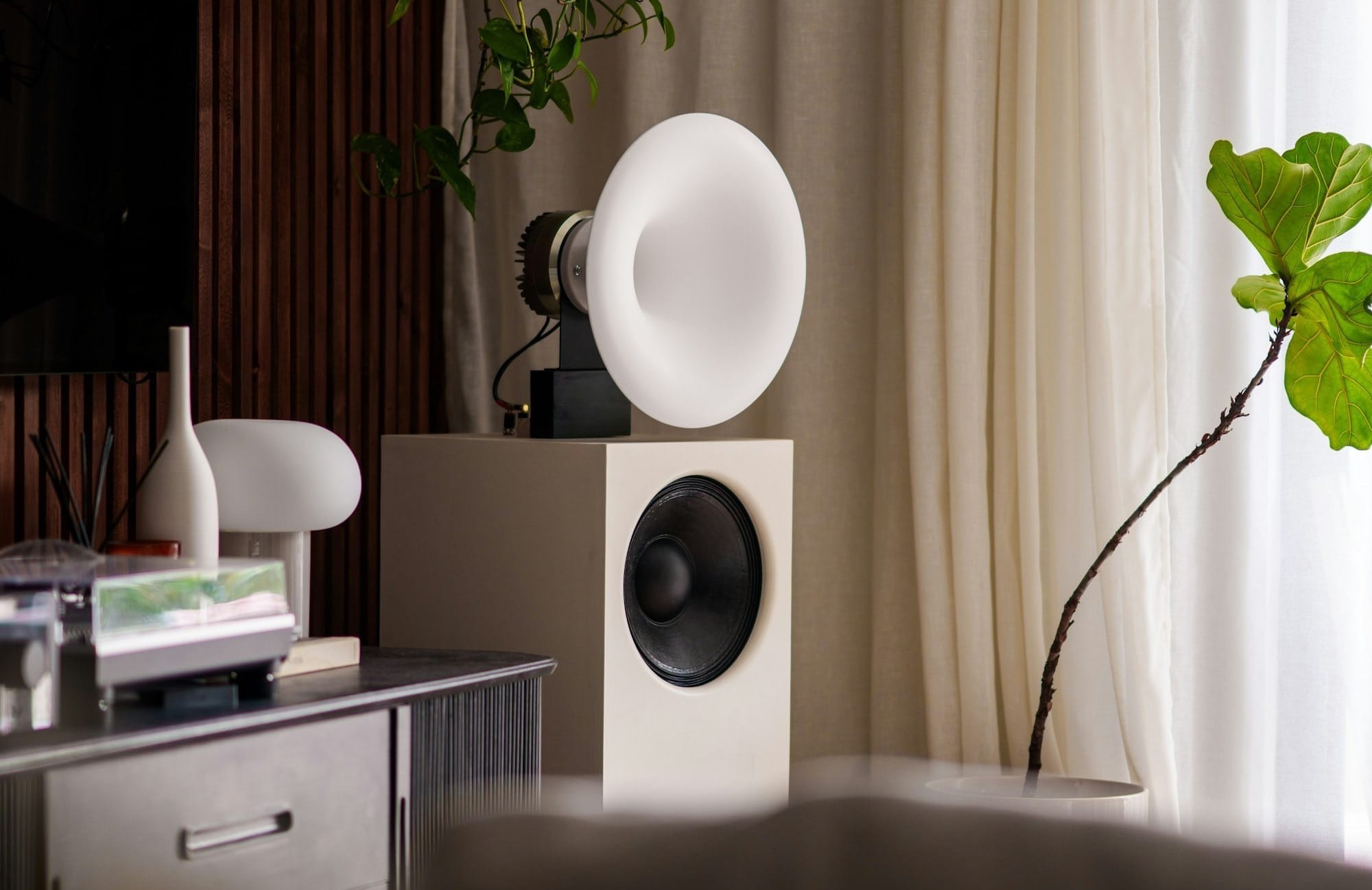
When it comes to music and music lovers, avoiding subjectivity is key. The moment you go there, you’re done. It’s like stepping into a jungle in the middle of a multi-faction guerrilla war. The goal is to stay away from experience and lean into lifestyle.
Here’s why.
Experience is subjective. How we experience things is subjective. Music taste is subjective. Taste in audio gear is subjective. Even preferences for formats like vinyl, magnetic tape, compact disc, or MP3 are subjective. Stack those together and you get endless debates, strong opinions, and no real resolution.
The defense of taste in music can get intense. Most of it turns into noise. Respect people’s preferences, but don’t get pulled into it.
What cuts through that noise is lifestyle choice. Choosing vinyl because it “sounds” warmer is not a lifestyle decision. Choosing a KEF R3 Meta over a Wharfedale Super Linton because it feels more precise is still about preference. Choosing how much privacy you want in your life, that’s a lifestyle decision.
The Lifestyle Choice of Opting Out

So once you clear out that noise, a lifestyle choice starts to come into focus among the hyper tech literate.
They don’t want to be counted inside a music app’s algorithm anymore. They want their music to feel personal again. They want to organize it on their own terms. Sometimes that means chasing new discovery. Sometimes it means sitting with an album they loved 10 years ago and actually spending time with it.
Streaming always came with a tradeoff.
Consumer Gain
Access to almost all the music in the world. High quality playback without managing files. A full library that follows you across devices.
Consumer Loss
You can see the friction points here, can’t you? And you can feel how these thoughts start to run through someone’s mind:
- Device Fatigue: If I have to buy all these devices, what’s one more? Maybe a standalone device could replace a few of them.
- Subscription Fatigue: Do I really want to pay $20 across multiple subscriptions when 98% of the catalog isn’t what I actually listen to? Wouldn’t buying one album I love make more sense?
- Circular "dumb" Algorithms: Why does this week’s “new discoveries” feel like the next track from last week’s albums? This doesn’t feel like discovery. It feels like a loop.
- Commodity of Overwhelming choice: Those curated playlists with 250 songs sounded great at first, but who has four hours to get through them, especially when most of it doesn’t meet you where you are?
- The Deep Cuts that make your music you: What about that song I liked years ago that lived on a CD maxi single? It’s not here. How do I get it into my library and have it show up correctly?
- Shame of Guilty Pleasures and the music that feels too personal: I don’t want people to know I like this artist. I don’t want someone stumbling across a playlist that feels too personal.
That’s the headspace of this consumer. There’s just one problem. There are no solid, affordable MP3 players in the market.
The MP3 Player Vacuum
There are no old school iPods. If you do find one, it’s over a decade old, and the battery is likely shot to the point where it needs to stay docked just to function. High-end MP3 players, like the ones Sony makes, are geared toward the audiophile crowd, not the mid-range consumer. They can feel like overkill.
The ByteReview video I shared highlights a $60 MP3 player with a retro Walkman vibe. If you watch it, the friction shows up quickly. Limited storage and clunky navigation make even a small library hard to manage. For some people, it brings back the feeling of spending ten minutes typing a single text on a Nokia phone in the early 2000s.
Building A New MP3 Player
So if we were going to create an MP3 player to reenter the market, what would it need?
- A good design and build, not ultra-luxe not cheap.
- Expandable storage
- A long-lasting battery with modern low power management.
- A UI that can navigate a library of any size with ease. That means a minimal OS, not full-blown Linux or Android.
- The ability to load tracks easily from another device, and delete tracks without needing to stay connected.
- A screen that works in all settings. Clear, legible, and not cluttered.
So let’s be honest about what this is. It’s a modernized iPod Classic, with just enough changes to avoid getting sued by Apple.
Calling the Strategic Play
The strategic play I would call is one I’ve named Break the System.
The first move is positioning the product as an escape from a dominant player and an oppressive situation. The dominant players are large music platforms and tech companies that lock you into their ecosystems. It puts us in the position of the hero and rescuer.
That stance leads directly into outlining the situation itself. Those pressure points were already defined in the “Consumer Lost” section. The tension is already there, already felt by the audience.
From there, the messaging leans into dramatizing what feels limiting, then connecting the MP3 player as the way out. The focus is on the break first. Show the exit. Show the daylight on the other side. That space can be framed as a private universe for the listener. Large, open, and shaped by their own choices.
Once you have attention, then you move into features, but not in the usual way. This is not about storage size, screen resolution, or spec sheets. The features are lifestyle-driven. Privacy. Personal control. How the device fits into someone’s life.
From there, the benefits follow. That’s where the emotional weight sits.
Keys to Why this Works
It works for a couple of reasons. For one, the tech and platform system we are positioning against is real. It’s felt the moment you pick up your phone and open a music streaming app.
The emotion comes from tension, not explanation. The trend points to tension already being there, with people already looking for an alternative. There’s no need to explain behavior they’re already living. The job is to help them see the picture they’re forming in their own mind. That’s what allows us to go off label and define features and benefits outside of product specs.
Lastly, the product is the release, not the story. The story is the delivery system that leads to that release.
One last connection. When tension is resolved, the emotion released is satisfaction. A satisfied customer is one who enjoys using the product and wants to share it with others.
💡 OffLabel-018 | The Half-Back Reversal
Diagnosis: A digitally saturated audience is pulling back from platform dependence, seeking control, privacy, and a more personal relationship with their music.
Prescription: Reframe the product as an exit from platform-controlled environments and position it as a self-directed system built around ownership, control, and personal organization.
Strategic Medication: Break the System, Private Universe Framing, Lifestyle Feature Encoding [Provisional]

