
Signal Overload Distortion | Strategy-021
When brands monitor everything, they start reacting to noise like it’s strategy. Signal Overload Distortion happens when volatility overwhelms interpretation, turning positioning into panic and responsiveness into confusion.

When Every Notification Feels Important
You’re staring at your marketing dashboard and refreshing it in real time.
Engagement dipped yesterday. A competitor went viral three hours ago. Someone on TikTok is mad. LinkedIn says the algorithm changed again. Also, you've learned the CEO saw a trend article on a flight and now wants a “strategy pivot.”
Nothing catastrophic has happened. But everything suddenly feels overly hyperactive.
So the instinct is to react. The messaging changes. The tone shifts. Campaigns get adjusted mid-flight. The social team starts posting like a caffeinated newsroom during a hurricane. And slowly, something strange begins to happen.
The brand stops communicating clearly and starts mirroring the emotional volatility of the market around it.
That’s when Signal Overload Distortion begins.
When Distorted Signals Become a Problem

The distortion happens when a brand’s observational capacity exceeds its interpretive capacity. In simple terms: the company can see more signals than it can meaningfully understand.
Every metric becomes urgent.
Every trend looks existential.
Every backlash feels permanent.
Instead of filtering information through a stable strategic perspective, the brand begins reacting directly to surface-level volatility. The result is reactive posturing disguised as responsiveness.
Think about weather vanes. A weather vane has no direction of its own. It simply rotates according to external conditions. The stronger the wind, the more aggressively it moves.
That’s what happens to brands under signal overload. The company stops producing a clear signal and starts reflecting whatever emotional weather system is currently passing overhead.
At first, this feels adaptive. Eventually, it becomes disorienting. Activity increases and strategic clarity suddenly decreases.
And now that weather vane seems to be spinning out of control.
The Symptoms (You’ve Seen This Before)
The organization stops distinguishing between meaningful shifts and temporary volatility. That’s when responsiveness mutates into distortion:
- Messaging pivots too frequently to form a coherent memory structure
- Strategy chases trends, backlash, or platform shifts without re-anchoring
- Metrics are monitored obsessively, but meaning is unclear
- Brand voice becomes emotionally reactive rather than deliberately on message
Campaigns begin responding to audience mood swings instead of strategic intent. From the inside, this feels agile. From the outside, it feels unstable.
The brand no longer filters the market through its own perspective. It mirrors the market back at itself.
Why Brands Start Hallucinating

There’s a reason this pattern appears across industries during periods of volatility.
Information theory calls it a signal-to-noise problem. As information volume increases, meaningful patterns become harder to distinguish from random fluctuations.
Nate Silver described this in The Signal and the Noise. More data does not automatically create more truth. Often, it creates more noise that only appears meaningful because it arrives faster and more frequently.
Nassim Taleb approaches the problem differently. He argues that excessive observation creates intervention bias. The more frequently organizations monitor conditions, the more likely they are to “correct” things that were never actually broken.
Daniel Kahneman explains another layer through the availability heuristic. Humans overweight the most recent and emotionally vivid information regardless of whether it is statistically meaningful.
Combined together, these forces create a dangerous organizational loop:
More Dashboards → More Monitoring → More Volatility → More Reaction.
The company begins confusing visibility with significance. That’s when strategic interpretation collapses into emotional reflex.
The Pendulum Effect
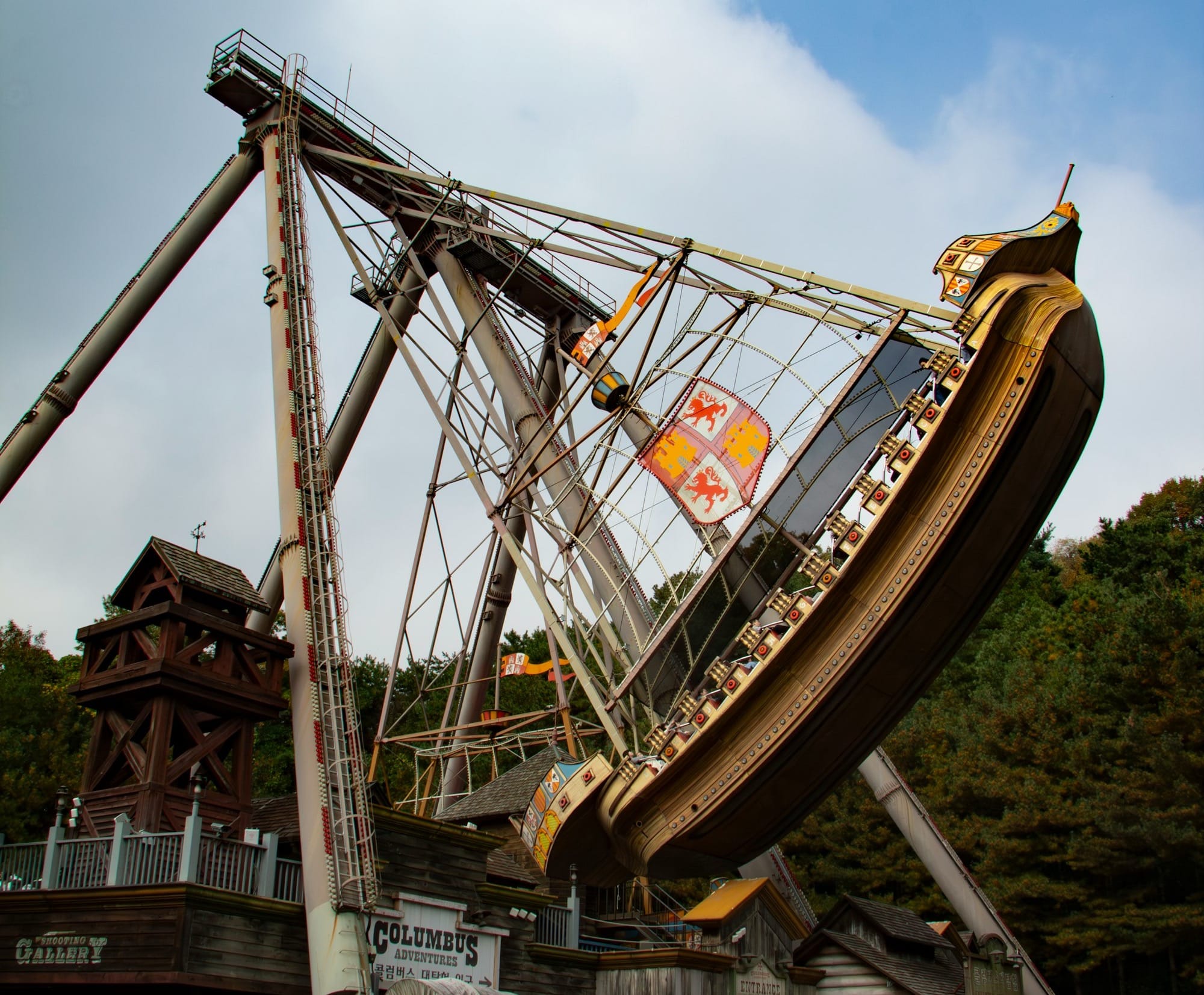
Once interpretive stability disappears, brands start swinging between extremes. One quarter they overreact to every trend. The next quarter they retreat into rigid conservatism.
The result is strategic whiplash. Hyper-reactive turns into hyper-defensive, which feeds back into being reactive again.
Without a stable interpretive frame, the company loses the ability to distinguish temporary turbulence from structural change.
Everything starts feeling equally urgent... and when everything feels urgent, nothing gets understood correctly.
Resisting Perception Whiplash
Some companies mistake temporary sentiment for permanent change. Others overreact to trend velocity while ignoring deeper audience identity structures. In nearly every case, the distortion begins with a real signal. The problem is interpretation.
- The Misread Signal: In "Pepsi Challenge" blind taste tests, consumers preferred the sweeter taste of Pepsi was read as “Taste preference equals brand preference.”
- The Overreaction: Coke panicked and assuming their historical flavor, their brand uniqueness was a liability. Coke changed its formula to compete directly with Pepsi’s sweeter profile.
- The Result: They confused sip-level preference with cultural attachment. Consumers weren’t loyal to Coke because of sweetness alone. They were loyal to what Coke represented. The company reacted to a surface signal while ignoring the deeper emotional structure underneath it.
The Gap noticed minimalist tech branding becoming fashionable during the late 2000s.
- The Misread Signal: A general trend in the late 2000s toward "minimalist, tech-forward" branding. Gap misread it as: “Modern equals minimal.”
- The Overreaction: They abruptly abandoned their iconic blue-box logo for a generic redesign with almost no strategic transition.
- The Result: The company mistook a broad aesthetic trend for a mandate to abandon brand memory. The backlash arrived almost immediately because the redesign removed recognition faster than it created relevance.
Peloton interpreted pandemic demand as a permanent behavioral shift.
- The Misread Signal: Massive growth spurred by the Covid-19 pandemic during 2020-2021 signaled that home fitness was becoming more popular. Peloton misread it as:“Home fitness has permanently replaced gym culture.”
- The Overreaction: Massive expansion into manufacturing, logistics, and inventory scaling. All on the assumption the pandemic would force a permanent habit.
- The Result: Temporary consumer behavior was misread as permanent market reality. Peloton optimized for peak volatility conditions instead of long-term equilibrium.
Each one was active. Each one was improving. All of them were exploiting a signal the market wasn't really communicating.
How to Question the Signals and Find Clarity

The solution is not ignoring signals. The solution is building interpretive filters strong enough to survive volatility. That requires slowing down long enough to ask harder questions:
- Is this trend repeating or merely exploding?
- Is this backlash statistically meaningful or emotionally amplified?
- Does this signal align with long-term audience behavior?
- Are we responding to real longterm change or temporary noise?
The distortion process begins when brands mistake movement for meaning.
More signals enter the market. The brand loses its internal filter. Campaigns multiply in response. Eventually the audience stops recognizing what the company actually stands for.
Signal volume explodes.
More trends, more dashboards, more metrics, more reactions. The market produces far more inputs than teams can meaningfully process.
The brand loses its frame.
Without a clear internal point of view, every new signal starts feeling equally important and equally urgent.
Activity replaces direction.
Campaigns launch rapidly to stay relevant. Messaging shifts constantly. The company begins mirroring the feed instead of guiding it.
Recognition breaks down.
Customers stop understanding what the brand actually represents because the identity changes every month.
Most inputs are noise. A few actually matter.
Strong brands do not react to everything equally. They filter signals through a consistent interpretation layer before changing behavior.
Five campaigns. Five directions.
The company stays busy, but each reaction pushes the identity further apart instead of making it stronger.
The strongest brands don’t react slower because they are disconnected. They react slower because they know clarity compounds faster than panic.
The Off Label Insight
Most brands think their problem is speed. Usually, the problem is interpretation.
Modern marketing systems create the illusion that constant observation creates intelligence. But excessive observation often creates distortion instead.
A dashboard cannot tell you what matters. It can only tell you what moved.
Without an interpretive frame, organizations start reacting emotionally to visibility itself. Every spike becomes prophecy. Every outrage cycle becomes a referendum. Every trend feels like the future arriving early.
That’s when the brand stops behaving like a signal source and starts behaving like a weather vane.
The market is allowed to panic. Your positioning and stance shouldn’t.
♟️ Strategy-021 | Signal Overload Distortion
Premise: When volatility increases faster than a brand’s ability to interpret it, companies begin reacting to noise as if it were strategic truth.
Framework: Separate meaningful behavioral shifts from temporary volatility. Build interpretive filters before increasing responsiveness. React through positioning, not emotional reflex.
Strategic Lens: Signal-to-Noise Theory, Availability Bias, Intervention Bias, Strategic Volatility, Interpretive Framing, Reactive Positioning

