
My Fascination with George the Magazine, not JFK Jr.
A great idea at the wrong time isn’t visionary. It’s a problem. George magazine nailed the concept but couldn’t survive long enough for the world to catch up. This is the quiet fight every idea faces: not just being right, but being right when it matters.
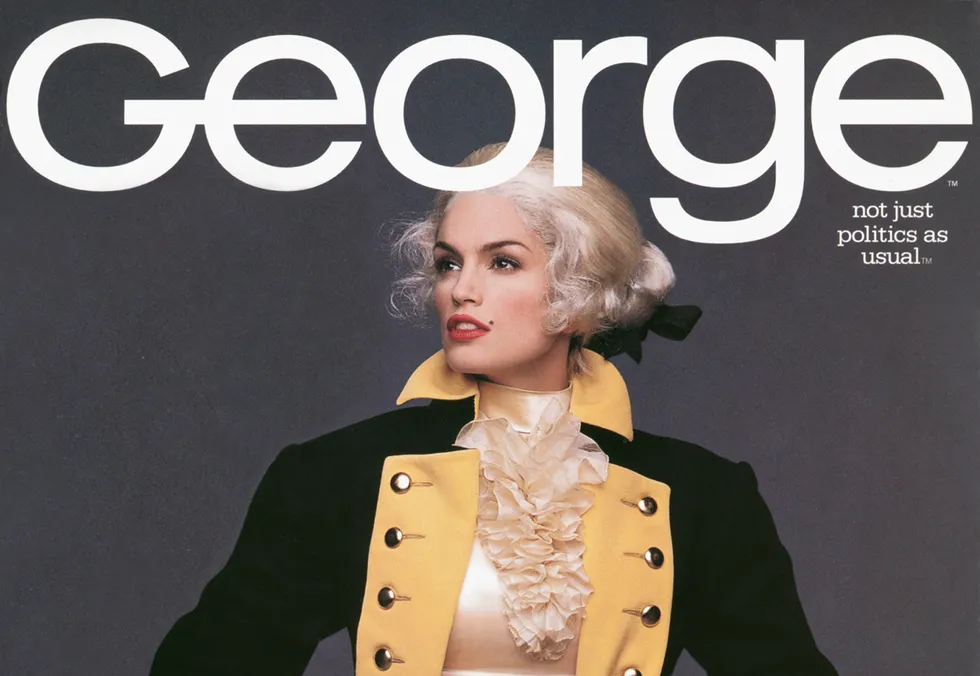
A 2010s Brand Trapped in 1995
I'd like to imagine if AI and LLM's existed in the mid to late 1990's, JFK Jr. would type in his idea for George, or maybe later his frustrations, and be met with this response:
"John, it's a great idea. There is nothing wrong with it. You're just ahead of your time. Everyone will catch up to it eventually." - Your Fav AI Chat of Choice
The funny thing is, most times when AI says that, it's BS. We can be honest here, right? But with George magazine it was right. The problem was, just like now, AI chat has no ability to tell him how far ahead his idea was.
Let's put it out there since AI is never fully honest or a straight dealer: Having an idea that is ahead of its time, is having an idea that's bad. Timing matters.
I know that sounds brutal. But if you work with ideas, this is something you battle and confront endlessly. Then you fight with yourself over the next loaded question: Where is the window for it and do I have enough time to hang on to reach it?
To me, that's the story of George magazine. A brand trying to stay in the fight long enough to turn a badly timed idea into the gem of an idea it felt like all along.
A 10/10 Idea with a 3/10 Engine
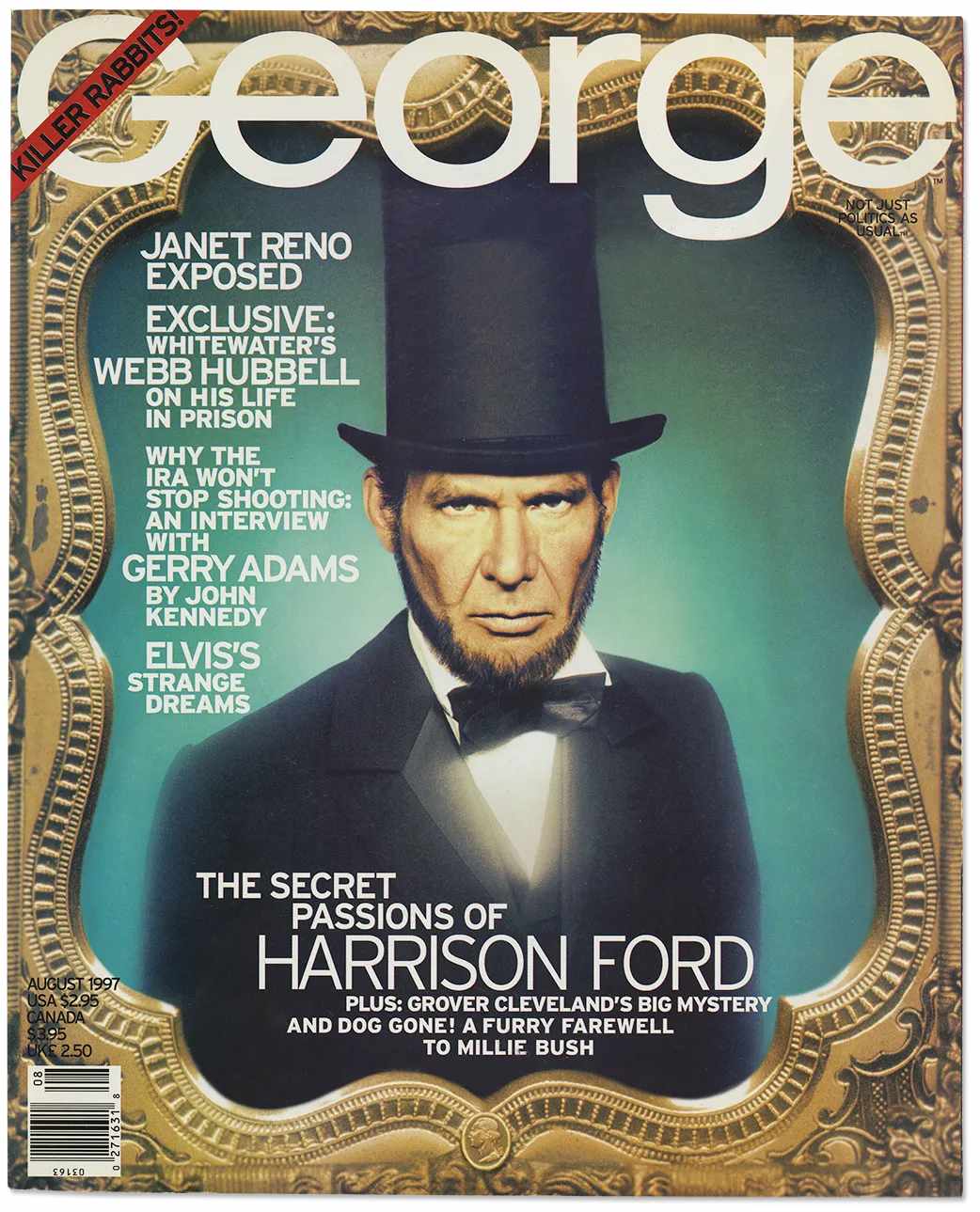
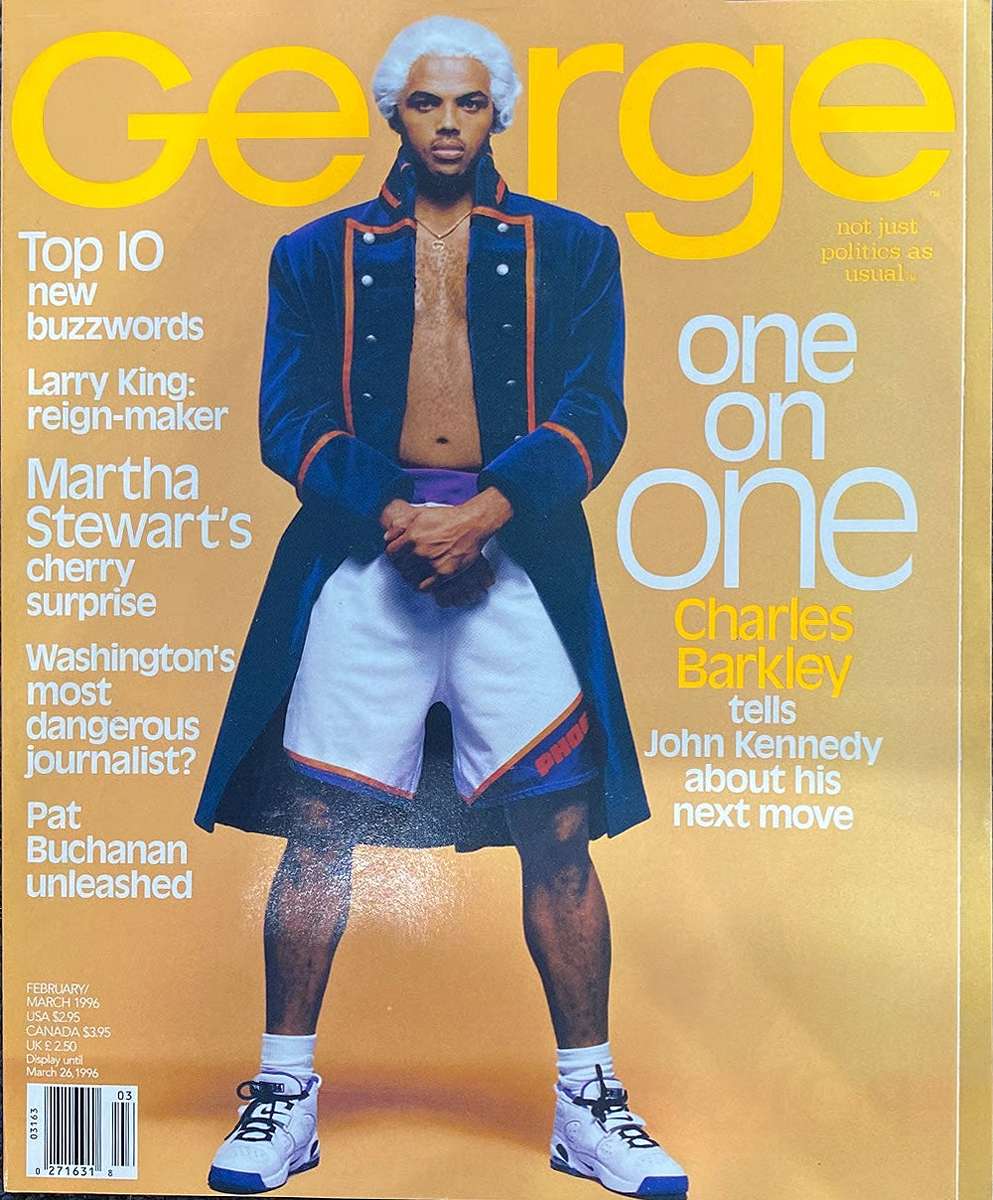
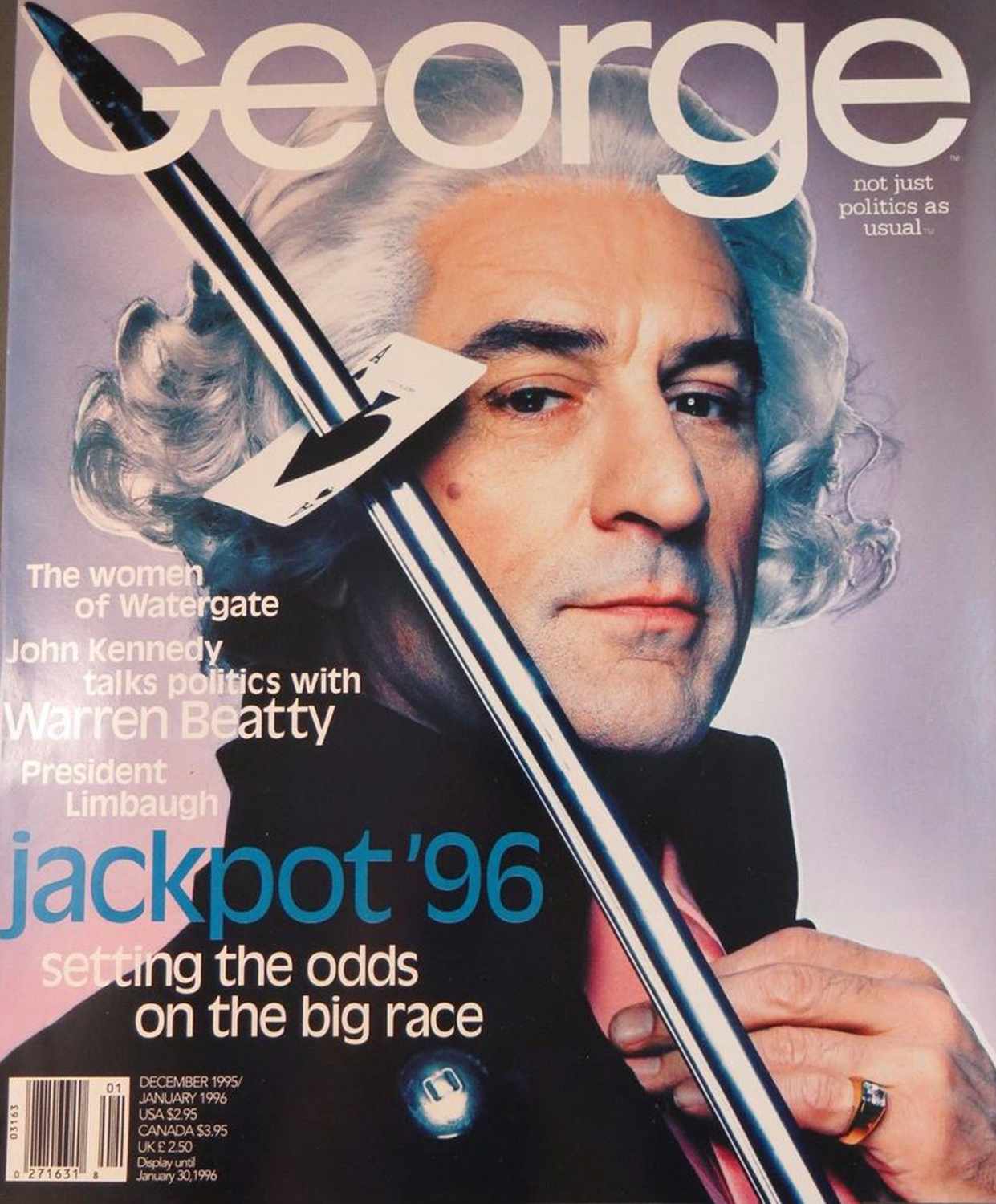
George Magazine Publication Personality #1: Politics as the Celeb Dressed as American Historical Figure
George was an "Outside Looking In" magazine that tried to find a blue ocean somewhere between politics and pop culture. It made sense. That's exactly where JFK Jr.'s whole life existed: between politics and pop culture. For positioning, you have to give that magazine a 10/10.
After a great launch with Cindy Crawford on the cover dressed as George Washington, ad sales tailed off. The magazine was too boring for pop culture and not wonky enough for the political audience. It wasn't targeting an existing audience, it was looking to build a new one from scratch via a ciphering strategy: pick off enough people from two niches to gain a base audience of its own. Ok, so let's give that strategy a 6.5/10. Doable and even realistic, but needs an extra push.
On one end it was high gloss, on the other end it turned down interviews with major political figures. That's an odd fluctuation. That says its direction was in conflict with itself. This is clear looking at the magazine covers featured in this article. They were cool and high gloss, but also all over the place. From celebrity dressed like colonial Americans to looking like Cosmo or Maxim for politics. Also, there is a very odd middle area that feels like Entertainment Weekly meets Fast Co. for the 1990's.
The problem wasn't picking a lane. I love the lane it picked. The problem was it never really defined the lane it owned clearly enough for others to grasp. Execution, sadly it's a solid 3/10.
The $10 Million Money Pit
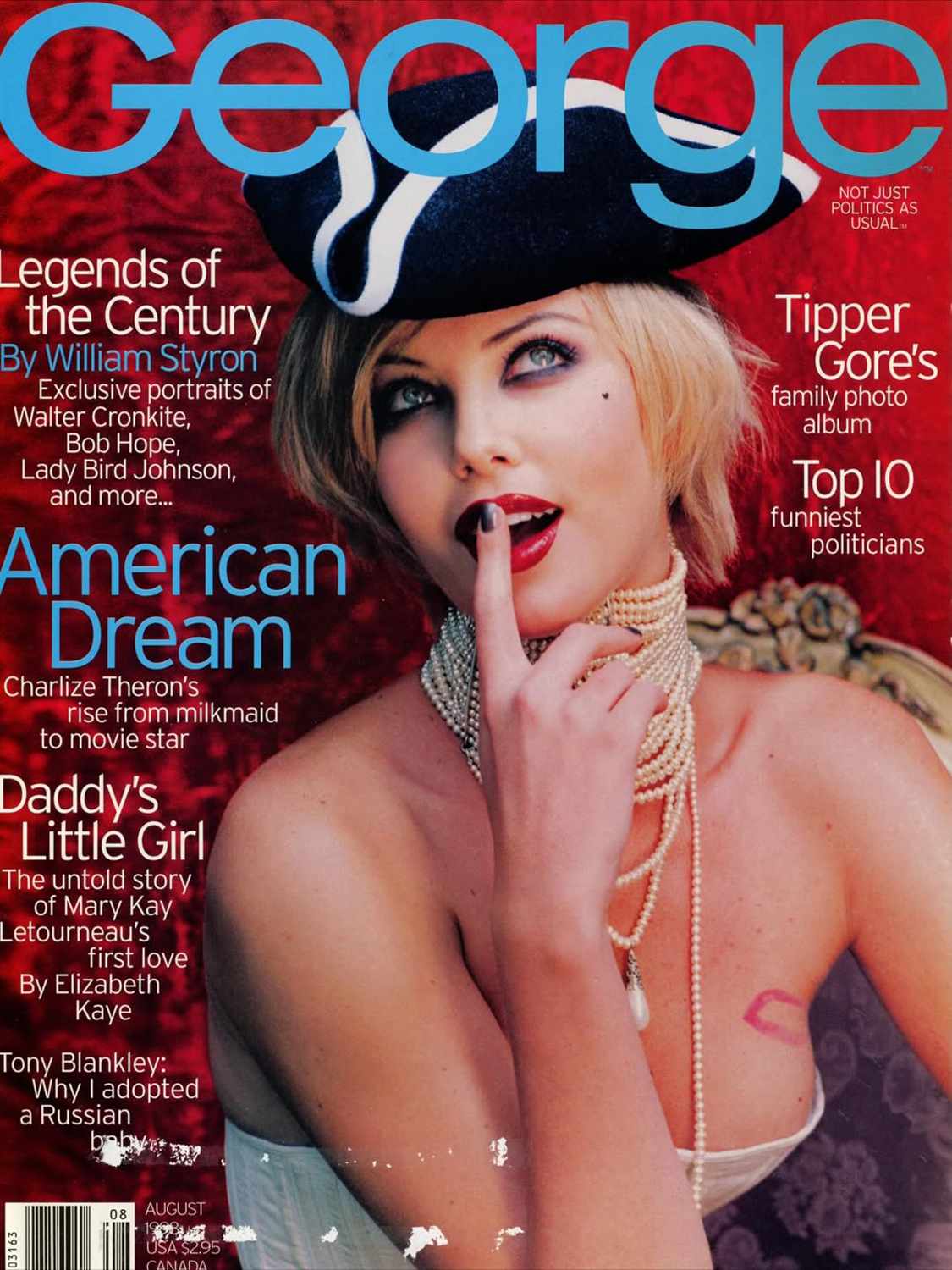
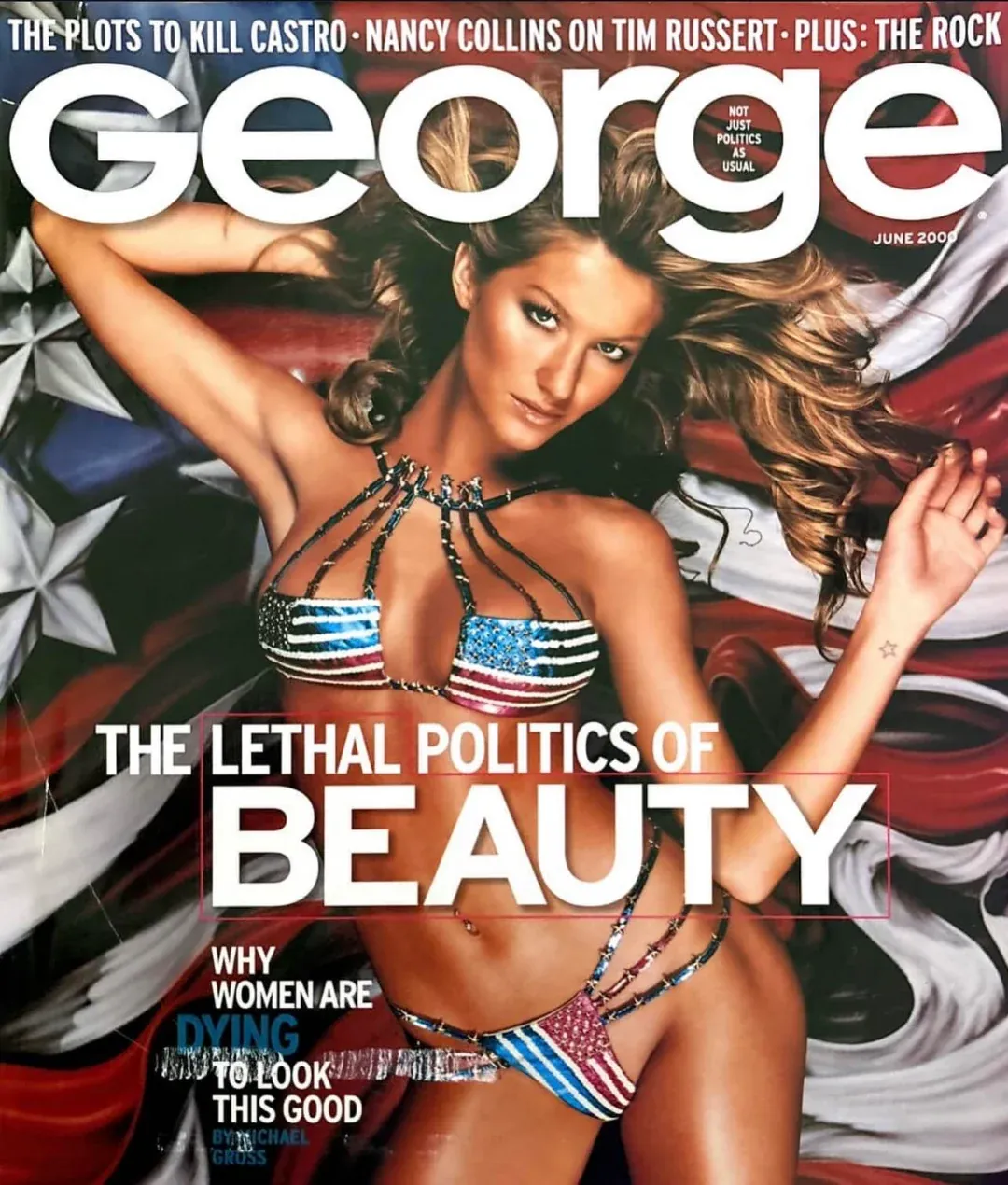
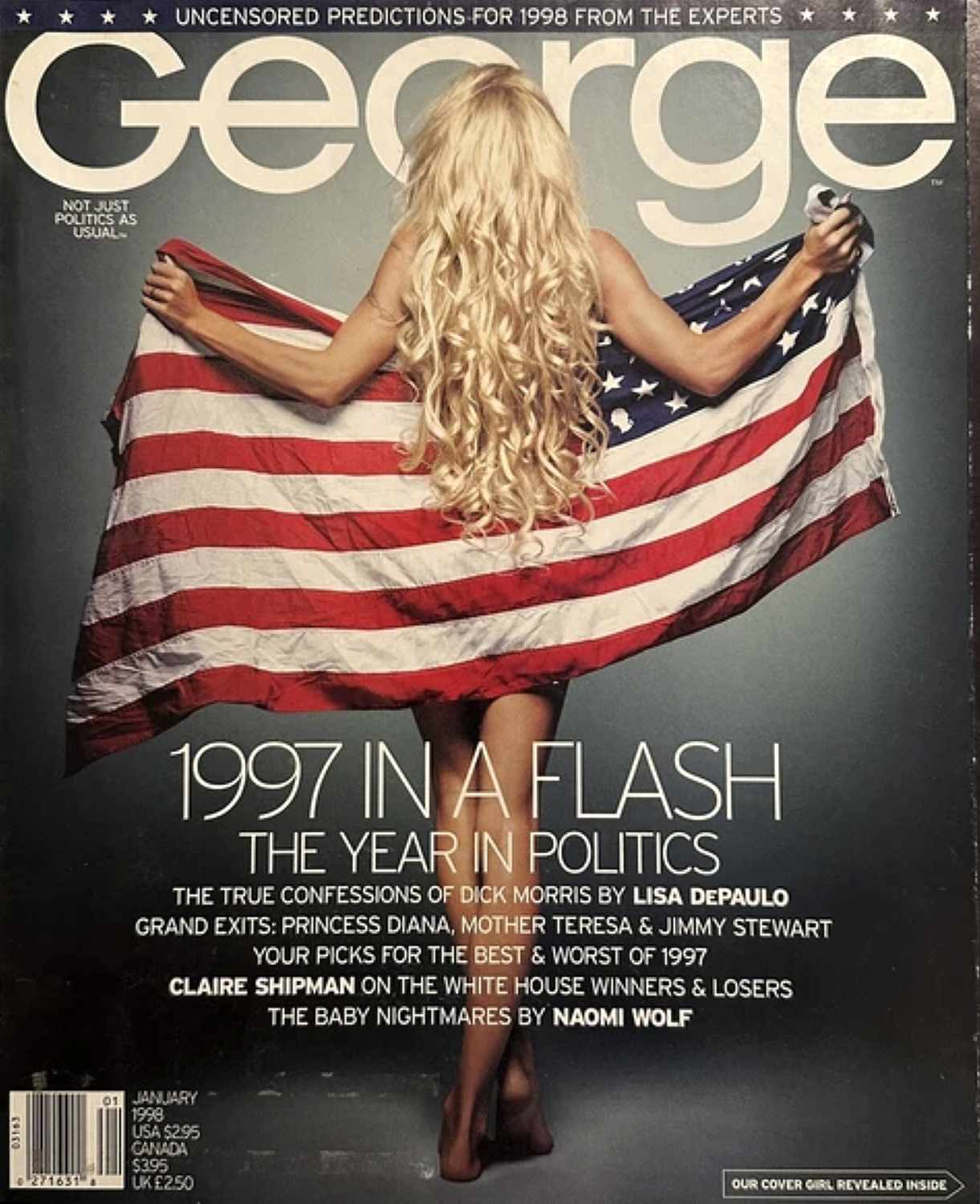
George Magazine Publication Personality #2: Politics as Cosmo and Maxim Magazine
Print publications are expensive. If you think running one is expensive now, your eyes would pop out of your head if you saw the running budgets for them in the 1990's. Back when the margins weren't so slim, when a large part of it of it could go towards entertaining ad buyers, publicists, and talent agents. Not to mention perking the talent on staff or attracting promising ones from elsewhere.
By the mid point of its shelf life, George was losing $8 million a year. In 1999, that number jumped to $10 million. In 2026, a magazine in this situation would shutdown print operations within a year, turns its focus to online sales and subscriptions. Once the P&L was safely in the plus, it would then, just maybe, re-introduce print again. First with special editions, then back to running its monthly or bi-monthly issue schedule.
This guy simply DID NOT want to do anything the easy way. It always had to be the hard way. Nothing could ever be done the easy way.
Web 1.0 Was Too Ugly for Gorgeous George
1996 was not 2026. Web was there, but it was ugly and clunky. If you were a publication running a glossy premium magazine, the technology didn't match. Unless you endured the costly nightmare of building the entire website in Adobe Flash. That's functional if you are a company using the web to showcasing your business with no need to update it. For those companies, the early web was a static brochure made of pixels. However, Flash is absolute nightmare if you are a publication running a schedule and updating monthly.
Yes, I said monthly. Unlike today, media didn't post 24/7. Only cable news was 24/7 and the main source of over-sped news cycles. The Drudge Report is a rare example of what posting all the time looked like in the 1990's. It was all HTML and zero CSS code. It's a well preserved Web 1.0 fossil. It's the same now as it was back then.
So you can rule out a 1990's web pivot for George. It just wasn't there.
He Wanted It 10 the Hard Way
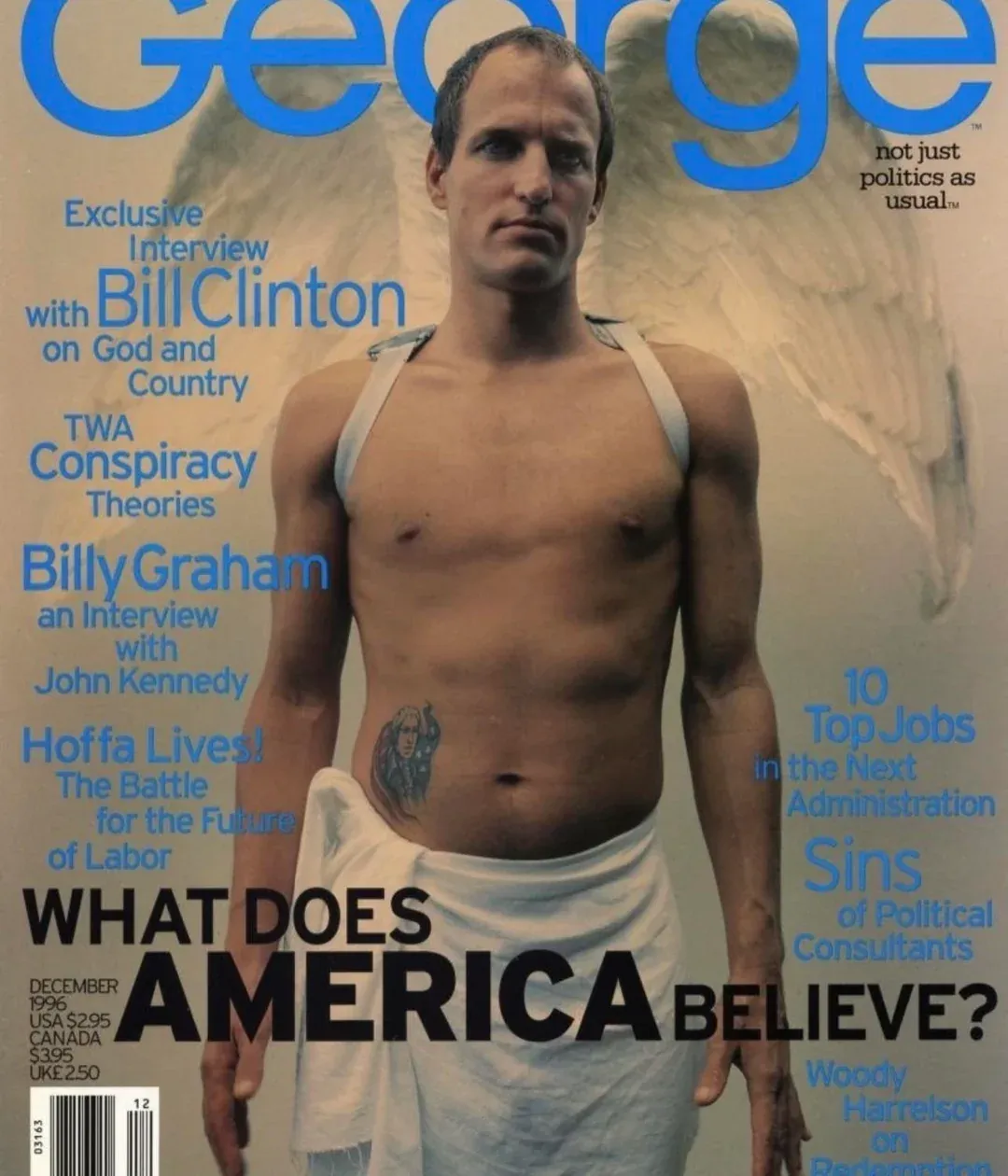
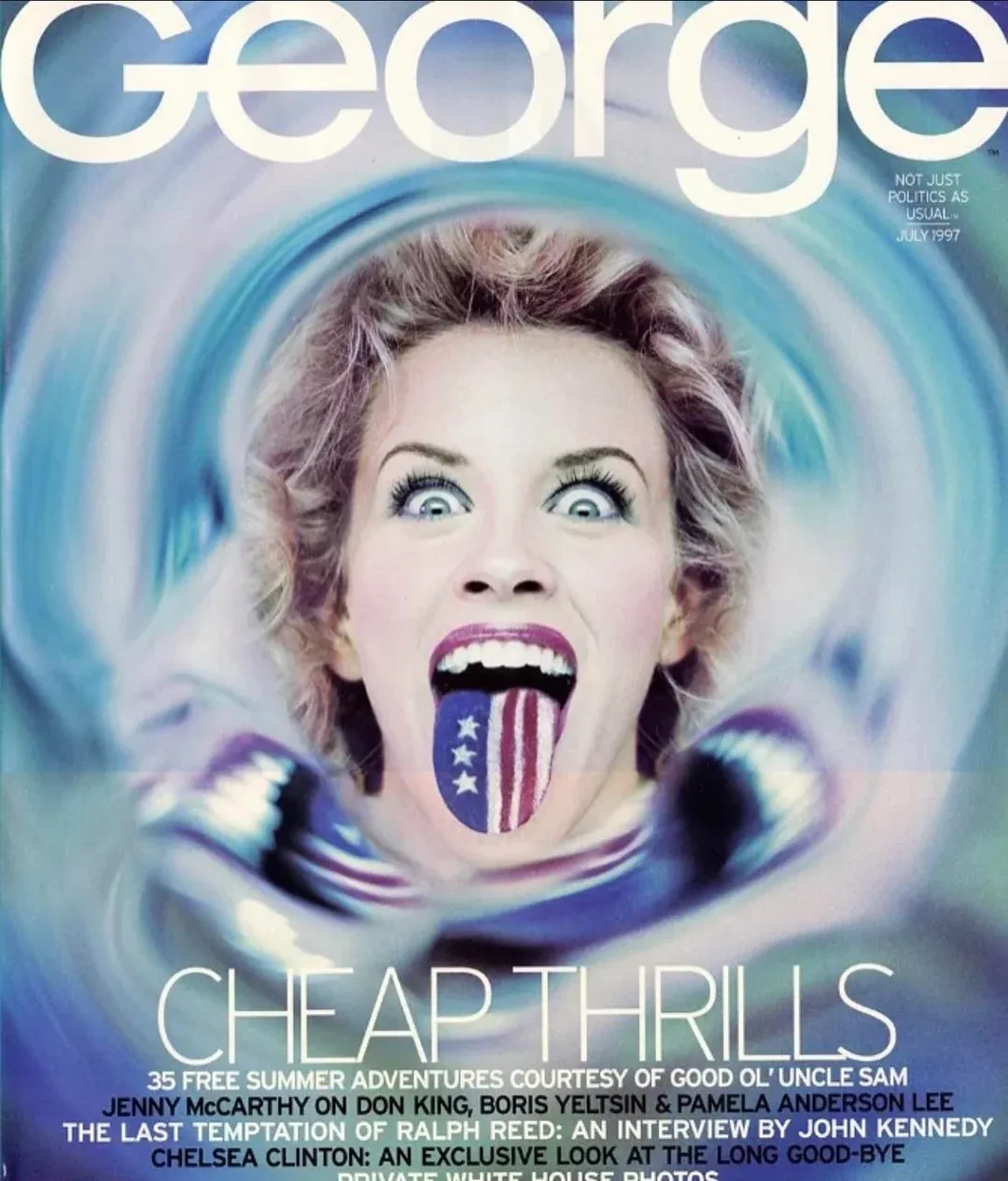
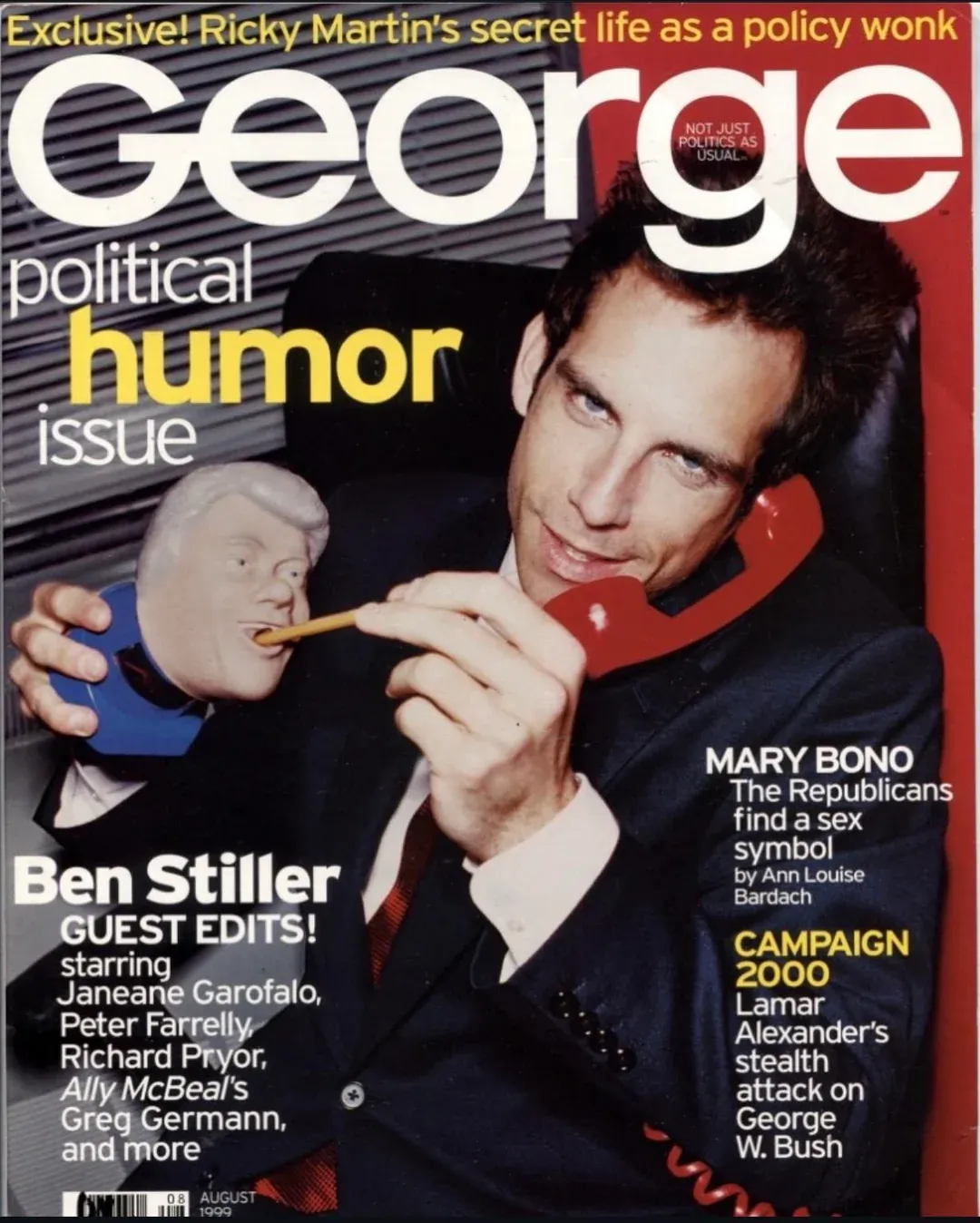
George Magazine Publication Personality #3: Politics as Fast Business Magazine meets Entertainment Weekly
The problem with George was it made no pivot at all. It stuck to its mission, but never changed the mission when the objectives couldn't be hit. I don't know anything about JFK Jr. on a personal level. I never met the man. My childhood consisted of relatives swooning over him on celebrity magazines that showed him rollerblading shirtless through NYC. What a hairy chest. And at a time when hairy chests were going out of style. Then again the rules of style always bent in his direction naturally. As long as it was him, whatever he did or wore was in. But only for him, not you, not me, just him. Are we clear?
Oddly, that aside still brings me to my point. Even from afar, there is one thing everyone could see: This guy simply DID NOT want to do anything the easy way. It always had to be the hard way. Nothing could ever be done the easy way. That's frustrating. In everything he did, he acted as if he was normal guy who came from a family that did seasonal beach house repairs in Hyannis Port, and not from one of the richest and most mythical American families who had a compound of beach houses there.
Through a political lens, that's charming. Through a business lens, it's absolutely madding. It's like southpaw entering a boxing match and saying to the officials, "No, I'm good. I insist that you tie my left arm behind my back. I want this to be a fair fight."
Refusing Halo Aura
Maybe it was humbleness. Maybe it was over awareness. Maybe it was how he was raised. Maybe it was all of that. I don't know. I do know that the man simply did not want to exploit the gifts and strengths he had to win. He was not built with the drive to win at the margins like most entrepreneurs... like his grandfather Joesph P. Kennedy, Sr actually did. I guess when you’re born well within the winning margins, you are aware of the margins, but you don't feel them in the same existential way the rest of us do.
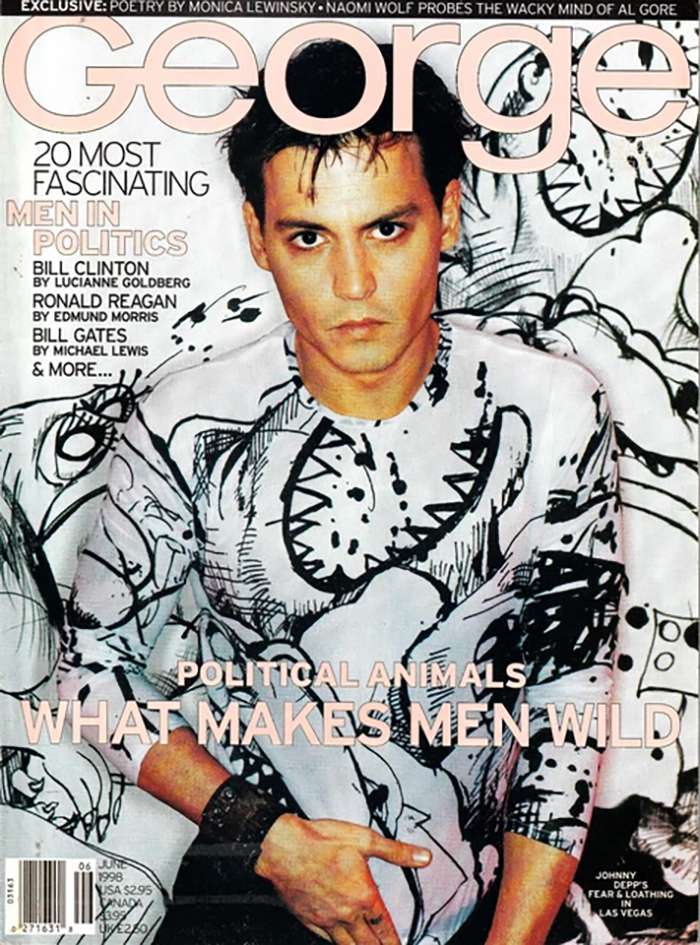
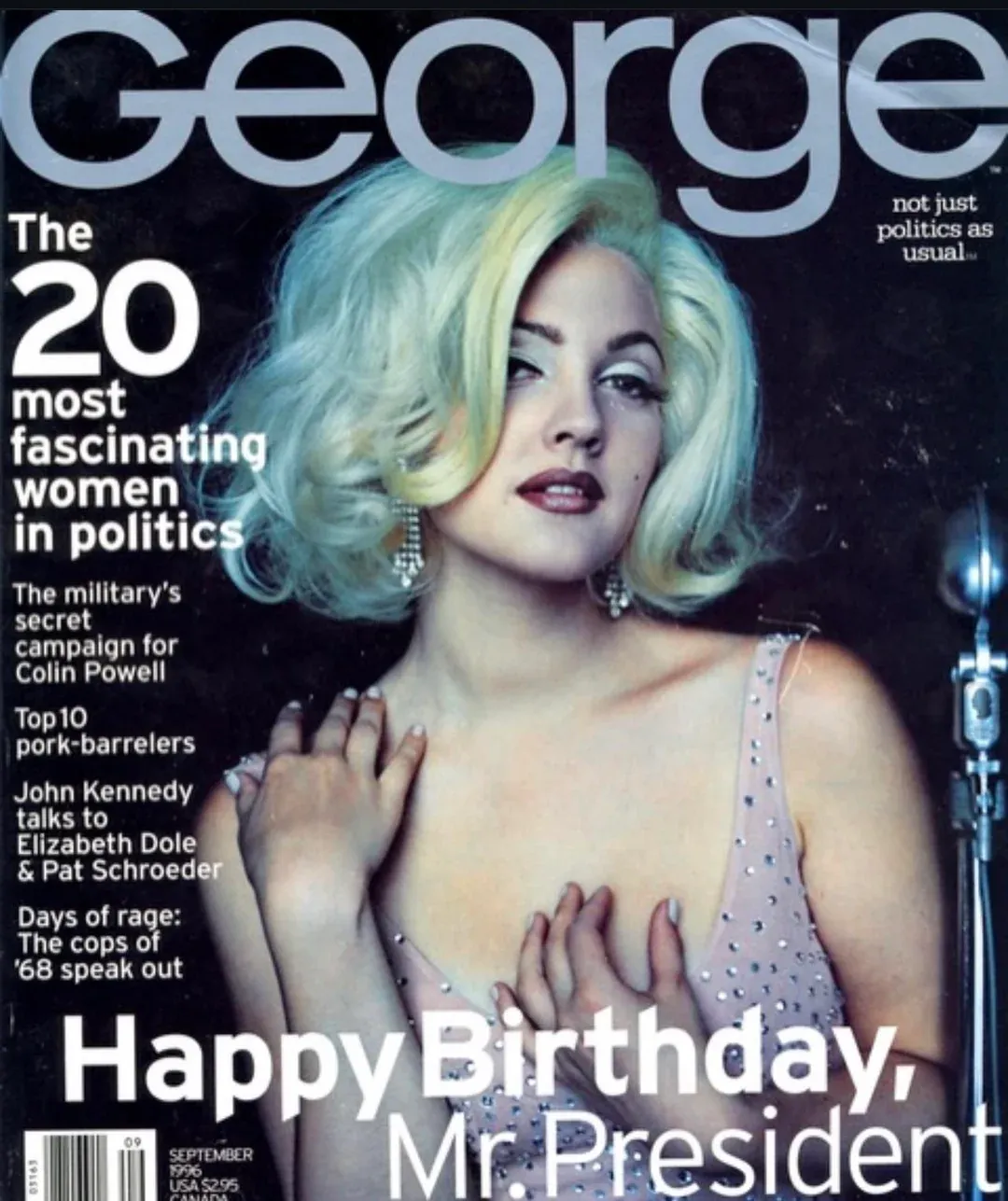
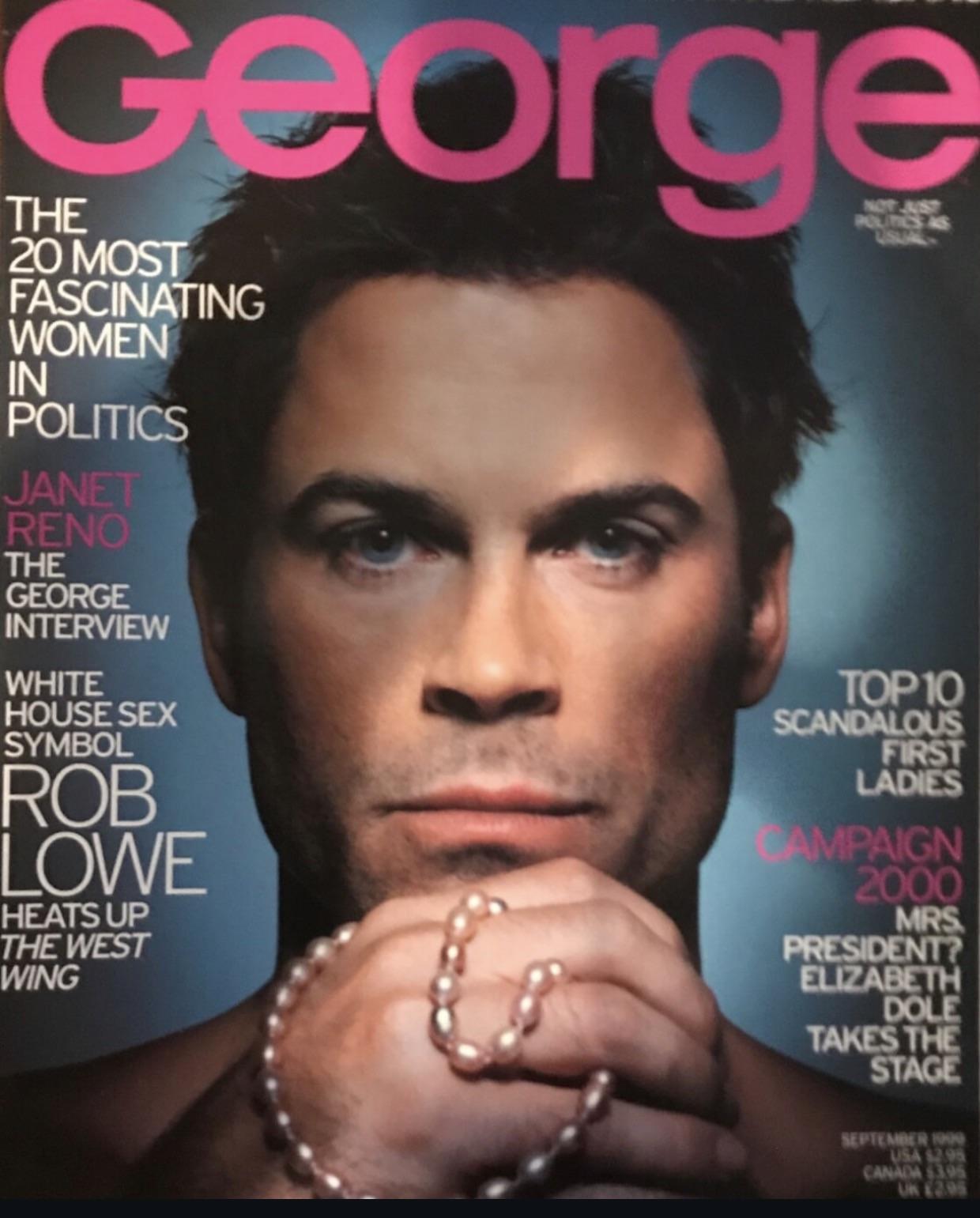
More Cool George Magazine Covers
His aura alone kept the magazine in print. It could have punched it through into profitability had he wielded it as the asset it was. I admit it's not fair to apply personal branding standards of today on a person who lived during a time when a personal brand was only reputation. Historical revisionism has its limits.
Assuming he made the pivots needed, stayed physically alive, kept investors onboard, and could see the openings that emerged in the following decade. And let's also include avoiding the pitfalls newspapers made with 2000's media. There was a long shot chance.
So how early was George exactly?
It was too early by about 15 years. When I look at the magazine, the place it fits is obvious. It belongs as part of Politico Magazine. Why do I think that? The same reason you think it doesn't fit: they both have opposite philosophies.
Rather than me write it, Let me lay it out for you like this:
Chart for Play Call #1
Inside-out vs. outside-in is not style. It’s audience pull.
One model serves insiders with precision. The other translates complexity for a broader audience. The gap between them is where opportunity lives.
Politico
Built for the political class. High-frequency reporting, granular detail, and constant updates designed for people inside the system.
George
Built on politics as culture. Glossy, accessible, and personality-driven framing designed to pull a broader audience into the conversation.
The merger solves the gap
The 2010's "Glossy Web" Sweet Spot
Beyond that, the content in George was made for the long form article era the early 2010's when Web 2.0 finally made it possible to develop websites with a premium and glossy editorial feel. Personally that's my favorite visual era before all the over optimized web grids took over. (Look up the 2011-12 Boston Globe and 2014-16 Nautilus Magazine in WayBack Machine. Those were cool websites. But be warned, they take a long time to load and will be missing an image to two.)
The image driven look of the covers and articles would have been highly shareable content on social media as well. George would have entered those platforms early on as first movers and gained a crucial follower base.
The other area George could have went, was even higher on the high end. Amp up the Prestige. But not too high up. Incorporate some of the more relatable material you find in Monocle magazine (also excellent publication first web design), or the active lifestyle stories you find in the DIRT series on Huckberry's YouTube Channel. If the epicenter of the magazine was JFK, Jr. as publisher, then the active lifestyle angle certainly would have fit, as brand extension in the evolving Personal Brand era of the 2010's.
Chart for Play Call #2
The new web pivot turns George into a prestige lifestyle engine with real authority.
In a digital-first world, the brand would move beyond the newsstand and become a high-end reference point: part briefing machine, part cultural magazine, part active-life publication, and part strategist’s handbook.
Relatable prestige with daily relevance
The opportunity is not to become a standard political magazine or a polished lifestyle publication. It is to combine authority, taste, utility, and active-world credibility into one brand that feels aspirational without becoming soft.
The Monocle effect
George expands beyond personalities and into international intelligence, design, urbanism, and systems-level observation. Politics becomes part of a larger world of power, place, and culture. Take the more accessible, non snob elements out of Monocle.
The DIRT element
The public figure is not just polished. He is tested in motion. Outdoors, gear, field use, and rugged context turn authority into something more physical and more watchable. JFK Jr.'s personal brand was one of active motion, a modern extention of "Kennedy Vigor".
The authority hub
Fast reporting, daily briefs, tactical guides, coded visuals, and strong recurring formats create a reason to return every day, not just admire the brand from a distance. This is an infusion of modern media DNA.
Avoid the “too high” trap
Too glossy and it loses the political class. Too trade-heavy and it loses the luxury layer. The win is in holding both seriousness and aspiration at the same time. It fits the publication and it fits the extension of the personal brand.
Redesigning Busted Plays
Sometimes it's fun to put our media mogul hat on and draw up these scenarios. George offers lessons to anyone, be it print, web, social, or other platforms on how to think about your content on a macro level. Looking at the playbooks of others isn't about picking winning plays. Sometimes it's about looking at the busted up plays, seeing what went wrong, then re-designing them to work for your own playbook.
💡 OffLabel-017 | The Timing Trap
Diagnosis: A category-defining idea launched before the media system, audience behavior, and business model were ready to support it.
Prescription: Match the ambition of the idea with the maturity of the ecosystem or redesign the execution to survive until the world catches up.
Strategic Medication: Cipher Strategy, Personal Brand Personality Infusion, Prestige Bridging [Provisional]

