
Every Online Mention Keeps Working After the News Cycle Moves On
Press coverage fades fast. The backlinks don't. Here's why every online mention keeps working long after the news cycle moves on, and how to build for it.
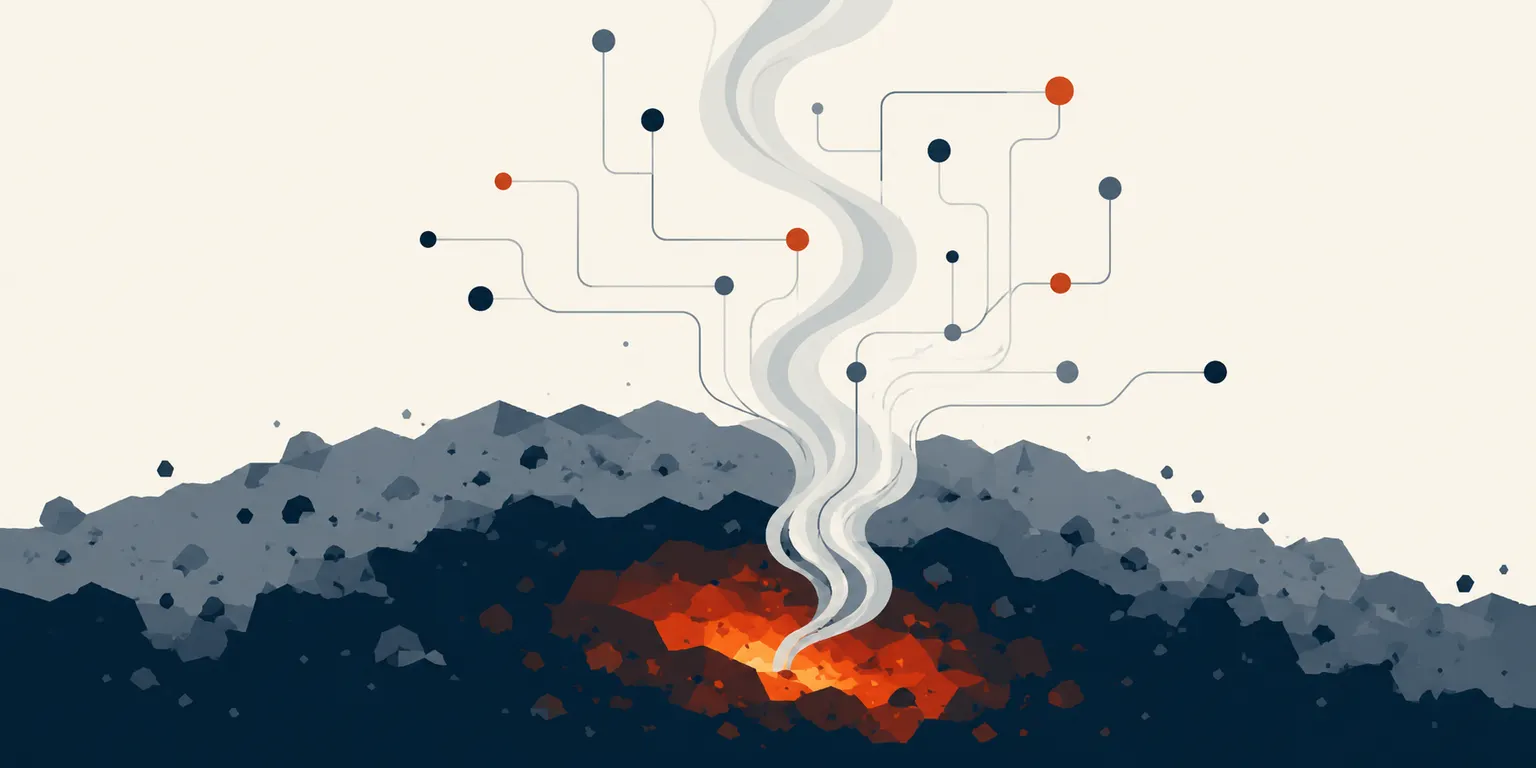
Most brands treat press coverage like a campfire. They light it, stand around it for a few days, and then walk away when the warmth fades. The story ran. The traffic spiked. The team celebrated. And then, quietly, everyone moved on to the next pitch. What almost nobody stops to notice is that the fire is still burning.
Digital PR coverage does not behave like a newspaper clipping tucked into a folder. It lives on the open web, indexed and searchable, accumulating authority and sending referral traffic long after the initial attention has evaporated. The press hit may have had a shelf life measured in days. The backlink attached to it does not.
Understanding this distinction changes everything about how you approach digital PR: what you pitch, who you target, how you measure success, and what you count as a win.
Key Takeaways
- Public attention around a major news story has a median lifespan of roughly seven days (according to Google Trends data analyzed by Schema and Axios). Online coverage from that same story can remain indexed, rankable, and traffic-generating for years.
- Digital PR coverage produces durable assets: backlinks that continue to pass domain authority, articles that rank in search, and branded search volume that compounds over time.
- The dominant mistake in digital PR measurement is treating coverage like an event rather than an infrastructure investment.
- High-authority placements outperform volume. One link from a publication with strong domain authority does more lasting work than a dozen placements on thin sites.
- Tracking the ongoing performance of past coverage, not just new coverage, is a legitimate and underused strategic practice.
The Classic Idea: Coverage Equals Exposure
For most of the history of public relations, this was the whole game. Get the story placed. Reach the audience. Influence perception. Repeat.
The logic was linear and, honestly, pretty reasonable given the constraints of the medium. A newspaper feature ran once. A television segment aired once. Radio was ephemeral by design. The value of coverage was front-loaded into the moment of publication, and the measurement frameworks built around traditional PR reflected that reality: impressions, circulation numbers, estimated reach.
PR professionals got good at chasing that moment. They built relationships with journalists, crafted pitches timed to editorial calendars, and learned to read what the news cycle wanted at any given week. Coverage was a transaction. You delivered a story, the outlet published it, the audience saw it, and then the world moved on. The coverage itself wasn't expected to do anything more.
That model shaped how an entire industry thought about success, and those thought patterns are stubbornly persistent.
Infotechnics · Durable earned media
Every online mention keeps working after the news cycle moves on.
Public attention fades. The indexed article, backlink, search result, referral path, and memory trace can keep producing value for years.
The long-tail engine
Move through time. Watch the spike disappear—not the asset.
Choose the kind of placement, then move its age forward. The model shows how attention and durable digital value behave differently.
Placement type
Launch traffic dominates the report, but the placement has only started its digital life.
The article is indexed, the backlink is active, and the publication continues lending authority.
Traditional PR behavior
The medium forgets.
Reach is fixed at publication. The measurement window closes when public attention moves elsewhere.
Digital PR behavior
The web remembers.
The page remains searchable, the link remains active, and future discovery can continue without another launch.
One placement · four durable assets
The article does more than generate impressions.
A digital mention can produce several kinds of value simultaneously. Each one unfolds on a different timeline.
The backlink keeps voting.
A live link from a credible publication remains part of the brand’s backlink profile.
Compounds across the domainThe article keeps ranking.
Indexed coverage can surface when future customers search the brand, category, or problem.
Creates long-tail trafficThe mention gets recalled later.
A reader may not click today but can remember the name when the need becomes active.
Supports branded searchThe story can reproduce.
Research, data, and useful perspectives can be referenced by new writers months later.
Creates a multiplier effectStop closing the file after launch
Manage coverage like a portfolio.
The useful question is not only what landed this week. It is which older assets remain live, visible, authoritative, and productive.
Is the page still live?
Monitor removals, redirects, broken links, and archive decay.
Is it still being found?
Watch rankings, referral traffic, and branded search over quarters.
Which assets compound?
Separate durable authority from launch-week impression volume.
What earns citations?
Build more research, data, and points of view that others reuse.
The news cycle moved on
The backlink didn’t get the memo.
Measure the spike. Then keep measuring the asset that remains after the spike is gone.
What Everyone Misunderstands: Treating Digital Like Traditional
Here's the problem: a lot of digital PR is still being practiced as if the internet is a faster newspaper.
The metrics betray it. Teams measure launch-week traffic. They count total impressions from syndication. They screenshot the coverage and put it in a slide deck. All of which captures the spike, and none of which captures what the coverage actually continues to do.
Research from Google Trends, analyzed in partnership with Schema and Axios, found that public attention around even the biggest news stories of a given year had a median lifespan of around seven days before search interest faded back to baseline. Seven days. Some stories, particularly those without ongoing developments, dropped off even faster.
That number gets cited a lot. What gets cited far less is the observation sitting right next to it: the article is still there. Still live. Still indexed. Still potentially receiving organic traffic from anyone who searches a related phrase six months later. The public's attention moved on in a week. The URL did not.
This gap, between the attention window and the permanence window, is where most digital PR thinking has a hole in it.
The backlink embedded in that article is doing something measurable right now, regardless of whether anyone remembers the original story. It is passing domain authority to the linked site. Search engines read it as a vote of credibility from the publication that hosted it. Depending on the anchor text, it may be actively supporting keyword rankings. None of that requires anyone to read the article again.
Teams that optimize for the spike are, in a real sense, optimizing for the least durable part of the asset they just created.
What Actually Changed: The Web Archived Everything
Traditional PR operated in a medium that forgot. Digital PR operates in one that doesn't.
This sounds obvious, but the operational consequences are significant and still not fully absorbed by the industry. When an article goes live on a publication with a strong domain authority, several things happen simultaneously. The brand receives a mention, which has reputational value. The brand likely receives a backlink, which has SEO value that compounds over time. The publication's audience sees the article, which drives an initial referral traffic spike. And then, quietly, the article enters the indexed web and begins its indefinite existence as a searchable object.
That last part is doing a lot of work that never shows up in the coverage report.
Consider what "domain authority" actually means at scale. It is not a number that gets awarded once and stays fixed. It is a signal that accumulates across a site's backlink profile over time. Each new high-quality link adds to it. More importantly, links do not expire in the way that a television segment expires. A link from a reputable publication placed three years ago is still contributing to your site's authority today, unless it gets removed or the publication's own authority deteriorates.
Earned media also shapes branded search behavior in ways that don't resolve in a single week. Someone reads about your brand in a feature article. They don't click through. Three months later, they encounter the problem your brand solves. They remember the name, vaguely, from something they read. They search. That branded search volume, slow and gradual as it builds, is a downstream effect of coverage that would never appear in a one-week traffic report.
Digital PR · compounding visibility
Public attention fades. A useful digital asset can keep working.
Online coverage extends the value of earned media through searchability, referrals, backlinks, and measurement long after the original news cycle ends.
Swipe to compare all columns →
| PR Element | Traditional PR Behavior | Digital PR Behavior |
|---|---|---|
| Press article | Published and archived in print with limited accessibility. | Indexed online, searchable, and accessible indefinitely. |
| Audience reach | Fixed at the time of publication. | Continues through organic search and referrals. |
| Backlinks | Not applicable. | An active SEO signal that passes domain authority over time. |
| Branded search impact | Difficult to track and fades quickly. | Produces measurable lift that can compound over months. |
| Coverage lifespan (public attention) | Days to weeks. | Days to weeks—the same immediate attention cycle. |
| Coverage lifespan (digital asset) | Ends with publication. | Indefinite, subject to site maintenance. |
| Measurement window | Days after publication. | Months and years after publication. |
One more thing worth naming: the SEO value of a backlink is not evenly distributed across all placements. A link from a publication with a domain rating (DR) in the 70-79 range, which Reboot Online's research found to be the most commonly acquired range in digital PR campaigns, carries considerably more weight than a link from a newly launched blog. Publication selection, in this context, is not just about reaching the right audience at publication time. It's about the durability and authority of the asset you're creating.
Not every placement compounds equally. Some links are on pages that never rank. Some publications have let their archives decay. The point is that quality of placement has long-term consequences that go far beyond initial impressions.
What This Means Operationally: Building for the Long Tail
So if coverage is infrastructure rather than a moment, how does that actually change what you do?
Publication selection shifts when you think in terms of asset permanence. A top-tier placement on a well-maintained publication with strong domain authority is, in a practical sense, a long-term investment. A cluster of placements on lower-authority sites might generate a bigger initial impression count while contributing less durable SEO value. Neither approach is universally wrong, but most PR teams don't even frame the tradeoff that way.
Link placement and anchor text matter more than people usually admit. There is a meaningful difference between a brand mention with no hyperlink, a hyperlink to the homepage, and a hyperlink using keyword-relevant anchor text pointing to a specific landing page. These produce different amounts of lasting SEO value. Digital PR and SEO teams rarely coordinate tightly enough on this, which leaves real value on the table.
Measurement timelines need to expand. Coverage placed six months ago should still be in someone's monitoring dashboard. Is it ranking? Is it still sending referral traffic? Has the publication's domain authority changed? Treating coverage as a closed chapter the moment it launches means you're never building a picture of what your actual digital PR asset portfolio is doing over time.
Content that gets cited compounds differently than content that just gets covered. A press release announcing a product launch might earn coverage. A piece of original research, a dataset, or a genuinely counterintuitive point of view might earn coverage and then get cited by other journalists, researchers, and bloggers in subsequent months. The second scenario creates a multiplier effect that the first does not. Not every campaign can or should aim for that, but the distinction is worth keeping in mind when deciding what to pitch.
Branded search volume should be tracked over quarters, not days. When earned media coverage increases branded search volume, that signal often appears gradually and doesn't peak immediately after publication. It requires a longer measurement window to surface, and most sprint-based reporting cycles are too short to catch it.
There's also a harder truth here. Some of the most valuable digital PR work you've ever done is probably not being credited anywhere, because the coverage landed, the team moved on, and no one checked six months later to see what it was still doing. Building a retrospective view of your coverage assets, and actually measuring their ongoing performance, is less glamorous than launching a new campaign. But it is almost certainly more informative.
What You're Really Building
The mental model that serves digital PR teams best is not "campaign" thinking. It's closer to "portfolio" thinking.
Each piece of earned coverage is an asset in a portfolio. Some assets perform strongly at launch and fade quickly. Others have modest launch performance but rank persistently and drive referral traffic for years. Some build domain authority. Some build branded awareness that surfaces months later in search behavior. A campaign mindset evaluates each asset the week it launches. A portfolio mindset evaluates the whole body of work over time, and asks which types of coverage tend to compound most usefully for a specific brand in a specific category.
That reframe changes what success looks like. It also changes what failure looks like. A placement that drives modest launch traffic but sits on a high-authority publication with a clean indexed archive may be outperforming a viral moment that generated a huge spike and then left no lasting trace.
The news cycle moved on after seven days. The backlink didn't get the memo.
Frequently Asked Questions
How long does a digital PR backlink continue to provide SEO value?
A backlink from an online publication continues to pass domain authority as long as the link remains live and the linking publication maintains its own authority. There is no automatic expiry. Links placed months or years ago are active contributors to a site's backlink profile unless they are removed, the page is taken down, or the publication experiences a significant drop in its own domain authority. This is one of the clearest differences between digital PR and traditional earned media.
What makes a digital PR placement durable rather than just timely?
Several factors determine whether a placement produces lasting value. The domain authority of the publication matters significantly, as links from high-authority sites contribute more to SEO over time. Whether the article is indexed and maintained in the publication's archive matters. Whether the coverage includes a dofollow link, and where that link points, also affects long-term SEO contribution. Beyond links, coverage on well-ranked publications can surface in branded and category-level search results indefinitely.
How is digital PR different from traditional PR in terms of measuring ROI?
Traditional PR measurement was largely built around reach at the moment of publication: circulation numbers, estimated impressions, and media equivalent value. Digital PR produces additional measurable outcomes that unfold over time, including referral traffic from coverage, backlink authority accumulation, branded search volume trends, and organic ranking improvements tied to earned links. This means the full ROI of a digital PR campaign often cannot be assessed in the week after launch. A measurement window of three to six months, at minimum, captures a more accurate picture.
Should digital PR strategy prioritize coverage volume or placement quality?
Quality of placement tends to produce more durable value than volume at lower quality. A single placement on a publication with strong domain authority and an active, well-indexed archive contributes more lasting SEO benefit than multiple placements on lower-authority sites. That said, coverage volume can still matter for specific goals, such as rapid brand awareness building or demonstrating broad industry presence. The tradeoff is worth naming explicitly when setting campaign objectives, because optimizing for volume and optimizing for authority are different strategic priorities.
Does old digital PR coverage need to be actively managed?
To some degree, yes. Monitoring whether key placements remain live, whether links are still active, and how coverage is performing in search over time gives a clearer picture of the ongoing health of your PR asset portfolio. If a major publication updates or removes an article that contained a significant backlink, that represents a loss of domain authority that should be understood and potentially addressed. Proactive management of your coverage archive is less common than it should be.
What types of content tend to produce the most durable digital PR coverage?
Original research, proprietary data, and genuinely counterintuitive or well-supported perspectives tend to generate coverage that gets cited over time, not just mentioned once. A dataset that journalists find useful becomes a recurring reference. A point of view that challenges a dominant assumption tends to resurface whenever that topic re-enters public conversation. News-driven pitches tied to a specific moment can produce immediate coverage but are rarely cited again after the moment passes. Both approaches have a place in a digital PR strategy, and the mix depends on the brand's goals and content capabilities.
An independent voice that will raise an eyebrow.
The Off Label is marketing strategy in action. We go further than what's on the surface. Every play, brief, strategy, and trend published here is proof of how we connect dots and turn ideas into an advantage.
Browse Full Foundations Archive →Published from the Charleston, South Carolina strategy lab. Synthesizing marketing behavior into actionable strategy for New York City and the world's creative hubs.
© 2026 The Off Label. All rights reserved. Content on this site may not be reproduced without prior permission.
NYC / LDN / CDMX / CHS

