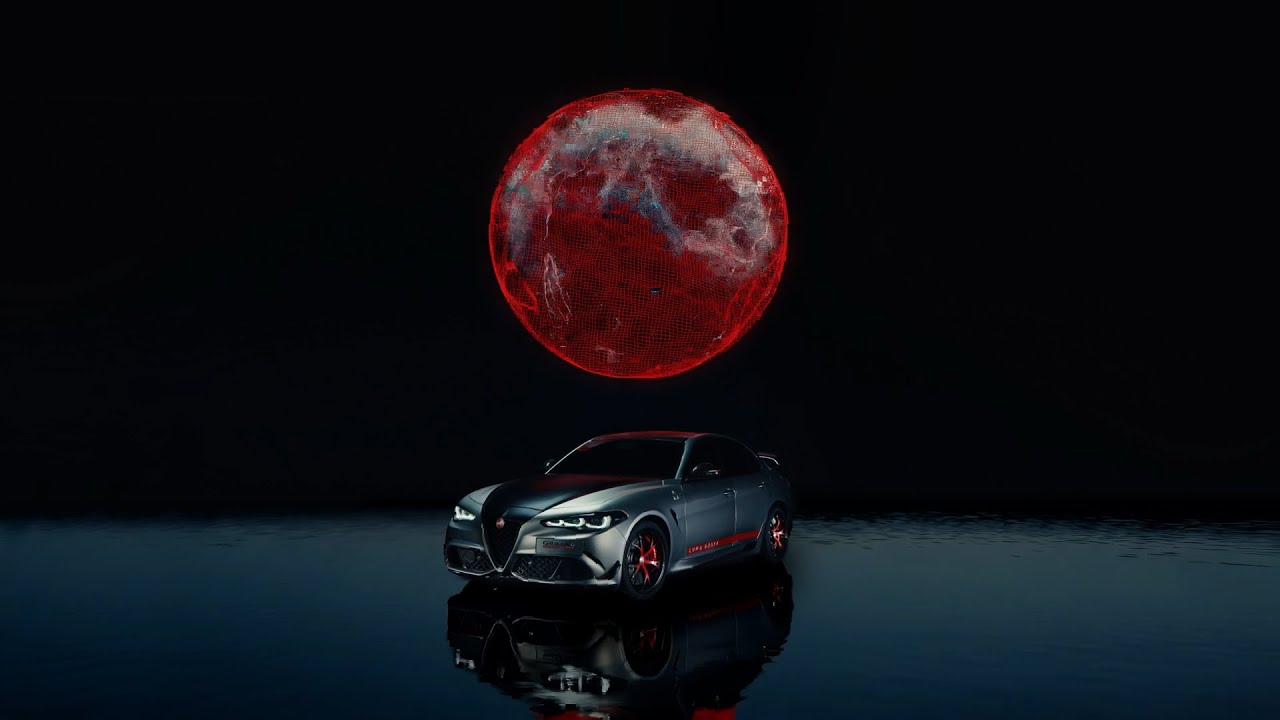
Six Names Would Be Too Long for Most Cars. But Italian Nobility Plays by Different Rules.
The Alfa Romeo Giulia Quadrifoglio Luna Rossa proves that the same obsession that wins on water now wins on asphalt.
The Setup
Alfa Romeo & Luna Rossa
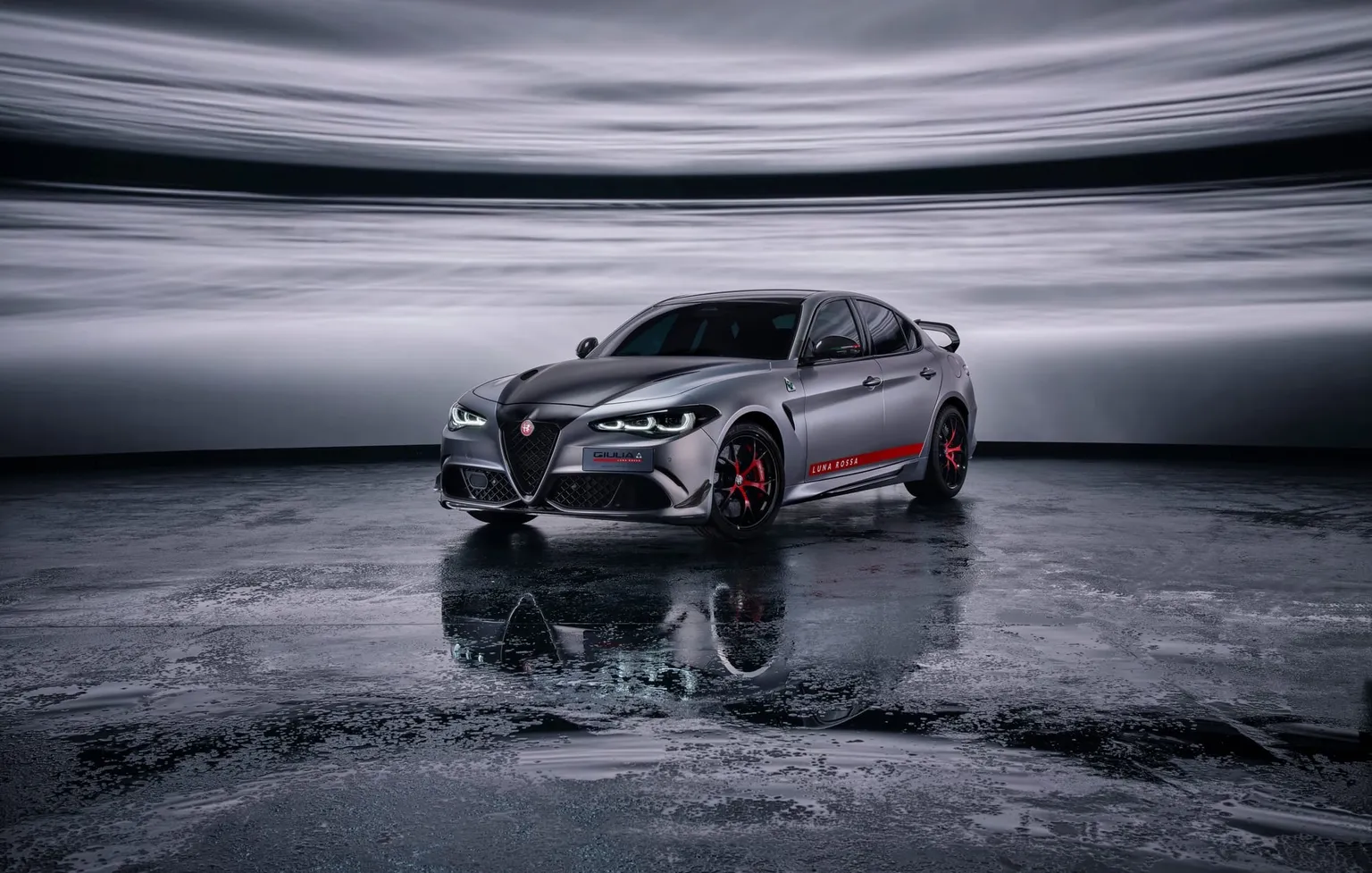
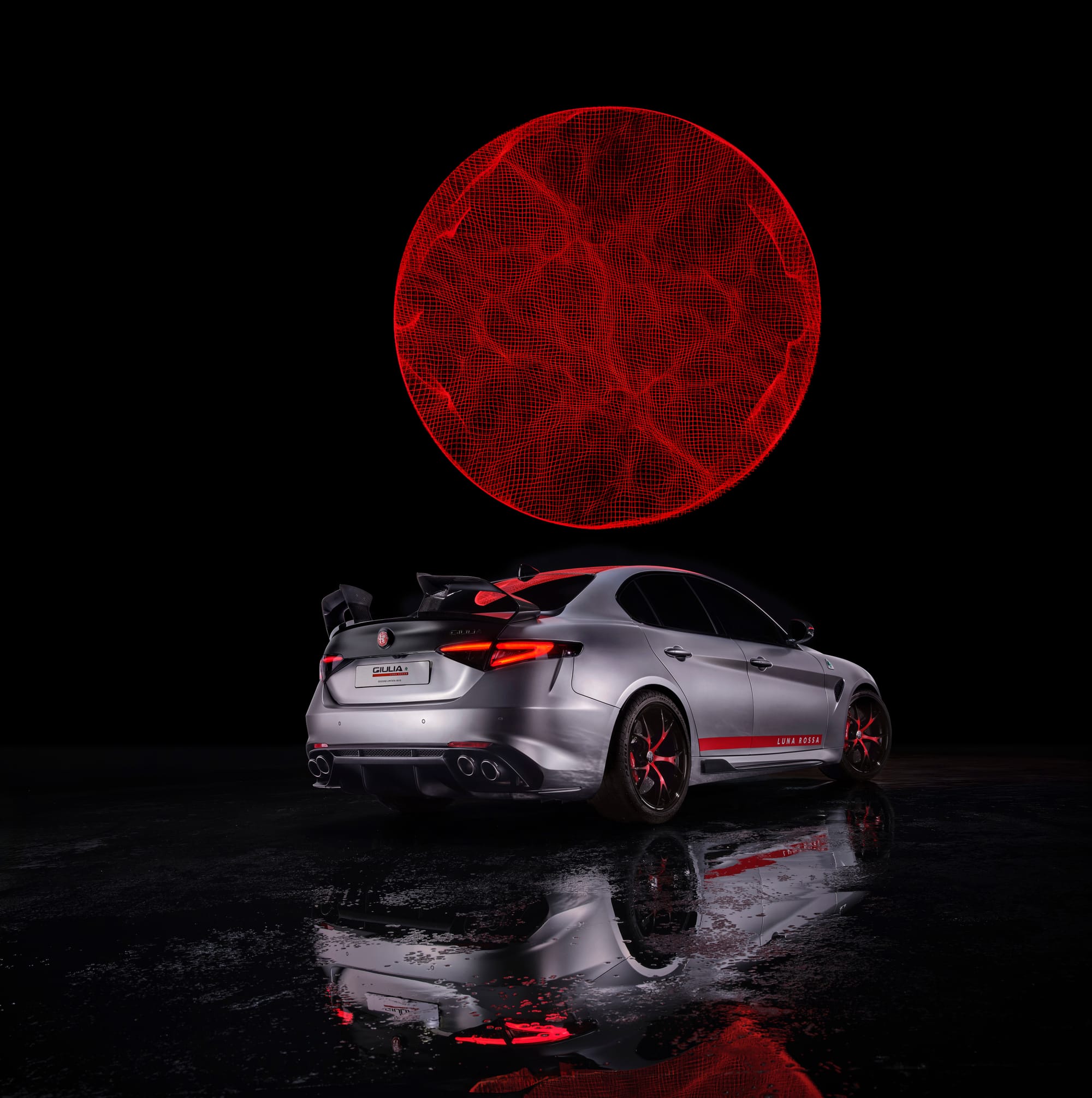
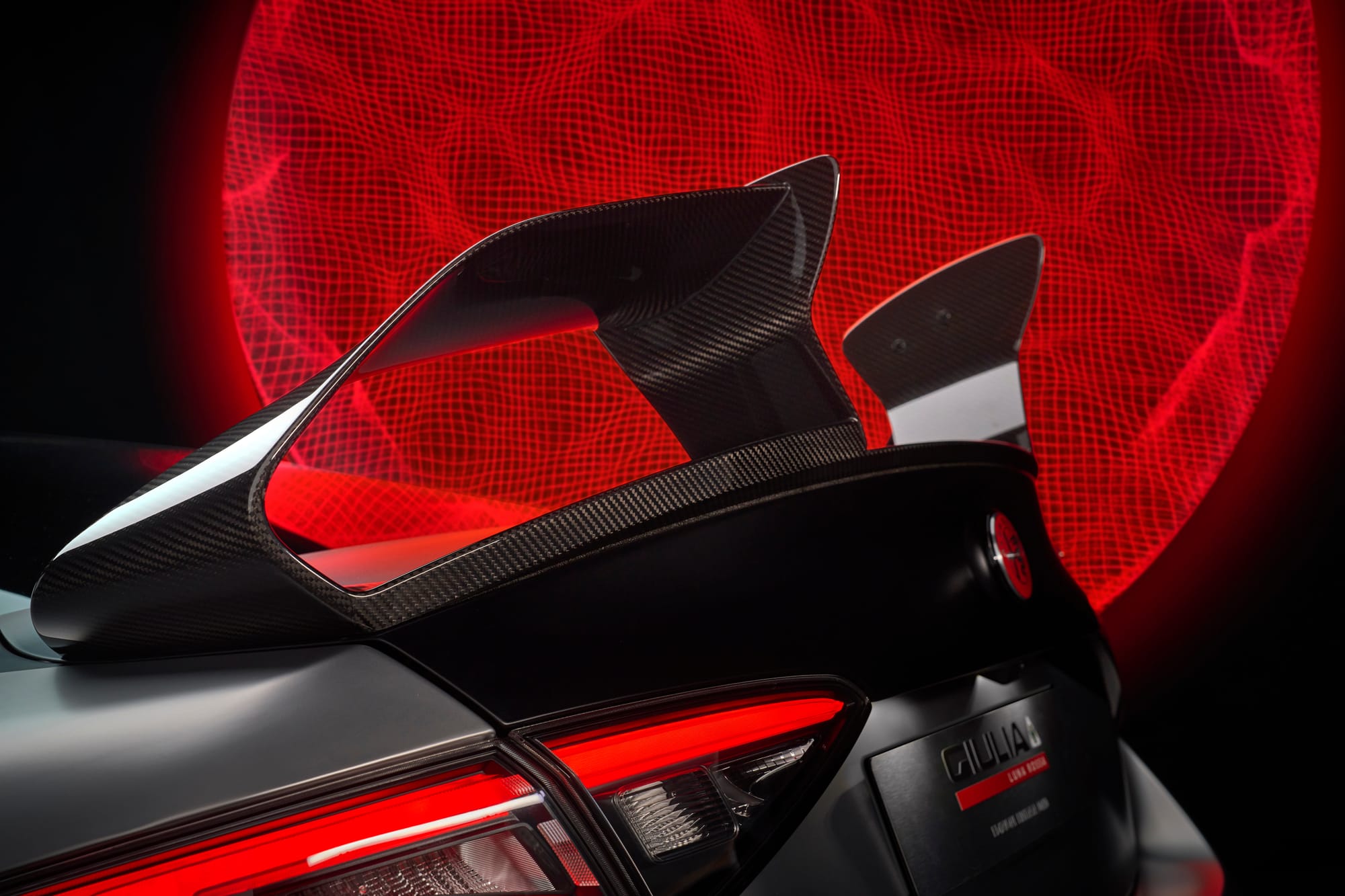
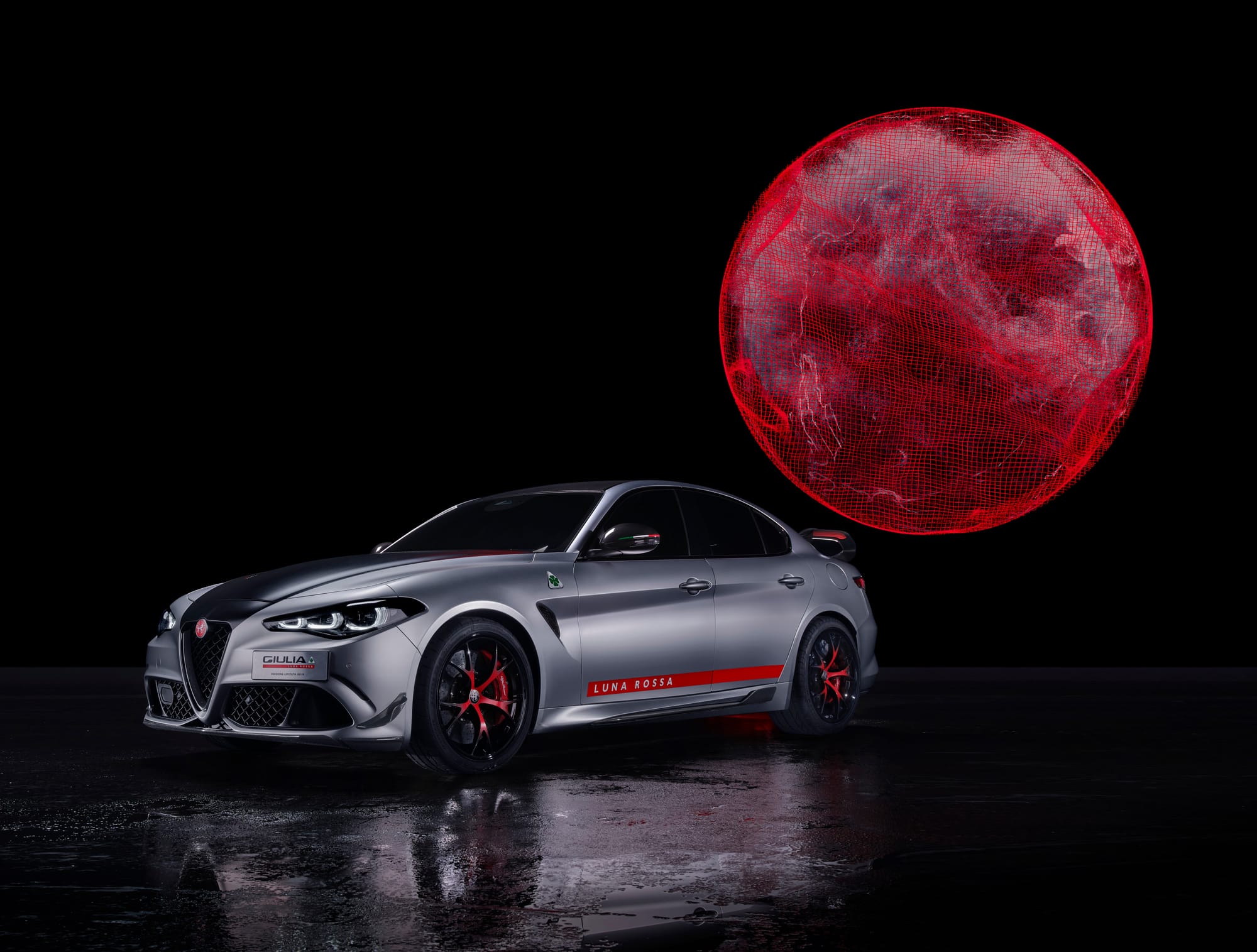
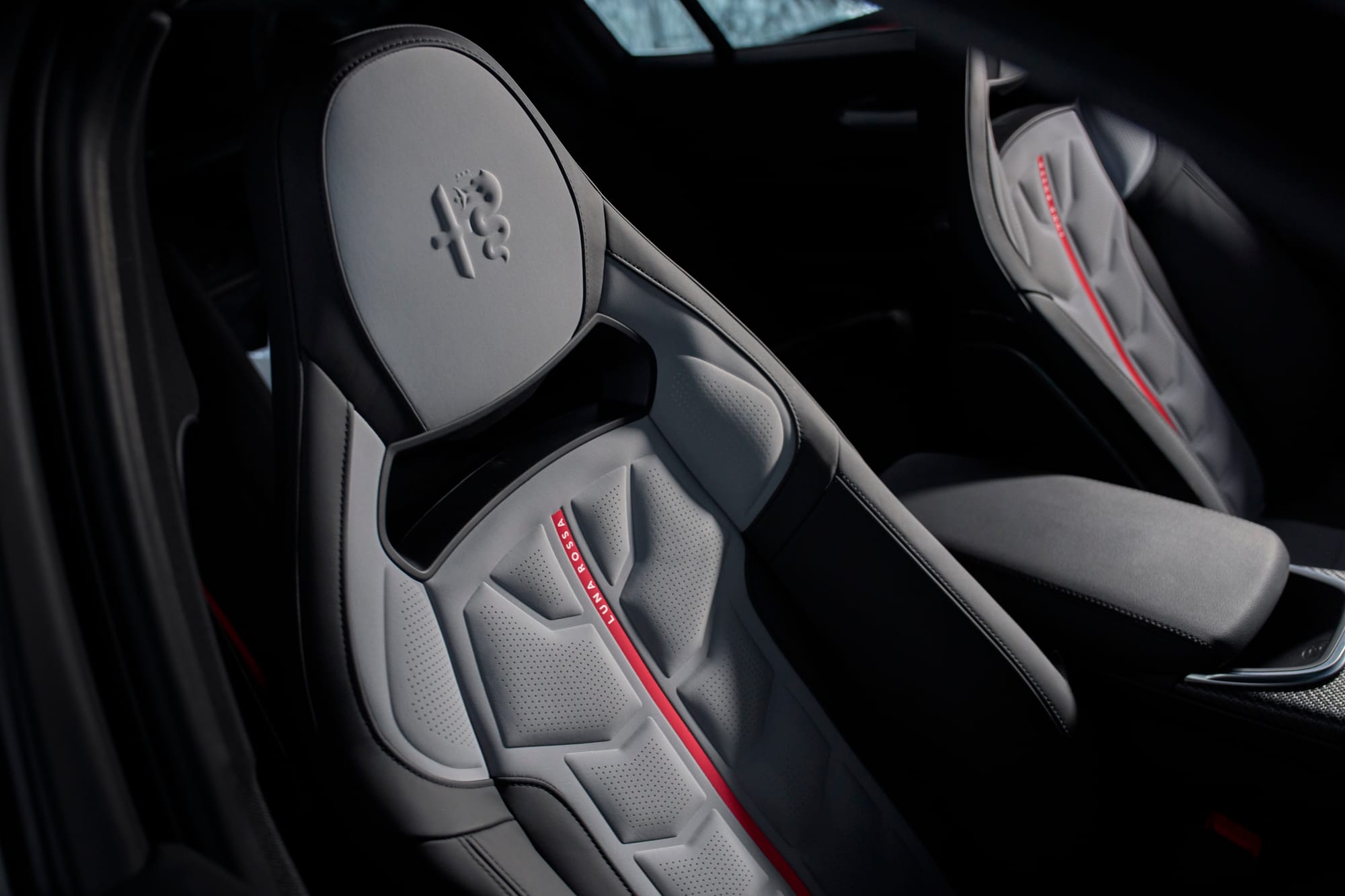
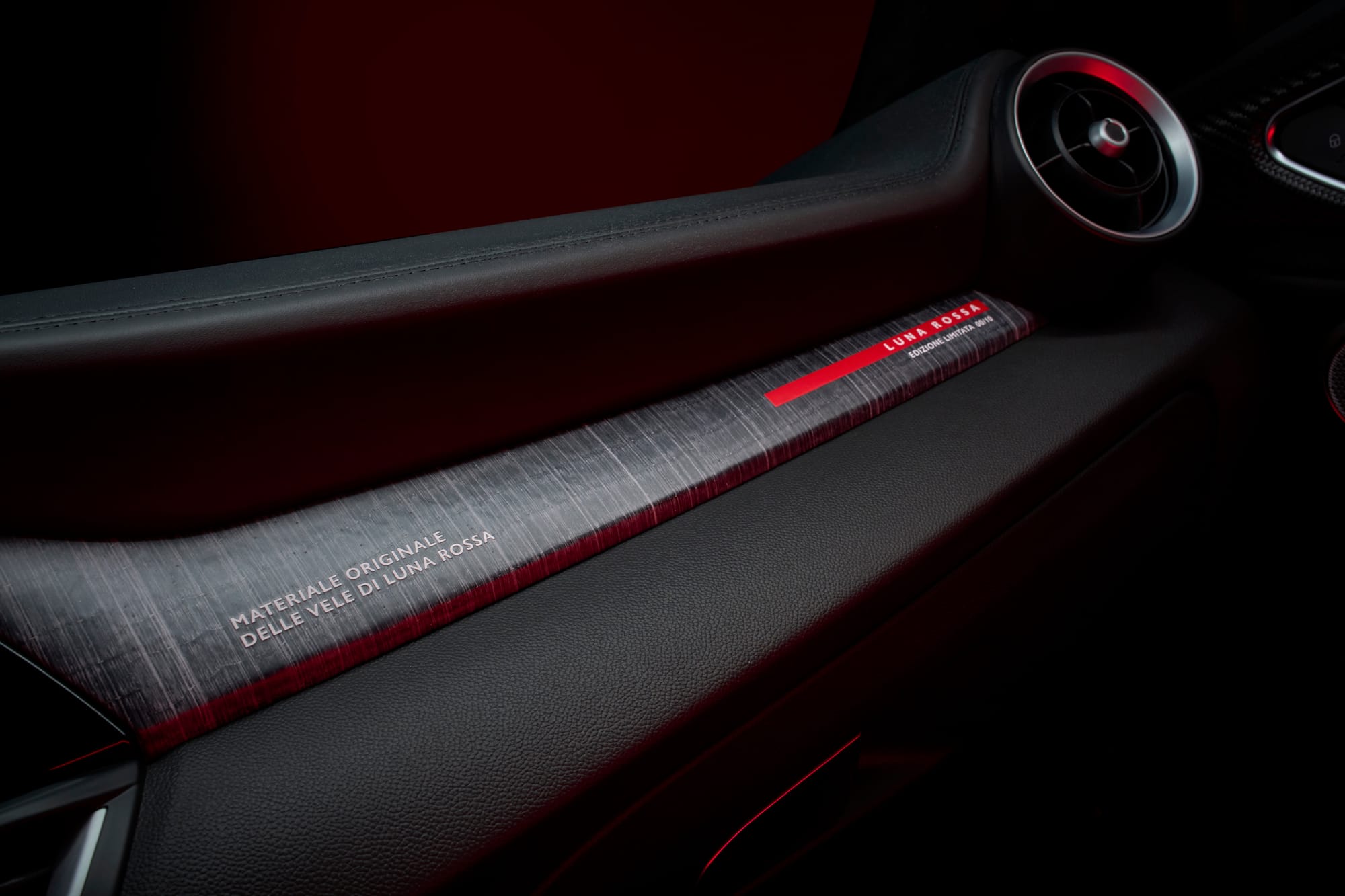
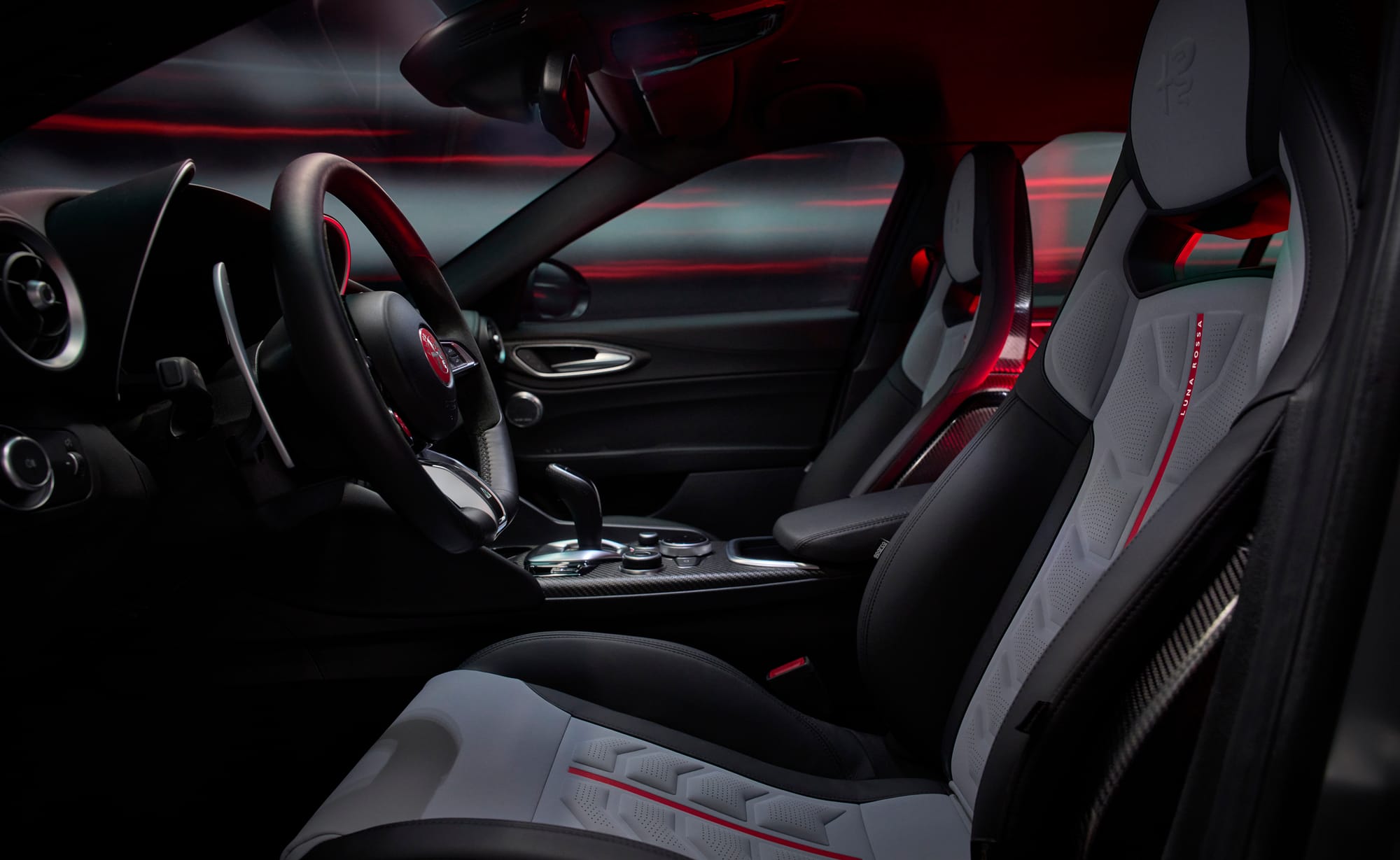
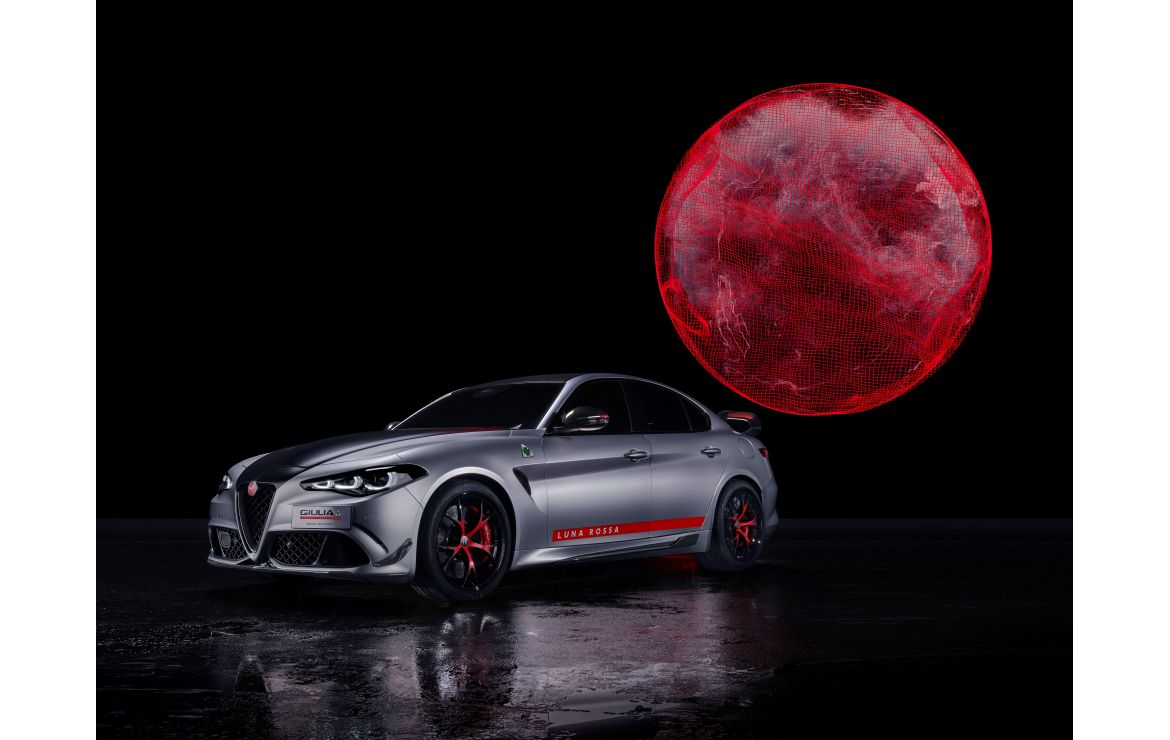
At the Brussels Motor Show, Alfa Romeo revealed the Giulia Quadrifoglio Luna Rossa, a ten-unit special edition created with Luna Rossa and developed under its BottegaFuoriserie division. The twin-turbo V6 undergoes an aerodynamic and material transformation. A split rear wing inverts the hydrofoil logic of the AC75 racing yacht to deliver five times the downforce of the standard car. The hand-painted metallic livery and red Alfa Romeo badges mark brand firsts, while the interior integrates flotation-vest-inspired seats and actual sail material in the dashboard. All ten cars were sold before the public reveal.
The marketing move is a clean pivot from automaker to bespoke design workshop. This is about converting a production car into a collectible through scarcity and material authenticity. By borrowing real engineering logic and physical components from elite sailing, Alfa Romeo avoids the empty collaboration trap and reinforces the idea that Italian performance is a single cultural discipline across land and sea.
The Breakdown
Alfa Romeo & Luna Rossa
Brand Positioning and Identity
Alfa Romeo is positioning itself as the high-water mark of Italian Technological Art, operating not as a volume manufacturer or nostalgia brand but as a curator of mechanical culture. The Giulia Quadrifoglio Luna Rossa, developed under the BottegaFuoriserie program, signals a deliberate shift toward hyper-limited, artisanal production where performance is treated as cultural expression. Heritage remains present, but it is reinterpreted through elite sailing, material science, and aerodynamic obsession, reframing Alfa Romeo as a maker of icons rather than products.
Target Segment and Audience
The primary audience is the ultra-high-net-worth collector who views automobiles as cultural assets rather than transportation, valuing provenance, technical storytelling, and enforced scarcity. These buyers are fluent in cross-disciplinary engineering and recognize the parallels between motorsport, sailing, and aerospace. The secondary audience consists of aspirational purists and global enthusiasts whose loyalty is reinforced by the presence of a 520 horsepower internal combustion halo that reasserts Alfa Romeo’s emotional core during an industry-wide shift toward electrification.
Messaging and Storytelling
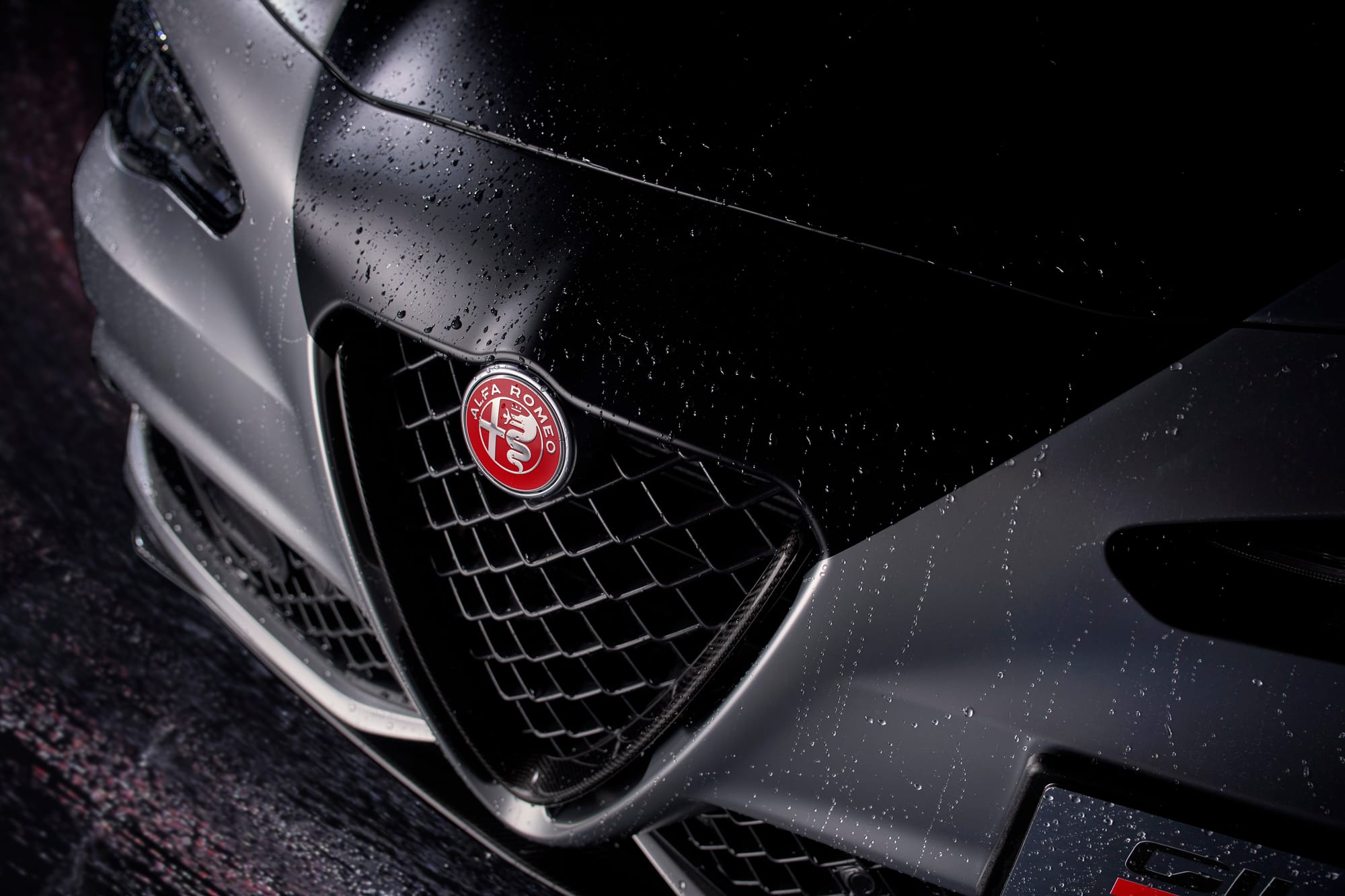
The narrative centers on fluidity and force, drawing a direct parallel between the invisible physics of elite sailing and high-performance driving. Wind becomes air, lift becomes downforce, and foils become inverted wings, with the story grounded in tangible proof points such as hydrofoil-inspired aerodynamics, sail film integrated into the dashboard, and flotation vest textiles used in the interior. The introduction of red Alfa Romeo badges for the first time in brand history acts as a deliberate signal that this collaboration justifies breaking long-held visual conventions.
Experience and Journey
Ownership is framed as an artisanal transformation rather than a purchase, with each Giulia Quadrifoglio built at Cassino before being reworked by hand through BottegaFuoriserie. Hand-painted iridescent finishes, carbon fiber aerodynamics, and material integrations reinforce the feeling of a private commission. By publicly revealing the car after all ten units were sold, Alfa Romeo creates scarcity while validating owners as insiders, extending the experience into a cultural cohort through events tied to the America’s Cup and Mille Miglia.
Alfa Romeo & Luna Rossa
Community and Culture Insight
The Luna Rossa edition taps into Italy’s Motor Valley mindset, where engineering mastery and aesthetic obsession coexist. The partnership with Luna Rossa works because both entities compete at the highest international levels while treating Italianness as a strategic advantage. With the America’s Cup returning to Italy in 2026, the collaboration gains geographic and temporal specificity, positioning Alfa Romeo inside a culture that values interdisciplinary fluency, national pride, and technological defiance.
Differentiation and Unique Selling Point
The unique selling proposition is literal material and engineering synergy rather than symbolic branding. This is not a livery exercise but a car built with the same carbon fiber philosophy and physical materials found in a world-class racing yacht. While competitors emphasize horsepower escalation or digital interfaces, Alfa Romeo differentiates through tactile authenticity and aerodynamic storytelling, creating a sensory and intellectual experience that no other performance sedan currently offers.
Design Language
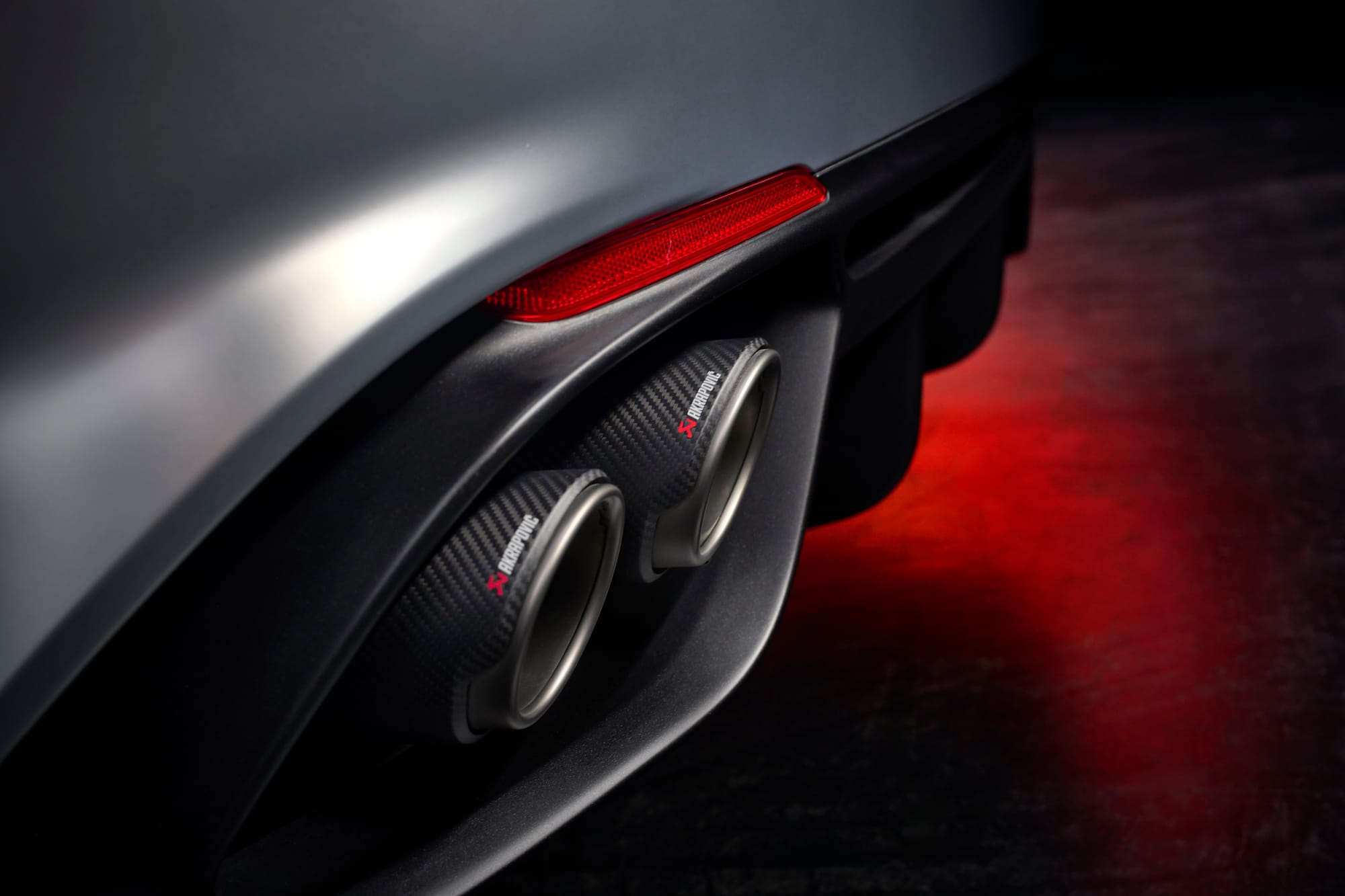
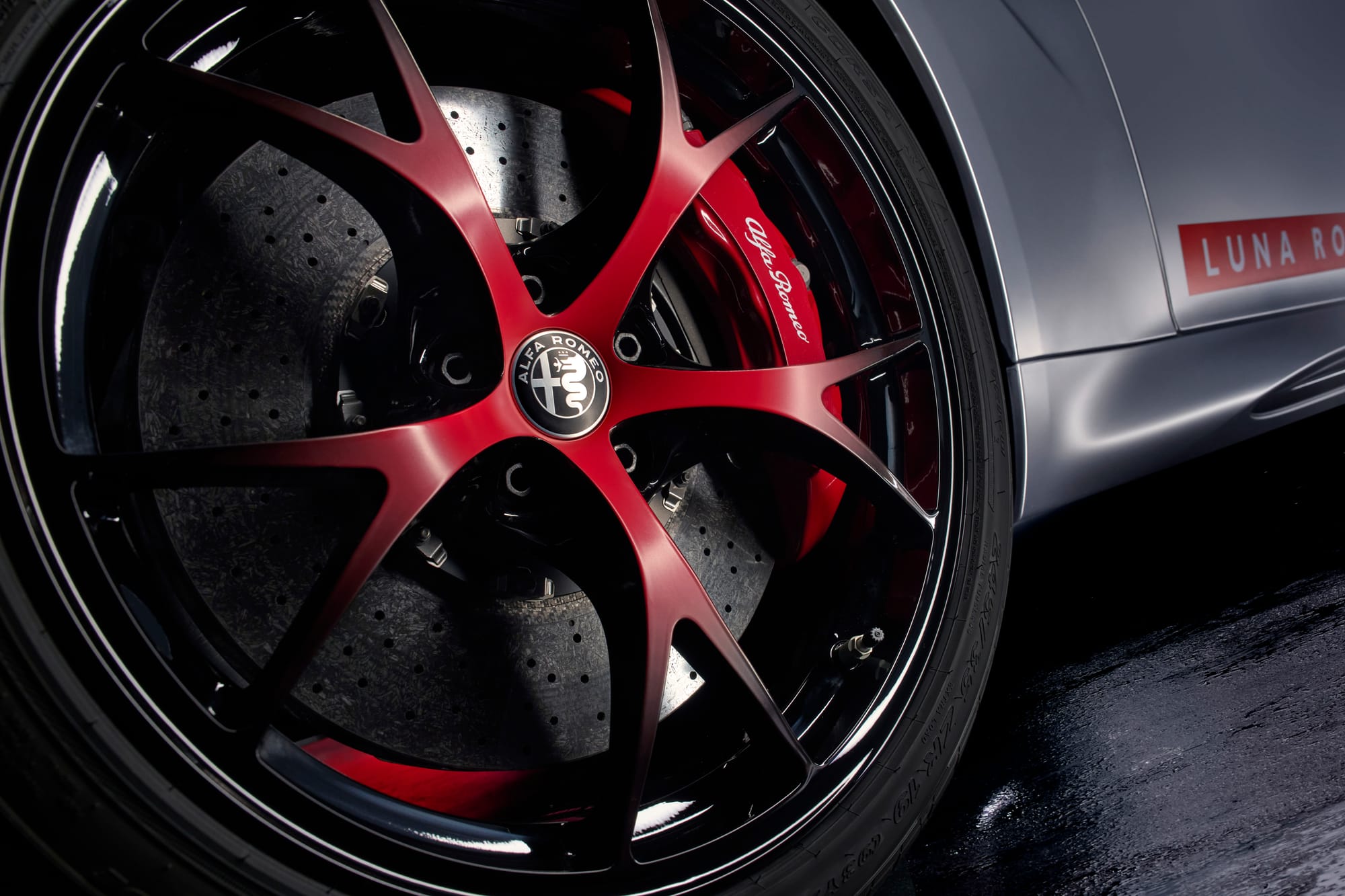
The design language communicates intent through contrast and material honesty, pairing hand-painted iridescent silver bodywork with exposed carbon fiber and a two-tone exterior that references nautical deck design while elongating the car visually. Red accents and badges provide continuity with Luna Rossa without overpowering the composition. The split rear wing serves as both functional sculpture and visual thesis, making the inverted foil concept immediately legible while the interior rewards close inspection through layered textures and translucent sail film.
Alfa Romeo & Luna Rossa
Marketing Pitch
The Giulia Quadrifoglio Luna Rossa is Alfa Romeo’s final, uncompromising tribute to internal combustion as cultural artifact. By limiting production to ten units, the brand creates instant legend status while protecting prestige during its transition toward electrified platforms. The pitch is not about specifications but about bottling the soul of Italian competition and offering it to a small group of people who understand that performance, when executed with craft and intent, is a legitimate form of art.
Is It A Winning Pitch?
What other industries should car brands be stealing real engineering from, not just aesthetics?

 Luna Rossa