
Global Strategic Intelligence: March 2026 (Part I)
Global crude nears $90 as Middle East instability follows Khamenei’s death. Beijing pivots with record-low growth targets, while the Larry Ellison-Warner Bros. deal redefines the AI data moat. From Gilt spikes to "digital sovereignty," we analyze the week’s strategic shifts.

The World This Week
The geopolitical landscape this week is defined by a significant escalation in the Middle East following the death of Iran’s Supreme Leader, Ayatollah Ali Khamenei. His passing has triggered immediate instability across the Persian Gulf, with major oil producers scaling back output and tanker operators avoiding the Strait of Hormuz. This regional friction has pushed global crude prices toward $90 per barrel, complicating the inflation outlook for Western central banks that had hoped to begin a cycle of rate reductions.
In East Asia, China has signaled a pragmatic shift in its economic ambitions. During the National People’s Congress, Beijing established a 2026 GDP growth target of 4.5% to 5.0%, the lowest official goal in decades. This move reflects a transition from a volume-focused growth model toward a strategy prioritizing technological self-sufficiency and high-quality development, as the nation grapples with a persistent property sector slump and local government debt.
The humanitarian crisis in Sudan has reached a desperate threshold as the United Nations nears a genocide verdict in Darfur. Fighting between the Sudanese Armed Forces and the Rapid Support Forces has intensified, with drone strikes hitting markets and aid convoys. The conflict is increasingly drawing in regional neighbors, with reports of training and logistics support crossing borders into Chad and Ethiopia, further destabilizing the Horn of Africa.
Business & Strategy

A major consolidation in the media and technology sectors is underway as Larry Ellison moves to acquire Warner Brothers. This acquisition marks a strategic push by enterprise technology giants to integrate content ecosystems directly with cloud and distribution infrastructure. Historically, such vertical integration has faced steep regulatory hurdles, yet current political sentiment appears to be shifting toward favoring domestic champions in the face of global digital competition. This trend suggests that the value of proprietary data and content libraries is now seen as an essential component of the broader artificial intelligence arms race, where the ability to train models on exclusive, high-quality media assets provides a distinct competitive moat.
Finance & Indicators
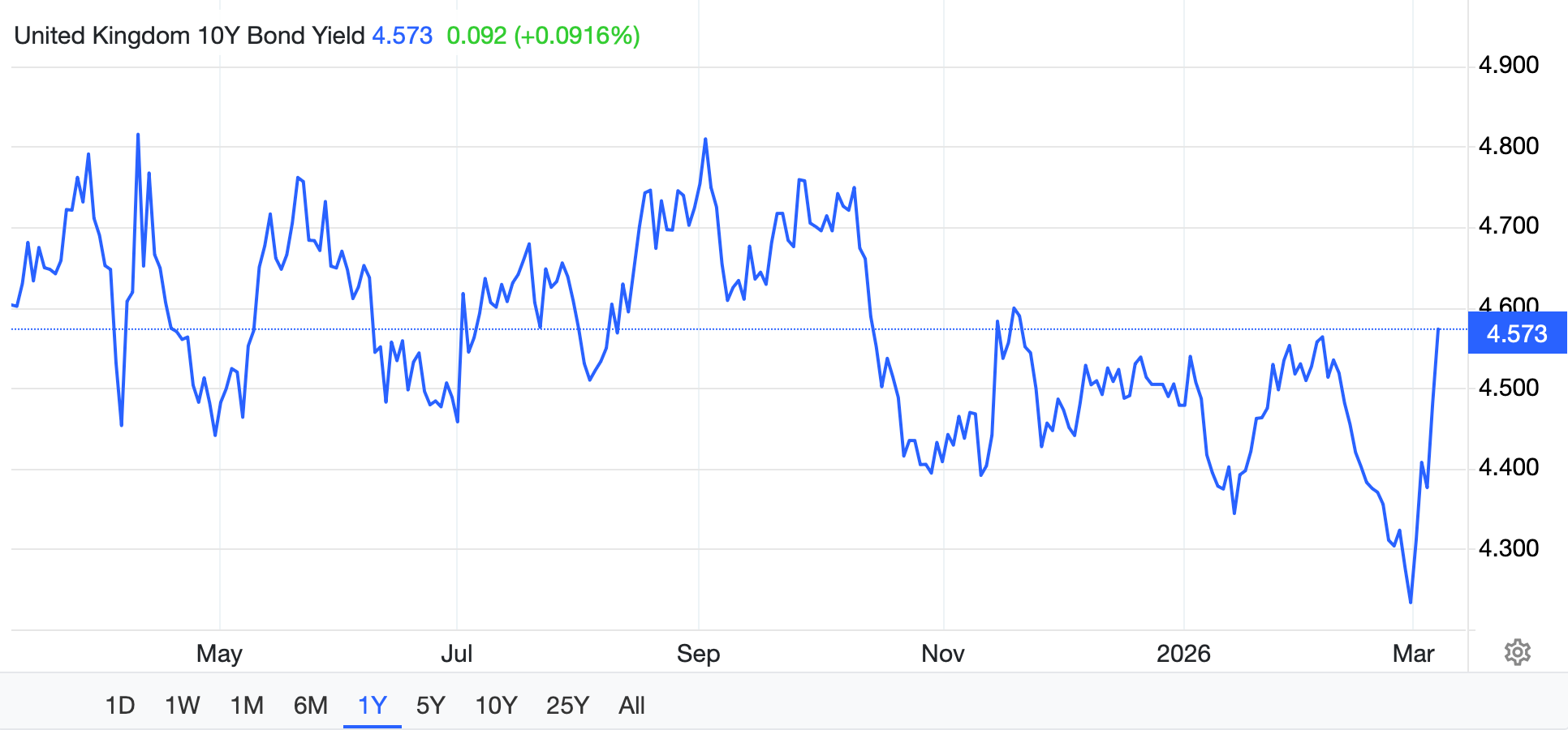
Market sentiment has turned sharply defensive as U.S. stocks declined to year-to-date lows this Friday. Investors are reacting to a rare contraction in the labor market, with non-farm payrolls unexpectedly falling by 92,000 in February.
- Key Indicator: The UK 10-year Gilt yield surged above 4.6%, its highest level since late 2025. This move reflects a global "higher-for-longer" reality as energy-driven inflation risks force markets to price out previously anticipated interest rate cuts for the remainder of the year.
Science & Tech-Philosophy
The rapid expansion of global data center footprints offers a quiet lesson on the physical nature of digital existence. While the U.S. continues to hold more data centers than the next 14 nations combined, the geographical shift toward Asia and Northern Europe highlights a new kind of "digital sovereignty." Philosophically, this represents the end of the cloud as an ethereal, placeless concept. We are seeing the return of geography as the primary arbiter of power. The requirement for massive computational capacity to train generative systems has turned electricity and cooling into the new borders of the intellectual world. In this era, the strength of a nation is increasingly measured not just by its citizens but by the total wattage of its supercomputing clusters.
Visual Signal: The Energy Chokepoint
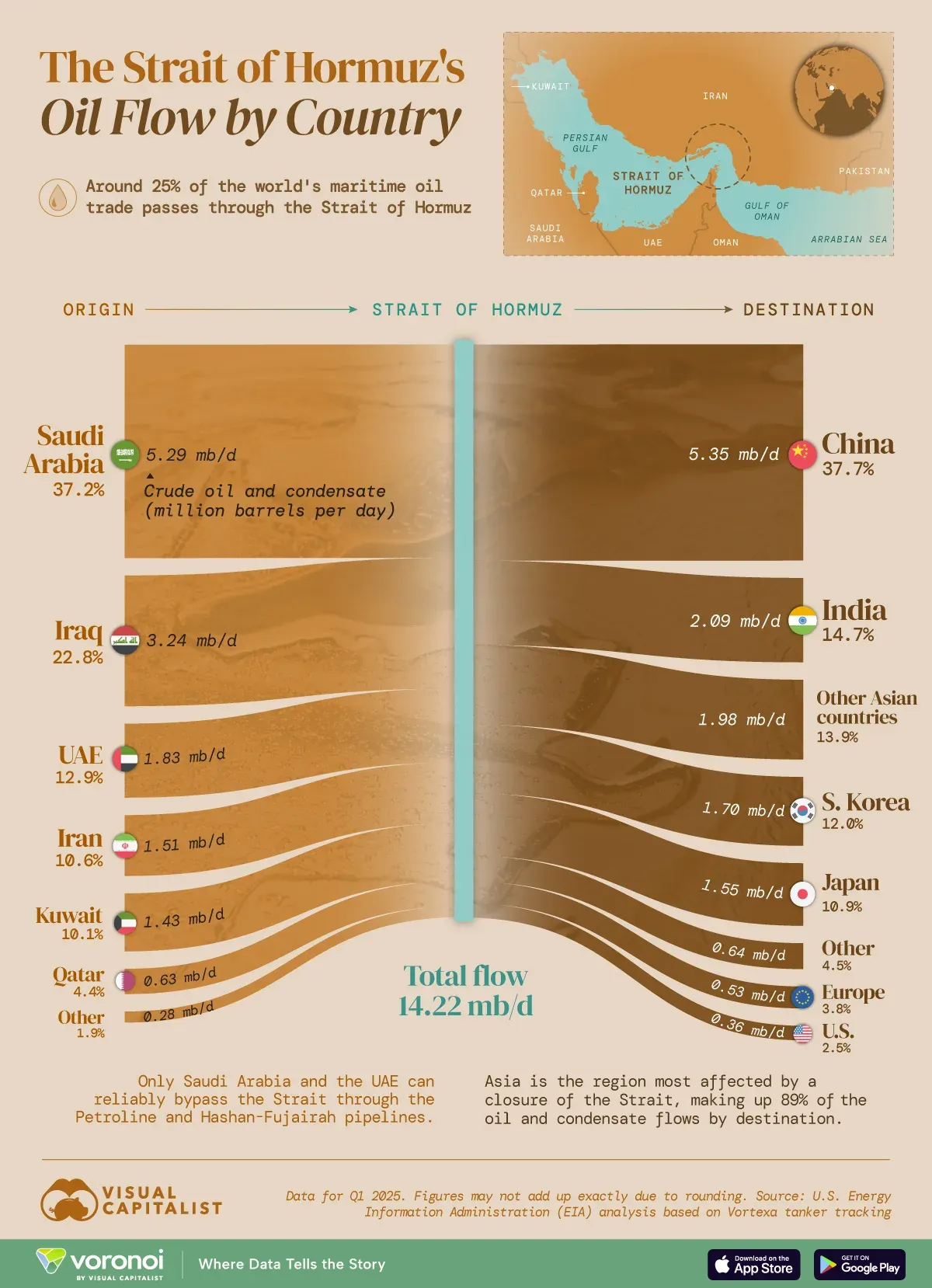
The most vital graphic of the week depicts the Strait of Hormuz as a singular point of failure for the global economy. Visualizing the 20 million barrels of oil that transit this narrow passage daily provides a stark contrast to the rhetoric of energy independence. The data shows that despite the rise of renewables, the global manufacturing base remains tethered to a few nautical miles of water, where a minor disruption can instantly add a premium to every product moved by sea.
Postscript
Before Clapton slowed down Layla, Sedaka went there first with "Breaking up is Hard to Do"
The passing of Neil Sedaka, the prolific singer and songwriter behind the pop canon of the 1960s, serves as a quiet reminder of an era when global culture was unified by a singular, analog frequency. Breaking up is hard to do.

