
An SUV Ready for the Apocalypse and Your Trader Joe’s Run
Hyundai’s Crater Concept is a Cybertruck That Grew Up Reading Adventure Comics Instead of Tech Blogs
The Setup
.

Hyundai
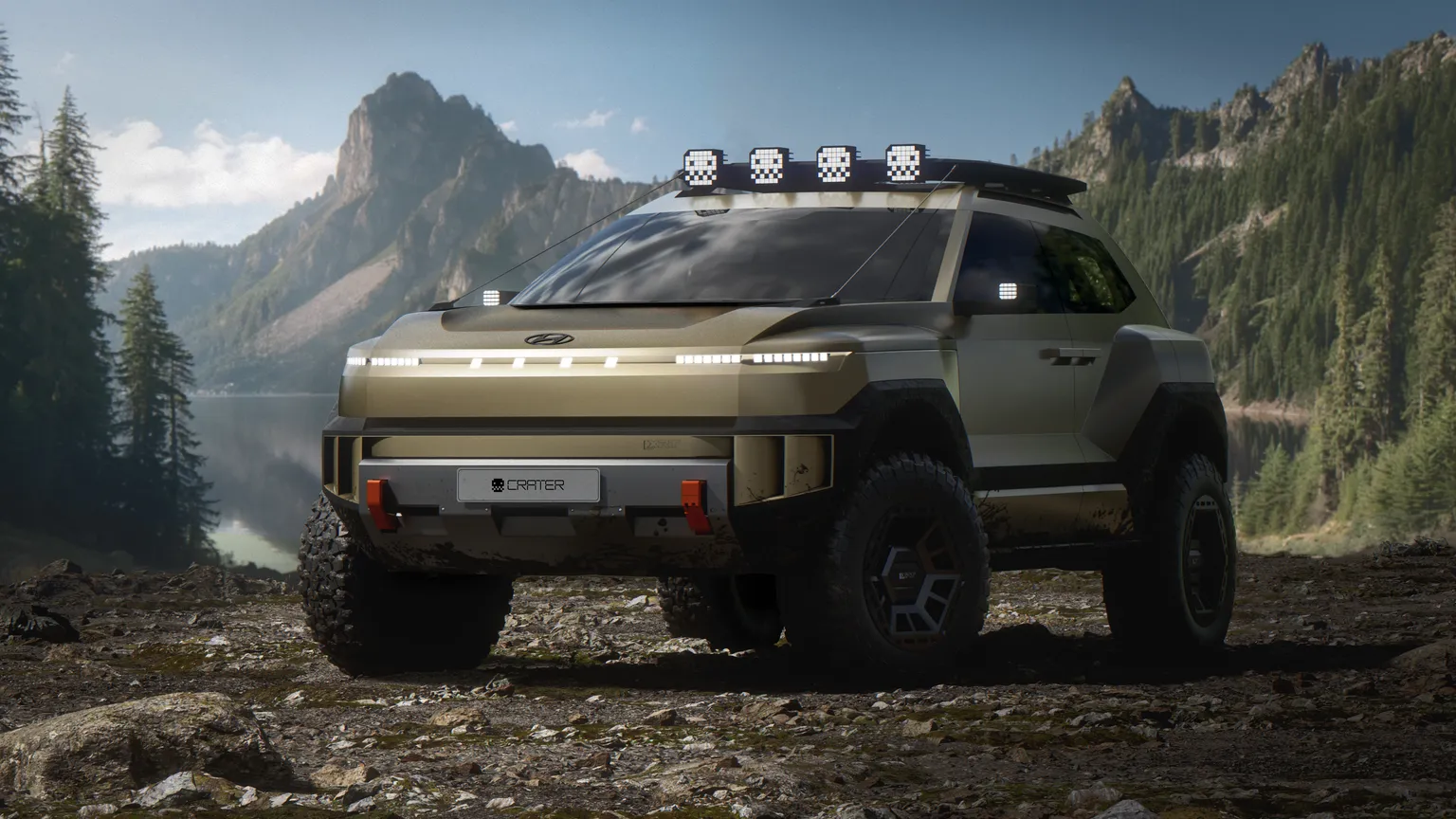
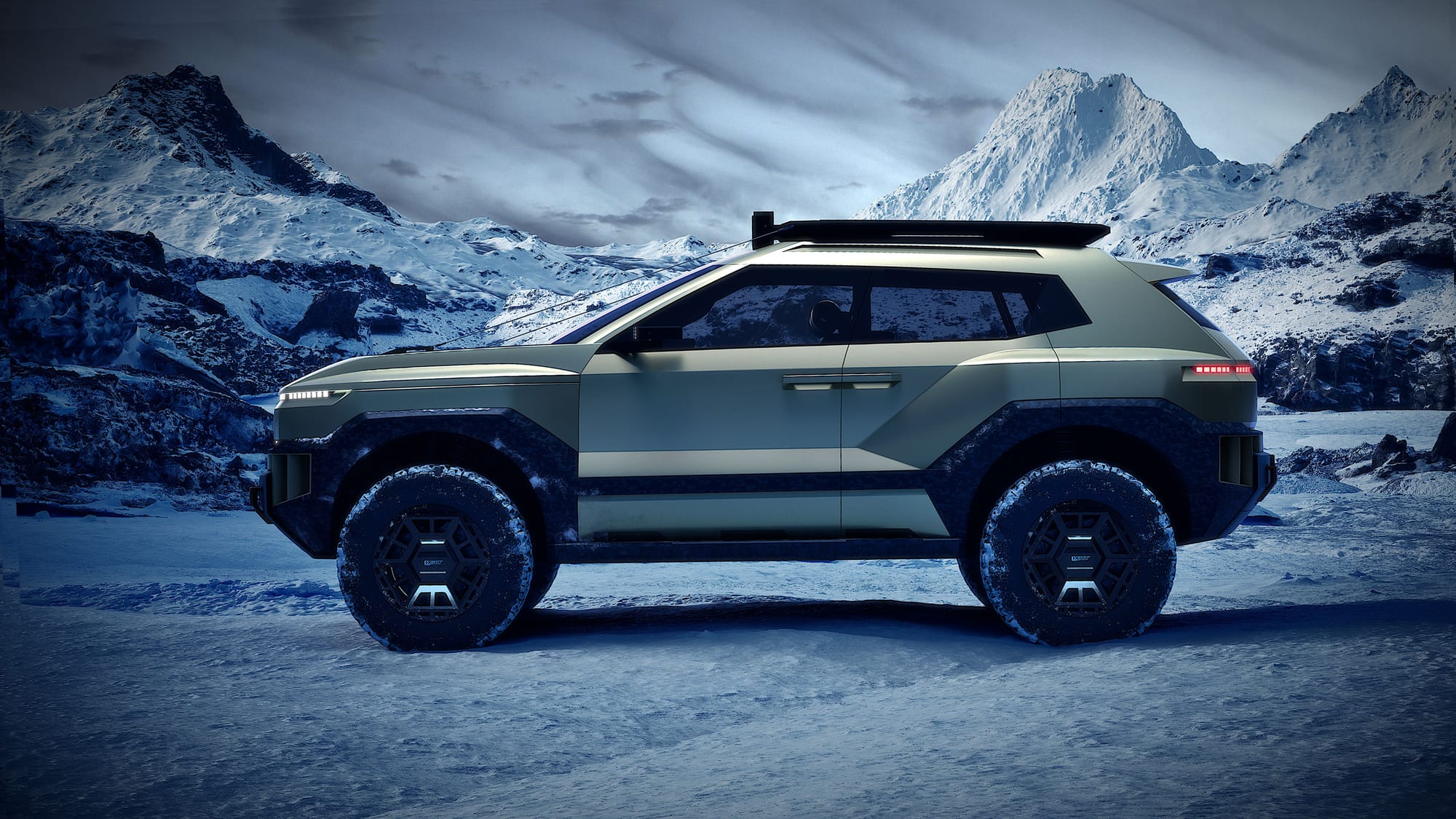
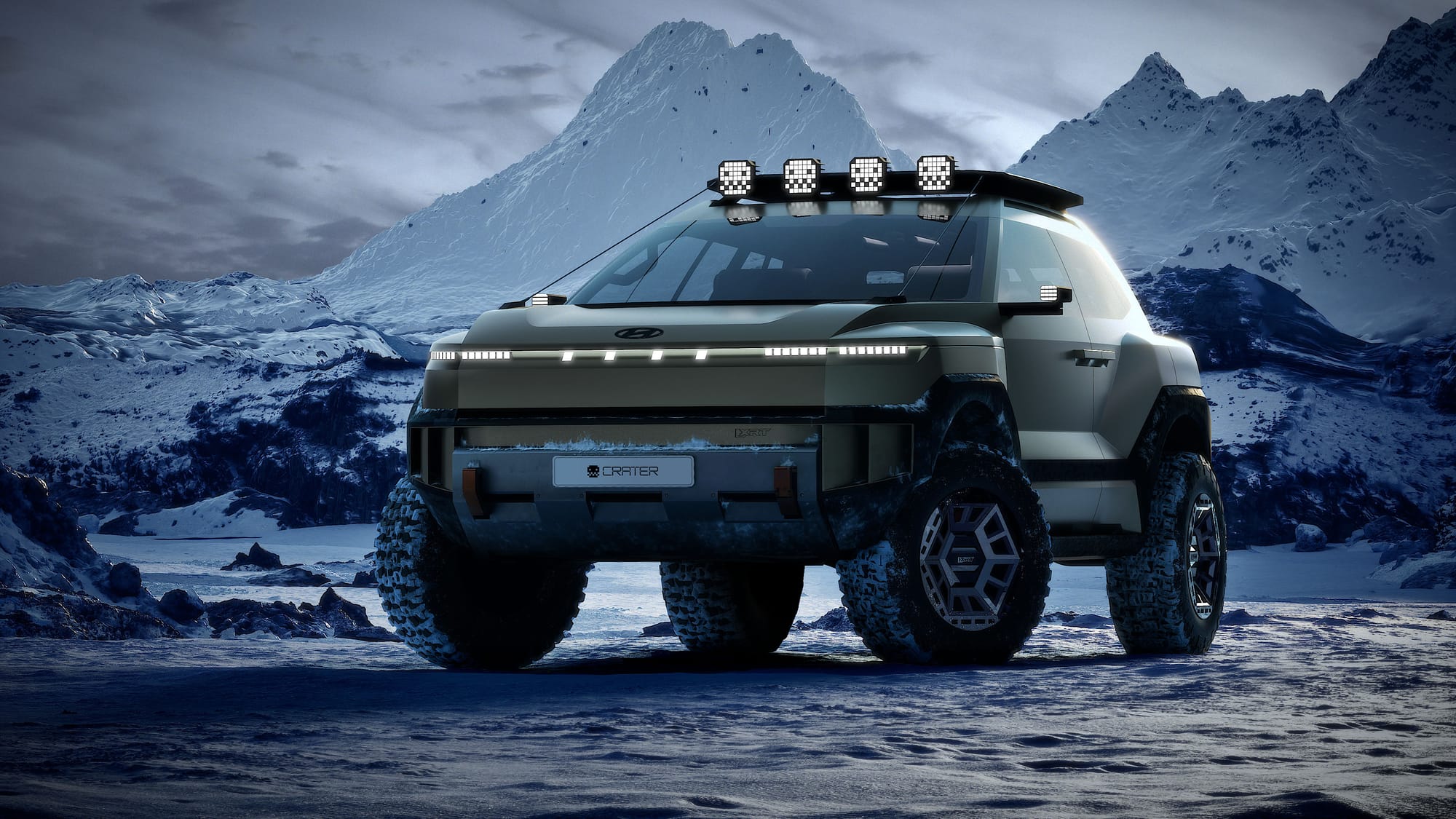
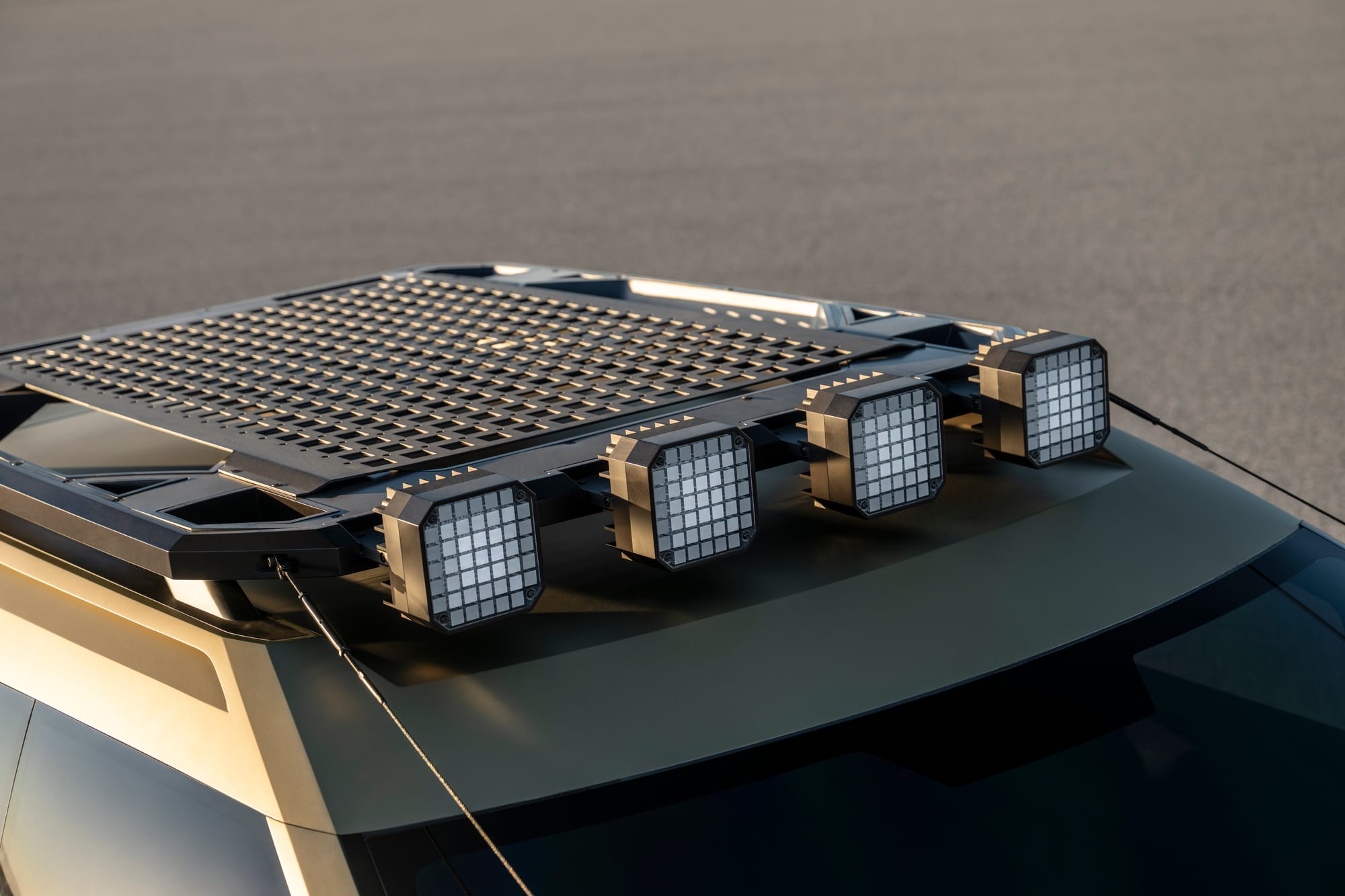
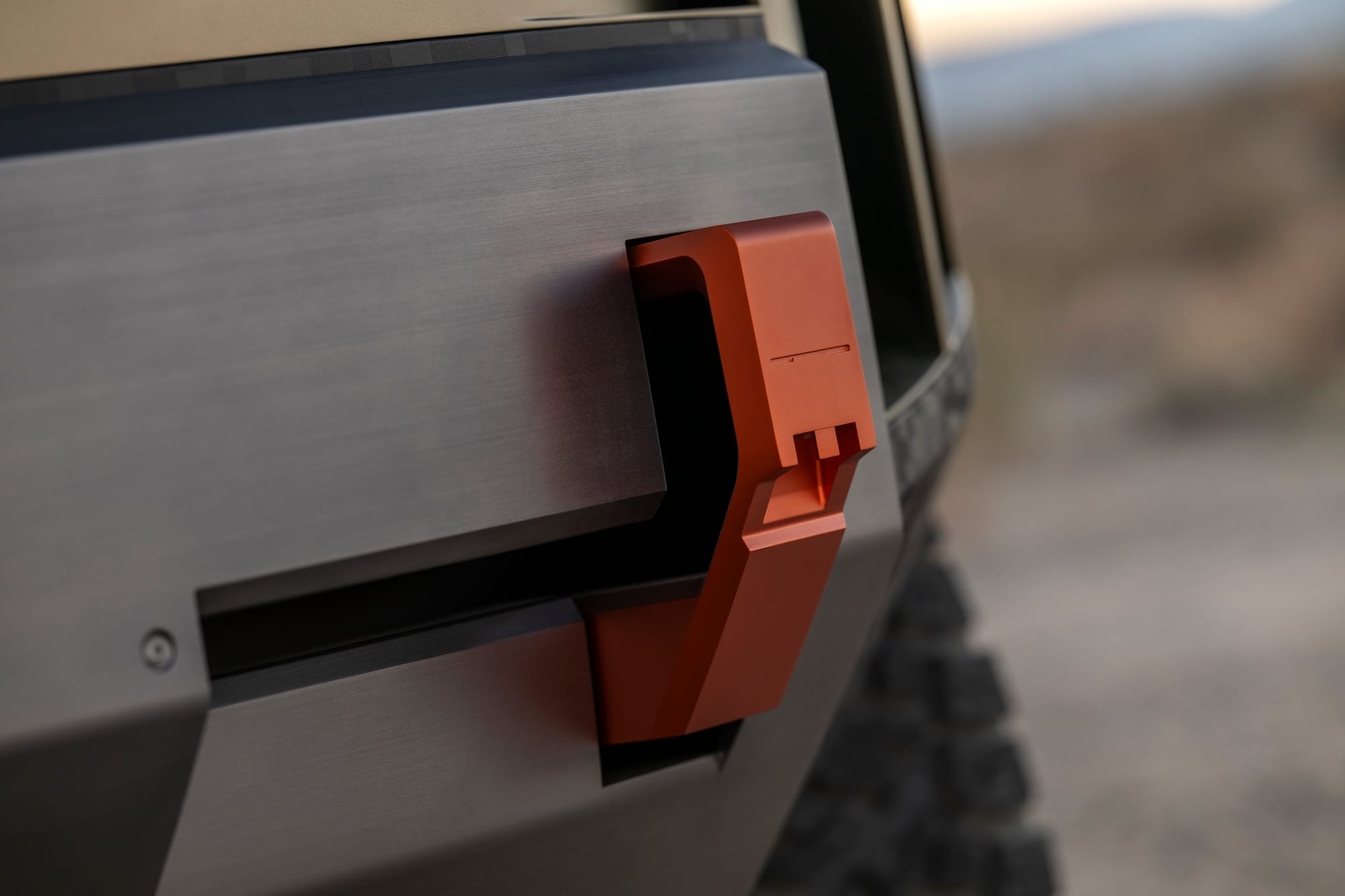
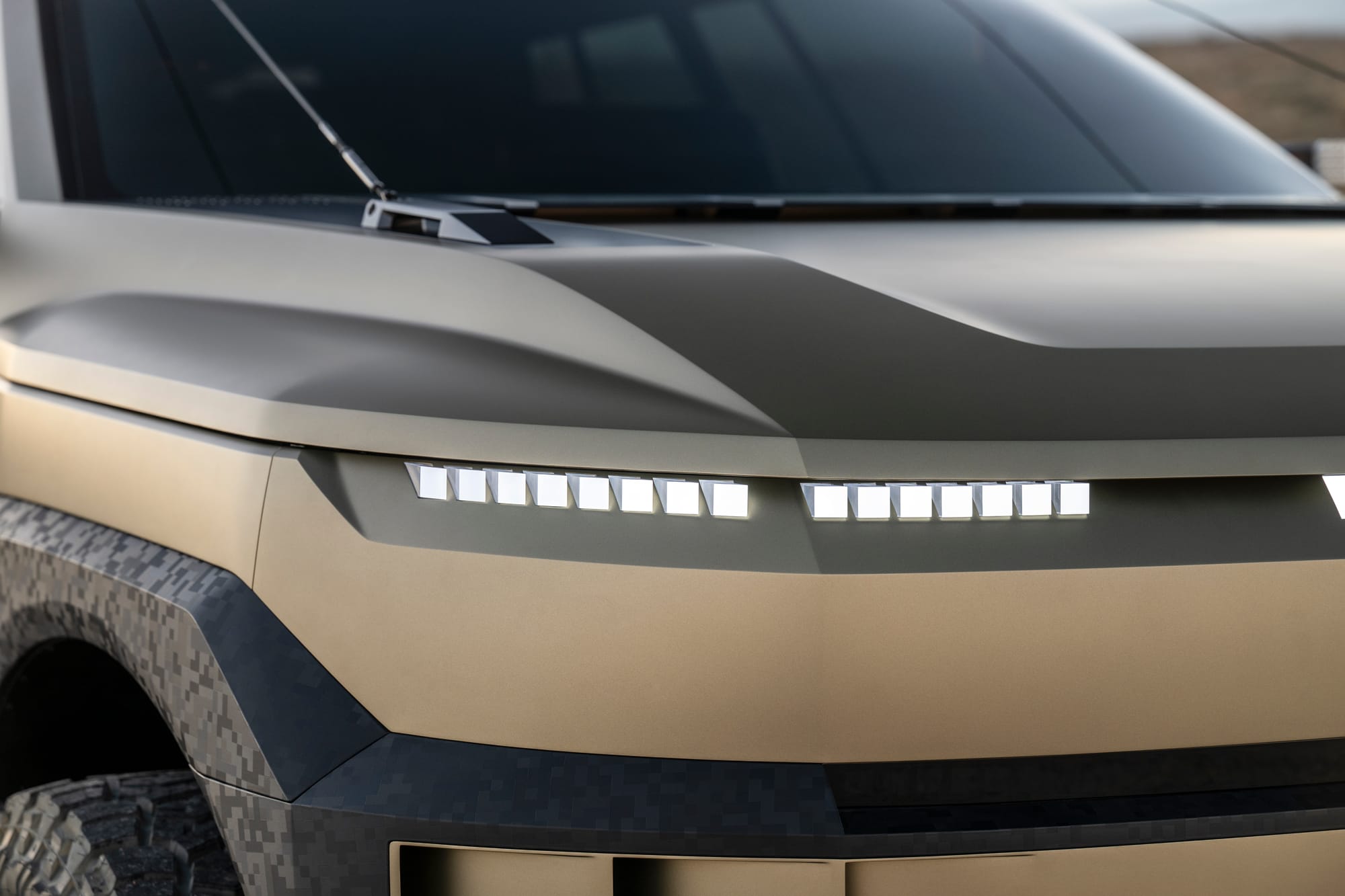
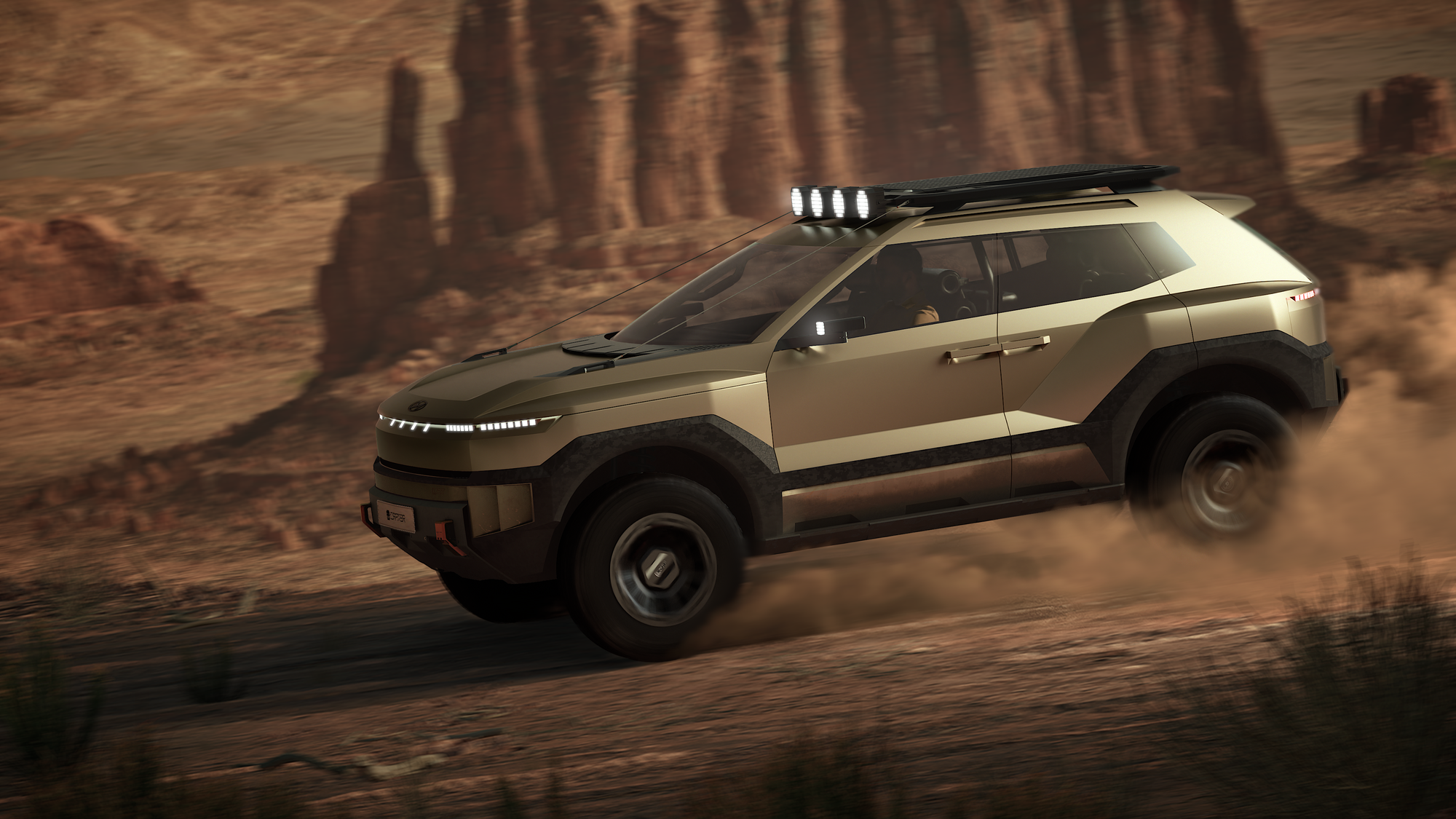
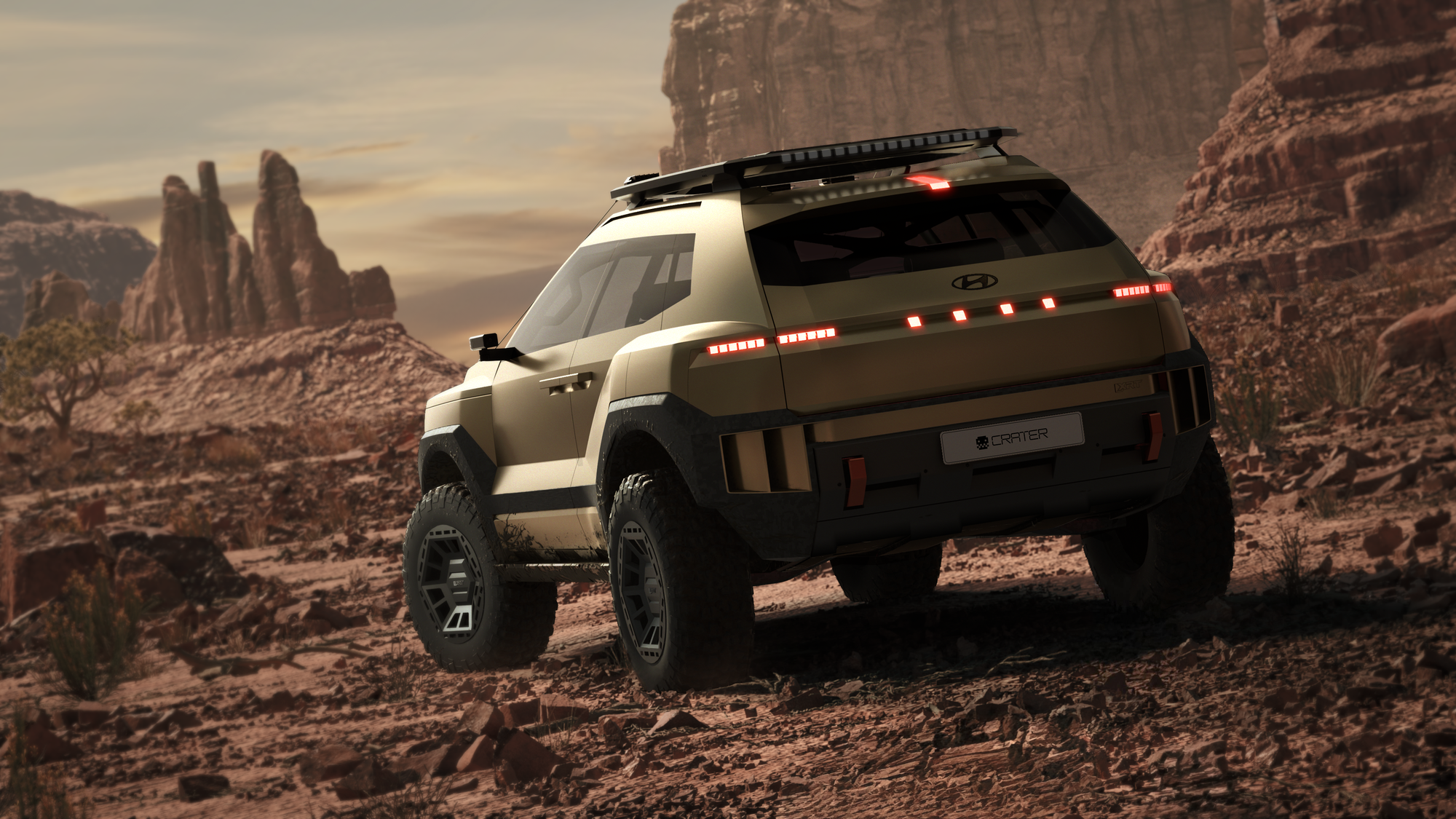
Hyundai’s Crater Concept is a compact off-road SUV built as the wildest expression of the brand’s XRT design language. Matte green-gold paint, asteroid-impact wheels, 33-inch tires, Pac-Man-style roof lights, rear-hinged doors, and removable flashlight mirrors make it look like a survival kit on wheels. Inside, the desert-sunset lighting, full-width HUD, terrain-mode buttons, and roll-cage framing push it even further into cinematic wilderness fantasy.
Crater is Hyundai’s play to turn adventure aesthetics into emotional identity, not utility. The concept treats ruggedness as a cultural signal, using playful survival cues and sculptural steel to offer the feeling of capability even when the destination is a weekly grocery run. It taps into a broader trend where people buy the symbol of self-reliance, and Hyundai leans into that by making Crater a vehicle designed as much for the imagination as the trail.
The Breakdown
Hyundai
Brand Positioning and Identity
Hyundai positions the Crater Concept as the next-evolution XRT statement piece: a compact adventure SUV that treats ruggedness as design language rather than an aftermarket bolt-on. It’s meant to signal Hyundai’s shift from “approachable mainstream” to “emotionally expressive off-road brand,” using steel, geometry, and oversized purpose cues to give the company a foothold in the lifestyle-adventure space.
Target Segment and Audience
The audience is the new American outdoor maximalist: younger buyers who want capability, cinematic survivability, and an aesthetic identity that feels prepared for anything whether or not they’re leaving pavement. This is the Patagonia-wearing urban explorer who values off-road symbolism as much as actual off-road skill, and wants a vehicle that broadcasts resilience, independence, and intent.
Messaging and Storytelling
Hyundai uses mythic adventure framing. Every feature gets a narrative, from asteroid impact wheels to limb riser cables to campfire lighting to terrain mode buttons, turning the vehicle into a storybook of post apocalyptic readiness and California desert spirituality. The storytelling works because it does not sell specs, it sells imagination, identity, and escapism.
Experience and Journey
The journey Hyundai is crafting is “daily life into controlled wilderness.” The Crater concept is built to feel equally at home in Whole Foods parking lots and Mojave dry washes. The interior tells the driver: you are capable, you are safe, and you are in command of a cinematic version of your own adventure. It reframes off-roading as an emotional mode rather than a hobby.

Hyundai
Community and Culture Insight
Hyundai taps into a culture where outdoorsy aesthetics have become aspirational symbols of autonomy. People want rugged objects that make them feel self-reliant even when their actual use case is suburban commuting. Like overlanding TikTok and EDC culture, the Crater reflects a broader trend where preparedness equals personality.
Differentiation and Unique Selling Point
The Crater differentiates through theatricality. Where Jeep leans heritage and Toyota leans capability, Hyundai leans imagination, introducing playful elements like Pac-Man spotlights, removable flashlight cameras, and bottle-opener tow hooks. Its USP is not “the toughest” but “the most creatively adventurous,” blending concept-car theater with functional cues.
Design Language
Crater uses sculptural steel surfaces, hex crater wheels, indirect lighting, roll cage cues, and warm desert color palettes to communicate emotional toughness. The aesthetic is not military or retro. It is cinematic futurism, equal parts survival gear, adventure anime, and premium outdoor equipment. This positions design as the primary storytelling medium rather than specs or performance.
Marketing Pitch
The Crater is adventure mythologized into metal. It takes the fantasy of exploration that lives in people’s heads and turns it into something you can walk up to and open the door. Every surface, texture, and detail is built to make the world feel bigger and you feel braver, turning the idea of escape into an object you can actually drive.
Is It A Winning Pitch?
If SUVs keep drifting toward fantasy adventure, how far should brands push it?

